TD
TD
Key Takeaways
- A resume aimed at Chinese employers commonly includes personal details that Western convention omits, and stating them plainly is the local expectation rather than an oversight.
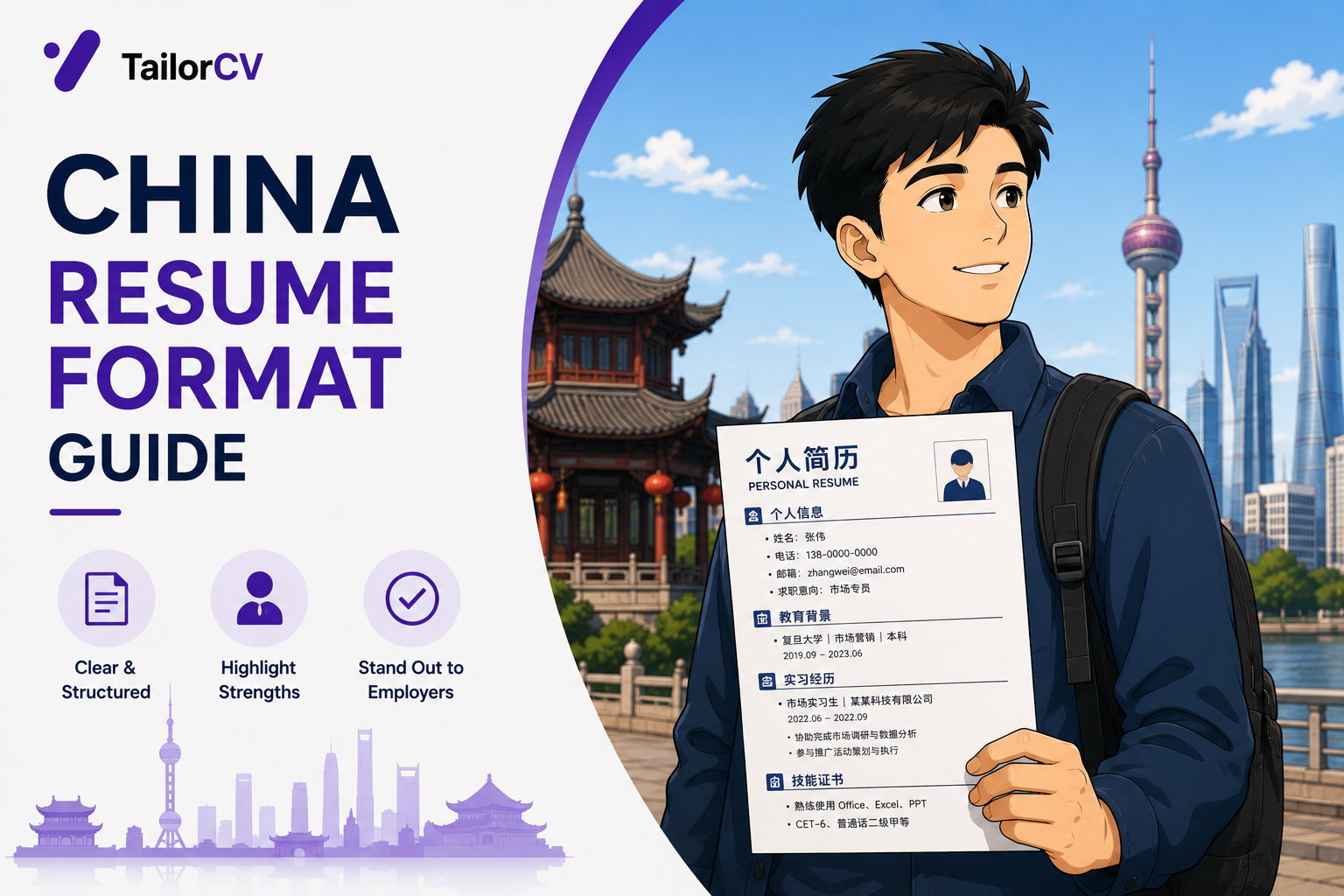
- A photograph is standard on resumes submitted within China, differing sharply from US and UK convention.
- Length runs closer to one to two pages, similar to Western norms, but the content and emphasis differ.
- Large employers screen with automated systems at enormous volume, so a document that parses cleanly and matches the posting's language matters as much here as anywhere.
- Multinationals operating in China sometimes expect a hybrid format, closer to Western convention with some local adjustments, worth confirming per employer.
What is expected on the document
A photograph is standard practice, worth taking seriously rather than treating as an afterthought, differing from US, UK and Canadian convention and aligning with expectations in parts of continental Europe and Asia more broadly, the country-by-country comparison sets out how sharply this varies globally, and an applicant moving between markets needs separate versions accordingly.
Personal details commonly included extend beyond what US or UK convention expects, frequently covering things like date of birth, and sometimes marital status, political affiliation status, or other details depending on the employer and role — the last of these specifically relevant for certain state-owned enterprise and government-adjacent applications — this reflects local hiring convention rather than anything unusual about a specific employer's request.
Contact details, education and work experience follow a broadly familiar structure, with education often given prominent placement, including specific detail on your university, major and results, more consistently emphasised than in some Western markets. The document itself is universally referred to as a 简历 (jiǎnlì) — worth knowing the term since it's what every job platform, application form, and recruiter conversation actually calls it, rather than a borrowed English word.
Length runs to roughly one to two pages for a graduate applicant, similar in spirit to broader international convention, avoid running significantly longer regardless of how much material you have.
Structure that works
Personal details and photograph at the top, following local convention.
Education, with institution, degree, major, dates and results stated clearly, this section frequently carries more weight in initial screening than in some Western markets, particularly for graduate roles at large domestic employers.
Work and internship experience, in reverse chronological order, with outcomes described specifically rather than duties listed generically, the same underlying principle that improves any resume anywhere, specific and quantified beats vague and generic.
Language ability, stated clearly with any relevant certification level, particularly relevant if applying to a mix of domestic and multinational employers where language requirements differ, the language requirements guide and HSK level guide cover this in detail.
Skills and any relevant certifications.
Self-evaluation or a brief personal summary (自我评价), a short section some domestic employers expect, stating your strengths and career direction concisely, this differs from Western convention where a lengthy self-summary is often discouraged, here a brief, specific version is commonly expected rather than optional — three or four sentences covering your core strengths and what you're specifically seeking, written with the same concrete, evidence-based standard as the rest of the document rather than generic self-praise.
Multinationals versus domestic employers
Multinational companies operating in China frequently expect a format closer to Western convention, sometimes without a photograph or with it optional, and placing less emphasis on some personal details, though this varies genuinely by company and even by specific hiring manager, worth checking the posting or asking directly rather than assuming.
Domestic Chinese employers, particularly larger and more traditional ones, generally expect the fuller local convention, including the photograph and personal details described above, deviating from this can read as unfamiliarity with the market rather than as a deliberate or acceptable choice.
The practical approach for anyone applying across both categories is maintaining two versions, similar to the master-document approach that works for any international job search, generating a market-appropriate version from a single underlying record of your experience.
Screening at scale
Large domestic employers and the major multinationals operating in China both screen at enormous volume, given the scale of China's campus recruiting seasons, automated systems filtering resumes before a human reviews them is standard practice, exactly the dynamic that makes tailoring language to the posting important everywhere, operating here at a larger scale than in most markets.
A document that does not extract cleanly, due to complex formatting, graphics, or unusual layout choices, fails at this stage regardless of the quality of your actual experience, running an ATS check before submitting is worth the few minutes it takes.
Getting the photograph right specifically
A properly taken, formal photograph specifically for this purpose is worth genuine investment, rather than reusing a casual photo from another context, this differs meaningfully from a snapshot suitable for a personal social media profile, professional photography services specifically for this purpose are widely available and worth the modest cost given how visible and immediately assessed this element is.
Follow standard proportions and presentation conventions for this specific document type, an incorrectly sized or informally styled photograph is noticed immediately and reflects on your overall attention to detail before a reader has assessed anything else about your actual qualifications.
Format the document on A4 paper, not US Letter. As with several other Asian markets, A4 is the default paper size assumption here — a document formatted for Letter size can show awkward margins or crop unexpectedly when printed or rendered by local office software. If you're adapting a resume built originally for a US application, checking and correcting the page size is an easy, easy-to-miss step.
Language on the document itself
Where you are applying to domestic employers, submitting the document in the appropriate language, generally the local language rather than English, is expected at most companies, unless a posting specifically indicates otherwise, worth confirming this for the specific employer rather than defaulting to whichever language you find more comfortable to write in.
For applications to multinational companies, check whether an English version, a local-language version, or both are expected, this varies genuinely by employer and even by specific role, and getting this wrong by submitting the wrong language entirely can itself be read as a signal of unfamiliarity with the specific market or company.
Do's and Don'ts
Do
- Include a properly taken formal photograph
- Format the document on A4
- Write a specific, concrete 自我评价 self-evaluation
- Keep separate versions for domestic and multinational employers
- State your language level with any certification
Don't
- Send a Western-format resume with no photo to a domestic employer
- Export on US Letter and hope the margins hold
- Write a vague self-evaluation full of general claims
- Use one identical document for every employer type
- Claim fluency you cannot demonstrate in interview
Your resume after optimization
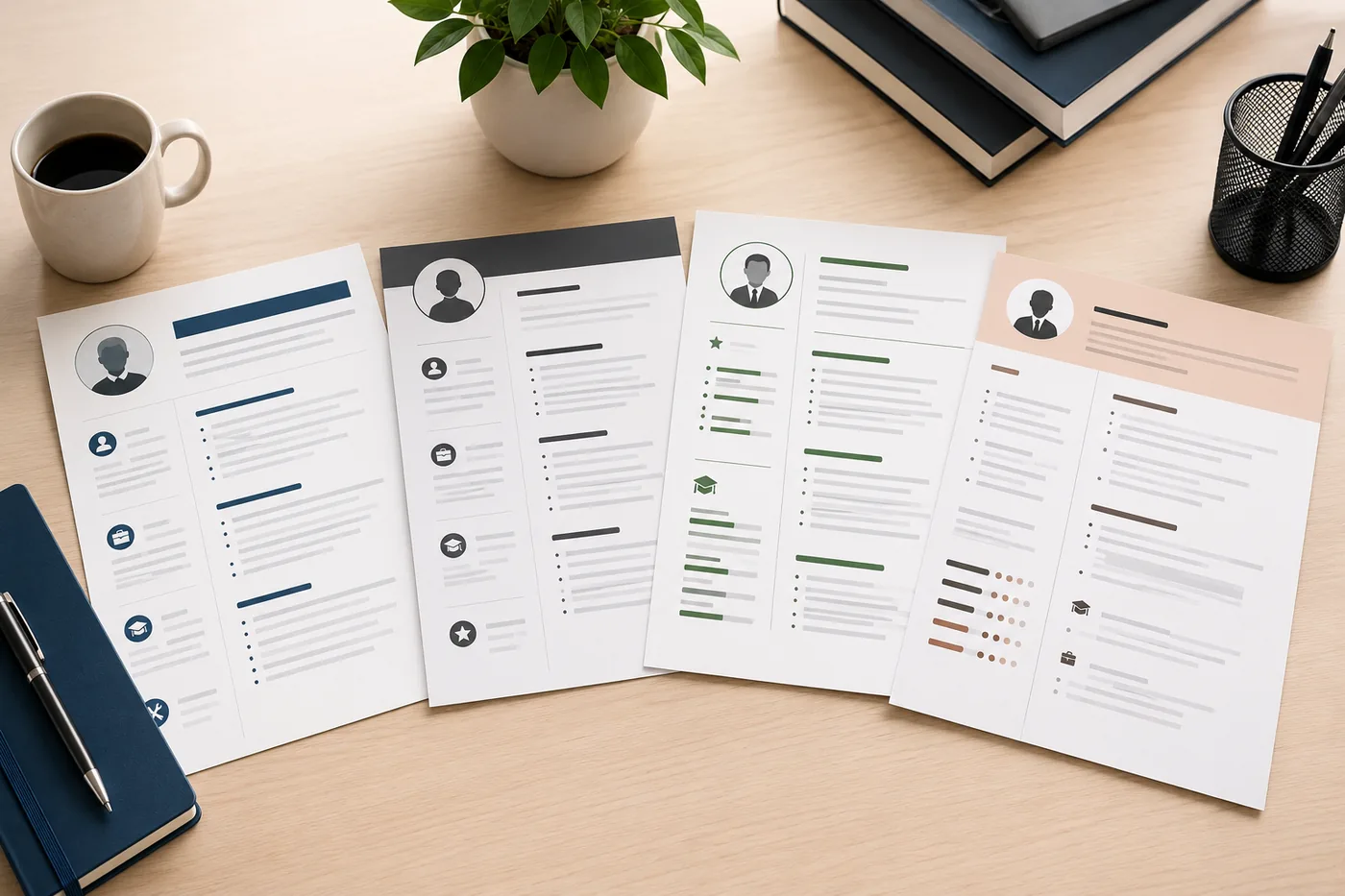
Templates differ in how much space they give a photo and a self-evaluation section, both of which a domestic Chinese employer expects.
Tip: Set your document to A4, not US Letter, before exporting. A Letter-sized file shows wrong margins or crops on local office software, and it is the kind of detail that reads as carelessness before anyone assesses your experience.
Common Mistakes
- A Western-format resume with no photo. Reads as unfamiliarity with the market.
- Omitting personal details that local convention expects. Out of habit from a different market's norms.
- One format for every employer type. Assuming multinationals and domestic employers want the identical format. They frequently differ, worth checking per employer.
- Sending a self-evaluation section that is vague. A brief, concrete version is expected where included.
- Not checking it parses. Not checking the document parses cleanly through automated screening. A real risk given the scale of applicant volume.
- One generic document for everything. Using a single generic document for every application rather than tailoring language to each posting.
Related Guides
Keep building on this with the related guides in this series:
- China Campus Interview Questions - What Is Actually Asked
- China Campus Recruiting - How the Autumn and Spring Cycles Work
- Teaching English in China - A Realistic Guide for Graduates
- The Points System for Foreign Graduate Work Permits in China
- Graduate Salary Expectations in China - A Realistic Guide
- HSK Levels and What They Actually Mean for Employment in China
- Flight Attendant Resume Guide 2026
You can also check your resume's ATS score for free, generate a tailored cover letter, or build a portfolio website in minutes.
Frequently Asked Questions
Do I need a photograph on my resume for China?
Standard for applications to domestic Chinese employers, more optional and variable for multinationals, check the specific employer's expectation where possible.
Should I include my date of birth?
Commonly expected on resumes aimed at domestic employers, less consistently required by multinationals, following local convention is generally the safer default when unsure.
How long should my resume be?
Roughly one to two pages for a graduate applicant, avoid running significantly longer regardless of experience.
Is a self-evaluation section really necessary?
Frequently expected by domestic employers as a brief, specific summary of your strengths and direction, less standard for many multinationals.
Should I have separate versions for domestic and multinational employers?
Generally yes, maintaining a single master record of your experience and generating a market-appropriate version for each is the most efficient approach.
Does automated screening really matter here?
Yes, given the volume of applications at major employers during recruiting seasons, a document that parses cleanly and matches the posting's language is a genuine factor in whether it is ever seen by a person.
What paper size should the document use?
A4, not US Letter. If you're adapting a resume originally built for a US application, check and correct the page size — a Letter-formatted document can show awkward margins or crop unexpectedly on local office software.
What is "自我评价" and how long should it be?
The self-evaluation section — three or four concrete sentences on your core strengths and career direction, written with the same specific, evidence-based standard as the rest of the resume rather than generic self-praise.
Does your formatting survive the parser?
Upload your resume and see what an ATS actually reads back.
Drop your resume here or choose a file
PDF only. Max 2 MB.
We never share your data or use it to train AI models.

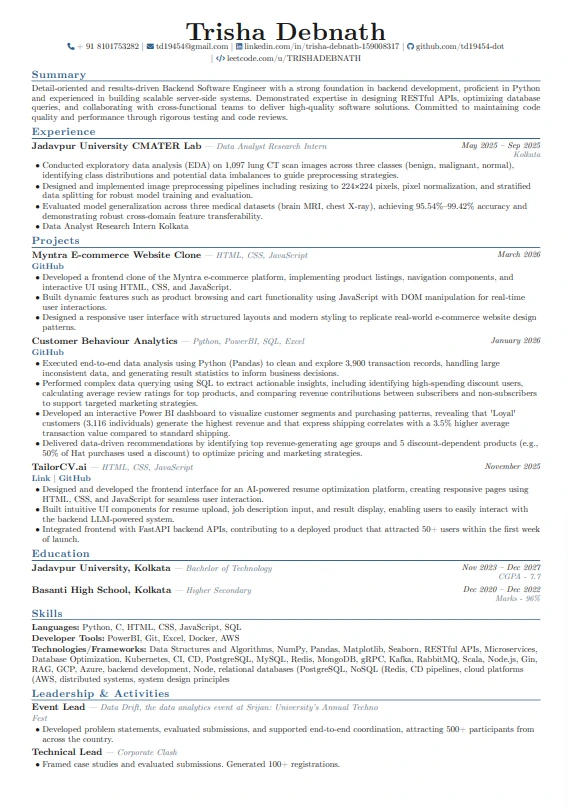
A layout that parses cleanly
Single column, standard headings, no text boxes — the formatting rules in this guide, already applied.
Was this guide useful?
Be the first to rate it.