 SS
SS
Key Takeaways
- Two pages is the UK standard, and a one-page CV can read as thin for a graduate application.
- No photograph, no date of birth, no marital status — the conventions here match the US rather than much of continental Europe.
- Degree classification is expected and frequently filtered on, unlike US practice on GPA.
- The document is screened by software at any employer of size before a human reads it.
- Tailoring to each posting moves your interview rate more than any formatting decision.
The conventions
Length: two pages. This is the clearest difference from US convention, where one page is close to mandatory for a graduate. A UK graduate CV running to one page frequently reads as lacking substance.
No photograph. Standard UK practice, matching US and Canadian convention and differing from parts of Europe and Asia — the country-by-country differences set out the full picture.
No date of birth, marital status or nationality. Not included.
Contact details: name, phone, professional email, city, and a link to a portfolio or professional profile where relevant. No full postal address.
Referees: generally omitted, or noted as available on request. Full contact details for referees are not expected on the document itself.
Degree classification is expected. Predicted or achieved, stated plainly. Unlike US convention where a modest GPA is simply omitted, UK employers frequently filter on classification and its absence is noticed — the classification guide covers how much it actually matters.
A-level or equivalent results are commonly included for graduate scheme applications, particularly at employers who filter on them.
Structure that works
A short personal statement or profile, three or four lines, saying what you do and what you are looking for. Optional and useful when it is specific rather than generic.
Education, with your degree, institution, dates and classification. Include relevant modules or a dissertation title where they support the application.
Work experience, reverse chronological, with outcomes rather than duties. Include part-time and vacation work — a job held through university demonstrates reliability and UK employers read it that way.
Projects, particularly for technical roles, where something that exists and runs outweighs a longer list of coursework.
Skills, specific and honest.
Positions of responsibility, societies and volunteering. Weighted more in UK graduate recruitment than in some markets, because competency frameworks draw evidence from exactly this material.
Interests, briefly, if genuine and specific. A line, not a paragraph.
Writing the content
Outcomes, not responsibilities. "Responsible for social media" says nothing; "grew the society's attendance from 40 to 120 over one term by shifting promotion to course-specific channels" says everything.
Quantify where honest. Numbers, scale, duration, change.
Use the language of the posting. Employers of size screen with software before a person reads, and a document that describes the same work in different vocabulary matches poorly. Tailoring per application is the single change that moves the interview rate most.
Check it parses. Two-column layouts, text in graphics and tables used for alignment frequently extract as scrambled text. Run an ATS check once on your base document.
Export as PDF, named with your own name rather than "CV final v3".
Adapting a CV across multiple international applications
If you are applying to employers in both the UK and other countries simultaneously, maintain a single master document containing your full evidence, then generate a properly adapted version for each specific market, exactly the same master-document approach that works efficiently across any multi-country search, rather than attempting to write a single universal document that awkwardly compromises between genuinely different conventions.
The specific differences between UK and other markets are small individually and meaningful in combination, length, the presence or absence of a photograph, whether classification is expected, referee conventions, getting several of these wrong simultaneously reads as unfamiliarity with the specific market rather than as a single minor oversight.
Do's and Don'ts
Do
- Keep it to one page
- Put a 2:1 or First where it is immediately visible
- Lead bullets with outcomes and numbers
- Tailor the wording to each posting
- Check it parses cleanly before applying anywhere
Don't
- Run to two pages as a student
- Bury your classification below the fold
- List duties copied from the job description
- Send one identical CV everywhere
- Add a photo, date of birth or marital status
Your resume after optimization
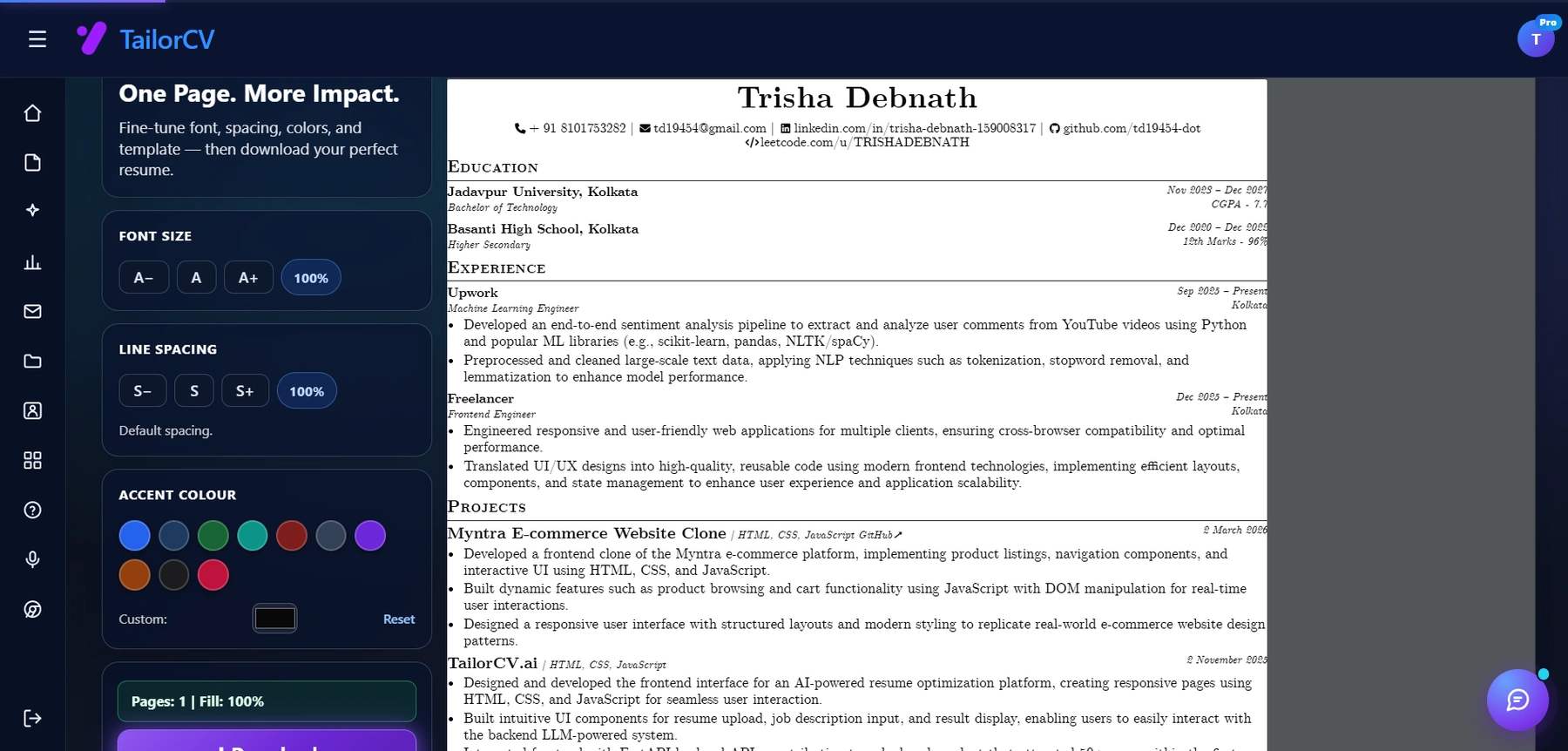
Font size, spacing and template controls with a live page counter — which is what keeps a UK graduate CV to the single page convention expects.
Scenarios: what to cut
Scenario 1: You have a placement year and three part-time jobs
Keep the placement in full, compress the part-time roles into one line each, and cut anything that does not show a transferable outcome.
Scenario 2: You have no work experience at all
Lead with a substantial project or society role described with outcomes. A committee position run properly reads better than a padded list of modules.
Scenario 3: You are applying to both tech and consulting
Two versions, not one hybrid. The skills section and the ordering change; the underlying content does not.
Tip: Keep it to one page and lead with a 2:1 or First if you have one. UK graduate screening still filters heavily on classification, and burying it below the fold works against you.
Common Mistakes
- Submitting a one-page US-style resume. Reads as thin against a two-page norm.
- Including a photograph. Not UK convention.
- Omitting your classification. Frequently filtered on, and its absence is noticed.
- Listing duties instead of outcomes. Listing duties instead of outcomes the most common weakness in graduate CVs.
- Sending the same document everywhere. Sending the same document everywhere the screen compares against a specific posting.
- Not checking it parses. Not checking it parses a document that extracts badly fails silently in every application.
Ordering sections for maximum impact
Place your strongest, most relevant evidence as early in the document as reasonably possible, given that reviewers often spend very limited time on an initial scan, a strong project or piece of work experience buried on the second page after a lengthy education section may never actually be seen properly.
Consider whether education or experience should lead, based on your own specific strengths, a candidate with a strong, directly relevant internship may benefit from leading with experience, while a candidate whose strongest evidence is academic or project-based may benefit from a more traditional education-first ordering, there is no single universally correct sequence, worth choosing deliberately based on what best represents you.
Related Guides
Keep building on this with the related guides in this series:
- UK Accountancy Graduate Routes - Qualifications and Employers
- The UK Civil Service Fast Stream - What the Process Involves
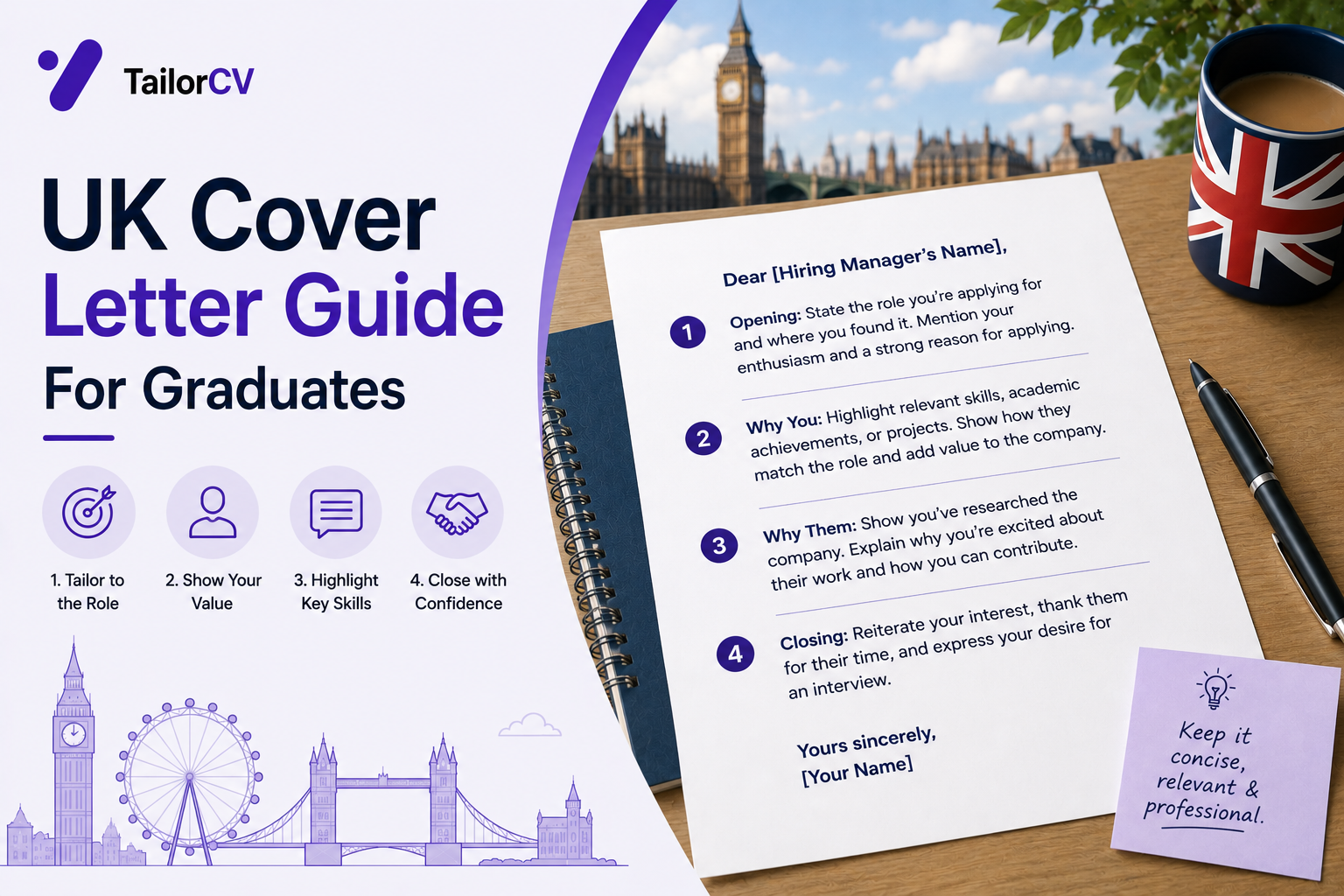
- UK Cover Letters for Graduates - When They Matter and What to Write
- Degree Classification and UK Employers - How Much It Actually Matters
- Understanding Your First UK Payslip and Tax
- UK Graduate Salary Expectations - What to Actually Expect
You can also check your resume's ATS score for free, generate a tailored cover letter, or build a portfolio website in minutes.
Frequently Asked Questions
Should my CV be one page or two?
Two is the UK standard for a graduate. One page is generally too short and three is too long unless you have substantial relevant experience.
Do I include my A-level results?
Commonly yes for graduate schemes, particularly at employers who filter on them. Less necessary once you have work experience.
Should I include a personal statement?
Optional. A specific three or four line profile helps; a generic one adds nothing and uses space.
What about a cover letter?
Frequently expected in the UK, and covered in the cover letter guide.
Do I list referees?
Generally not on the CV itself. "References available on request" or simply omitting the section is standard.
Is a creative CV design a good idea?
Rarely. Design frequently breaks the parsing that determines whether a human ever sees it, and UK graduate recruitment is largely conventional in format expectations.
Does your formatting survive the parser?
Upload your resume and see what an ATS actually reads back.
Drop your resume here or choose a file
PDF only. Max 2 MB.
We never share your data or use it to train AI models.

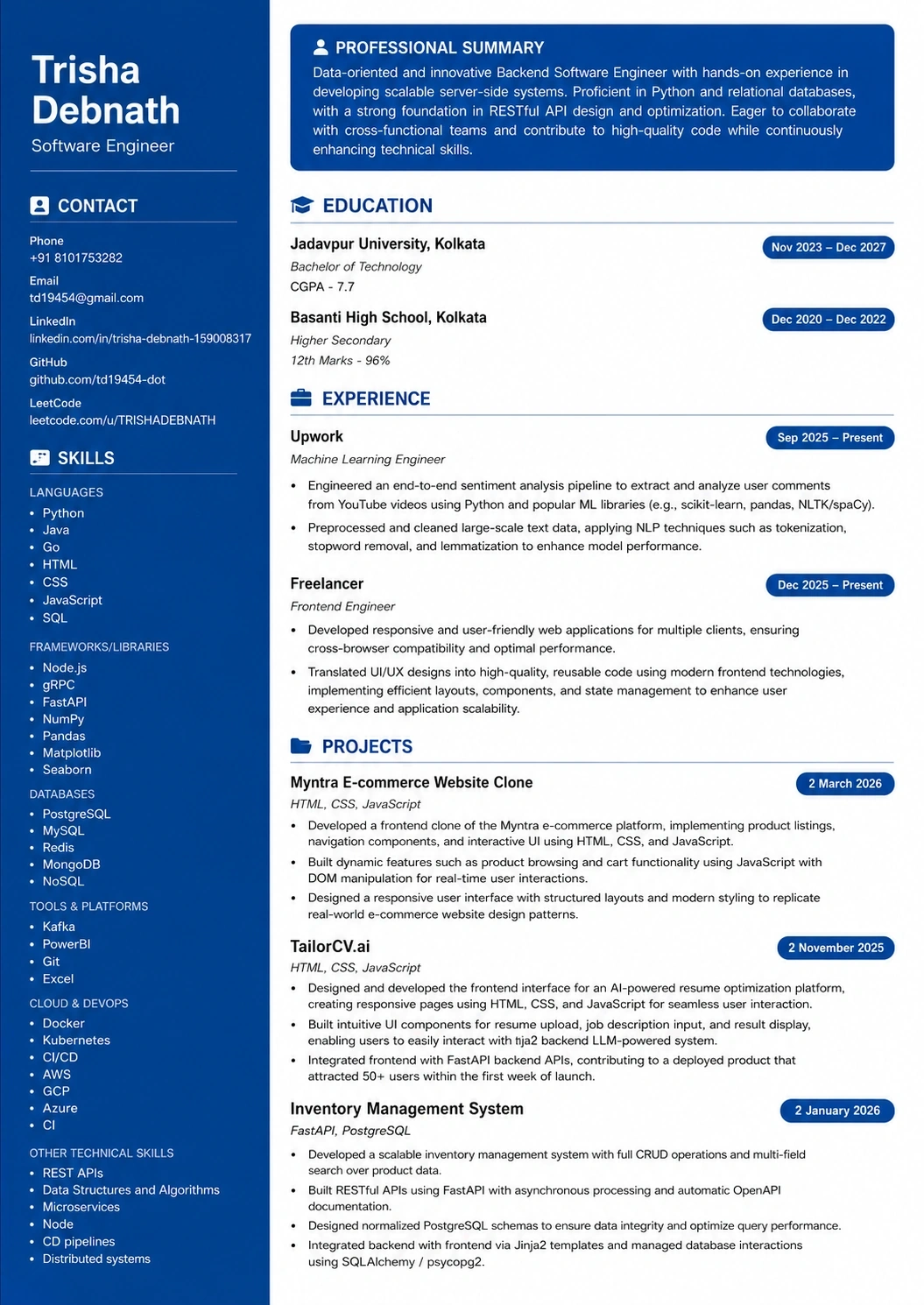
A layout that parses cleanly
Single column, standard headings, no text boxes — the formatting rules in this guide, already applied.
Was this guide useful?
Be the first to rate it.