 TD
TD
Key Takeaways
- A placement year is the single strongest CV addition available to most UK undergraduates, and it frequently converts into a graduate offer.
- Applications open around a year in advance, so second-year students should be applying in the autumn.
- Placement students who convert are hired without competing in the graduate scheme round at all.
- Summer internships are shorter and more competitive but follow the same conversion logic.
- Treat the placement as a year-long interview, because that is precisely what it is.
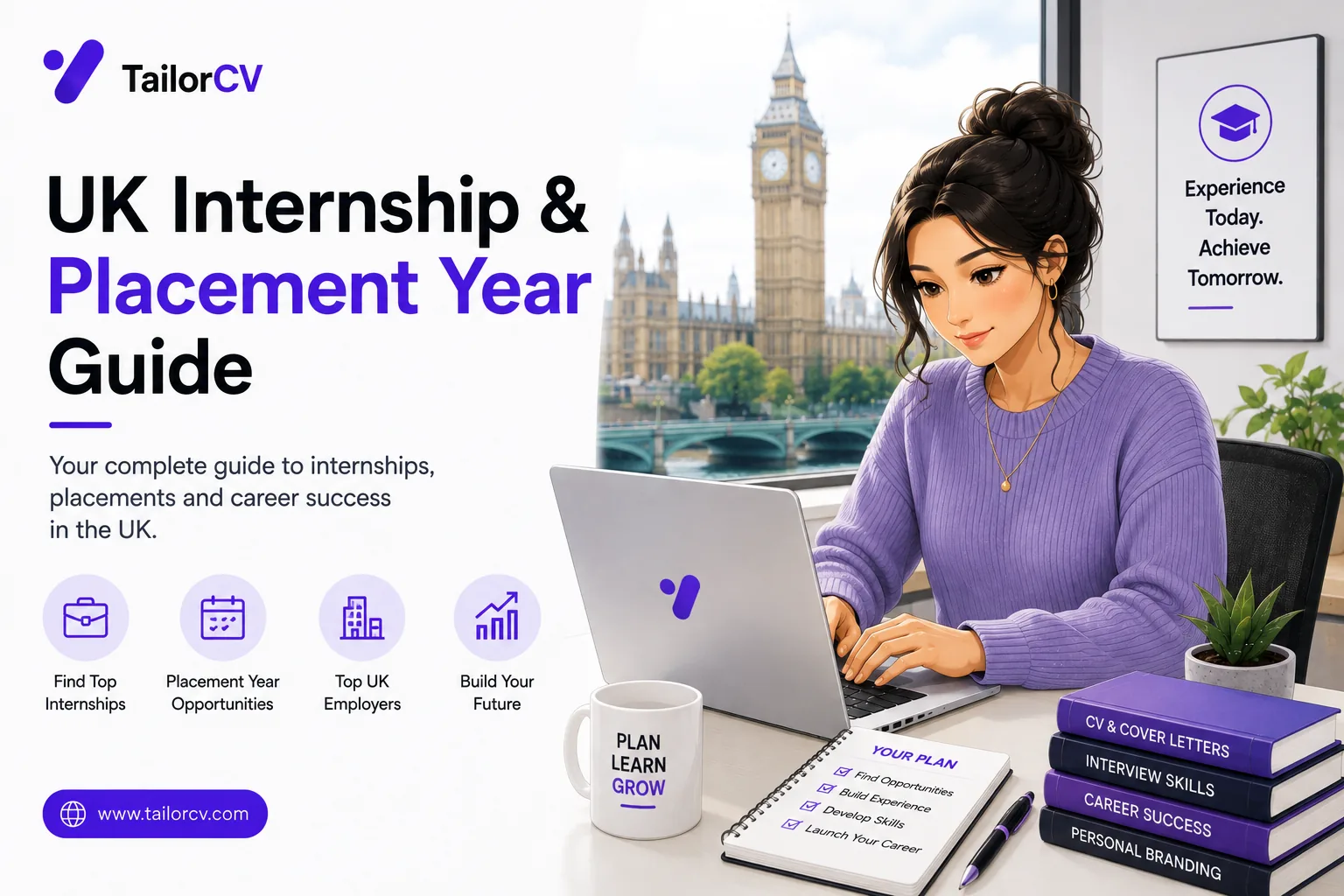
The UK is unusual in offering the sandwich degree — a full year in industry between second and final year. Students who do one graduate with twelve months of real experience, a professional reference, and very often a graduate offer already in hand.
The catch is timing. Applications open around a year before the placement starts, which means the decision has to be made in second year, before most students have thought about careers at all.
This guide covers finding one, getting one, and converting it.
Before applying, check your CV parses — the free ATS score checker.
Why a placement year is worth so much
It converts. A large share of placement students receive graduate offers from their placement employer. That means entering final year with a job secured while your peers are grinding through assessment centres.
It removes the experience paradox. Graduate employers want experience; you cannot get experience without a job. A placement year resolves it entirely.
It clarifies what you want. Twelve months tells you whether you actually like the work — which is worth knowing before you commit a career to it.
Your final year improves. Students frequently report better final-year results after a placement, because the work gave context to the theory.
You are paid. Placement salaries are usually reasonable, and many universities reduce tuition for the placement year.
It is a reference. A twelve-month professional reference is worth considerably more than an academic one.
The timing
Second year, autumn. Applications open. Large employers recruit early and many operate rolling selection, filling as they go.
Second year, winter to spring. Tests, interviews, assessment centres, offers.
Between second and final year. The placement itself, typically 9-12 months.
During the placement. Conversion conversations, usually toward the end.
Final year. Either you have an offer, or you apply to graduate schemes in the autumn with a much stronger CV — see the UK graduate scheme guide.
The trap: thinking about placements in spring of second year, when many programmes have already closed. If you are in first or second year and reading this in autumn, apply now.
Where to find them
Your university placement office. The most underused resource on campus. They hold employer relationships, previous placement listings, and often exclusive opportunities. They also review applications for free.
Large employer schemes. Most companies running graduate schemes also run placement years, recruited through the same portals.
Sector-specific programmes. Engineering, finance, pharmaceuticals and technology all have well-established placement pipelines.
Public sector. Civil Service and NHS placement and internship schemes exist and attract far fewer applicants — see the UK Civil Service application guide and the NHS jobs guide.
Smaller companies directly. Less structured and rarely advertised, but a well-written speculative approach works better than students expect. Many SMEs have never hosted a placement student and are open to it — see networking messages for referrals.
The application process
Broadly the same as a graduate scheme, compressed:
- Online application with competency questions
- Aptitude tests — numerical, verbal, situational judgement. Practisable, and practice measurably improves scores
- Video interview, often asynchronous
- Assessment centre — group exercise, presentation, interview
With no work experience yet, your evidence comes from academic projects, societies, part-time work and volunteering. That is expected — see UK part-time student jobs for writing those up properly.
Answer in STAR with emphasis on your own actions, and use "I" rather than "we" — see UK interview tips.
Apply to a realistic number properly rather than many generically. Written answers are scored individually, so recycled applications fail.
Converting the placement
Treat it as a year-long interview, because it is.
Ask in the first weeks: "What would a successful placement look like from your side, and how do graduate offers work here?" Very few students ask, and the answer is the actual criteria — with twelve months to meet them.
Reliability over brilliance. Managers assess whether they want you permanently. Delivering consistently, communicating progress, and asking when stuck matter more than occasional impressive output.
Say when you are stuck rather than going quiet. Silence is the single most damaging pattern.
Finish things, including documentation and handover.
Meet people beyond your team. Conversion decisions involve more people than you expect.
Ask for feedback at the midpoint, while you can still act on it.
Keep a record of what you built and what it achieved — you need it for the conversion conversation, your CV, and every interview afterwards.
The same behaviours apply as in the internship to PPO conversion guide.
Common Mistakes
Thinking about placements in spring of second year. Applications open the previous autumn and many fill on a rolling basis, so spring is usually too late for the larger schemes.
Not using the university placement office. It holds employer relationships and exclusive listings, reviews applications free, and most students never visit it.
Applying to many programmes generically. Written answers are scored individually, so recycled applications fail regardless of how many you send.
Skipping aptitude test practice. They are learnable formats, and unprepared candidates fail at this stage despite being strong otherwise.
Never asking about conversion criteria. Asking in the first weeks gives you twelve months to meet them; asking at the end gives you nothing.
Going quiet when stuck during the placement. It is the most damaging pattern an early-career employee can establish.
Not recording achievements during the year. Reconstructing twelve months in final year produces a far weaker CV and weaker interview answers.
Ignoring smaller employers. Many SMEs have never hosted a placement student and respond well to a specific speculative approach.
Frequently Asked Questions
What is a placement year?
A year working in industry between second and final year of an undergraduate degree, usually 9-12 months and paid. Also called a sandwich year or industrial placement.
When do applications open?
Around a year in advance — typically autumn of second year, with many programmes filling on a rolling basis through winter.
Do placements lead to graduate jobs?
Frequently. A large share of placement students receive graduate offers from their placement employer, which means securing a job before final year begins.
Is it worth extending my degree by a year?
For most students yes — twelve months of experience, a professional reference, likely a graduate offer, and often improved final-year results. Many universities also reduce fees for the placement year.
What if I have no experience to write about?
Academic projects, societies, part-time work and volunteering are all valid evidence and are exactly what assessors expect at this stage.
Can international students do placements?
Generally yes, since a placement forming part of your course sits within Student visa conditions — confirm the specifics with your university and check UK right to work explained.
What if I miss the placement deadlines?
Summer internships follow a similar but later cycle, and smaller employers recruit on normal timelines year-round.
Check your CV before applying. Check your ATS score free.
Make This Practical
Apply in autumn of second year, not spring. Programmes open around a year ahead and many fill on a rolling basis, so the single biggest factor in whether you get a placement is when you start.
Then use the resource you are already paying for. Your university placement office holds employer relationships and exclusive listings, and will review your application for free — most students never walk in.
Finally, treat the placement itself as the year-long interview it is. Ask in the first weeks what success looks like and how graduate offers work, communicate when you are stuck rather than going quiet, finish what you start including the documentation, and keep a written record of what you achieved so both the conversion conversation and your final-year CV write themselves.
Find out where a fresher resume stands
Score yours against a real posting - no account, no cost.
Drop your resume here or choose a file
PDF only. Max 2 MB.
We never share your data or use it to train AI models.

Was this guide useful?
Be the first to rate it.