 SS
SS

Key Takeaways
- The Skilled Worker route requires an employer holding a sponsor licence, a role at a qualifying skill level, and a salary meeting the applicable threshold.
- The register of licensed sponsors is public, which means you can check before applying whether an employer could ever keep you.
- Holding a licence and being willing to sponsor are different things, and the second is worth asking about directly.
- New entrant provisions can lower the salary threshold for recent graduates, which materially widens what is available to you.
- Time on this route can count toward settlement, unlike the Graduate route.
The three requirements
A licensed sponsor. The employer must hold a valid sponsor licence and be willing to assign you a certificate of sponsorship. Without a licence they cannot employ you on this route regardless of how much they want to.
A qualifying role. The job must sit at or above the required skill level, assessed against defined occupation codes rather than against the job title the employer happens to use.
A salary meeting the threshold. There is a general threshold and an occupation-specific going rate, and the applicable figure is generally whichever is higher. Thresholds have been revised upward in recent years, which is why relying on remembered figures is unsafe.
English language ability must also be demonstrated, which is usually straightforward for someone who completed a UK degree.
The new entrant provisions
Worth knowing because it changes the arithmetic considerably.
Reduced salary thresholds can apply to those classed as new entrants, which includes recent graduates and people early in a career, subject to conditions. Where they apply, roles that would otherwise be out of reach become viable.
The reduction is time-limited. New entrant status does not last indefinitely, and the salary needs to rise to the standard threshold when you extend beyond that period. Understanding this at the point you accept a role prevents an unpleasant discovery at extension.
Ask the employer whether they are applying new entrant rates, since it affects both what they can offer and what happens at renewal.
Checking employers before you apply
- The sponsor register is public and searchable. This is the single most useful practical fact in this article. Before spending time on an application, you can check whether the employer holds a licence at all.
- Being on the register is necessary and not sufficient. A licence means they can sponsor; it does not mean they will for your role. Many licensed employers sponsor selectively.
- So ask directly, early. "Does this role come with sponsorship under the Skilled Worker route?" is a normal question and it saves months. The same principle applies everywhere — employer eligibility is knowable in advance and filtering on it early is what prevents a wasted season.
- Smaller employers are less likely to hold a licence. Obtaining one takes time and administrative effort, and many small companies have never needed to. Some will apply for one for a candidate they want; most will not.
- Larger employers, universities, the NHS and the public sector are more likely to hold licences and to have established processes — which is one reason the NHS graduate schemes and university roles are worth looking at if sponsorship matters to you.
Switching from the Graduate route
You can switch from inside the UK, without leaving, once you have a qualifying job with a licensed sponsor.
Timing matters. Apply before your Graduate permission expires, and allow for processing.
This is the transition the Graduate route exists to enable, and the graduates who manage it well are the ones who targeted sponsorable roles from early in the period rather than treating the search as something to begin later.
Time on the Skilled Worker route can count toward settlement, which is the substantive difference from the Graduate route and the reason the switch matters beyond simply continuing to work.
Practical planning
Target roles that clear the thresholds rather than assuming any graduate job converts. A role below the skill level will not qualify however well you perform in it.
Check the occupation code, not the job title. Employers use titles inconsistently and the code determines the requirement.
Understand what happens if you change jobs. Moving employers generally requires a new certificate of sponsorship from the new employer, and there are rules about how and when this can happen.
Keep your documentation organised — the same record-keeping habit that pays off across any international career.
Verify current thresholds and requirements officially. These have changed repeatedly and the Home Office guidance is the authority, not any summary.
What the salary threshold actually protects against, and why it moves
The threshold exists as a policy mechanism to ensure sponsored roles genuinely meet a substantive skill and compensation bar, rather than being used to bring in labour at rates below what the role would command in the open market, understanding the underlying logic helps explain why the specific figures are reviewed and adjusted periodically rather than fixed permanently.
Because thresholds have moved upward over recent years, a role that might have qualified under an older, lower figure may no longer clear the bar under current requirements, this is precisely why relying on a remembered figure from even a year or two ago is genuinely unsafe, always verify the current specific threshold against official guidance before making a decision that depends on it.
Occupation-specific going rates, where they exceed the general threshold, reflect the specific market rate research conducted for that occupation, worth checking both the general figure and the specific occupational rate for your target role, since the higher of the two generally applies.
Scenarios: checking before you invest
Scenario 1: An employer says they will 'look into sponsorship'
Check the public register of licensed sponsors yourself. An employer without a licence cannot sponsor you regardless of intent.
Scenario 2: You have an offer below the salary threshold
Thresholds vary by occupation code and there are reduced rates for new entrants. Check the specific code before assuming it fails.
Scenario 3: You are on the Graduate Route already
You can switch to Skilled Worker from inside the UK once you have a sponsored offer, which is usually simpler than leaving and reapplying.
Tip: Check the employer holds a valid sponsor licence on the Home Office register before investing in an application. The register is public, and an employer without one cannot sponsor you regardless of intent.
Common Mistakes
- Not checking the sponsor register. Public, searchable, and it determines whether an employer can keep you.
- Assuming a licence means willingness. Many licensed employers sponsor selectively.
- Taking a role below the skill threshold. It will not convert regardless of performance.
- Relying on remembered salary figures. Thresholds have been revised repeatedly.
- Not asking about new entrant rates. They materially change what is viable and they are time-limited.
- Leaving the switch too late. Apply before Graduate permission expires and allow for processing.
Building your case with a specific target employer
Once you have identified an employer holding a sponsor licence who is willing to consider sponsoring you, work with them directly to confirm the specific occupation code and salary that would apply to your role, this is a collaborative conversation, employers experienced with this process generally understand exactly what information you need and why.
If the role as initially described does not clearly meet the requirements, but the underlying work genuinely would, raise this directly and constructively, asking whether the job description or title could be adjusted to accurately reflect duties that do qualify, is a reasonable request rather than an unusual one, provided the underlying substance of the role genuinely supports it.
Related Guides
Keep building on this with the related guides in this series:
- The UK Graduate Route - What It Gives You and What Comes Next
- UK Accountancy Graduate Routes - Qualifications and Employers
- The UK Civil Service Fast Stream - What the Process Involves
- UK Cover Letters for Graduates - When They Matter and What to Write
- The UK CV Format for Students and Graduates
- Degree Classification and UK Employers - How Much It Actually Matters
You can also check your resume's ATS score for free, generate a tailored cover letter, or build a portfolio website in minutes.
Frequently Asked Questions
How do I know if an employer can sponsor me?
Check the public register of licensed sponsors, then ask the employer directly whether they will sponsor for this specific role.
Does the Graduate route automatically lead to this?
No. You must find a qualifying job with a licensed sponsor and switch before your Graduate permission expires.
What is the salary threshold?
There is a general threshold and an occupation-specific going rate, with the higher generally applying, and reduced rates for new entrants in some cases. Figures have changed repeatedly — check current official guidance.
Can I change employers on this route?
Generally yes, with a new certificate of sponsorship from the new employer and the applicable process followed.
Does this route lead to settlement?
Time on it can count toward settlement, subject to the requirements in force, which is the substantive advantage over the Graduate route.
What if I cannot find a sponsoring employer?
Widen the search toward larger employers, universities, healthcare and the public sector, which are more likely to hold licences — and start earlier, since the constraint is finding the right employer rather than being good enough.
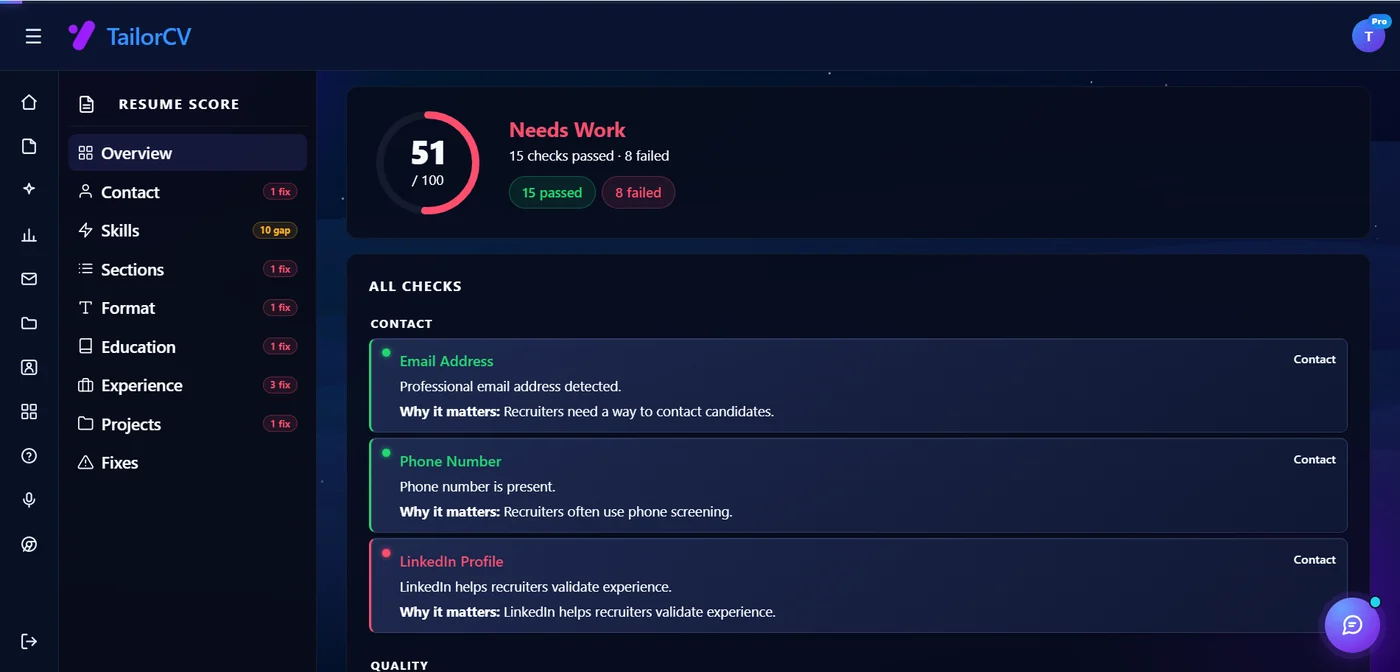
What is your resume scoring right now?
Scan it against a job description and get your ATS match score in about a minute.
Drop your resume here or choose a file
PDF only. Max 2 MB.
We never share your data or use it to train AI models.
Was this guide useful?
Be the first to rate it.