 SS
SS
Key Takeaways
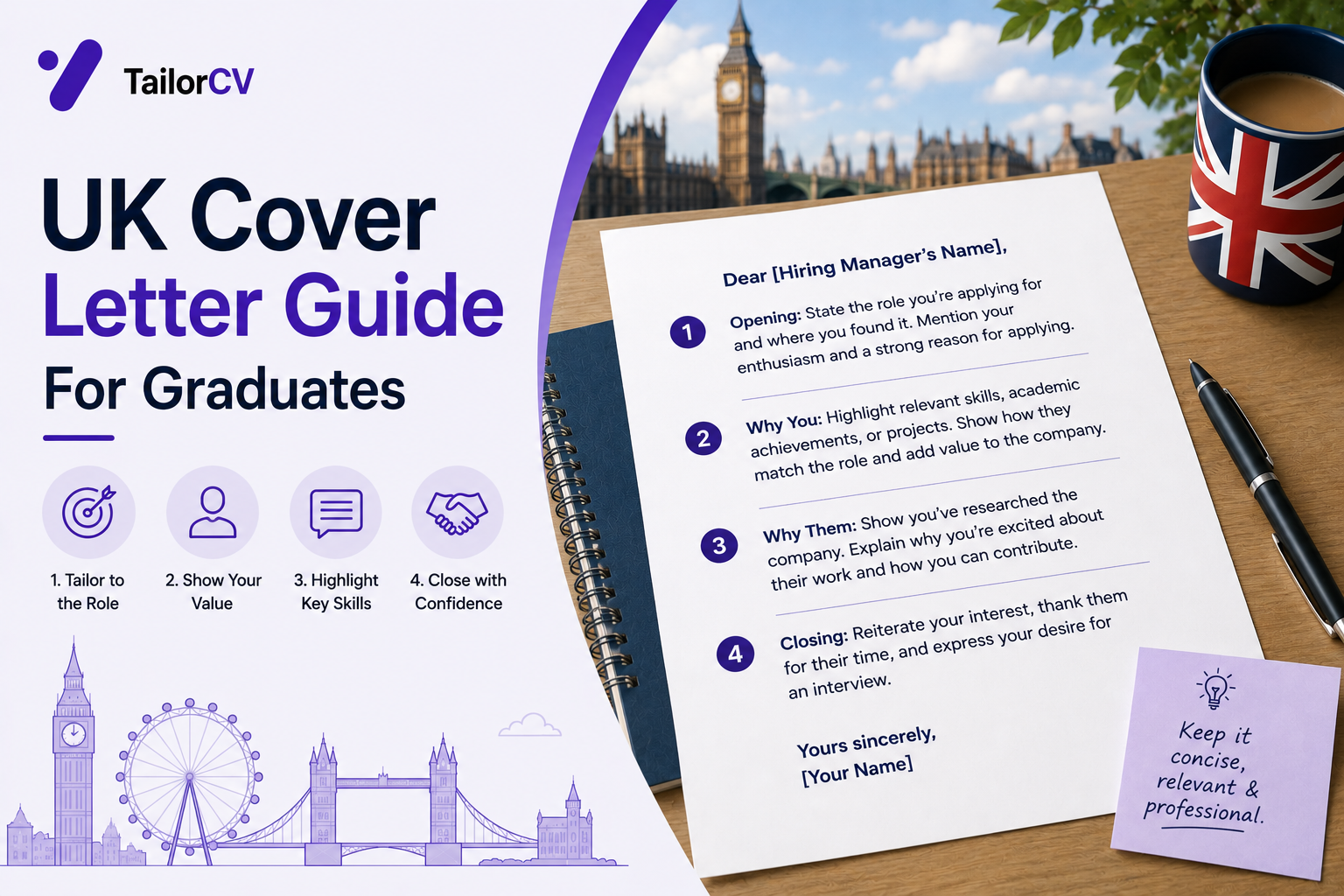
- Cover letters are expected more often in UK graduate hiring than in US campus recruiting, and frequently read.
- One page, three or four short paragraphs, addressed to a named person where you can find one.
- The paragraph explaining why this employer is the one that decides the outcome, and the one candidates most often recycle.
- For large graduate schemes, the application form's written questions serve the same purpose and deserve the same effort.
- A generic letter is worse than no letter, because it demonstrates mass application.
When one is expected
Smaller and mid-sized employers. A person reads applications and a specific letter genuinely changes the outcome.
Public sector, charities and academia. Frequently required, frequently read carefully.
Speculative and direct applications. Essential, since there is no posting to structure your case around.
Applications through a referral. A short note giving context for the person who referred you.
Large graduate schemes. Frequently no separate letter is requested, because the application form's written questions do the same job — and those questions are read and scored, so the effort simply moves rather than disappearing.
When genuinely unsure, a short specific letter is the safer default in the UK, provided it is specific. A generic one is worse than none.
Structure that works
One page. Three or four short paragraphs. Longer is not better and is frequently skimmed.
Address a named person where you can find one. A wrong name is worse than "Dear Sir or Madam", so only use one you have actually verified.
Open with something concrete, not with an announcement that you are applying. The reader knows why the letter exists.
Second paragraph: your strongest evidence, with the context a CV cannot hold. What you did, what was hard, what changed.
Third paragraph: why this employer. The paragraph that decides it, covered below.
Close plainly. Availability, thanks, nothing elaborate.
The paragraph that decides it
What does not work: the employer's own marketing language, "industry leader", "excellent training", "strong reputation". All true of every competitor, which is exactly why they carry no information.
What works:
A specific business line, product or team and why it interests you.
Something recent — a result, an announcement, a change in direction — and what you make of it.
A conversation. "I spoke with two analysts from your risk team at the careers fair in October, and what struck me was..." This is the strongest version and it requires having done something, which is why attending events feeds directly into application quality.
A genuine contrast. Why this firm rather than the obvious alternative.
The test: if a competitor's name could be substituted into your paragraph without anything else changing, it has failed.
And write it fresh every time. Everything else in the letter can be reused; this paragraph cannot. It is the entire reason the letter exists.
Practical points
Match the CV. Same font, same header, consistent dates. They are read together — the CV conventions apply to both.
Do not restate the CV in prose. The letter's job is to add what the CV cannot hold, not to summarise it.
Mention your availability if it is relevant.
Do not raise visa status unprompted. If sponsorship is relevant, it belongs in a conversation rather than in an opening letter — the Graduate route means many graduates need no sponsorship initially anyway.
Export as PDF, named with your own name.
Proofread properly. A typo in a one-page document that is explicitly a writing sample is costly.
Common structural errors beyond the content itself
Using an inconsistent format from your CV, different fonts, header styles or date formats between the two documents reads as careless, since they are generally reviewed together as a single application package.
Ending with an overly casual or, conversely, an excessively formal sign-off relative to the rest of the letter's tone, aim for consistency in register throughout the entire document, a measured, professional tone maintained end to end reads considerably better than a mismatch between an informal body and a stiffly formal closing, or the reverse.
Your resume after optimization
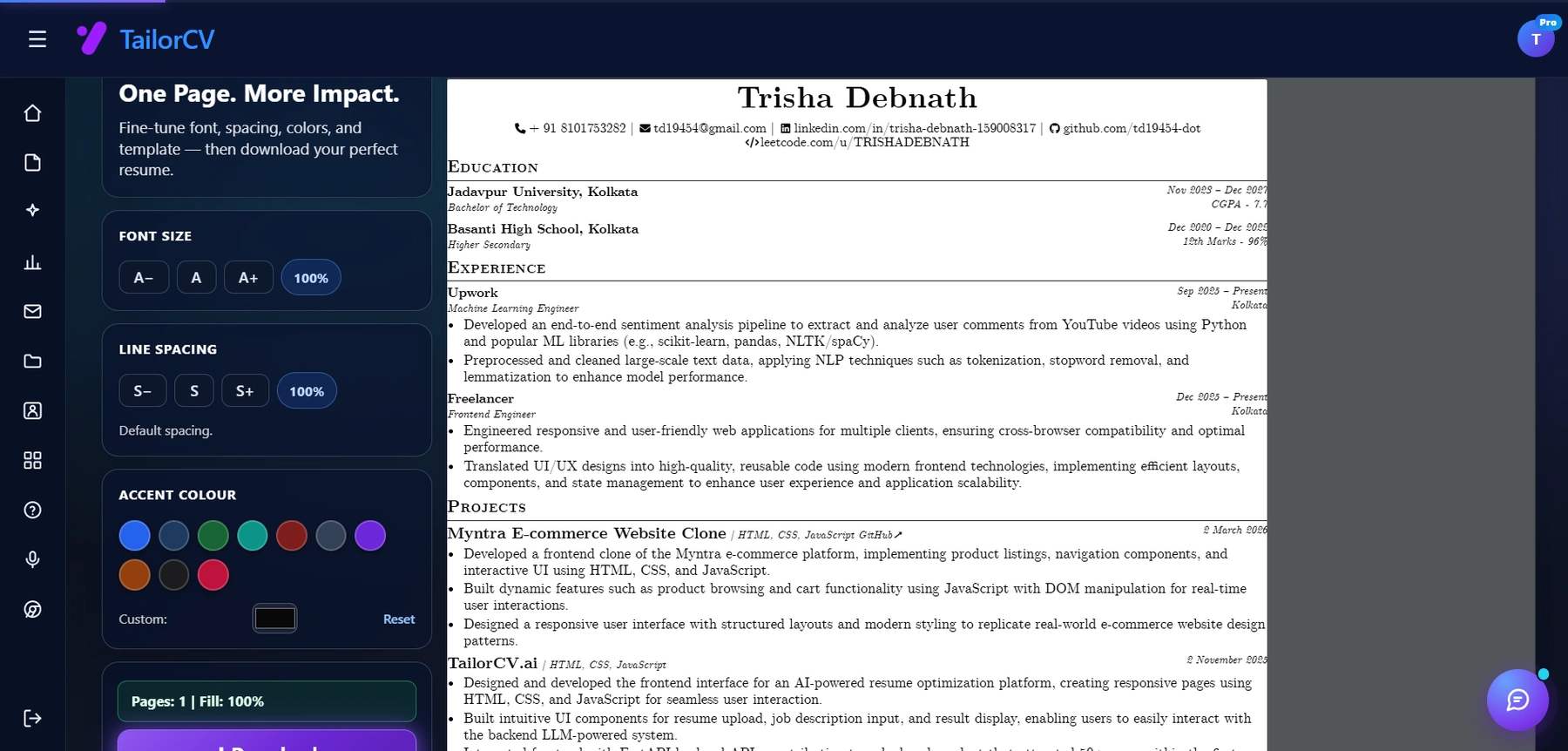
Keeping the letter and CV visually consistent matters when a reader opens both together.
Where the letter actually gets read
Not every UK application reads a cover letter, and knowing which is which saves a great deal of wasted effort.
| Application type | Does the letter get read? | What to do |
|---|---|---|
| Large scheme with an online form | Rarely as a separate document | Treat the form's written questions as the real letter |
| Smaller employer or direct email | Almost always | Write a genuine, specific one page |
| Recruitment agency | Sometimes, skimmed | Keep it short and lead with role fit |
| Speculative approach | It is the entire application | Make the specific reason for this employer the centre of it |
The written questions on a scheme's application form are scored against defined criteria, usually with a word limit. That word limit is the tell: a question with a 250-word box is being marked, not skimmed.
Do's and Don'ts
Do
- Treat the form's written questions as the graded item
- Use the full word count when one is given
- Name something specific and recent about the employer
- Mirror the language of the advert
- Keep a separate letter to one page
Don't
- Attach a generic letter and assume it is read
- Leave half a word count unused
- Praise the employer in terms that fit any competitor
- Restate your CV in prose
- Send the same letter to every scheme
Scenarios: three applications, three approaches
Scenario 1: A large scheme with a 250-word question box
That box is the cover letter and it is scored. Use the full count, answer the question asked, and do not attach a separate letter hoping it gets read.
Scenario 2: A 40-person company advertising by email
A real one-page letter changes the outcome here, because a person reads the whole application. Name something specific about what they do.
Scenario 3: A speculative approach with no advertised role
The letter is the entire application. Lead with what you noticed about them and what you could contribute, not with your availability.
Tip: For a large scheme, treat the application form's written questions as the real cover letter. That is what gets scored — a separate attached letter frequently is not read at all.
Common Mistakes
- A generic "why this employer" paragraph. A generic "why this employer" paragraph the most common cause of early rejection.
- Restating the CV. Wastes the one chance to add something.
- Running to two pages. One page, and shorter is usually better.
- Guessing a name. Guessing a name a wrong name is worse than a general salutation.
- Neglecting the written questions. Neglecting the form's written questions for large schemes. They are the letter, and they are scored.
- Reusing the letter unchanged. Reusing the letter unchanged the evidence can be reused; the reasoning cannot.
Adjusting length and depth for different application types
A speculative application to an employer with no advertised vacancy generally warrants a somewhat longer, more thorough letter than an application against a specific stated posting, since you are doing more work to explain why they should consider you at all, absent a specific role description to respond to directly.
An application through a referral can generally be somewhat shorter, since the referral itself has already done some of the work of establishing your credibility, the letter's job here shifts toward giving the reader useful context for a name they will recognise, rather than establishing your case from nothing.
Related Guides
Keep building on this with the related guides in this series:
- Canadian Cover Letters - When They Matter and How to Write One
- UK Accountancy Graduate Routes - Qualifications and Employers
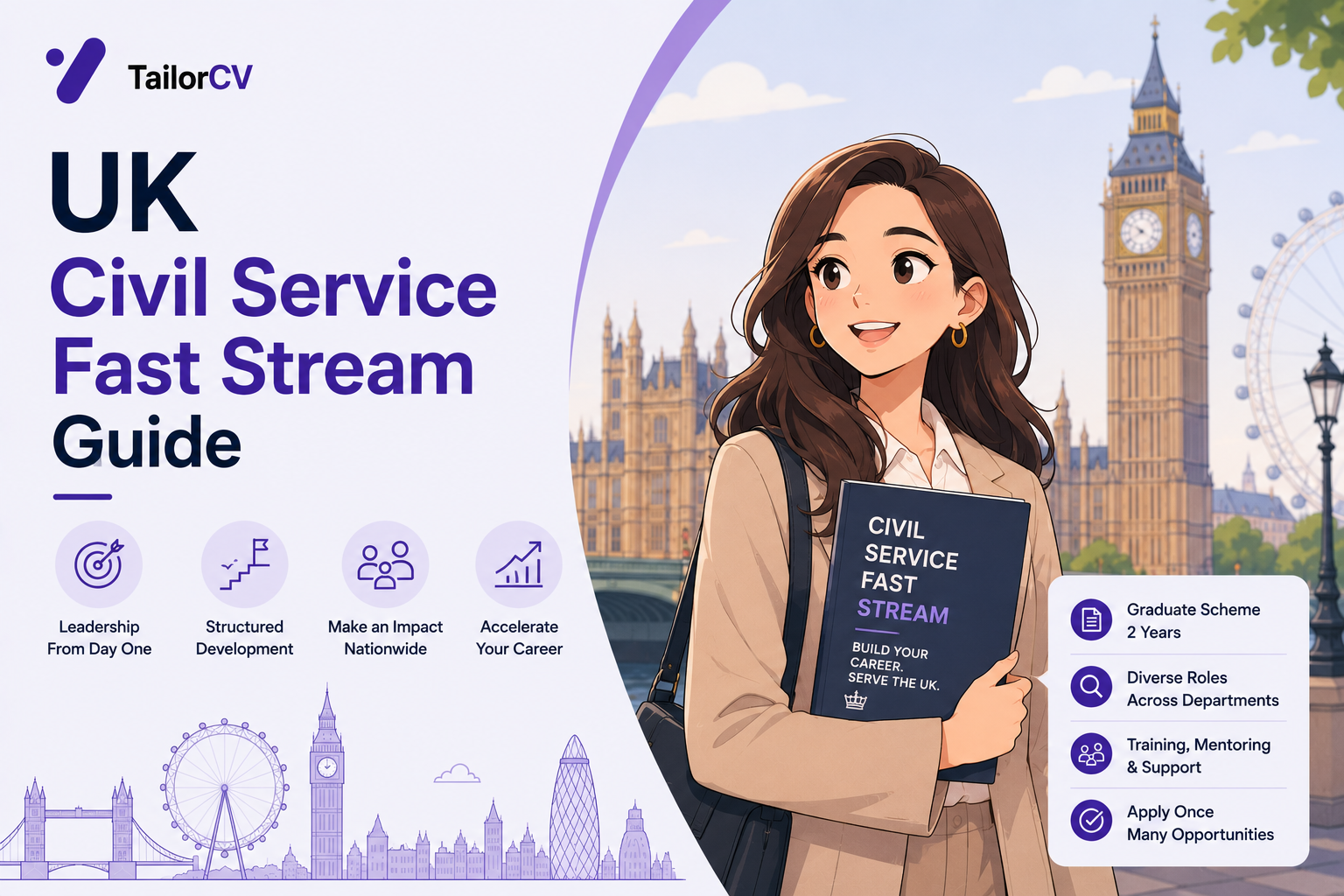
- The UK Civil Service Fast Stream - What the Process Involves
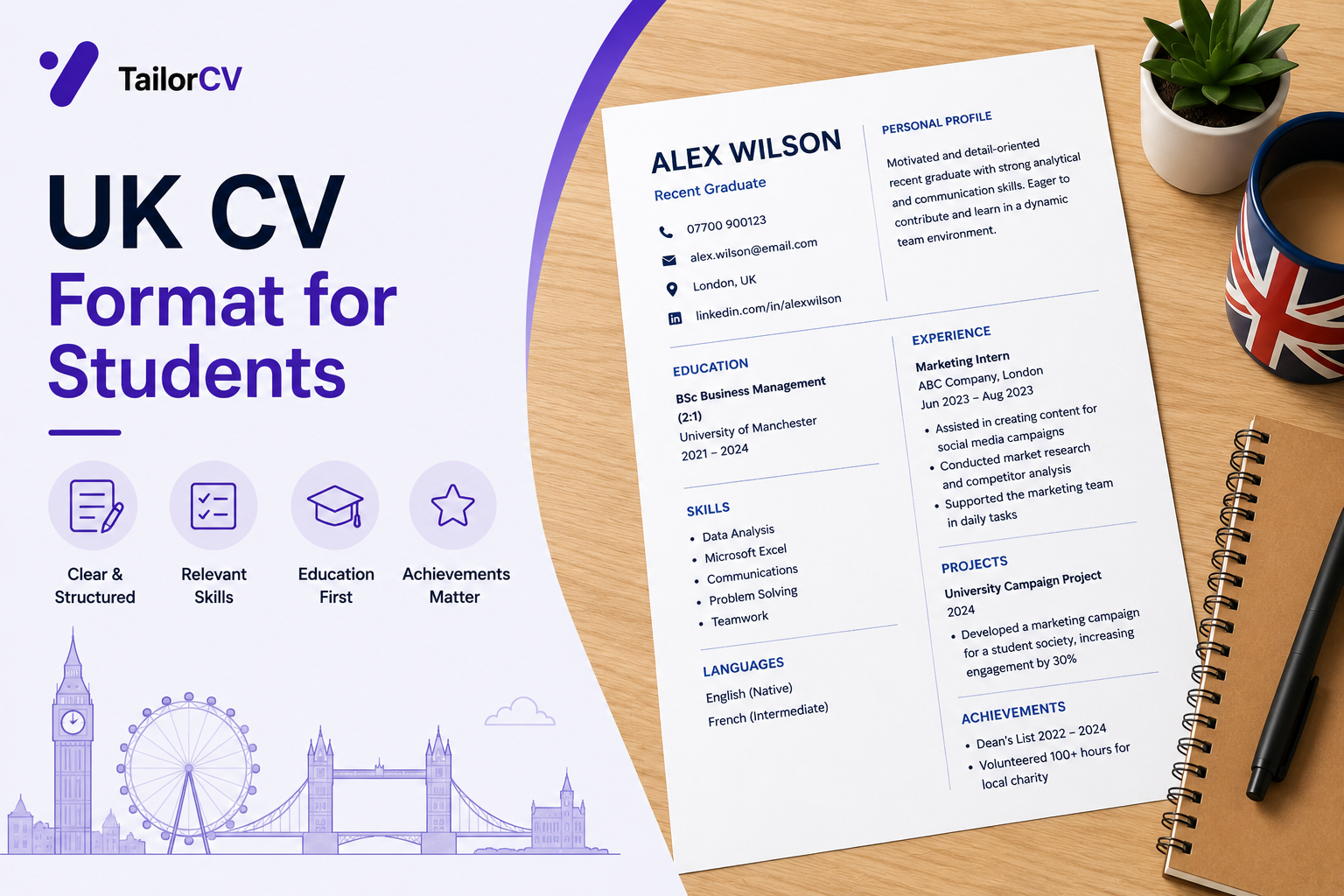
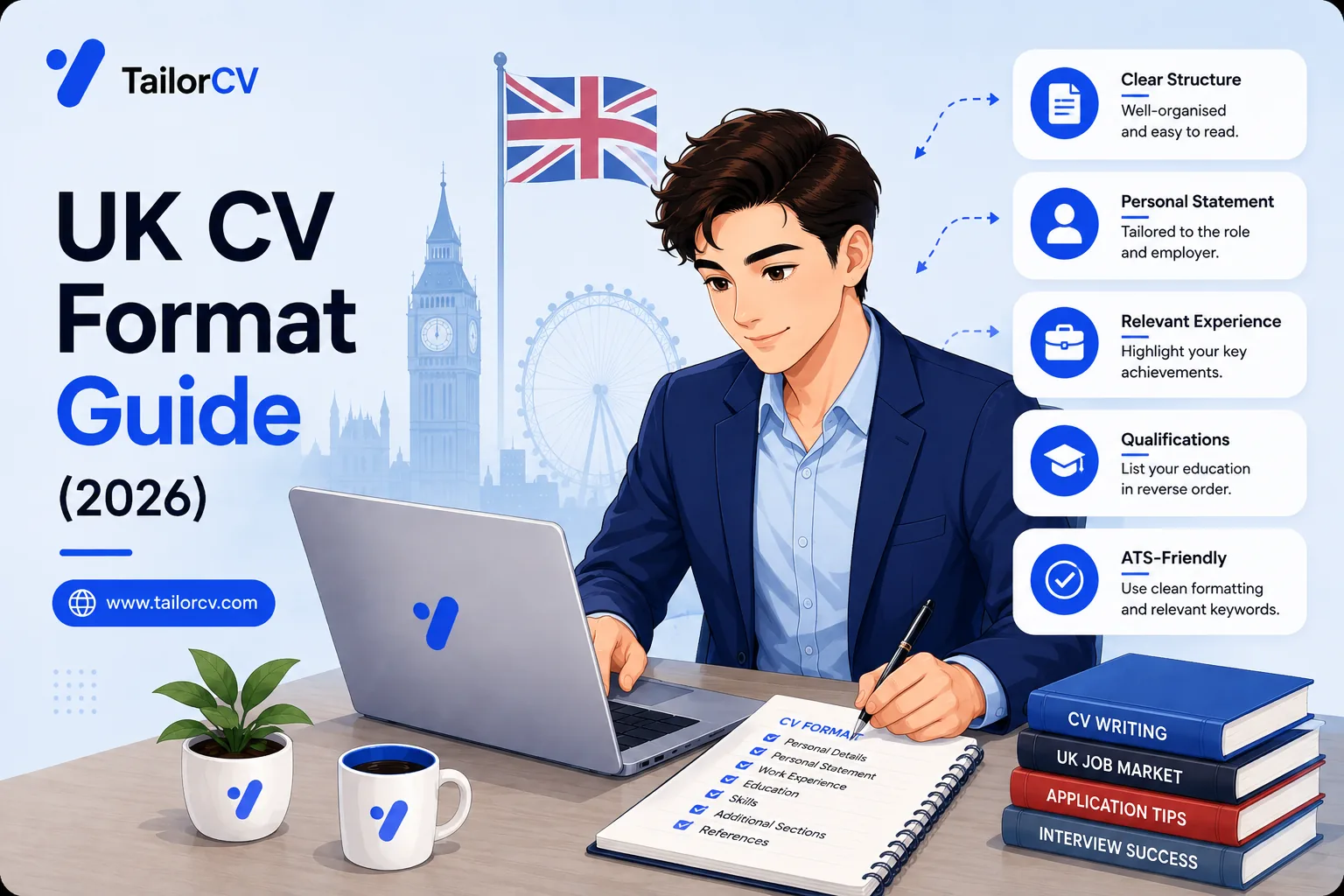
- The UK CV Format for Students and Graduates
- Degree Classification and UK Employers - How Much It Actually Matters
- Understanding Your First UK Payslip and Tax
- UK Reference Request Guide 2026 - What Employers Can and Cannot Say
You can also check your resume's ATS score for free, generate a tailored cover letter, or build a portfolio website in minutes.
Frequently Asked Questions
Are cover letters really expected in the UK?
More often than in US campus recruiting, particularly at smaller employers, in the public sector and for direct applications. Large graduate schemes frequently use application form questions instead.
How long should it be?
One page maximum, three or four short paragraphs. Most strong letters are well under a full page.
What if I cannot find a name?
Use a general salutation. Guessing is worse than not knowing.
Should I mention that I need sponsorship?
Not in the letter. It belongs in conversation, and many graduates on the Graduate route need no sponsorship at the point of applying.
Can I reuse the same letter?
Reuse the structure and the evidence paragraph. Write the "why this employer" paragraph fresh every time — it is the only part that has to be new and the part that decides the outcome.
Do they actually read them?
At smaller employers and in the public sector, frequently yes. At large schemes with application forms, the equivalent effort belongs in the written questions, which are read and scored.
Templates that keep this structure intact
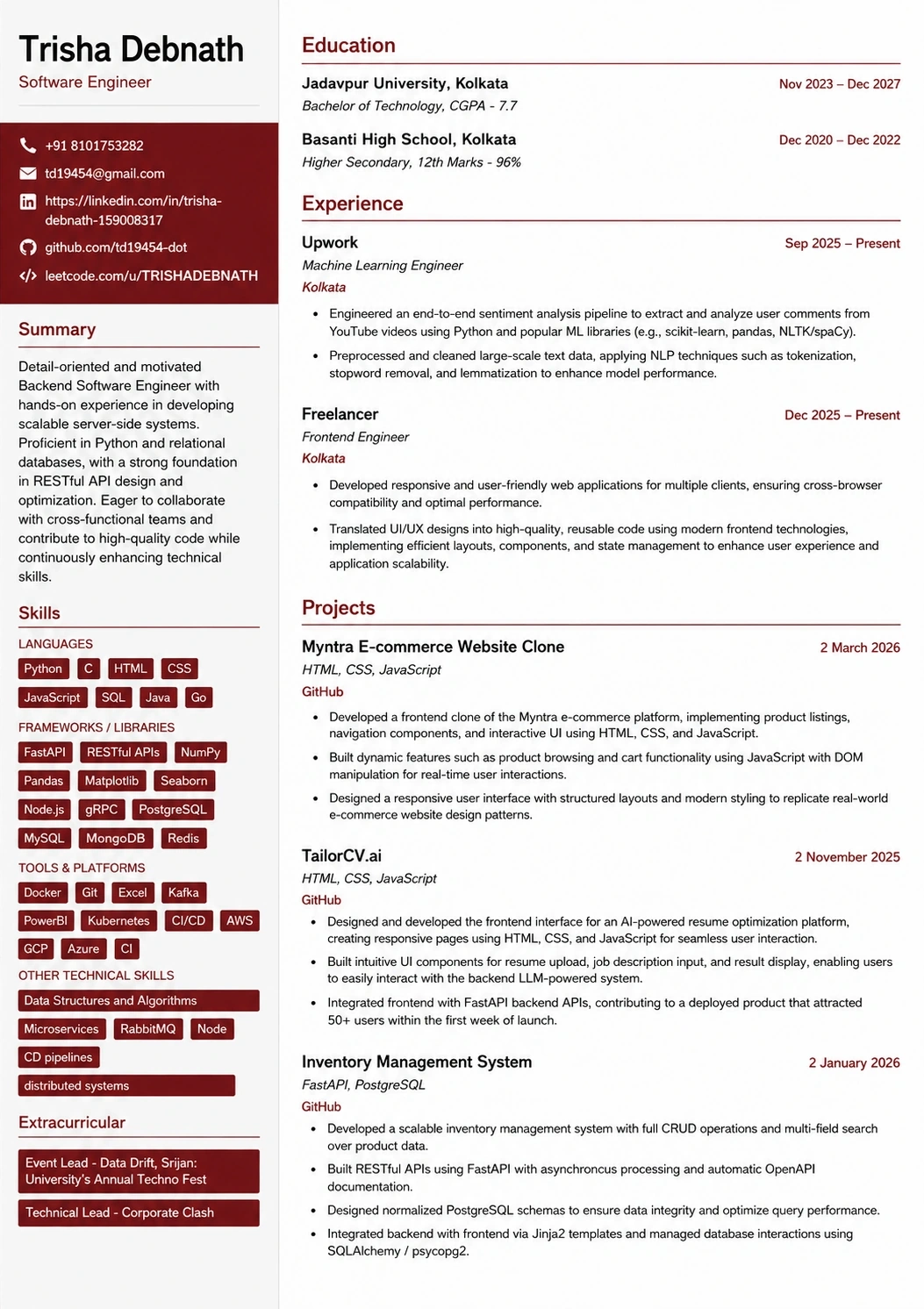
This template is ATS-tested — start from it and the formatting rules in this guide are already handled.
Was this guide useful?
Be the first to rate it.