 TD
TD

Key Takeaways
- Accountancy firms hire graduates from any degree discipline and fund the professional qualification.
- The main qualifications differ in focus — practice and audit, general finance, or management accounting in industry.
- The Big Four are the most visible employers and mid-tier and regional firms hire in volume with less competition.
- Training contracts combine paid work with study leave and examinations over roughly three years.
- Qualification is portable and opens routes well beyond accountancy itself.
The qualifications
Practice-focused chartered qualification. Traditionally associated with audit and professional practice, typically completed through a training contract with a firm. Well regarded internationally and the standard route into audit and assurance.
General chartered certified qualification. Broader in setting, completable in practice or in industry, with more flexibility in how and where you study.
Management accounting qualification. Focused on management accounting, business partnering and finance within organisations rather than professional practice. The natural route if industry rather than audit is your target.
Which to choose depends on where you want to work. Practice and audit points one way; a finance function inside a business points another. Firms will generally tell you which they sponsor, and the choice is frequently made for you by the employer you join.
All of them are funded by the employer in a typical graduate scheme, alongside a salary, which is the central attraction — you are paid to gain a professional qualification rather than paying for one.
The employers
The largest professional services firms. The most visible, with structured graduate schemes across audit, tax, consulting and advisory. Large intakes, strong training, and high application volumes.
Mid-tier firms. Substantial national and international firms with comparable qualifications and training, materially less competition, and frequently earlier client responsibility.
Regional and independent practices. Smaller intakes, broader early exposure across clients, and a genuinely different working pattern. Consistently overlooked and consistently viable — the regional argument applies directly.
Industry finance schemes. Graduate programmes inside businesses, frequently sponsoring the management accounting route.
The public sector. Government, the NHS and local authorities run finance graduate schemes with sponsored qualification.
The practical instruction: apply across tiers rather than only to the best-known names. The qualification is the same and the ratio of applicants to places is dramatically better outside the largest firms.
What the training contract involves
Roughly three years, combining paid work with study leave and a sequence of examinations.
You work while you study, which is demanding and is why employers structure study leave and provide tuition.
Examinations are the constraint. Progression through the contract depends on passing, and firms have policies about resits.
Rotation is common, particularly in larger firms, across clients or service lines.
On qualification, options widen considerably. Staying in practice, moving into industry finance, or moving into adjacent commercial roles are all common, which is why the qualification is valued as a portable credential rather than a narrow one.
Selection
Application, tests, then assessment centre at most employers.
Psychometric and situational judgement tests are standard — the preparation applies, and practising under time pressure is what actually moves scores.
Video interviews at many firms, following the standard format.
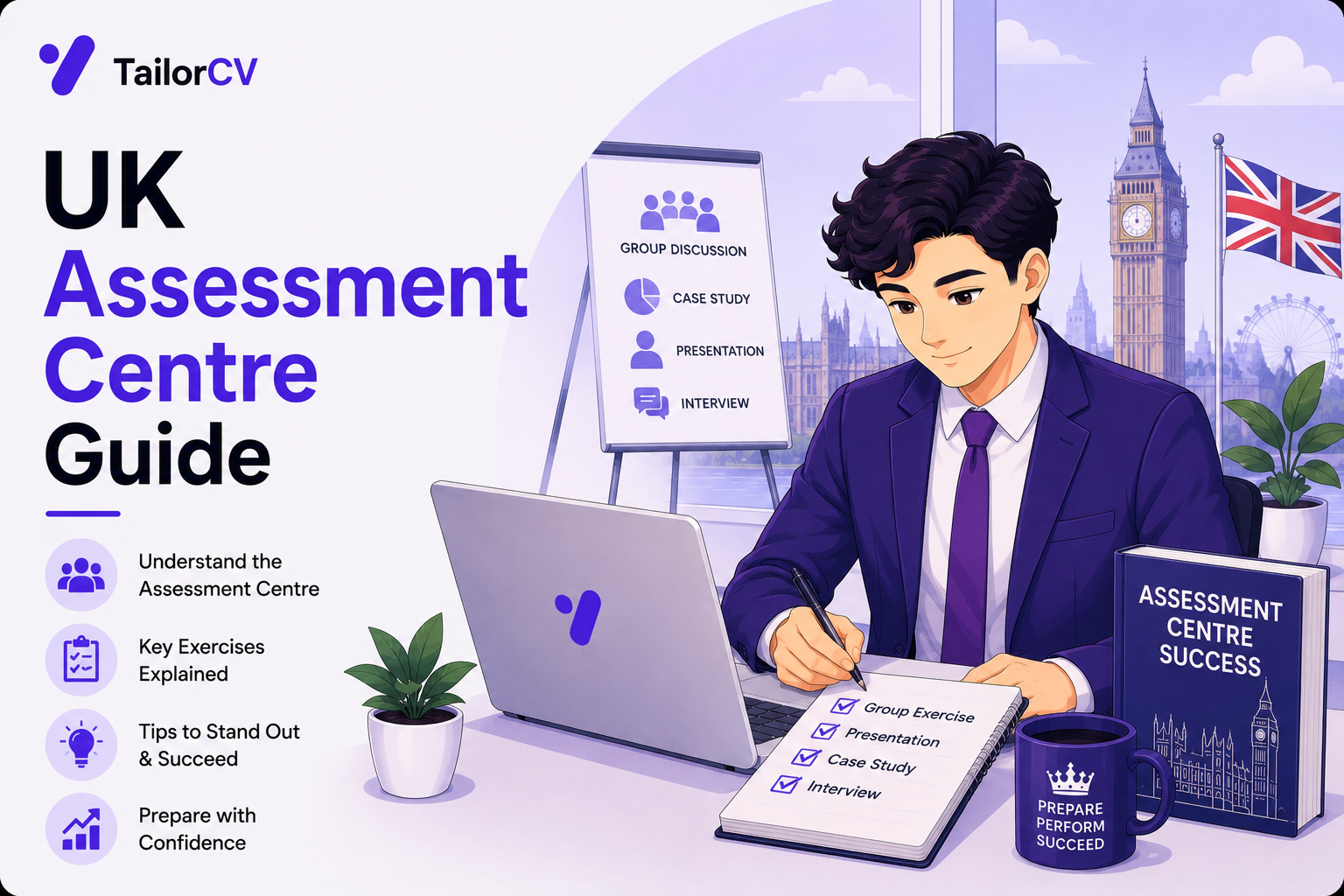
Assessment centres with case work, group exercises and interviews — the mechanics transfer directly.
Competency and strengths questions throughout, drawing on the same evidence bank that serves any UK graduate application.
Academic requirements vary by firm and frequently include degree classification and sometimes prior results — see the classification guide.
Commercial awareness is assessed, though generally less heavily than in law or investment banking.
Choosing between the qualification routes with your specific goals in mind
If you are genuinely unsure whether you want a long-term practice career or eventually intend to move into industry finance, discuss this openly with prospective employers during the application process, most firms have real experience advising candidates who are weighing exactly this choice, and their perspective on how each route has served people with similar goals is genuinely useful.
Research not just the immediate training contract but what people who completed a specific firm's programme several years ago are now doing, professional networking platforms make this genuinely researchable, a firm whose alumni have gone on to strong, varied careers signals something real about the quality of training received.
Which qualification actually suits you
The three main qualifications lead to genuinely different careers, and the training contract you sign commits you to one of them for roughly three years.
| Qualification | Body | Typically leads to |
|---|---|---|
| ACA | ICAEW | Audit and practice, especially the large firms; the traditional route into corporate finance and advisory |
| ACCA | ACCA | Broad and portable, strong internationally; common in industry and smaller practices |
| CIMA | CIMA | Management accounting inside businesses rather than practice — budgeting, costing, commercial finance |
The exams are hard and each body publishes its pass rates, so check them rather than assuming they are a formality. Most trainees sit exams alongside a full-time job, which is the part people consistently underestimate: study leave is a real term in your contract and worth comparing between offers in writing.
Do's and Don'ts
Do
- Choose the qualification first, then the employer
- Compare study leave and exam-resit policy between offers, in writing
- Apply to mid-tier and regional firms, not only the Big Four
- Ask what work you actually do in year one
- Check the published pass rates for the exams you will sit
Don't
- Assume all three qualifications open the same doors
- Treat the exams as a formality alongside the job
- Apply only to the four most famous names
- Accept vague answers about study support
- Rule out a firm because it is not in London
Scenarios: choosing your route
Scenario 1: You want to work in industry, not practice
CIMA is built for exactly this — management accounting inside a business rather than auditing other people's. Applying to a Big Four ACA contract because it is the famous route puts you three years into the wrong qualification.
Scenario 2: You are not sure yet
ACA or ACCA keep more doors open, and practice gives you exposure to many businesses quickly. Decide the qualification on where you want to be at 27, not on which brochure looked best at a careers fair.
Scenario 3: You did not get a Big Four offer
Mid-tier and regional firms train the same qualifications, often with earlier client responsibility and better study support. The letters after your name are identical.
Tip: Pick the qualification before the employer — ACA, ACCA and CIMA lead to genuinely different careers. The training contract you sign locks you into one of them for three years.
Common Mistakes
- Assuming you need an accounting degree. Firms recruit across disciplines deliberately.
- Applying only to the largest firms. Mid-tier and regional practices offer the same qualification with far less competition.
- Not understanding which qualification suits your goal. Practice and industry routes differ.
- Underestimating the examination load. Working and studying simultaneously is genuinely demanding.
- Neglecting the online tests. Neglecting the online tests an early filter, and trainable.
- Applying late. Autumn deadlines with rolling review at many firms.
Balancing study and work during the training contract
The combination of full-time work and professional examination study is genuinely demanding, worth building realistic expectations about this before starting rather than being caught off guard partway through.
Ask current trainees directly how they actually structure their study time around work commitments, and what support the specific firm provides beyond the formal study leave allocation, this practical detail varies meaningfully between firms and matters considerably to your actual day-to-day experience during the contract.
Related Guides
Keep building on this with the related guides in this series:
- UK Teacher Training Routes for Graduates
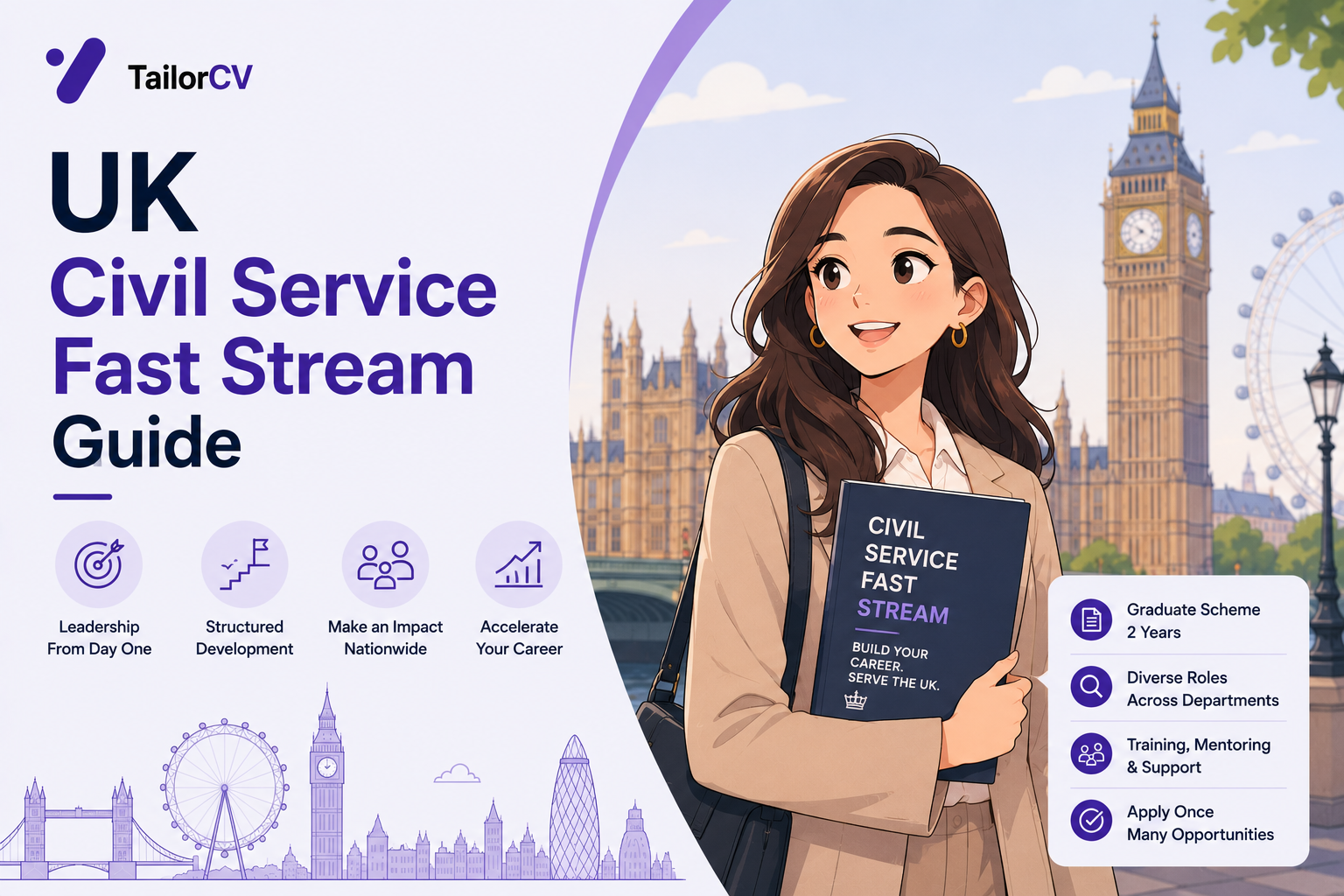
- The UK Civil Service Fast Stream - What the Process Involves
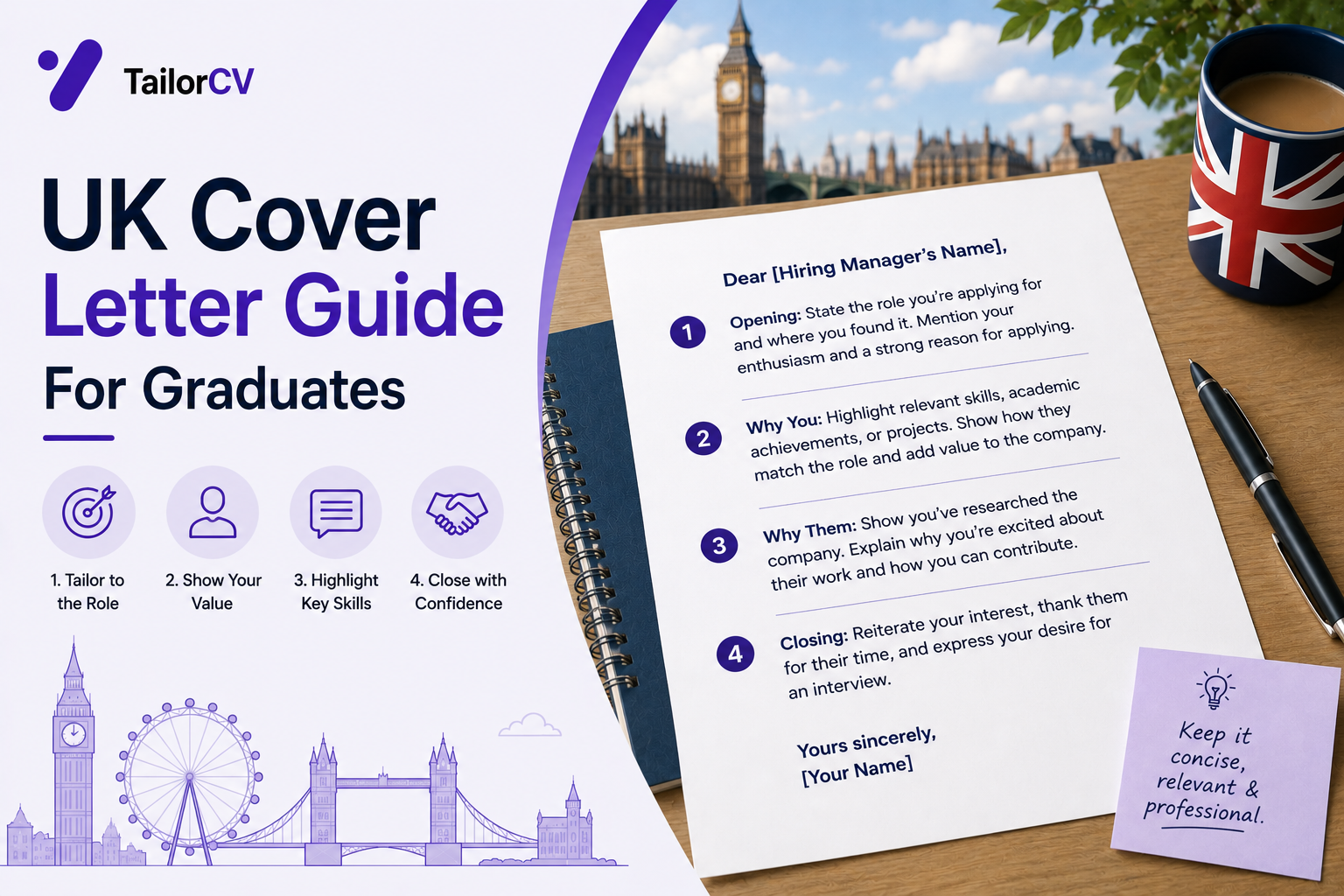
- UK Cover Letters for Graduates - When They Matter and What to Write
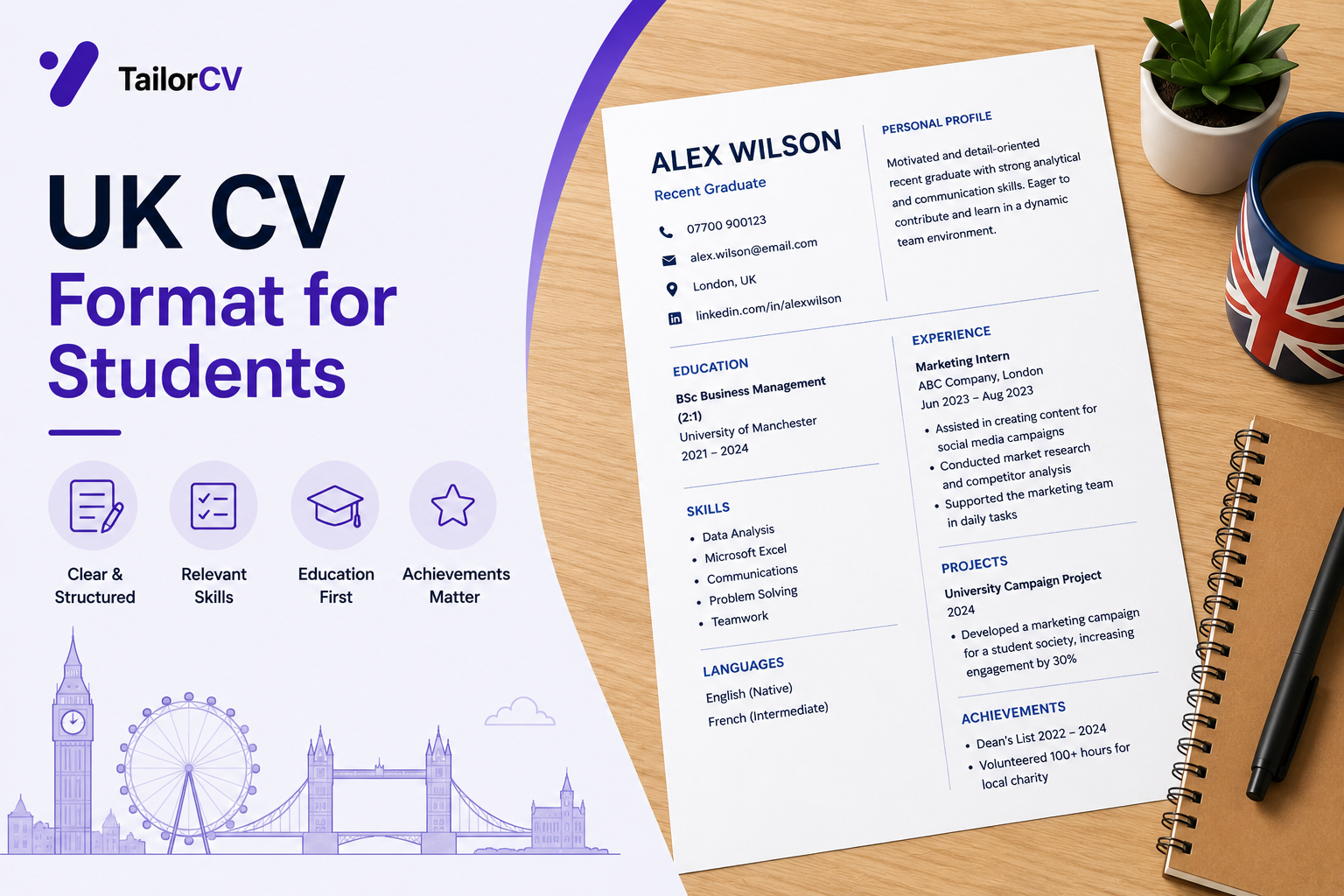
- The UK CV Format for Students and Graduates
- Degree Classification and UK Employers - How Much It Actually Matters
- Understanding Your First UK Payslip and Tax
- UK Reference Request Guide 2026 - What Employers Can and Cannot Say
You can also check your resume's ATS score for free, generate a tailored cover letter, or build a portfolio website in minutes.
Frequently Asked Questions
Do I need a finance or accounting degree?
No. Firms recruit graduates from any discipline and provide the technical training, and numerate degrees are common without being required.
Which qualification should I choose?
It depends on whether you want professional practice or a finance role inside a business, and frequently the employer you join determines it.
Does the firm pay for it?
In a typical graduate scheme, yes — tuition, examination fees and study leave alongside a salary.
How hard are the exams?
Demanding, particularly alongside full-time work. Pass rates vary by paper and firms provide structured support.
Is it worth going to a smaller firm?
Frequently. The qualification is the same, competition is lower, and early client exposure is often broader.
What can I do after qualifying?
Stay in practice, move into industry finance, or move into commercial and advisory roles. The qualification is portable and widely recognised.
What is your resume scoring right now?
Scan it against a job description and get your ATS match score in about a minute.
Drop your resume here or choose a file
PDF only. Max 2 MB.
We never share your data or use it to train AI models.

Was this guide useful?
Be the first to rate it.