 TD
TD
Key Takeaways
- There are a few specific situations where a hobbies section earns its space - outside those, it usually does not.
- If you have a full page of strong, relevant experience, cut hobbies to make room for what matters.
- Be specific and show depth: "Marathon runner (3 completed)" signals something, "fitness" says nothing.
- Volunteering is usually stronger than a hobby because it shows commitment and real-world skills, so give it its own section.
- Hobbies are a small supporting detail - the summary, quantified experience, and role-matched keywords do the real work.
Should you put hobbies on your resume? Sometimes — but only when they add real value. Space on a resume is expensive, and a random list of interests can look like filler that pushes your actual experience and skills further down the page. Used strategically, though, hobbies can show culture fit or relevant skills that set you apart. This guide covers exactly when to include them, when to cut them, and how to list them so they help.
Before you agonize over hobbies, make sure the core of your resume is strong: a matching job title, quantified achievements, and keywords that pass the ATS. Confirm all that with the free ATS score checker first — hobbies are a garnish, never the meal.
When hobbies help your resume
There are a few clear situations where a hobbies section earns its space:
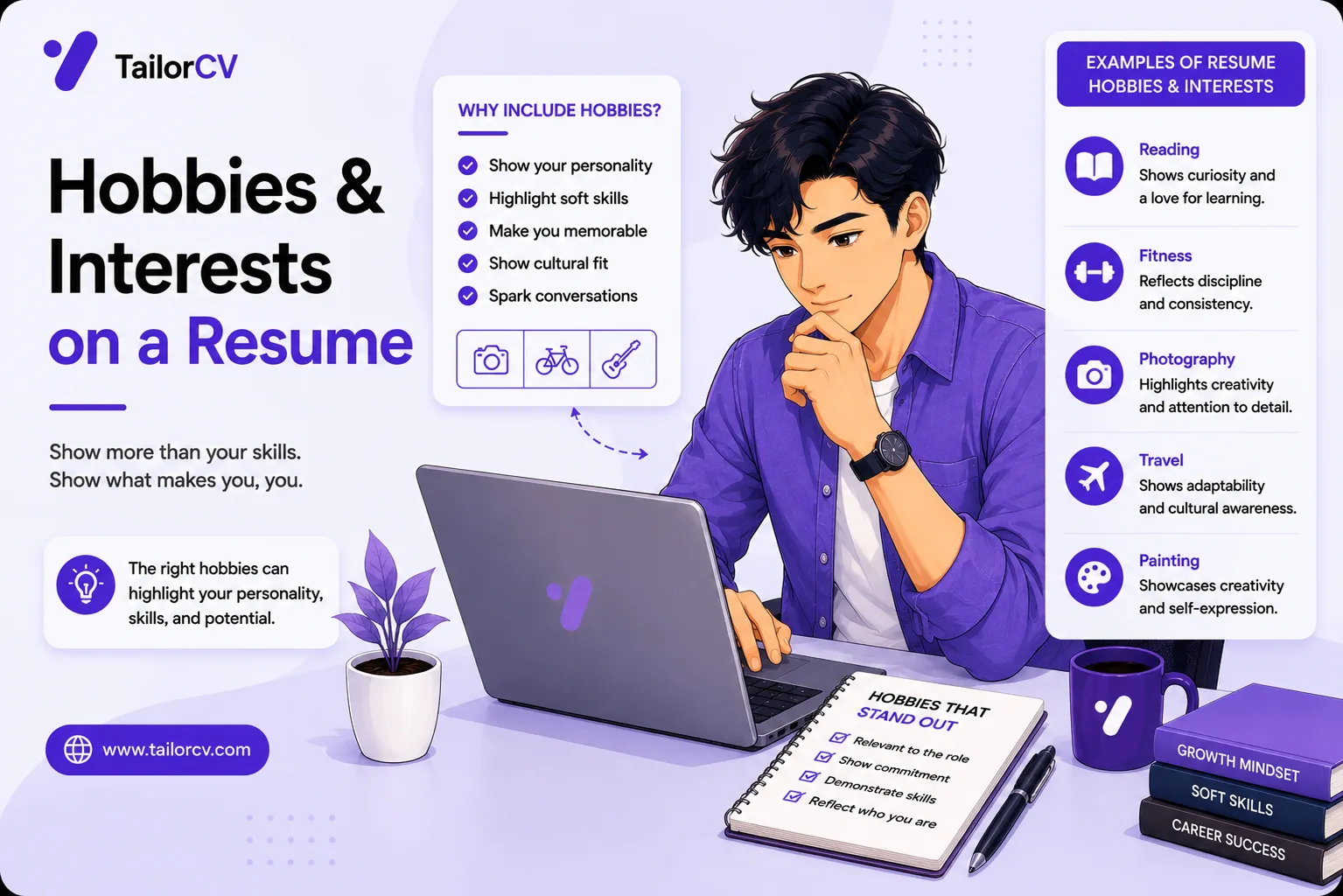
- You're early-career or light on experience. For students and new graduates, hobbies add personality and signal transferable skills — the resume with no experience guide and first job resume for a teenager explain how to fill a page meaningfully.
- The hobby is relevant to the role. A photography hobby for a marketing or design job, chess or competitive gaming for analytical roles, or a coding side project for a developer role all reinforce your fit. A portfolio can showcase relevant creative hobbies.
- The company clearly values certain interests. Some employers signal culture in the job description — volunteering, teamwork, endurance sports. When they do, a matching interest is a genuine plus. Research the company first, as in how to research a company before an interview.
When to skip hobbies
If you have a full page of strong, relevant experience, cut hobbies to make room for what matters. A senior professional's resume almost never needs them. And always skip anything controversial, polarizing, or so generic it says nothing — "reading, music, traveling" is filler that adds zero signal. When space is tight, the resume review checklist helps you decide what to trim, and what not to put on a resume covers what to leave off entirely.
How to list hobbies well
If you include them, be specific and show depth. "Marathon runner (3 completed)" signals discipline and commitment; "fitness" says nothing. "Volunteer coding mentor for local students" shows initiative and communication; "helping others" is empty. Specificity is what turns a hobby into evidence — the same principle behind quantifying achievements in your experience section.
Keep the section short — a single line near the bottom is plenty — and use a clean, ATS-friendly template so it doesn't disrupt parsing. A hobbies section should never push a recruiter past your real qualifications.
Hobbies vs interests vs volunteering
These overlap but aren't identical. Volunteering is often stronger than a hobby because it shows commitment and real-world skills — give it its own treatment, as in volunteer work on a resume. Interests that align with the role or company culture can support your fit. Pure hobbies are the lightest signal, so reserve them for when you genuinely need to round out a page or reinforce a specific, relevant trait.
Keep the focus on fit
At the end of the day, hobbies are a small supporting detail. Lead with a strong summary, quantified experience, and role-matched keywords. Tailor each application so the most relevant content is front and center, and use the resume optimizer to confirm your resume matches the role. If a hobby genuinely strengthens that story, keep it; if it doesn't, cut it without a second thought.
Final checklist
Include hobbies on your resume only when they:
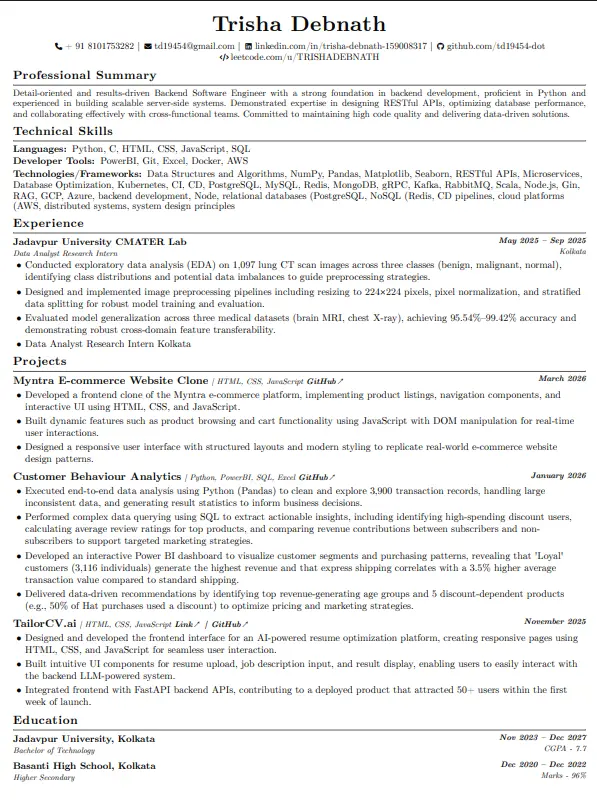
Your resume after optimization
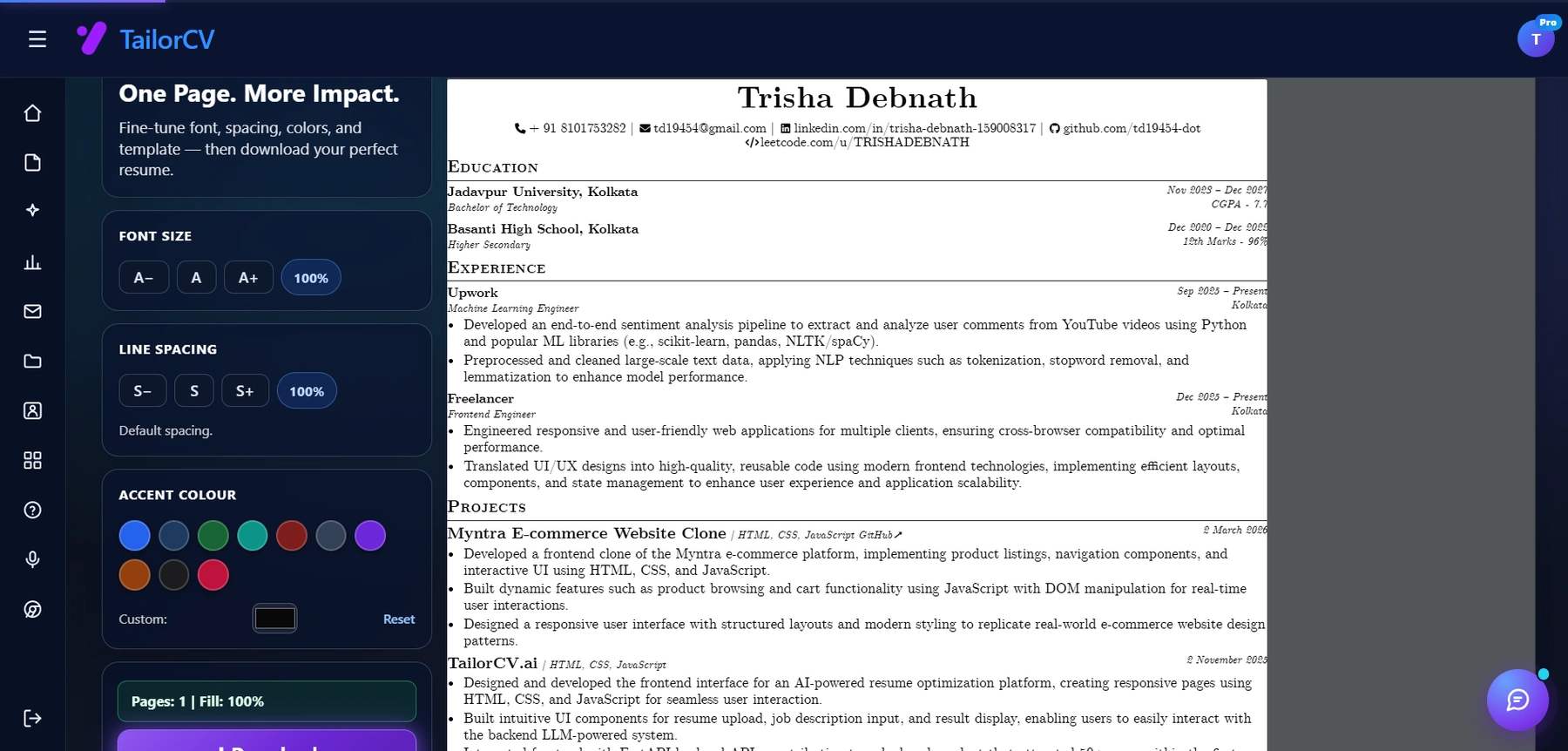
This is the resume after tailoring - the content is already matched, and these controls are how you fit it onto one page.
- Add real signal — relevance, culture fit, or transferable skill.
- Are specific, not generic ("marathon runner," not "fitness").
- Don't crowd out stronger experience or skills.
- Keep the resume ATS-safe and passing the ATS score checker.
Build a focused resume in the resume builder, score it with the free ATS checker, and only add hobbies if they make your case stronger.
What is your resume scoring right now?
Scan it against a job description and get your ATS match score in about a minute.
Drop your resume here or choose a file
PDF only. Max 2 MB.
We never share your data or use it to train AI models.
Templates that keep this structure intact
This template is ATS-tested — start from it and the formatting rules in this guide are already handled.
Was this guide useful?
Be the first to rate it.