 TD
TD
Key Takeaways
- Canadian and US resumes are broadly similar: 1–2 pages, achievement-focused, ATS-friendly, no photo or personal details.
- The main differences are spelling (Canadian vs American English), some terminology, and minor conventions.
- Both markets screen with an ATS, so formatting and keywords matter equally.
- Adapting the details — spelling, metrics, and local terms — signals you fit the market.
- When applying across the border, tailor a dedicated version rather than reusing one blindly.
Canada and the United States share a border, a language, and many workplace norms — so it's easy to assume a resume that works in one will work in the other. Mostly, that's true: both favour concise, achievement-focused, ATS-friendly resumes. But there are real differences in spelling, terminology, and a few conventions that can subtly mark you as "not local" if you get them wrong.
This guide breaks down the Canadian vs American resume in 2026: what's the same, what's different, and exactly how to adapt your resume when you apply across the border — so you always send the right version for the right market.
Why Both Markets Converged on the Same Core Format
It helps to understand why Canadian and American resumes look so alike. Both countries have strong anti-discrimination norms, which is why neither includes a photo, age, marital status, or other personal identifiers that could enable bias — a sharp contrast with markets like Malaysia or parts of Europe where photos are common. Both also have results-oriented business cultures and widespread use of applicant tracking systems, which reward concise, keyword-relevant, achievement-focused resumes. So the shared format isn't a coincidence; it reflects shared legal norms, shared hiring technology, and a shared preference for evidence over ornamentation. That common foundation is exactly why adapting between the two is quick — you're adjusting surface details, not rebuilding from scratch.
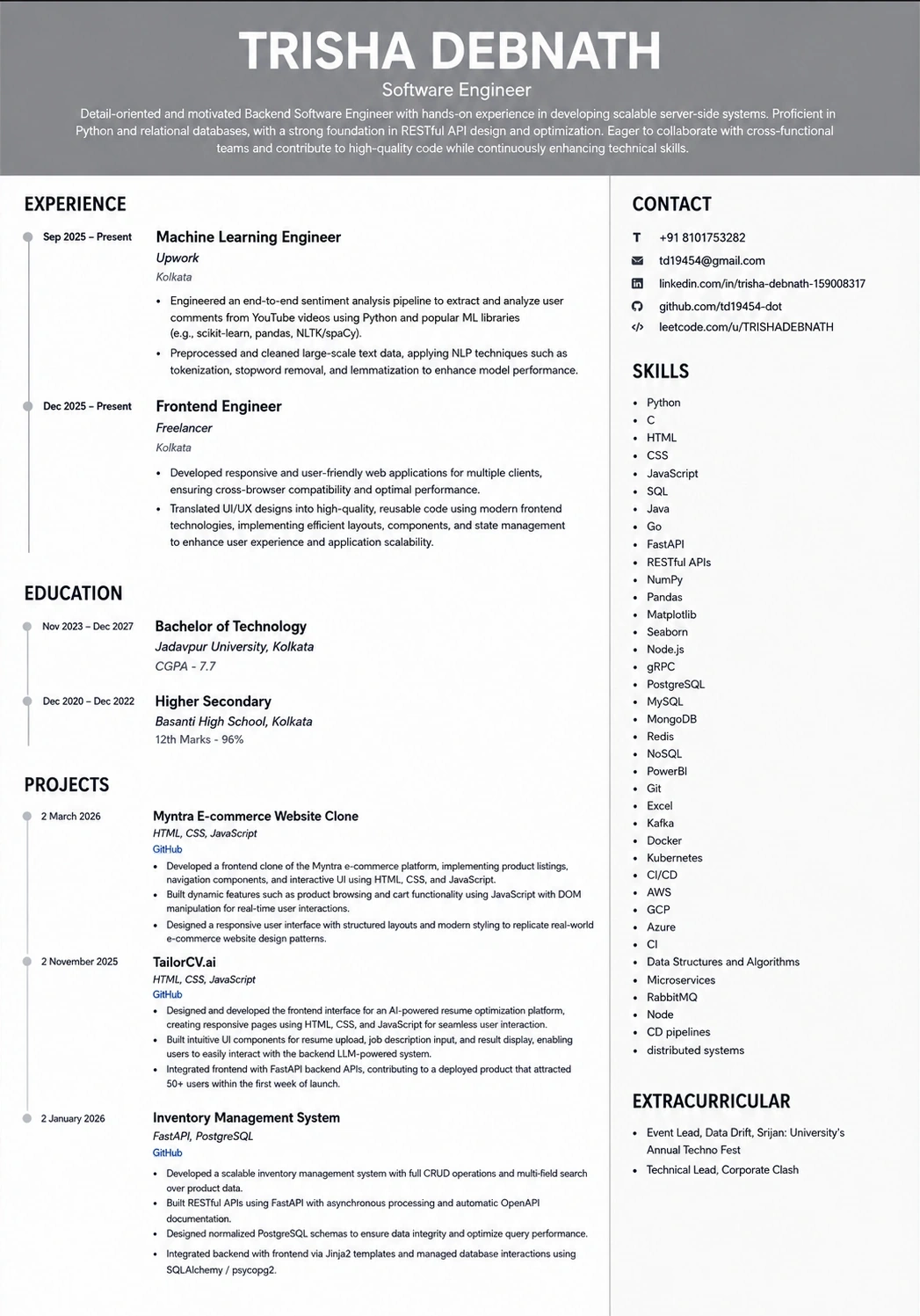
Your resume after optimization
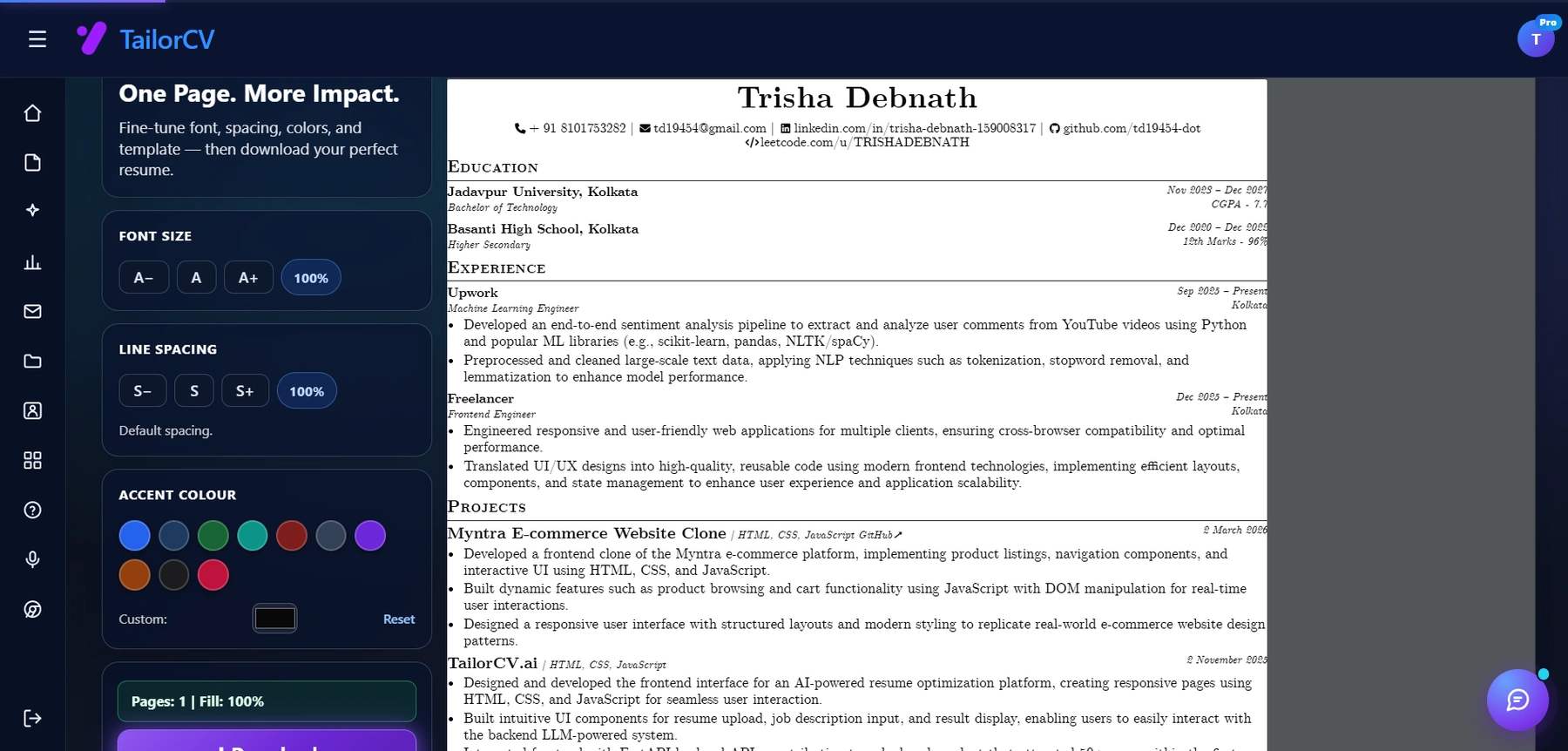
This is the resume after tailoring - the content is already matched, and these controls are how you fit it onto one page.
Who Needs to Worry About This?
This comparison matters most if you fall into one of a few groups: professionals relocating between Canada and the US for work; newcomers who studied or worked in one country and are applying in the other; people applying to remote roles that could be based on either side of the border; and job seekers near the border who naturally consider opportunities in both markets. If you're firmly settled and job-hunting in just one country, you mainly need that country's conventions — see the Canadian resume guide for the full Canadian treatment. But if you're moving between the two, or hedging across both, the details below are exactly what keep you from sending a resume that quietly reads as "from the other country."
What's the Same
Before the differences, note how much overlaps — because it means adapting is quick:
- Length: one page for early-career; up to two for experienced professionals.
- No photo or personal details: neither Canadian nor US resumes include a photo, age, marital status, or (in the US) SSN / (in Canada) SIN.
- Achievement-focused: both prioritise quantified results over duty lists.
- Reverse-chronological work history.
- ATS-friendly formatting: single column, standard headings, text-based PDF, keyword-matched.
- A dedicated skills section.
So a strong resume in one country is 90% of the way to a strong resume in the other. The remaining 10% is what this guide covers.
A Quick Comparison Table
For a fast reference, here's how the two markets line up on the points that matter most:
| Element | Canada | United States |
|---|---|---|
| Length | 1–2 pages | 1–2 pages |
| Photo / personal details | No | No |
| Format | Achievement-focused, ATS-friendly | Achievement-focused, ATS-friendly |
| Spelling | Canadian (colour, centre, labour) | American (color, center, labor) |
| GPA | Less universally expected | Commonly listed (4.0 scale) |
| "CV" meaning | Long academic document | Long academic document |
| Bilingual asset | English–French (esp. federal/Quebec) | Spanish/others (role-dependent) |
| Engineering designation | P.Eng | PE |
| ID to omit | SIN | SSN |
| Volunteer experience | Valued, slightly emphasised | Welcome |
As the table shows, the skeleton is identical — the adaptations are in spelling, a few conventions, and local signals. That's why moving a resume across the border is a quick edit, not a rewrite.
Key Difference 1: Spelling
The most visible difference. Canadian English generally follows British spelling conventions, while American English does not:
- Canadian: colour, labour, organisation/organization, centre, cheque, licence (noun)
- American: color, labor, organization, center, check, license
(Note: Canadian usage is somewhat mixed — "organization" with a "z" is common in Canada too — but "-our" endings like "colour" and "labour" and "centre" are distinctly Canadian.) Match the spelling to the country you're applying in. It's a small detail recruiters notice.
Key Difference 2: Terminology
Some terms differ:
- Grades/education: US resumes may cite GPA on a 4.0 scale; Canadian resumes sometimes reference percentage or letter grades, and GPA is less universally expected.
- "Resume" vs "CV": in both countries, "resume" is standard for most jobs, and a "CV" is the long academic document. (This differs from the UK and many other regions where "CV" means the everyday resume.)
- Certifications and licences: name the country-specific credential (e.g. CPA designation exists in both but through different bodies; P.Eng in Canada vs PE in the US for engineers).
Key Difference 3: Measurements and Localisation
- Metric vs imperial: Canada uses metric; the US uses imperial. Where units appear (rare on resumes, but possible for trades or logistics roles), match the local system.
- Phone and location format: use the local convention — city and province (Canada) or city and state (US). A local phone number reassures employers you're reachable.
- Bilingualism: in Canada, English–French bilingualism is a notable asset, especially for federal and Quebec roles. In the US, Spanish or other languages may be valued depending on the role and region.
Key Difference 4: What Employers Expect Culturally
The differences here are subtle but real:
- Canada often values evidence of collaboration, community involvement, and (for newcomers) local volunteer experience.
- The US can lean slightly more toward bold self-promotion and standout individual achievement.
Neither is dramatic — quantified results win in both — but tone and emphasis can be nudged to fit.
Key Difference 5: Cover Letters and Application Norms
The two markets treat cover letters similarly, but with subtle differences in expectation. Both value a concise, tailored, one-page cover letter, and in both, a strong letter helps for professional and competitive roles. Canadian government and public-sector applications, however, often lean more heavily on demonstrating specific "essential qualifications," so a Canadian cover letter for such roles may need to address stated criteria more explicitly. In both countries, tailoring is what matters most. If you're applying in Canada, see the Canadian cover letter guide for the specifics.
Key Difference 6: References and Additional Sections
Both countries typically expect you to omit references from the resume itself (a separate list is provided on request), and neither expects the line "references available upon request." Volunteer experience, however, tends to carry a little more weight on a Canadian resume, where community involvement is genuinely valued — and for newcomers it doubles as a source of local experience and references. In both markets, additional sections (certifications, projects, professional affiliations) should earn their place by strengthening your case for the specific role.
A Deeper Look at Spelling Differences
Because spelling is the most visible marker, it's worth getting right systematically. Canadian English generally follows British conventions for certain patterns while adopting American ones for others, which is why it can feel inconsistent:
- "-our" vs "-or": Canadian colour, labour, honour, favour, behaviour vs American color, labor, honor, favor, behavior. This is the clearest Canadian marker.
- "-re" vs "-er": Canadian centre, theatre, metre vs American center, theater, meter.
- "-ce" vs "-se" (nouns): Canadian licence, defence, practice (noun) vs American license, defense.
- "-ize/-ization": here Canada is mixed — both organize/organization and organise/organisation appear, with the "-ize" form very common. American English uses "-ize" consistently.
- Doubled consonants: Canadian travelled, cancelled, labelled vs American traveled, canceled, labeled.
The practical approach: set your word processor's language to English (Canada) or English (United States) to catch most of these automatically, then proofread the distinctive "-our" and "-re" words by eye. Consistency matters — pick the target country's conventions and apply them throughout.
How to Adapt Your Resume Across the Border
When you apply in the other country, create a dedicated version:
- Switch spelling to match the target country.
- Adjust terminology (grades, credentials, "resume" conventions).
- Localise details (location format, phone number, metric/imperial where relevant).
- Re-check keywords against the specific posting — the ATS still rules on both sides.
- Add local signals (Canadian volunteer experience; US-relevant certifications).
The TailorCV resume optimizer helps you tailor to each posting and keep it ATS-safe, and you can maintain clean versions in the resume builder.
Terminology Differences in More Detail
Beyond spelling, a handful of vocabulary and convention differences are worth knowing when you move a resume across the border:
- Grades and academic standing: US resumes commonly list GPA on a 4.0 scale, and a strong GPA is often expected for new graduates. Canadian resumes treat GPA as less universal — you may cite a percentage, a letter grade, or nothing at all, depending on your field. Follow the norm for your industry and what the posting requests.
- "College" vs "university": in the US, "college" and "university" are often used interchangeably to mean a bachelor's-degree institution. In Canada, "college" usually refers to a diploma- or certificate-granting institution distinct from a "university" that grants degrees. Name your institution precisely so the level of your qualification is clear.
- Job titles and levels: most titles translate directly, but be aware that seniority conventions can differ slightly by company and country. Use the title you actually held, and let your achievements convey the scope.
- "Resume" spelling and accents: both countries write "resume" (or "résumé"); either is acceptable, but be consistent.
- Dates and formatting: both use similar date conventions, but keep them consistent throughout, and remember that headers/footers can confuse ATS in either country.
None of these are dramatic, but getting them right removes small friction points and signals you understand the market.
Localising Contact Details and Layout
A quick but important adaptation is your contact block and any location references. Use the local format — city and province for Canada (e.g. "Toronto, ON"), city and state for the US (e.g. "Chicago, IL"). A local phone number reassures employers you're reachable and genuinely available in the market; if you're relocating, a local number (or a note about your relocation plans in the cover letter) helps. You don't need a full street address in either country — city and region are enough. Keep the rest of the layout identical to the clean, single-column, ATS-friendly structure both markets expect; the localisation is in the details, not the overall design.
Don't Forget the ATS — On Both Sides
Whichever country you're targeting, your resume will likely be screened by an ATS first. Keep it single-column, use standard headings, submit a text-based PDF, and mirror the posting's keywords. Learn the mechanics in how ATS works in Canada, and test any version with the free ATS score checker.
Applying in Canada Specifically
If Canada is your target, use our dedicated resources:
- The complete Canadian resume guide.
- Best resume keywords for Canadian jobs.
- The Canadian cover letter guide.
- For newcomers, how to get a job in Canada as a newcomer.
Credentials and Professional Designations Across the Border
One area that trips people up is professional credentials, because the same profession often has different designations and regulatory bodies in each country:
- Accounting: both countries use "CPA," but it's awarded through different bodies (CPA Canada vs the US state boards) — name the one you hold and, if applying across the border, clarify which.
- Engineering: Canada uses "P.Eng" (licensed through provincial associations); the US uses "PE." List the designation relevant to where you're applying, and note if you're in the process of obtaining the local one.
- Healthcare: licensing is provincial in Canada and state-based in the US, and credentials rarely transfer automatically — reference the registration relevant to the target market.
- Trades: Canada's Red Seal program is distinct; if you hold a US trade certification, describe it clearly for Canadian employers.
If your credential doesn't directly transfer, be transparent about your status and any steps you're taking toward local recognition. For internationally trained candidates moving to Canada, a credential assessment (e.g. WES) helps translate foreign qualifications — see how to get a job in Canada as a newcomer.
Which Version Should You Lead With?
If you're actively job-hunting in both countries, maintain two clean base versions — one Canadian, one American — and tailor each to specific postings from there. Don't try to make a single "North American" resume serve both; the spelling alone will be wrong for one market, and small mismatches accumulate into a subtle "not local" impression. Keeping separate versions in the TailorCV resume builder makes this easy: your core content stays in one place, and switching spelling, localising details, and re-checking keywords for each market takes only minutes. The goal is that whichever employer opens your resume, it reads as though you're one of their own.
A Note for Candidates Moving Between Markets
Professionals relocating from the US to Canada (or vice versa) should think beyond the resume. Work authorisation differs — moving across the border for work involves immigration processes you'll need to understand and, in most cases, an employer or program to support you. On the resume itself, localise everything (spelling, terminology, location, credentials), and in your cover letter, briefly address your situation and genuine commitment to the new market. Employers are reassured by candidates who clearly understand the local context and aren't treating the move casually. Always confirm current immigration and work-authorisation requirements with official sources before you commit.
Common Cross-Border Mistakes
- Wrong spelling. American spelling on a Canadian resume (or vice versa) is an easy tell.
- Reusing one version blindly. Localise details for each market.
- Ignoring the ATS. Both countries screen with software — formatting and keywords matter.
- Missing local signals. Canadian volunteer experience or relevant local certifications strengthen fit.
- Not tailoring to the posting. The biggest miss in either country.
Frequently Asked Questions
Can I use my American resume in Canada? Almost — the structure is the same, but switch to Canadian spelling, localise details, adjust terminology, and re-check keywords for the specific posting.
Is the resume format different in Canada and the US? The core format (concise, achievement-focused, ATS-friendly, no photo) is the same. The differences are spelling, some terminology, and minor localisation.
Do Canadian resumes use GPA like American ones? GPA is less universally expected in Canada; you may cite percentage or letter grades. Follow the norm in your field and what the posting asks for.
Does spelling really matter on a resume? Yes — matching Canadian or American spelling to the target country is a small but noticeable signal of fit.
Do professional designations transfer between Canada and the US? Not automatically. The same profession often has different designations and regulatory bodies — CPA through different bodies, P.Eng (Canada) vs PE (US), provincial vs state healthcare licensing. Name the credential relevant to where you're applying, and be transparent about any local recognition in progress.
Should I keep separate Canadian and American resume versions? Yes, if you're job-hunting in both. Maintain two clean base versions and tailor each to specific postings. A single "North American" resume will have the wrong spelling for one market and accumulate small mismatches that read as "not local."
Is volunteer experience treated differently in Canada vs the US? It tends to carry a little more weight on a Canadian resume, where community involvement is genuinely valued — and for newcomers it also provides local experience and references. It's welcome on US resumes too, but the emphasis is slightly stronger in Canada.
Do I need to worry about work authorisation when applying across the border? Yes — moving between the two markets for work involves immigration processes and usually employer or program support. Localise your resume, briefly address your situation in your cover letter, and confirm current requirements with official sources before committing.
The Bottom Line: Small Details, Real Signals
It's tempting to dismiss spelling and terminology tweaks as trivial, but in a competitive market, small signals of fit add up. A recruiter reading a resume with American spelling for a Toronto role — or Canadian spelling for a Chicago one — registers, even subconsciously, that the candidate didn't tailor for their market. That impression can nudge a borderline decision the wrong way. Conversely, a resume that gets every local detail right reads as though the candidate belongs there, which reassures the employer. Because adapting between the two markets takes only minutes once you know what to change, there's no reason to leave those signals to chance. Treat the cross-border adaptation as a quick, deliberate step in tailoring — switch the spelling, adjust the conventions, localise the details, and re-check your keywords against the specific posting — and you turn a potential subtle liability into a quiet advantage.
Final Thoughts
Canadian and American resumes are close cousins: both concise, achievement-focused, and ATS-driven. The differences — spelling, terminology, and localisation — are small but worth getting right, because they signal that you understand the market you're applying to.
When you cross the border, tailor a dedicated version, switch the details, and re-check your keywords. Build and adapt yours with the TailorCV resume builder and the ATS optimizer, and you'll always send the right resume for the right market.
What is your resume scoring right now?
Scan it against a job description and get your ATS match score in about a minute.
Drop your resume here or choose a file
PDF only. Max 2 MB.
We never share your data or use it to train AI models.

Templates that keep this structure intact
This template is ATS-tested — start from it and the formatting rules in this guide are already handled.
Was this guide useful?
Be the first to rate it.