 TD
TD

Key Takeaways
- A UK CV carries no photo, no date of birth, and no marital status - including them looks unprofessional and creates a discrimination risk the employer would rather avoid.
- Two pages is the standard, not the one-page US convention, and a strong two-page CV beats a cramped one-pager.
- Degree classification matters: 2:1 is a common screening threshold for graduate schemes, and many applications ask for it directly.
- A personal statement of three or four lines opens the document - tailored per application, not a fixed paragraph.
- Right-to-work status is a screening field for non-UK applicants, so state it plainly rather than leaving it to be inferred.
British employers call it a CV, and the differences from an American resume go beyond the name. Some are cosmetic. Others - the photo, the personal details, the length - will actively count against you if you get them wrong.
If you are applying from the US, the surprises are the second page and the personal statement. If you are applying from a market where a photo and date of birth are conventional, such as much of Asia or continental Europe, the surprise is that including them is a mistake here.
This guide covers the structure, the conventions, and the screening.
Start by checking what a parser actually extracts from your current file with the free ATS score checker.
What a UK CV Leaves Out
This is the fastest way to get the format right, because the omissions are specific and non-negotiable.
No photo. UK employers do not expect one, and many actively prefer not to receive one - it introduces a discrimination risk into their process. Some recruitment agencies strip photos before passing a CV to a client.
No date of birth or age. Age discrimination is unlawful, and including it puts the employer in an awkward position.
No marital status, gender, or nationality - beyond your right to work, which is a legitimate and necessary field.
No National Insurance number. It is not needed until you are hired, and putting it on a document you email widely is a bad idea.
No full home address. Town or city and postcode area is enough. "London SE1" or "Manchester" does the job.
No references section, usually. "References available on request" is a wasted line - employers assume it. Provide them when asked.
If your CV currently has any of the above, removing them is the single quickest improvement available.
The Standard Structure
- Name and contact details - phone, email, LinkedIn, city
- Personal statement - three to four lines
- Work experience - reverse chronological
- Education - including degree classification
- Skills - technical, language, relevant tools
- Additional sections - certifications, publications, volunteering
The personal statement
The UK equivalent of a professional summary, and the part most people write badly. It should say what you do, your strongest relevant evidence, and what you are looking for - tailored to the posting.
Weak:
A hard-working and motivated professional seeking a challenging role in a dynamic organisation.
That describes nobody. Stronger:
Data analyst with four years in retail e-commerce, specialising in customer segmentation and forecasting. Cut stock-out rates by 18% at a £40m-revenue retailer. Looking to move into a senior analyst role with more ownership of pricing.
The method is in how to write a resume summary.
Education and degree classification
British degrees are graded First, 2:1 (upper second), 2:2 (lower second), and Third. This matters more than international applicants expect:
- Many graduate schemes screen at 2:1 as a minimum, and some application forms ask for it as a required field
- If you have a 2:1 or First, state it
- If you have a 2:2, state it anyway on graduate applications where it is asked, and make the rest of the application carry the weight
- If your degree is from outside the UK, give the classification in your own system plus a UK equivalent if you know it
A-levels and GCSEs are worth including for early-career applicants - some employers screen on GCSE Maths and English specifically. Once you have several years of experience, they can go.
Graduate scheme specifics are covered in the UK graduate scheme guide.
Length: Two Pages
The one-page rule is American. In the UK, two pages is standard and expected for most roles.
- Two pages - the default for almost everyone
- One page - acceptable for a first job or an internship
- Three pages - academic CVs, senior executive roles, and some technical positions with publication lists
Do not shrink the font to 8pt to force two pages. If it does not fit, cut content - older roles compressed to one line, irrelevant detail removed. The judgement is in the ideal resume length guide.
Right to Work
For non-UK applicants this is a screening field, and vagueness costs you.
Employers must check right to work, and sponsoring a visa is a cost and an administrative burden that not every employer takes on. Being explicit saves everyone time and reads as organised rather than as a liability.
State one of:
- "UK citizen" or "Settled status - no sponsorship required"
- "Graduate visa valid until [month/year] - no sponsorship required"
- "Requires Skilled Worker sponsorship"
Put it on the contact line or at the end of the personal statement. The mechanics are covered in the UK Skilled Worker visa guide, and the wider search in how to get a job in the UK as a foreigner.
Writing the Experience Section
The convention that costs British applicants most is the duty list, usually written in the passive:
Responsibilities included managing the team inbox and liaising with suppliers.
Rewrite as achievement with evidence:
Cut supplier response time from five days to one by restructuring the shared inbox into an owner-based triage system across a team of six.
Use UK spelling throughout - "organised", "analysed", "programme" for a scheme and "program" for software. Mixed spelling is noticed, particularly by hiring managers in traditional sectors.
The techniques are in how to write resume bullet points and how to quantify achievements on your resume.
Explain foreign employers. A UK recruiter may not recognise a well-known company from your home market. One clause of context - sector and size - fixes it.
Address gaps briefly. UK employers are generally reasonable about career breaks, but an unexplained two-year gap invites speculation. A single line is enough - see how to explain an employment gap.
Getting Past ATS Screening
Applicant tracking systems are widely used in the UK, particularly by large employers, graduate schemes, and recruitment agencies - and agencies place a substantial share of UK roles, which means your CV frequently enters a database before a human reads it.
Practical requirements:
- Standard headings - "Work Experience", "Education", "Skills"
- No text inside images or graphics
- Single column where possible; two-column layouts commonly scramble in extraction
- Nothing critical in headers or footers
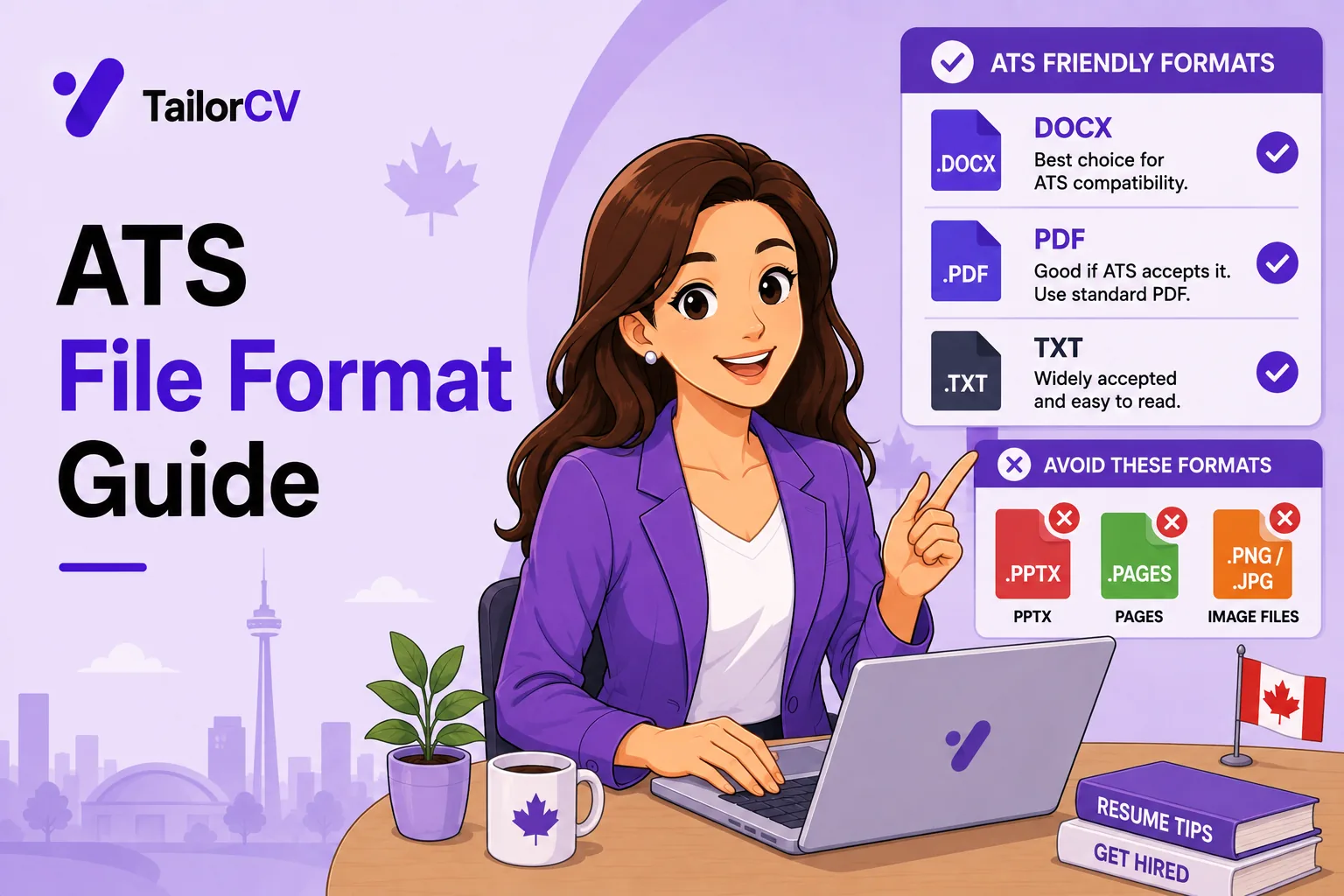
- PDF, unless the agency asks for Word - some still do, and that is worth respecting
- Standard job titles so keyword search finds you
The failure modes are catalogued in ATS resume formatting mistakes, and the keyword side in the best resume keywords for the UK.
Common Mistakes
Including a photo. The clearest signal that a CV was not written for the UK market.
Date of birth or marital status. Same problem.
American spelling throughout. Noticed immediately.
One page when you have ten years of experience. You are cutting evidence for no reason.
"References available on request." Assumed. Delete it.
A generic personal statement. Tailor it per application - the method is in how to tailor your resume for every job.
Omitting degree classification on graduate applications where it is expected.
Leaving right-to-work status unstated as a non-UK applicant.
Frequently Asked Questions
Should I include a photo on my UK CV?
No. UK employers do not expect one and many prefer not to receive one because of discrimination risk. Some agencies remove photos before forwarding a CV to a client.
How long should a UK CV be?
Two pages for most roles. One page is fine for a first job or internship. Academic and senior executive CVs may run longer.
Do I need to include my degree classification?
For graduate roles and early-career applications, yes - many schemes screen at 2:1 and some forms require the field. It becomes less important once you have several years of experience.
Should I say I need visa sponsorship?
Yes. Employers must verify right to work, and not all hold a sponsor licence. Stating it plainly avoids a wasted process on both sides and reads better than the question surfacing at offer stage.
Is a CV the same as a resume?
In the UK, the words are used interchangeably for the same two-page document. Note that in the US, "CV" means a longer academic document, which is a common source of confusion between the two markets.
Should I send a PDF or a Word document?
PDF by default, since it preserves formatting and parses reliably. Send Word if a recruitment agency specifically asks - some reformat CVs onto their own letterhead before submitting to clients.
Not sure your CV parses cleanly? Check your ATS score free.
Make This Practical
Start by deleting: photo, date of birth, marital status, full address, and the references line. That takes five minutes and removes every signal that your CV was written for a different market.
Then rebuild the top. Write a tailored personal statement with one piece of quantified evidence, add your degree classification if you are early career, and state your right-to-work status in one clause.
Finally, fix the evidence and the parsing. Rewrite duty lines as outcomes using how to write resume bullet points, switch to UK spelling throughout, run the file through the free ATS score checker, and tailor per posting with how to tailor your resume for every job. Then apply where the roles are, using the best job sites in the UK.
Does your formatting survive the parser?
Upload your resume and see what an ATS actually reads back.
Drop your resume here or choose a file
PDF only. Max 2 MB.
We never share your data or use it to train AI models.

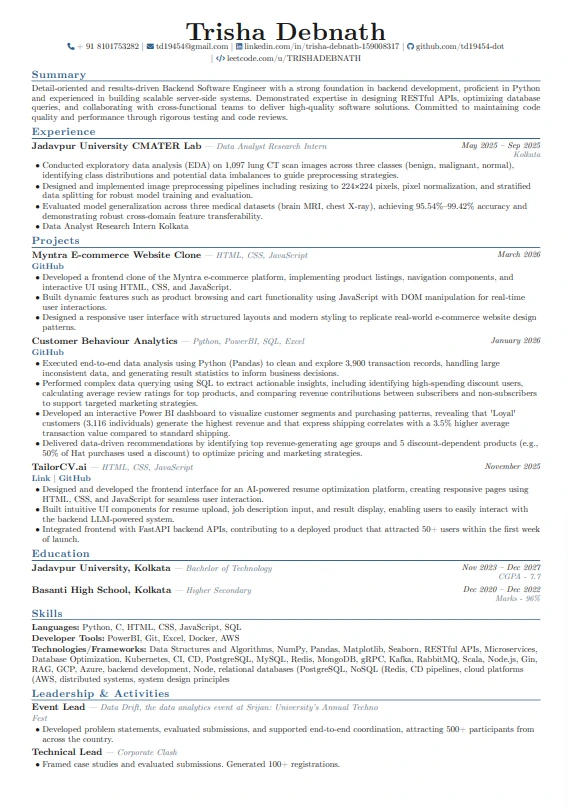
A layout that parses cleanly
Single column, standard headings, no text boxes — the formatting rules in this guide, already applied.
Was this guide useful?
Be the first to rate it.