 SS
SS
Key Takeaways
- You need a job offer from an employer holding a sponsor licence before you can apply - the visa follows the job, not the other way round.
- The Home Office publishes a register of licensed sponsors, which is the single most useful job search tool available to a visa-dependent applicant.
- Salary and skill-level thresholds both apply, and they were raised significantly in 2024 - verify current figures rather than relying on older guidance.
- The Graduate visa gives eligible students a period of unsponsored work rights, which is often the easier route into a sponsored role.
- Filtering your search to licensed sponsors from day one saves more time than any other single change.
The UK immigration system is document-heavy but reasonably transparent: the criteria are published, and you can check most of your eligibility yourself before applying to anything.
The mistake that costs applicants months is applying broadly and discovering at offer stage that the employer cannot sponsor. Most UK employers do not hold a sponsor licence, and an employer without one cannot hire you no matter how well the interview went.
This guide covers how sponsorship works, what the thresholds are, and how to run a search that only targets employers who can actually make you an offer.
A note on accuracy: UK immigration rules change frequently, and the salary thresholds in particular were revised substantially in 2024 with further changes signalled since. Treat the figures here as orientation and confirm current requirements on GOV.UK before making decisions.
How Sponsorship Actually Works
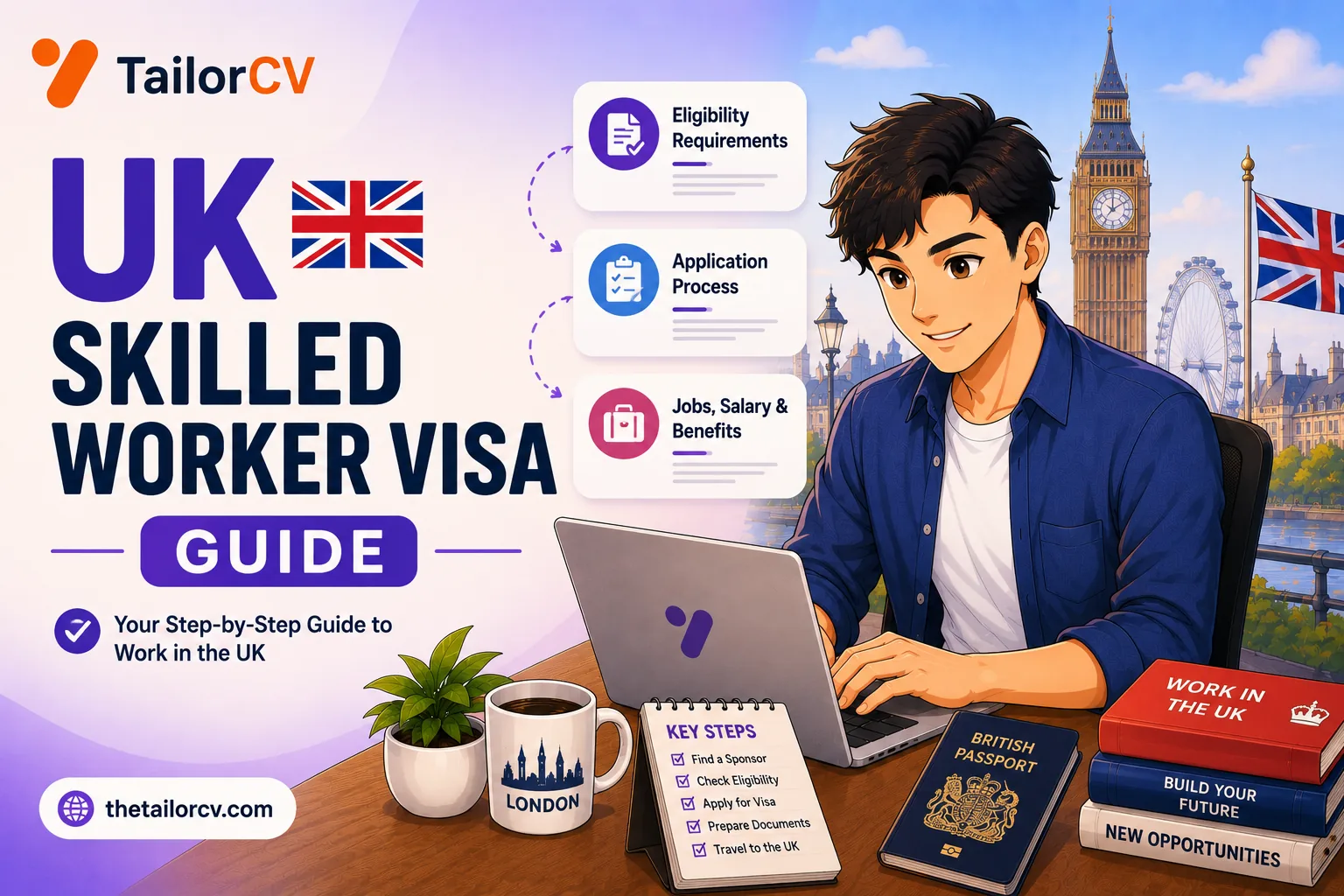
The sequence:
- An employer holds a sponsor licence. They applied to the Home Office for it, paid for it, and maintain compliance obligations. Not every employer bothers.
- They offer you a job that meets the skill and salary requirements.
- They issue a Certificate of Sponsorship (CoS) - a reference number, not a physical document.
- You apply for the visa using that CoS, paying the application fee, the Immigration Health Surcharge, and providing your documents.
- You receive a decision, and if granted, permission to work for that sponsor in that role.
The critical implication: your visa is tied to your employer and your job. Changing employers requires a new sponsorship and a new application. Changing roles significantly within the same employer can also require an update.
The Register of Licensed Sponsors
This is the piece of information that changes a visa-dependent job search, and most applicants find it too late.
The Home Office publishes a public register of all organisations licensed to sponsor workers. It is searchable, updated regularly, and free.
Use it as a filter. Before applying anywhere, check whether the employer appears on the register. If they do not, the application is almost certainly a dead end, however good the fit.
Use it as a source. Filter by your city and sector, and you have a list of employers who are structurally able to hire you - a far better starting point than a general job board.
Note two things: appearing on the register means an employer can sponsor, not that they will for a given role, and a licence can be rated or revoked, so check rather than assume.
How to combine this with the main job boards is covered in the best job sites in the UK.
Skill and Salary Thresholds
Two tests apply to the role, and both must be met.
The skill threshold. The job must sit at or above a defined skill level, assessed against the occupation code your employer assigns. Some occupations were removed from eligibility in recent changes, so the occupation code matters as much as the job title.
The salary threshold. There is a general minimum, and separately a "going rate" for the specific occupation - you generally need to meet whichever is higher. The general threshold was raised substantially in 2024.
Discounts and exceptions exist in some circumstances - for new entrants to the labour market, for certain occupations, and for roles on relevant shortage or immigration salary lists. These change, and eligibility is specific.
What this means practically: the salary in the job advert is not incidental to your visa. A role that pays below the applicable threshold cannot sponsor you even if the employer wants to. When you are negotiating, this is a genuine constraint rather than a bargaining position - see UK salary negotiation for how to handle it.
The Graduate Visa Route
If you have studied in the UK, this is frequently the easier path.
The Graduate visa allows eligible students who have completed a qualifying course to stay and work - typically for two years, or longer for doctoral graduates - without needing sponsorship.
Why it matters: you can take a job with an employer who does not hold a sponsor licence, build UK experience, and then either move to a licensed sponsor or persuade your employer to apply for a licence. Employers are considerably more willing to sponsor someone already working for them and performing well than an unknown applicant abroad.
The route has been subject to policy review, so confirm current terms and duration before planning around it.
If you are on this route, say so on your CV explicitly - "Graduate visa valid until [date], no sponsorship required" removes the largest objection to your application. Where to put it is covered in the UK CV format guide.
Costs
Budget realistically, because the total surprises people.
- Visa application fee, varying by length of visa and whether the role is on a relevant shortage list
- Immigration Health Surcharge, charged per year of the visa and payable upfront - frequently the largest single cost
- Certificate of Sponsorship fee, normally paid by the employer
- Immigration Skills Charge, paid by the employer, and a real reason some smaller employers avoid sponsorship altogether
- Dependants each pay their own application fee and health surcharge
Some employers cover part or all of the employee-side costs. It is a reasonable thing to ask about at offer stage, and the answer tells you something about how routinely they sponsor.
Making Your Application Work
State your status on the CV. Whether you need sponsorship, and if you already hold a visa, which one and until when. Leaving it unstated does not help - recruiters ask early, and ambiguity reads as evasion.
Target licensed sponsors only. This is the highest-value filter in your search.
Emphasise what justifies the cost. An employer sponsoring you is paying fees and taking on compliance obligations. Your CV needs to make that obviously worthwhile - specific skills, quantified results, and clear relevance. The method is in how to quantify achievements on your resume.
Apply to sectors that sponsor routinely. Technology, healthcare, engineering, academia, and finance sponsor far more often than retail, hospitality, or small local businesses.
Get the CV parsing right. Large sponsors run applicant tracking systems, so the file must extract cleanly - see ATS resume formatting mistakes.
Common Mistakes
Applying without checking the sponsor register. The single biggest waste of effort in a visa-dependent search.
Assuming a big company must be a sponsor. Many large UK employers are not licensed, particularly in domestically-focused sectors.
Hiding your visa requirement. It surfaces at offer stage and wastes everyone's process.
Ignoring the occupation code. Eligibility attaches to the code, not the job title on the advert.
Relying on outdated salary figures. The thresholds changed significantly in 2024. Check current rules.
Not budgeting the health surcharge. Payable upfront for the full visa period, and often the largest cost.
Assuming the visa moves with you. It is tied to your sponsor. A job change means a new application.
Frequently Asked Questions
Can I apply for a UK work visa without a job offer?
Not for the Skilled Worker route - it requires a licensed sponsor and a Certificate of Sponsorship. Other routes exist for specific circumstances, including talent and business categories with different criteria.
How do I know if an employer can sponsor me?
Check the Home Office register of licensed sponsors, which is public and searchable. If the organisation is not listed, they cannot sponsor you under this route.
What is the salary threshold?
There is both a general minimum and an occupation-specific going rate, and you generally need to meet the higher of the two. Thresholds were raised substantially in 2024, so confirm current figures on GOV.UK rather than relying on any summary.
Can I switch jobs on a Skilled Worker visa?
Yes, but it requires the new employer to sponsor you and a new visa application. You cannot simply move.
Does the Graduate visa lead to a Skilled Worker visa?
It can. Many people use the Graduate visa period to build UK experience and then switch, either with the same employer if they hold a licence or by moving to one who does. Confirm current terms before planning around it.
Can my family come with me?
Dependent partners and children can generally apply, each paying their own fees and health surcharge. Requirements for dependants have been tightened in some categories, so check the current position for your route.
The visa follows the job offer - so the CV has to work first. Check your ATS score free.
Make This Practical
Filter your search before you apply to anything. Pull the licensed sponsor register, narrow it to your city and sector, and treat that list as your target set - it removes the largest single source of wasted applications.
Then make your CV answer the sponsorship question immediately. State your status in one clause, format the file to UK convention using the UK CV format guide, and make the evidence strong enough to justify the cost an employer is taking on.
Finally, verify the details yourself. Confirm current salary thresholds and your occupation code on GOV.UK, budget the health surcharge upfront, run your CV through the free ATS score checker, and target the sectors that sponsor routinely - the wider strategy is in how to get a job in the UK as a foreigner.
What is your resume scoring right now?
Scan it against a job description and get your ATS match score in about a minute.
Drop your resume here or choose a file
PDF only. Max 2 MB.
We never share your data or use it to train AI models.

Was this guide useful?
Be the first to rate it.