TD
TD
Key Takeaways
- A cloud engineer resume in 2026 should demonstrate expertise in designing, building, and managing reliable and secure cloud infrastructure, with a focus on architecture and cost governance.
- Include certifications prominently, as they are crucial indicators of competency in cloud roles, along with measurable achievements in cost, availability, or security.
- The recommended resume format includes a header, summary, technical skills, work experience, projects, certifications, and education, ideally kept to one or two pages.
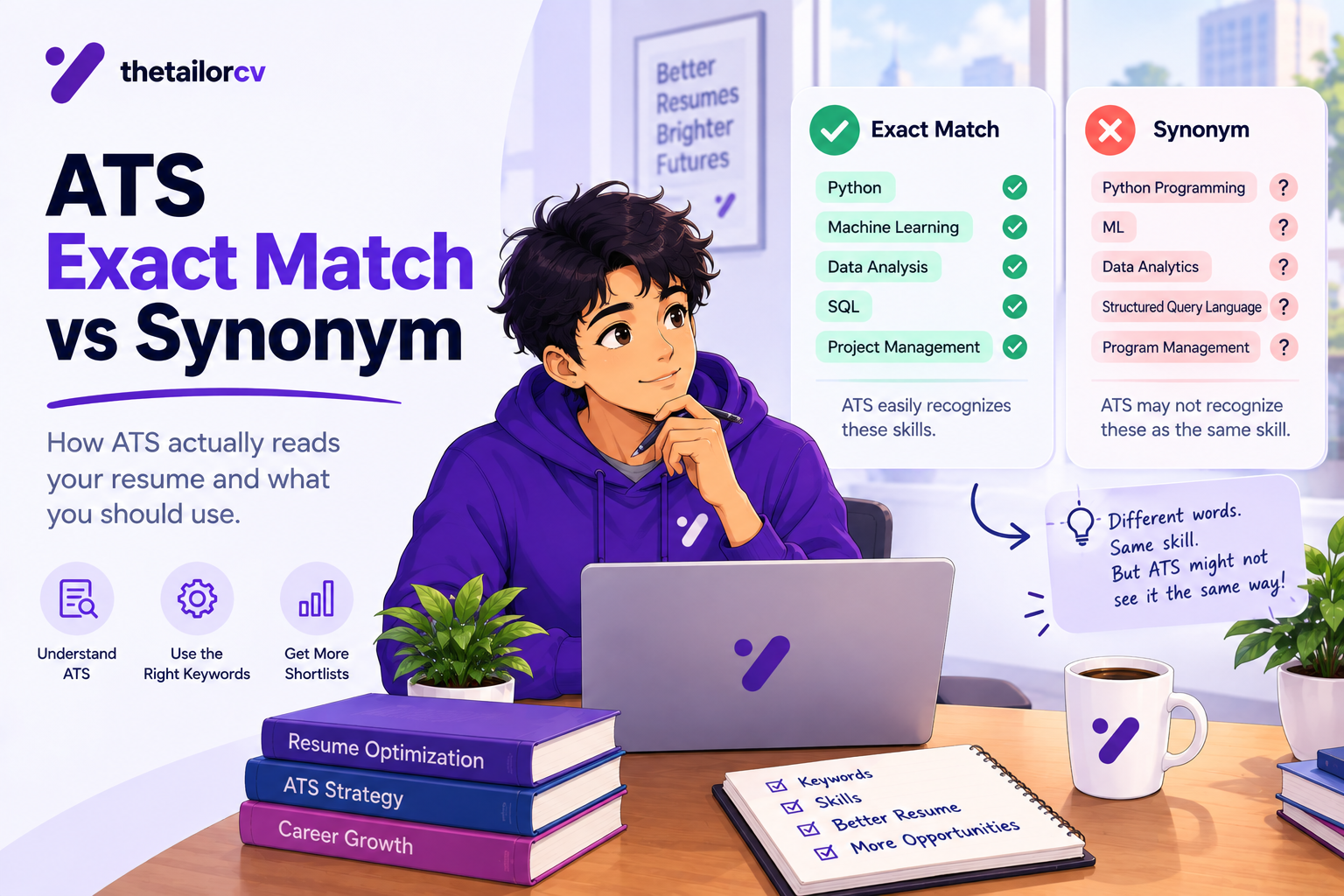
- Use specific ATS keywords related to cloud services, infrastructure as code, and security to enhance visibility in applicant tracking systems.
- Bullet points should clearly articulate achievements using a formula that highlights the action taken, the cloud service involved, and the measurable result achieved.
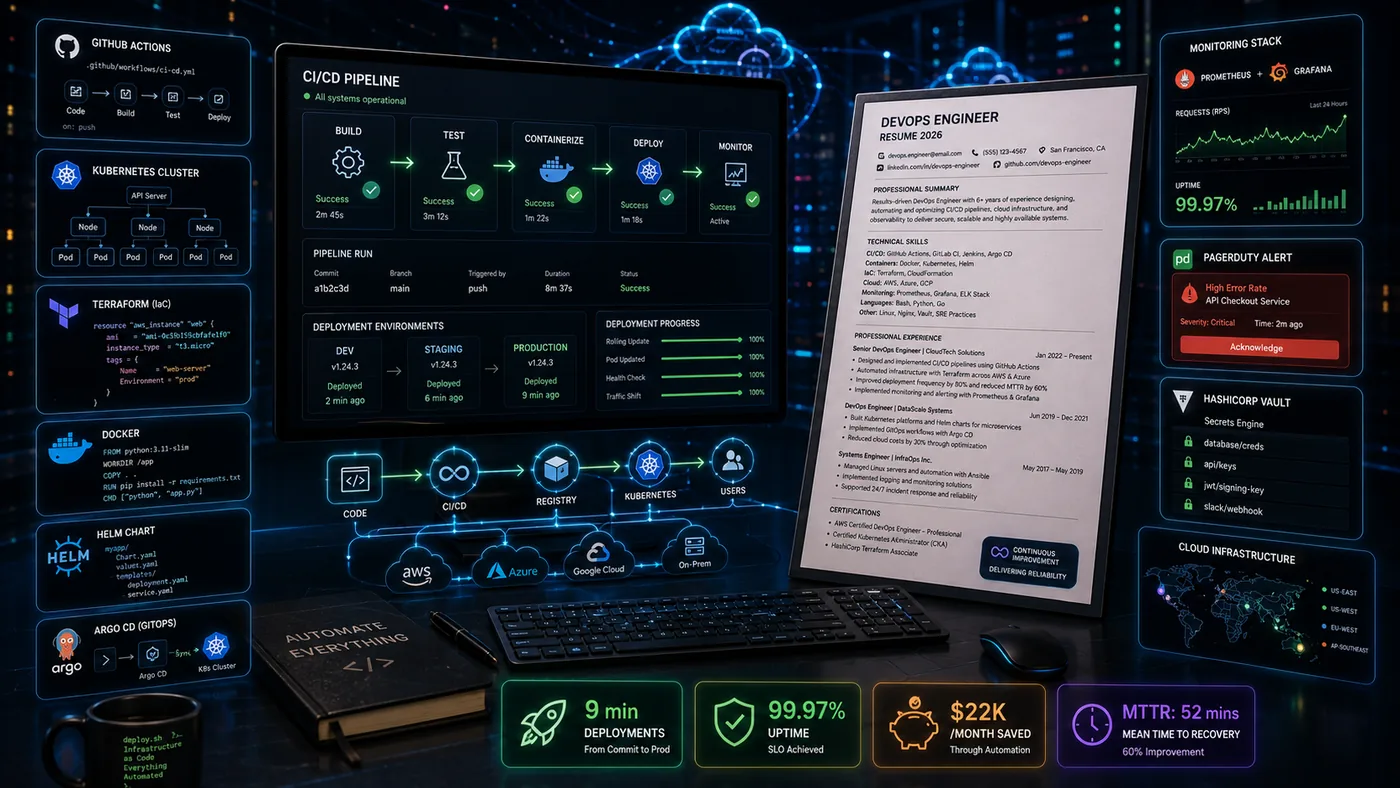
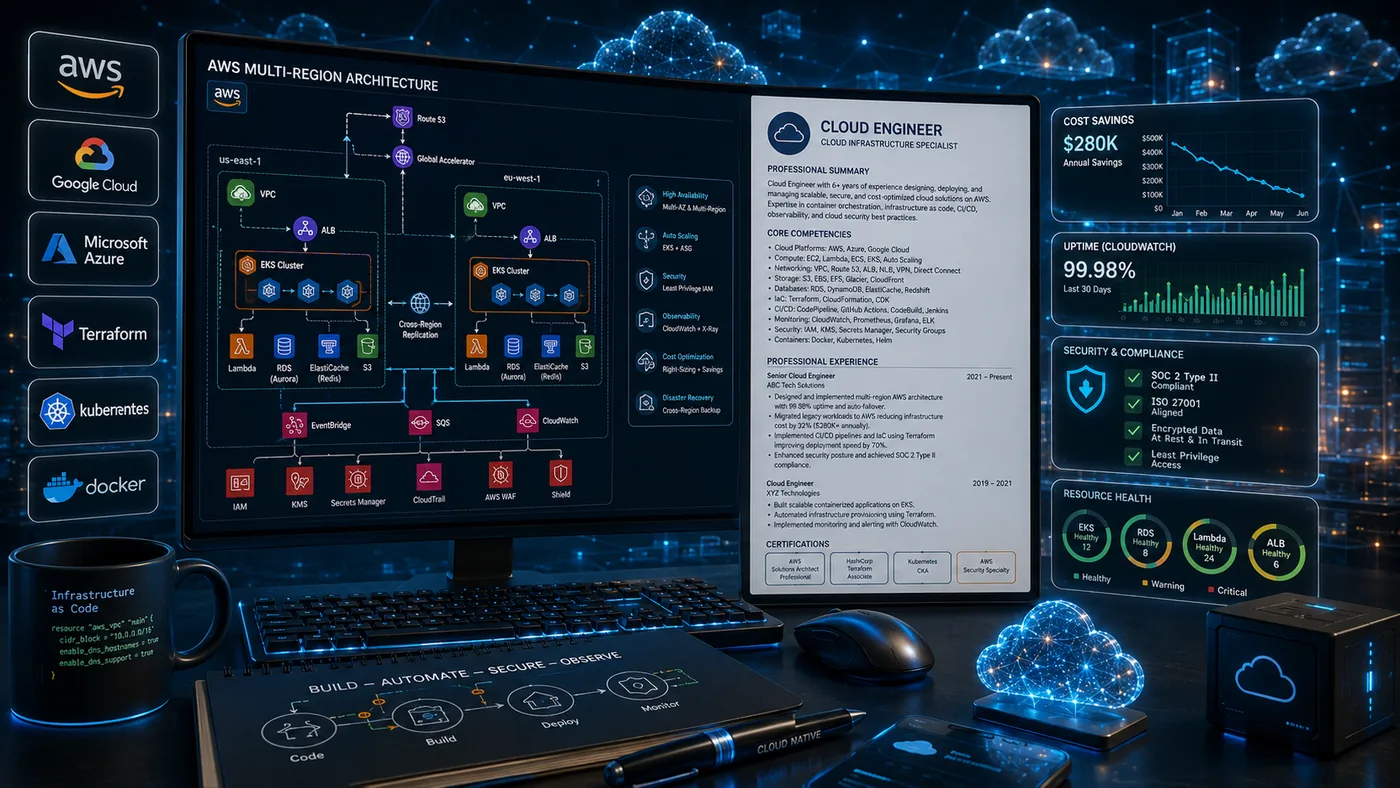
A cloud engineer resume in 2026 needs to prove that you can design, build, and manage cloud infrastructure that is reliable, secure, cost-efficient, and automated. The distinction between cloud engineering and DevOps is blurring, but cloud roles tend to emphasize architecture, managed services, cost governance, and multi-cloud strategy more than CI/CD pipeline tooling.
Whether you are targeting AWS, GCP, Azure, or multi-cloud roles, your resume must show certifications, real infrastructure built, and measurable improvements in cost, availability, or security posture.
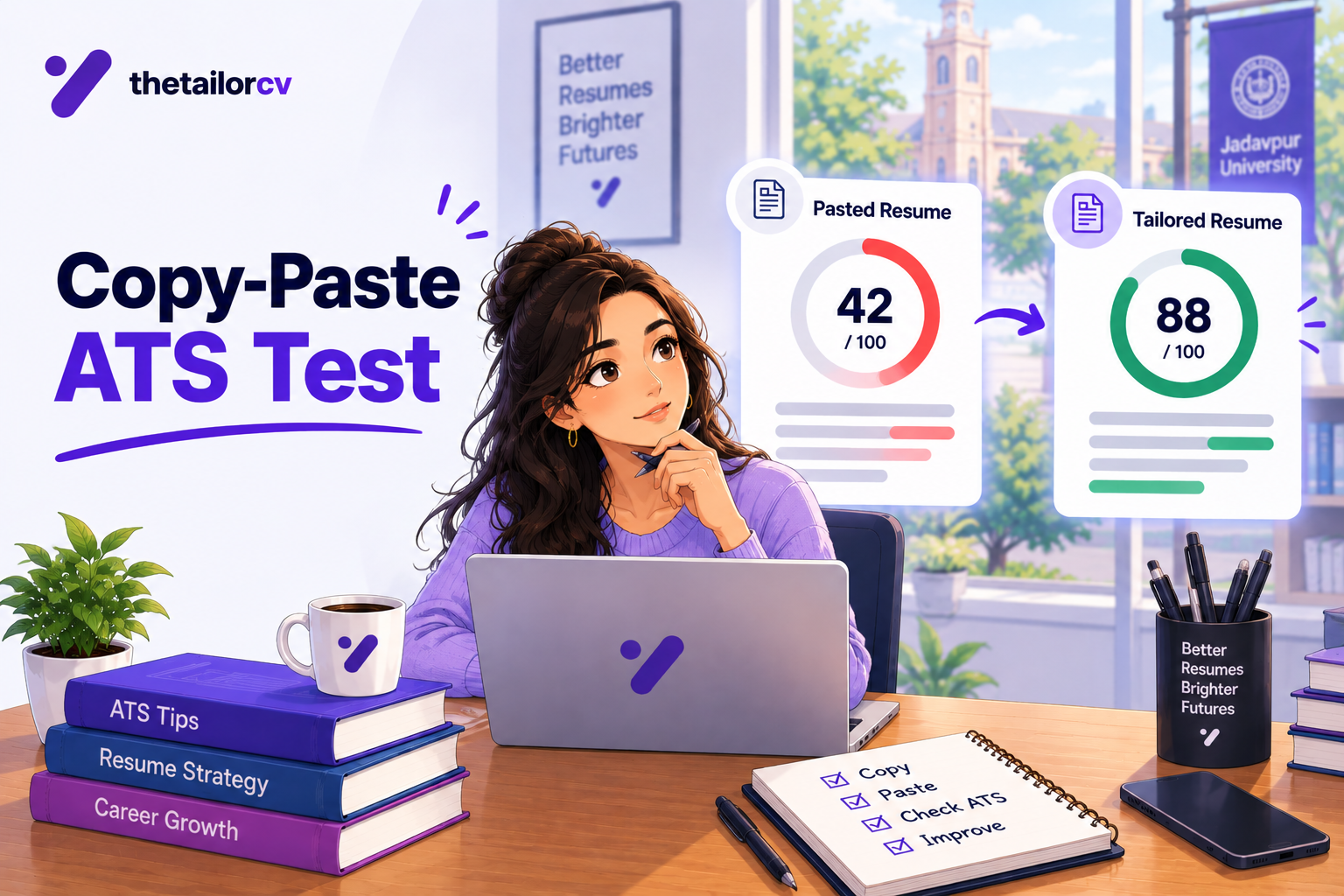
Before applying, run your resume through the ATS score checker. If your role is more pipeline and automation focused, also read the DevOps engineer resume guide. Use ATS-friendly resume templates.
Best Cloud Engineer Resume Format
- Header
- Summary with certification highlight
- Technical skills by cloud and category
- Work experience
- projects
- certifications
- education
Your resume after optimization
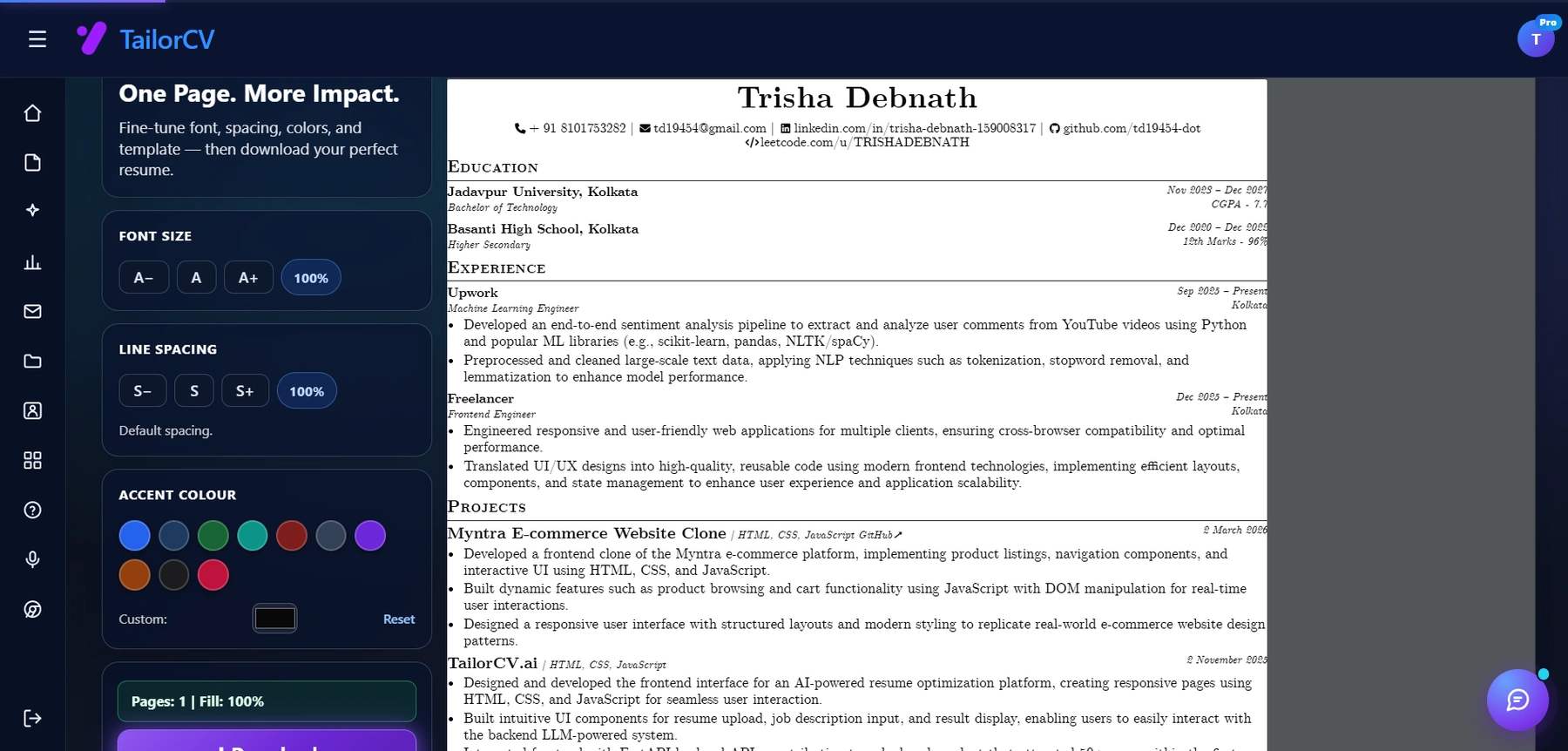
This is the resume after tailoring - the content is already matched, and these controls are how you fit it onto one page.
One to two pages. certifications are important signals in cloud roles and should be clearly visible.
Cloud Engineer Resume Summary
Formula:
Cloud Engineer with X years of experience designing and managing [AWS/GCP/Azure] infrastructure for [company type or scale]. Reduced [cost/incident/provisioning time] by [metric]. Certified [AWS/GCP/Azure certification].
Example for Experienced Cloud Engineer
Cloud Engineer with 6 years of experience architecting multi-region AWS infrastructure for SaaS and fintech platforms. Designed and maintained cloud environments supporting 4M+ monthly users with 99.97% availability. Reduced monthly AWS costs by $34K through reserved instance planning, spot fleet usage, and right-sizing. Certified AWS Solutions Architect - Professional and Certified SysOps Administrator.
Example for Entry-Level Cloud Engineer
Cloud Engineer with hands-on experience in AWS, Terraform, and Docker. Built 3 cloud infrastructure projects including a multi-environment VPC setup, serverless API with Lambda, and containerized workload on ECS. AWS Cloud Practitioner and Solutions Architect - Associate certified. Seeking a junior cloud or infrastructure engineering role.
Cloud Engineer Technical Skills
AWS Services: EC2, EKS, ECS, Lambda, RDS, Aurora, S3, CloudFront, Route 53, IAM, VPC, CloudWatch, SNS, SQS, Kinesis, Glue, Redshift, ElastiCache GCP Services: GKE, Cloud Run, Cloud SQL, BigQuery, Cloud Storage, IAM, Pub/Sub, Cloud Functions, Vertex AI Azure Services: AKS, Azure Functions, Azure SQL, Cosmos DB, Azure AD, Key Vault, Event Hub Infrastructure as Code: Terraform, Pulumi, AWS CloudFormation, CDK, Ansible Containers and Orchestration: Docker, Kubernetes, Helm, ArgoCD Security: IAM policies, SCPs, VPC security, WAF, GuardDuty, Security Hub, KMS, Secrets Manager Monitoring: CloudWatch, Datadog, Prometheus, Grafana, PagerDuty, X-Ray Cost Management: AWS Cost Explorer, Trusted Advisor, Savings Plans, Reserved Instances, Spot Fleet
Best ATS Keywords for Cloud Engineer Resume
- AWS / GCP / Azure
- Terraform / CloudFormation
- Infrastructure as code
- Kubernetes / EKS / GKE / AKS
- Serverless (Lambda / Cloud Functions)
- VPC design
- IAM / security policies
- Cloud cost optimization
- High availability
- Auto-scaling
- Disaster recovery
- Multi-region architecture
- CI/CD integration
- Cloud security
- Monitoring and alerting
- Reserved instances / savings plans
- Cloud governance
- Compliance (SOC 2, HIPAA, PCI)
- AWS Solutions Architect certification
How to Write Cloud Engineer Resume Bullet Points
Formula:
Designed / Reduced / Migrated / Built + [cloud service or architecture component] + [context or scale] + [cost, availability, security, or provisioning time result]
Weak Bullet Points
- Managed AWS infrastructure
- Used Terraform for infrastructure as code
- Set up monitoring and alerting
- Worked on cloud cost optimization
Strong Bullet Points
- Designed a multi-region AWS architecture across US-East and EU-West with Route 53 failover, achieving 99.98% measured uptime for a payment processing service handling $180M in annual transactions.
- Reduced monthly AWS spend from $86K to $54K by analyzing Cost Explorer recommendations, purchasing 3-year Reserved Instances for baseline EC2, migrating batch workloads to Spot Instances, and removing 380 idle resources.
- Built modular Terraform infrastructure covering VPC, IAM, EKS, RDS, and CloudFront across 3 environments, enabling full environment provisioning in 25 minutes versus 3 days manual setup.
- Migrated 12 EC2-hosted services to AWS Lambda and ECS Fargate, eliminating server management overhead and reducing compute costs by 42% for variable workloads.
- Led AWS GuardDuty and Security Hub implementation across 4 AWS accounts, establishing centralized threat detection and remediation that resolved 140 high-severity findings in 60 days.
Cloud Engineer Resume Example
Senior Cloud Engineer B2B SaaS Company | Nov 2021 - Present
- Owned AWS cloud infrastructure for a 600-person company with 2.8M monthly active users across 3 production regions.
- Designed and implemented multi-account AWS Organization with 12 accounts, SCPs, and centralized logging - passing SOC 2 Type II cloud scope for the first time.
- Led Kubernetes migration from EC2 auto-scaling groups to EKS with Helm, enabling team-level self-service deployments and reducing infrastructure ops ticket volume by 70%.
- Reduced annual AWS spend by $280K through Reserved Instances, Compute Savings Plans, and EBS volume right-sizing - achieving 67% infrastructure cost efficiency improvement.
- Established disaster recovery plan with documented RPO of 4 hours and RTO of 2 hours for all Tier 1 services, validated through quarterly DR drills.
Cloud Certifications Worth Having
Highly valued in cloud engineering:
- AWS Certified Solutions Architect - Associate (most common starting point)
- AWS Certified Solutions Architect - Professional
- AWS Certified SysOps Administrator
- AWS Certified DevOps Engineer
- Google Cloud Professional Cloud Architect
- Google Cloud Professional Data Engineer
- Microsoft Azure Administrator (AZ-104)
- Microsoft Azure Solutions Architect Expert (AZ-305)
- HashiCorp Terraform Associate
List format: AWS Certified Solutions Architect - Professional | AWS | 2025 HashiCorp Certified: Terraform Associate | HashiCorp | 2025
Common Cloud Engineer Resume Mistakes
Mistake 1: Listing all AWS services without context
"Experienced with EC2, S3, RDS, Lambda, EKS, ECS, CloudFront, Route 53, IAM, VPC, SNS, SQS, Kinesis..." - this is a service catalog, not a resume. Show which services you actually architected with and what they achieved.
Mistake 2: No cost or availability metrics
Cloud engineers are valued for cost efficiency and reliability. If you have reduced costs or improved uptime, these are your most impressive credentials.
Mistake 3: No infrastructure-as-code evidence
In 2026, manually clicking through the AWS console is not a cloud engineering practice. Terraform, CloudFormation, or CDK must be on your resume.
Mistake 4: No security coverage
Cloud security is an expected component of cloud engineering. Show IAM design, compliance work, security posture improvement, or audit readiness.
Related Guides
- Civil Engineer Resume
- DevOps Engineer Resume
- Chemical Engineer Resume
- Cybersecurity Engineer Resume
- Data Engineer Resume
- Electrical Engineer Resume
- Embedded Systems Engineer Resume
- Game Developer Resume
- Machine Learning Engineer Resume
- Mechanical Engineer Resume
- QA Engineer Resume
- Site Reliability Engineer (SRE) Resume
- Accountant Resume 2026 - Complete Guide with Examples
- Software Engineer Resume for FAANG in 2026
- How to List Education on a Resume in 2026 - Complete Guide with Examples
- Journalist Resume Guide 2026
Make This Practical
Once you draft this resume, test it against a real job post with the free ATS score checker. Then improve fit using Resume Matching With Job Description, polish the layout with ATS-friendly resume templates, and make the bullets stronger with How to Write Resume Bullet Points.
A complete application needs more than one document. Pair the resume with a targeted letter from the AI cover letter generator, practice role-specific questions with the AI mock interview tool, and publish proof of work with the portfolio website builder when your role benefits from projects or case studies.
Conclusion
A strong cloud engineer resume in 2026 shows cloud architecture ownership, infrastructure-as-code proficiency, cost optimization results, and security compliance contributions. Every bullet should connect your cloud work to a measurable infrastructure or business outcome.
Run your resume through the TailorCV ATS score checker. Then prepare for cloud architecture and technical interviews with the interview preparation guide.
Frequently Asked Questions
What are the key components of a Cloud Engineer resume in 2026?
A Cloud Engineer resume in 2026 should include several essential components: a professional header, a summary highlighting your experience and certifications, a section detailing your technical skills categorized by cloud platforms, and a comprehensive work experience section. Additionally, showcasing relevant projects, certifications, and education is crucial. For more details on structuring your resume, check out our guide on Job Description Analysis Checklist Before You Apply.
How can I make my Cloud Engineer resume ATS-friendly?
To ensure your Cloud Engineer resume is ATS-friendly, use clear headers, standard fonts, and avoid complex formatting. Incorporate relevant ATS keywords related to cloud engineering, such as specific technologies and skills, to help your resume get past automated screening. You can also run your resume through our Free ATS score checker to identify areas for improvement.
What certifications should I include on my Cloud Engineer resume?
Including certifications specific to cloud platforms is vital for demonstrating your qualifications. For example, certifications from AWS, GCP, or Azure can significantly enhance your resume's credibility. Make sure these certifications are clearly visible in your resume, as they signal your expertise in cloud roles. For more on listing certifications, visit our guide on how to list certifications on resume.
How do I quantify my achievements in a Cloud Engineer resume?
Quantifying your achievements can greatly strengthen your Cloud Engineer resume. Use specific metrics to illustrate your impact, such as the percentage reduction in costs, the number of incidents resolved, or improvements in infrastructure reliability. This approach not only provides concrete evidence of your skills but also aligns with what employers are looking for. For examples of impactful projects, refer to our post on Fresher Resume Projects That Get Interviews.
Should I focus more on technical skills or soft skills in my Cloud Engineer resume?
While technical skills are crucial for a Cloud Engineer position, soft skills should not be overlooked. Employers value candidates who can communicate effectively, work collaboratively, and adapt to changing environments. Therefore, it's essential to balance both types of skills on your resume. For insights on presenting soft skills and technical expertise, consider reading our DevOps Engineer Resume 2026 guide.
What is your resume scoring right now?
Scan it against a job description and get your ATS match score in about a minute.
Drop your resume here or choose a file
PDF only. Max 2 MB.
We never share your data or use it to train AI models.

Templates that keep this structure intact
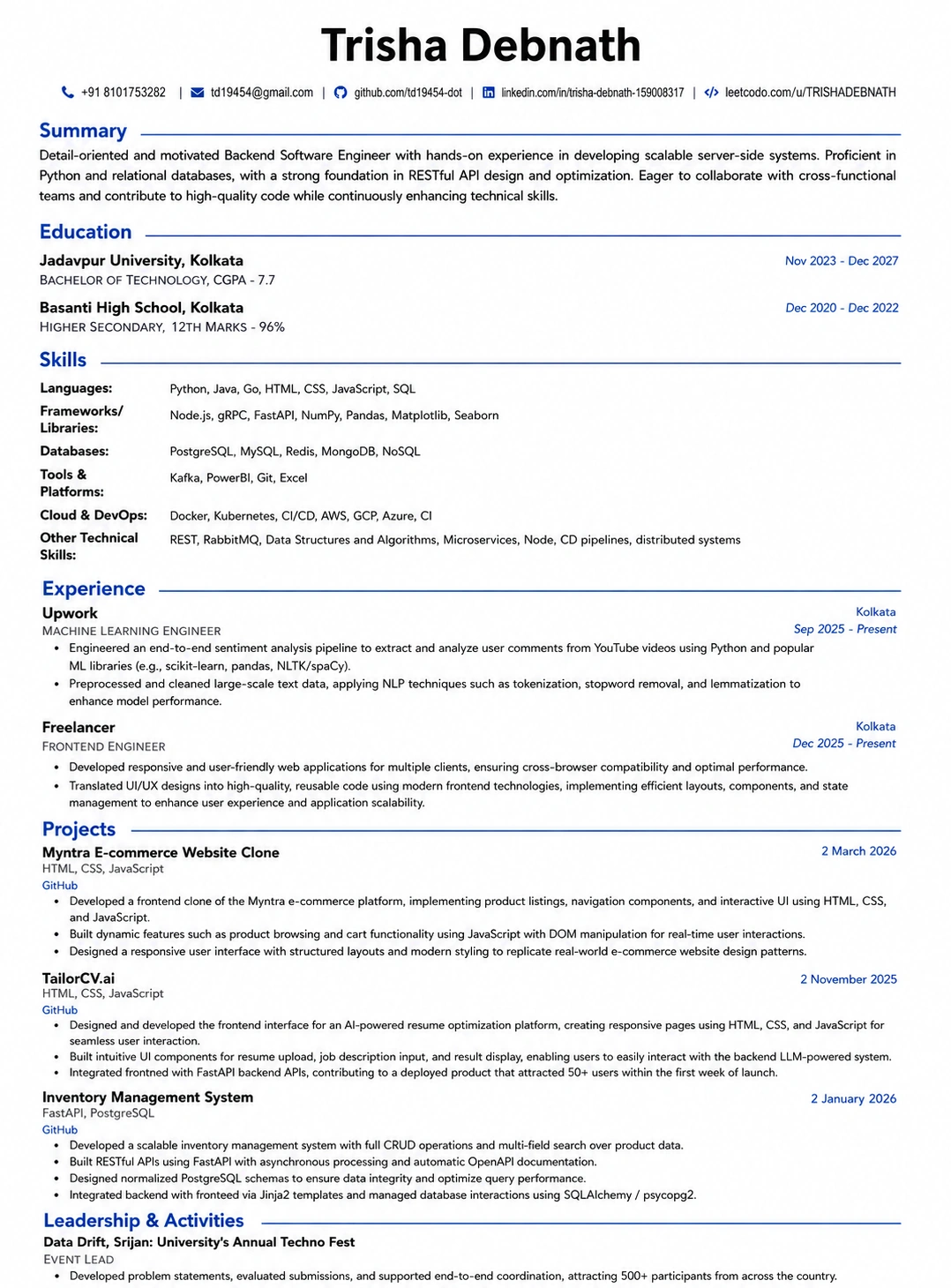
This template is ATS-tested — start from it and the formatting rules in this guide are already handled.
Was this guide useful?
Be the first to rate it.