 TD
TD
Key Takeaways
- Application volume in the US is enormous, so a cold application competes against hundreds - referrals convert at a dramatically higher rate.
- LinkedIn is the primary channel for professional roles, functioning as a board, a database recruiters search, and a networking tool at once.
- Company career pages remain worth using directly, since some roles never reach the aggregators.
- Specialist boards for tech, government, healthcare, and non-profit carry roles the general sites miss entirely.
- If you need sponsorship, public H-1B disclosure data is a better starting point than any job board.
The US has more job boards than any other market, and using more of them is not the answer. Volume is the defining problem: a posting on a major board can attract hundreds of applications within days, most of which are never read by a human.
That reality shapes the strategy. Boards are how you find out what exists and how you fill the top of your funnel. Referrals and direct outreach are how you actually convert. Candidates who treat the apply button as their whole strategy send two hundred applications and hear nothing.
This guide covers which platforms carry what, how they screen you, and where to spend your effort instead.
Before uploading anywhere, check what a parser extracts from your file with the free ATS score checker.
The Major General Boards
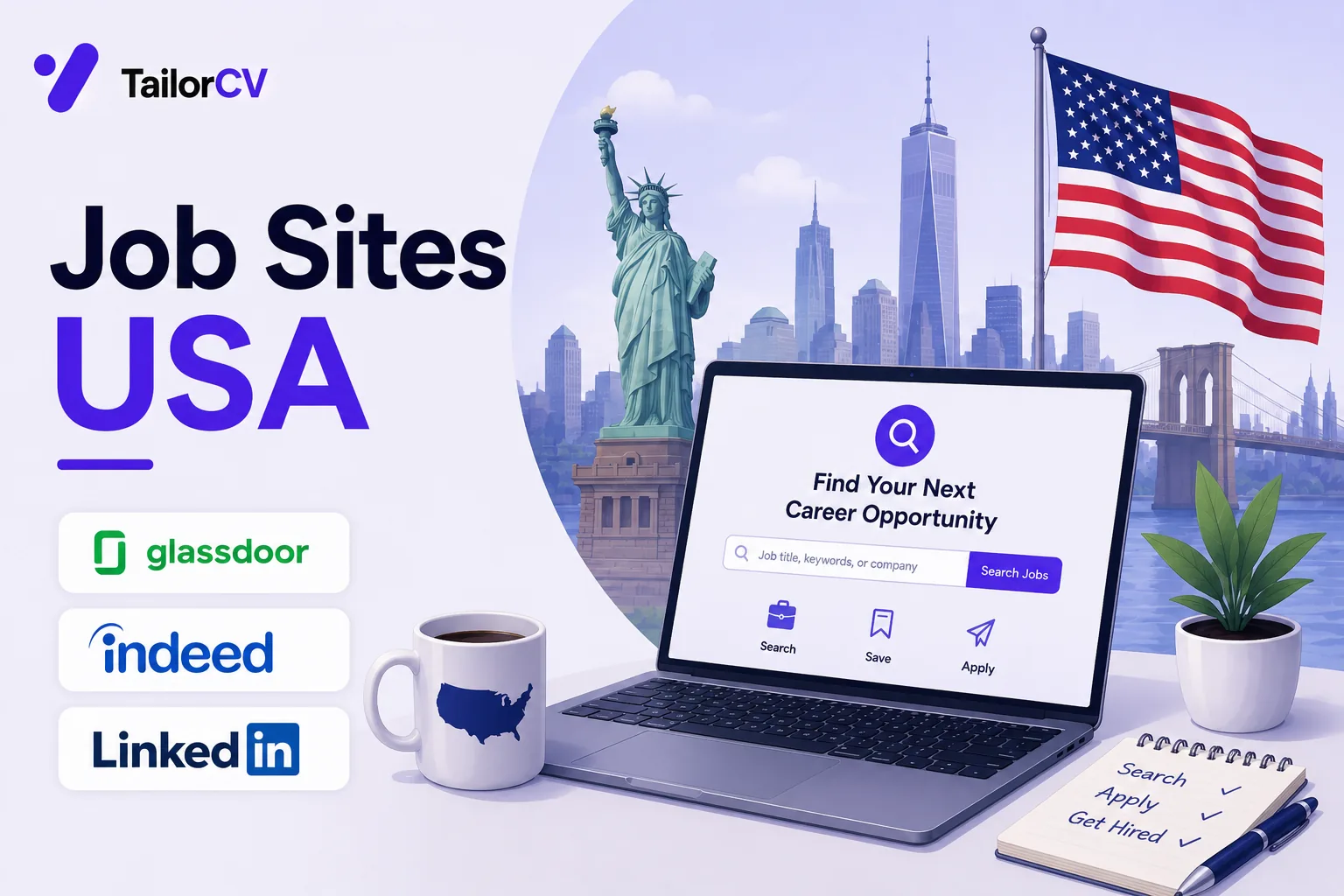
The most important single platform for US professional roles, and it does three jobs at once: a job board, a searchable database recruiters mine constantly, and a networking channel for referrals.
What matters most: your profile is a search result. Recruiters search by title, skill, and location, then reach out. A complete, keyword-accurate profile generates genuine inbound contact.
Practical setup: headline naming your actual role and specialization, "Open to Work" set to recruiters-only if you are searching confidentially, skills section populated with searchable terms, and location set to a real US metro. See the LinkedIn profile optimization guide and LinkedIn for USA job search.
Easy Apply is a trap in isolation. It makes applying frictionless for everyone, so those postings collect enormous volume. Use it, but pair it with finding a person at the company.
Indeed
The largest by raw volume, aggregating from employer sites plus direct postings. Strong coverage at every level and across every industry, including hourly and non-professional roles that LinkedIn covers thinly.
Best for: breadth, and for non-technology sectors where LinkedIn is weaker.
Glassdoor
Job listings plus company reviews, salary reports, and interview question archives. The interview section is genuinely useful preparation - candidates post the actual questions they were asked, by company and role.
Best for: research before an interview, and salary benchmarking before a negotiation - see US salary negotiation.
ZipRecruiter and Monster
Still carry meaningful volume, particularly outside major metros and in mid-market roles. Worth a profile, lower priority than the three above.
Company career pages
Do not skip these. Some employers post roles on their own site days before syndicating, and some never syndicate at all. If you have a target list of employers - which you should, particularly if you need sponsorship - check their pages directly on a schedule.
Specialist Platforms
The general boards miss entire categories.
Technology. Beyond LinkedIn, several startup-focused and engineering-specific boards carry roles that never reach the aggregators. Startup job platforms in particular list early-stage companies that do not pay to post elsewhere.
Government. Federal roles go through USAJOBS, which uses its own application format - long, structured, and unlike a normal resume submission. State and city governments run separate portals. These roles are invisible on commercial boards.
Healthcare. Hospital systems typically run their own portals, and specialty-specific boards cover clinical roles.
Academia and research. University career pages and academic job boards. Also worth knowing: universities and affiliated non-profits are frequently cap-exempt for H-1B purposes, which matters enormously for international candidates - see the H-1B visa job search guide.
Non-profit. Dedicated boards carry roles that rarely appear commercially.
Remote-specific boards aggregate distributed roles across employers - see remote jobs in the USA.
If You Need Visa Sponsorship
Start somewhere other than a job board.
Public disclosure data. Employers filing H-1B petitions submit data that becomes public record, and several free sites make it searchable by employer, job title, year, and location. This tells you who has actually sponsored rather than who might.
Build a target list of thirty to fifty employers from that data, then monitor their career pages directly. This single filter removes the largest source of wasted applications.
Read postings literally. Many state their position explicitly - "we are unable to sponsor" or "sponsorship available". Believe both.
Some boards let you filter on sponsorship-related terms, which helps but is less reliable than the disclosure data.
The wider strategy is in how to get a job in the USA as an international candidate, and for students, the OPT and CPT resume guide.
Referrals Beat Every Board
This is the most important section here.
Referred candidates convert at a dramatically higher rate than cold applicants in the US, for a simple structural reason: most large employers pay referral bonuses, so referred applications are routed differently and actually get read. A cold application on a popular posting may never reach a human.
How to get one without knowing anyone:
Find people at the company through LinkedIn - alumni from your university are the highest-yield group, because a shared institution is a real connection.
Send a short, specific message. Not "please refer me". Name the role, say briefly why you fit, and offer to send your resume. Most people will read a message that respects their time. See networking messages for referrals and how to write a cold email to a recruiter.
Ask recruiters directly. In-house recruiters post openly on LinkedIn and frequently respond to a well-targeted message.
Rebuild dormant connections before you need them. Former colleagues, classmates, people from previous roles.
A reasonable allocation: half your effort on applications, half on getting a person at each target company. Most candidates spend ninety-five percent on applications and wonder why nothing lands.
How Boards Screen You
Uploading a resume puts it in a searchable database, and recruiters search that structure.
Standard job titles. A recruiter searching "Software Engineer" will not find "Code Wizard" - see the best resume keywords for the USA.
Named skills, not categories. Matching is close to exact.
Clean parsing. Single column, standard headings, no text inside images, nothing critical in headers or footers, real text PDF. The failure modes are in ATS resume formatting mistakes.
Complete profiles rank higher in most board search results.
Recency matters. Several boards weight recently updated profiles, so refreshing yours every couple of weeks keeps you visible.
Location filters are strict. Set a real US metro. "Open to relocation" belongs in the field, not only in your resume.
Common Mistakes
Applying only through boards. A cold application on a popular posting competes with hundreds and frequently never reaches a person, which is why candidates who send two hundred applications often hear nothing at all.
Ignoring referrals. This is the single highest-converting channel in the US market, and most candidates skip it entirely because asking feels awkward - a few hours of outreach outperforms weeks of applying.
Using Easy Apply exclusively. Frictionless applying for you means frictionless applying for everyone, so those postings accumulate the highest volume and the lowest per-application odds.
Skipping company career pages. Some employers post to their own site days before syndicating and some never syndicate at all, so aggregator-only searching misses roles entirely.
Missing the specialist platforms. Federal roles on USAJOBS, hospital system portals, and academic boards are invisible on commercial sites, which quietly removes whole sectors from your search.
Uploading a resume that does not parse. You become invisible to the database search recruiters actually use, regardless of how strong the content is.
Never updating your profile. Several boards weight recency in search ranking, so a profile untouched for six months sinks below identical ones refreshed last week.
Applying to employers who cannot sponsor. If you need sponsorship, public disclosure data tells you who has actually filed - applying without checking is the largest source of silent rejection in an international search.
Frequently Asked Questions
Which US job site is best?
LinkedIn for professional roles, because it combines listings, recruiter search, and referral networking. Indeed for breadth and non-technology sectors. Glassdoor for research. Then whichever specialist board covers your field.
Do recruiters really find people through LinkedIn?
Yes, extensively. Recruiters search the database by title, skill, and location and reach out directly, which is why a complete keyword-accurate profile generates inbound contact rather than just hosting your history.
How many applications should I send?
Fewer, better-targeted ones plus referral outreach beats high-volume applying. Twenty tailored applications with a contact at each company outperforms two hundred cold submissions.
Should I pay for premium features?
Generally not at first. Free tiers are enough to test whether your profile attracts responses. If you get no traction, the problem is usually the resume, the targeting, or the lack of referrals rather than the tier.
How do I find jobs that sponsor visas?
Start with public H-1B disclosure data rather than a job board - it shows which employers have actually sponsored, by role and location. Then monitor those employers' career pages directly.
Are government jobs on the normal boards?
Federal roles go through USAJOBS with its own application format, and state and city governments run separate portals. These are largely invisible on commercial job sites.
Should I make my resume public on job boards?
Generally yes, since recruiters search those databases actively. If you are searching confidentially, most platforms let you restrict visibility, and LinkedIn's settings let you hide profile updates from your current employer.
Make sure recruiters can find you in the database at all. Check your ATS score free.
Make This Practical
Split your effort deliberately: half on applications, half on getting a human contact at each target company. Most candidates spend almost everything on the apply button, which is why they compete against hundreds of identical submissions and hear nothing.
Then set up on two general platforms rather than six - LinkedIn plus Indeed for most people - with a profile built for search: standard job title, named skills, a real US metro, and recent updates. Add whichever specialist board covers your field, and check your target employers' own career pages on a schedule.
Finally, if you need sponsorship, build your target list from public H-1B disclosure data before applying anywhere, following the H-1B visa job search guide. Format your resume to US convention using the US resume format guide, verify it parses with the free ATS score checker, and pursue a referral for every role you seriously want.
What is your resume scoring right now?
Scan it against a job description and get your ATS match score in about a minute.
Drop your resume here or choose a file
PDF only. Max 2 MB.
We never share your data or use it to train AI models.

Was this guide useful?
Be the first to rate it.