 TD
TD
Key Takeaways
- Referred applications get read; cold applications on popular postings frequently never reach a human at all.
- Most US employers pay referral bonuses, so asking is not an imposition — there is something in it for them.
- You do not need to know someone well. Alumni, former colleagues, and people two steps removed all convert.
- Ask for a specific role, not for help generally — vague requests are the ones that get ignored.
- Informational interviews are the version that works when there is no open role yet.
The uncomfortable truth about US job searching is that the apply button is the weakest channel available to you. A popular posting collects hundreds of applications, most reviewed by nobody. The same application arriving through a referral link is routed differently and actually gets read.
Most candidates know this and still spend ninety-five percent of their effort on applications, because asking feels awkward. This guide is about making it not awkward — which mostly means asking correctly.
Before you ask anyone, make sure the resume you send holds up — the free ATS score checker.
Why referrals work mechanically
It is not favouritism. It is process.
Referral bonuses exist. Most mid-size and large US employers pay staff a bonus — often meaningful — for referring someone who gets hired and stays. When you ask for a referral, you are offering them a lottery ticket, not asking for charity. This reframing matters, because it is why strangers say yes.
Referrals enter a different queue. Referred candidates are typically flagged in the ATS and reviewed separately from the general pool.
They carry implied vetting. Someone put their name on it, which is a weak signal but a real one.
So the person you ask is not doing you a large favour at their own expense. They are spending two minutes on something that might pay them.
Who to ask
In rough order of how well it converts:
Former colleagues. Highest conversion. They have seen your work, so the referral is genuine rather than nominal.
University alumni. Extremely effective and consistently underused. A shared institution is a real connection in the US, and alumni are unusually willing to help. LinkedIn's alumni filter on your school page lists exactly who works where.
Second-degree connections. Someone you know knows them. Ask your mutual for an introduction rather than approaching cold — a warm intro converts far better.
People in the team you would join. They have the strongest incentive: they want the role filled with someone competent.
Recruiters at the company. Not a referral, but in-house recruiters post openly on LinkedIn and respond to well-targeted messages more often than people expect.
Complete strangers with something in common. Same previous employer, same bootcamp, same city, same niche technology. Lower conversion, still non-zero, and the volume is unlimited.
How to ask — the message that works
The bad version:
Hi, I'm looking for opportunities in data engineering. Could you help me out or refer me to anything suitable at your company?
This fails because it asks the recipient to do the work — find the role, judge the fit, decide what "suitable" means. Most people will not.
The good version does the work for them:
Hi Sarah — I saw you're a data engineer at Stripe. I'm applying for the Data Engineer II role (req 4471) and noticed you'd worked on their payments pipeline.
I've spent three years on event-driven ingestion at a fintech, most recently rebuilding a pipeline handling 40M events a day. If it looks like a reasonable fit, would you be open to referring me? Happy to send my resume either way — and no problem at all if you'd rather not.
Thanks either way.
Why it works:
- Names the specific role and req number — zero effort for them to find it
- One concrete line of evidence — they can judge the fit in five seconds
- Explicit easy out — removes the social pressure that makes people ignore messages
- Short — under 120 words
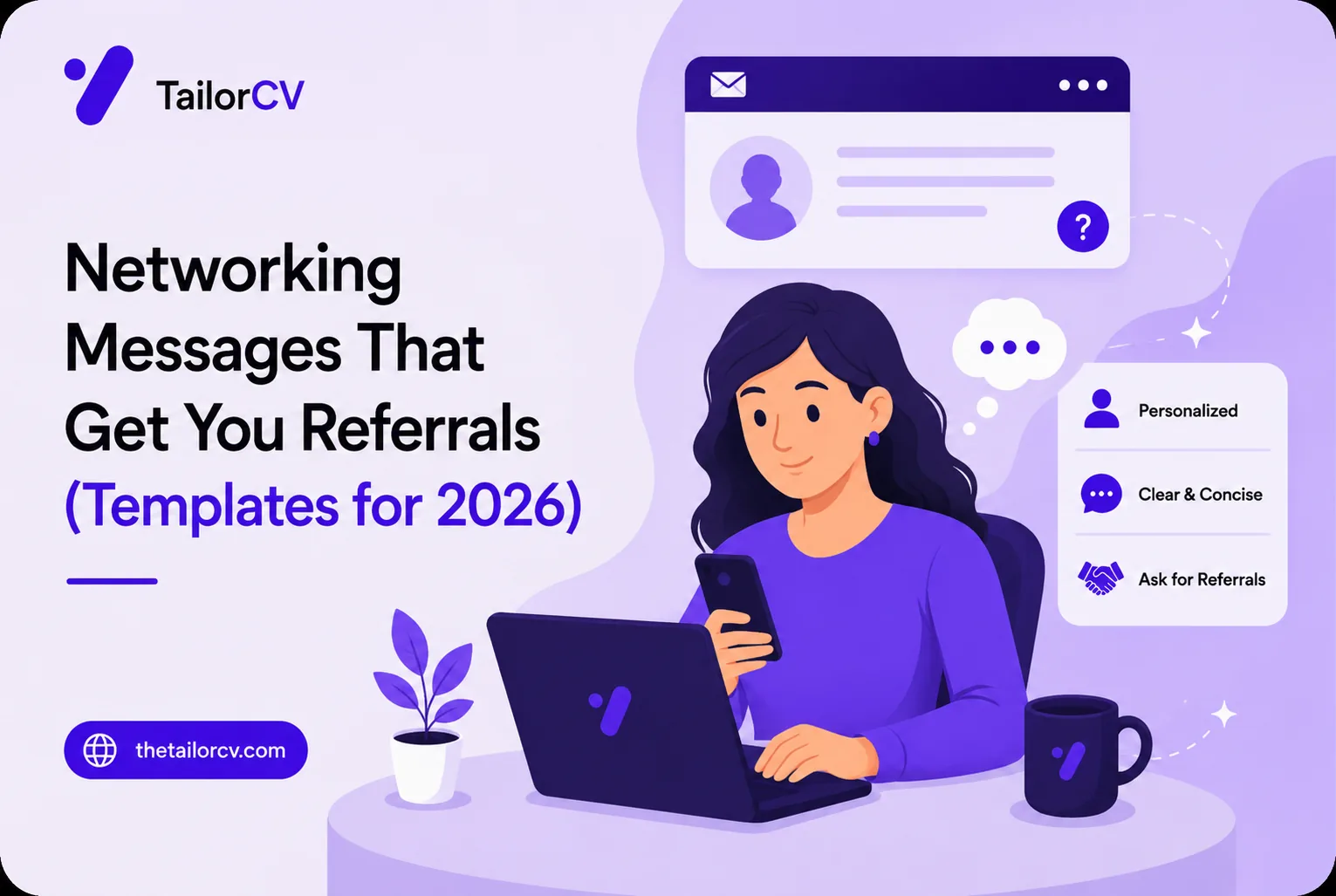
Send it on LinkedIn, and keep it to one follow-up after a week if there is no reply. The broader approach is in networking messages for referrals and how to write a cold email to a recruiter.
Informational interviews
The version that works when there is no open role, or when you want the relationship before you need it.
You ask for twenty minutes to hear about their work — not for a job. This is a well-understood convention in the US and people say yes surprisingly often, because talking about your own work is pleasant and the ask is small.
Hi Marcus — I'm moving from analytics into data engineering and I've been reading about how your team handles streaming at scale. Would you be open to a 20-minute call sometime in the next few weeks? I'd love to hear how you got into it and what the work is actually like. Happy to work around your calendar.
What to do on the call: ask about their path, their team, what they wish they had known, what the hiring process is like. Do not pitch yourself. Do not ask for a referral.
What happens afterwards: send a thank-you, stay in touch occasionally, and when a role opens they already know you. Many referrals start here rather than as a direct ask.
Building the network before you need it
Keep former colleagues warm. A message twice a year costs nothing. Reaching out cold after four years of silence is what feels awkward.
Be visible in your field. Writing, open source, conference talks, or just posting substantively on LinkedIn. Inbound is far easier than outbound — see the LinkedIn profile optimization guide and LinkedIn for USA job search.
Say yes when others ask you. Referral networks are reciprocal, and people remember.
Meetups and communities. Local meetups, Slack and Discord communities in your niche. Lower yield per hour than direct outreach, better for the long term.
Common Mistakes
Spending everything on applications. The apply button is the weakest channel in the US market, and most applications on popular postings are never reviewed by a person at all.
Asking vaguely. "Let me know if you hear of anything" puts the work on the other person, which is why those messages get ignored.
Not naming the specific role. A referral takes two minutes when you supply the req number and thirty when they have to hunt for it — one of those gets done.
Writing a long message. Under 120 words gets read; four paragraphs about your career journey does not.
Omitting the easy out. Without "no problem if you'd rather not", the ask carries social pressure and people resolve that by not replying.
Pitching during an informational interview. You asked for twenty minutes about their work; turning it into a job request breaks the implicit agreement and is remembered.
Only networking when unemployed. Reaching out cold after years of silence is the awkward version — occasional contact when you need nothing is what makes the later ask easy.
Giving up after one message. One polite follow-up a week later is normal and frequently the one that gets the reply.
Frequently Asked Questions
Do referrals really make that much difference?
Yes. Referred applications are typically flagged and reviewed separately, while cold applications on popular postings frequently reach nobody. It is the single highest-leverage channel in a US search.
Is it rude to ask a stranger for a referral?
Not if you ask well. Most employers pay referral bonuses, so there is something in it for them — and a short message naming a specific role with an easy out is a small, reasonable request.
What if they say no or ignore me?
Entirely normal. Send one polite follow-up after a week, then move on. Response rates are a numbers game, not a verdict.
How many people should I contact?
For a role you genuinely want, two or three people at that company is reasonable. Across a search, contacting five to ten people a week is a sustainable pace.
Should I attach my resume to the first message?
Offer it rather than attaching it. "Happy to send my resume" lets them opt in, and unsolicited attachments feel heavier.
What is an informational interview?
A short conversation about someone's work and career path, not a job request. It is a normal US convention, people accept them often, and referrals frequently grow out of them later.
Does the referral guarantee an interview?
No. It gets your application read, which is the hard part. The resume and your fit still have to do the rest.
Make sure the resume behind the referral is worth the ask. Check your ATS score free.
Make This Practical
Change how your effort is split. Aim for roughly half applications, half outreach — for every role you seriously want, find two or three people at that company before you hit apply.
Then write the ask properly. Name the exact role and req number, give one concrete line of evidence they can judge in five seconds, offer to send your resume rather than attaching it, and include an explicit easy out. Keep it under 120 words and send one follow-up after a week.
Finally, build the network for next time. Start with your university's alumni filter on LinkedIn, book informational interviews where there is no open role yet, keep former colleagues warm with a message twice a year, and say yes when other people ask you — referral networks run on reciprocity.
What is your resume scoring right now?
Scan it against a job description and get your ATS match score in about a minute.
Drop your resume here or choose a file
PDF only. Max 2 MB.
We never share your data or use it to train AI models.

Was this guide useful?
Be the first to rate it.