 SS
SS
Key Takeaways
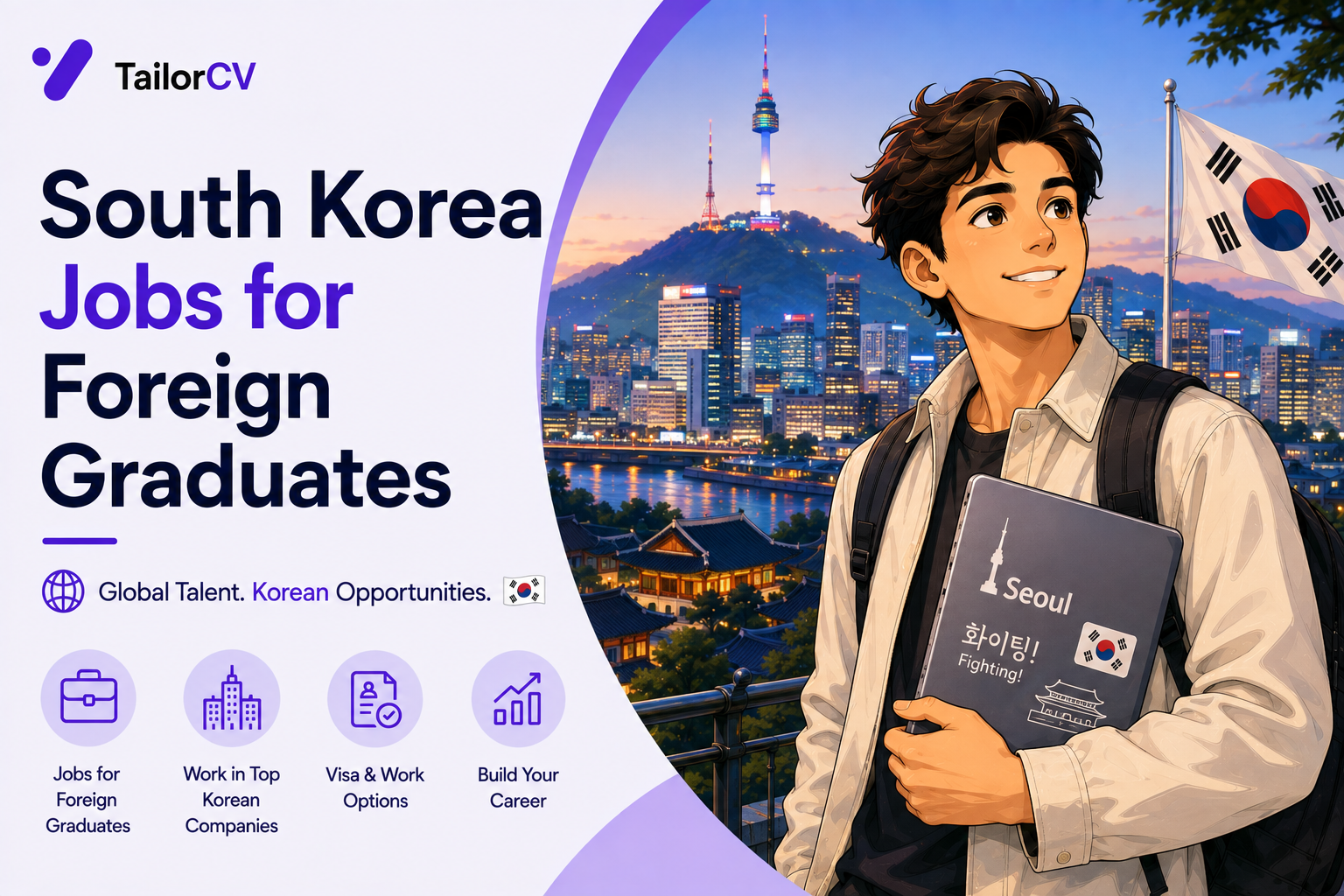
- South Korea hosts genuinely world-leading companies — Samsung, LG, SK, Hyundai, Naver, Kakao, Coupang — and they do hire foreign professionals.
- The E-7 visa is the main professional route, and it is tied to a specific occupation code that must match your degree and the job.
- Korean language ability is a major differentiator. Some roles run in English, but the market opens dramatically at business-level Korean.
- Teaching English (E-2) is the most accessible entry route but it is a separate track that does not lead naturally to corporate employment.
- Chaebol hiring cycles run on structured recruitment periods, closer to the Japanese model than the Western one.
The shape of the market
Korea's economy is dominated by a small number of very large conglomerates alongside a genuinely dynamic technology sector.
The chaebol. Samsung, LG, SK, Hyundai, Lotte and their affiliates employ enormous numbers and run structured recruitment. They hire foreign nationals, particularly in R&D, semiconductors, engineering, design and global business roles.
The domestic technology giants. Naver and Kakao dominate Korean search, messaging and platform services. Coupang is a very large e-commerce and logistics operation and is notably international in its hiring, running substantially in English.
Gaming is a genuine specialism. Nexon, NCSOFT, Krafton and Netmarble are globally significant, and the industry hires internationally for development, art and live operations.
Semiconductors and displays are areas where Korea is world-leading, and where a specialised engineering background is genuinely scarce and valued.
Foreign multinationals run Korean operations and are frequently the most accessible starting point for a foreign professional, because they are already structured around international staff.
Startups cluster around Seoul's Gangnam and Pangyo districts, with Pangyo Techno Valley functioning as the country's technology corridor.
The visa question, in outline
Everything about your job search is shaped by which visa you can realistically obtain. The E-7 guide covers this properly; the short version matters here.
E-7 (Foreign National of Special Ability) is the main professional work visa. It is tied to a specific occupation code, and your degree, your experience and the job description all have to align with it.
E-2 is the teaching visa for English instructors, and it is the most accessible route into the country for a native English-speaking graduate.
D-10 is a job-seeking visa allowing you to stay while looking for work, which is useful if you are already in Korea.
F-2-7 is a points-based residence visa, and F-5 is permanent residency. Both reward Korean language ability, income and time in country.
Graduates of Korean universities are treated more favourably across several of these routes, which makes studying in Korea a genuine entry strategy.
Language, honestly
This is the factor that most determines your ceiling.
Some environments run in English. Coupang, foreign multinationals, parts of the gaming industry, research roles and certain global-facing chaebol divisions.
Most do not. The overwhelming majority of Korean workplaces operate in Korean, and internal documents, meetings and informal communication all run in it.
TOPIK is the standard measure — the Test of Proficiency in Korean, levels 1 to 6. Level 4 is a common threshold for professional roles and it also carries weight in the F-2-7 points system.
The honest calculation: without Korean you are competing for a small slice of the market. With business-level Korean you are competing for most of it, and you become genuinely scarce — a foreign professional with real Korean is a rare and valuable combination.
Start before you arrive. Language ability compounds, and arriving at TOPIK 3 rather than zero changes your first year entirely.
The recruitment calendar and how hiring runs
Korean corporate hiring follows a rhythm that is closer to Japan's than to the West's.
Gonchae — open recruitment. The large conglomerates historically ran mass structured recruitment in defined periods, typically spring and autumn, hiring whole cohorts at once. This model has been softening in favour of more continuous, role-specific hiring, but the seasonal rhythm persists.
Sujik — experienced hiring runs continuously and is more accessible to foreign professionals with a specific skill.
The process itself commonly includes a document screening, an aptitude test, and multiple interview rounds including a panel and sometimes a presentation.
Aptitude tests are real. Samsung's GSAT and equivalents at other conglomerates test reasoning, and they are a genuine filter rather than a formality. They are usually administered in Korean.
Foreign-hire tracks exist. Several large employers run separate global recruitment tracks with different processes, often in English, aimed specifically at international candidates. These are considerably more accessible than the domestic track and worth seeking out by name.
Multinationals and Coupang run processes recognisable to anyone who has interviewed in the West.
Working culture, honestly
Worth calibrating carefully, because the gap from Western norms is real.
Hierarchy is explicit and linguistically encoded. Korean has grammatical levels of formality tied to seniority and age, and workplace relationships are structured around them. This is not something you can opt out of.
Hours have been legally capped and the statutory maximum working week was reduced, with enforcement that has genuinely changed practice at larger employers. Smaller companies vary considerably.
Hoesik — after-work team dinners remain part of professional life, though the intensity has moderated. Participation is social and expected; the older culture of mandatory heavy drinking has declined markedly but has not vanished.
Speed and intensity are cultural norms. Ppalli-ppalli — "quickly, quickly" — is a genuine feature of Korean working style, and the pace surprises people.
Foreign employees are frequently exempted from some norms and included in others, and navigating which is which is part of the first year.
None of this is a reason not to come. It is a reason to arrive informed, because the mismatch people struggle with is almost always the one they did not expect.
Salaries, costs and what stays in your account
Korean pay is respectable and the structure differs enough to matter.
Annual salary is quoted as yeonbong — a total annual figure — and it is frequently divided into twelve or thirteen payments. Bonuses at the large conglomerates can be a significant share of total compensation and are performance-linked.
The four major insurances are compulsory and deducted from pay: national pension, health insurance, employment insurance and industrial accident insurance. Employer and employee both contribute.
Foreign nationals and the national pension. Depending on your nationality, a lump-sum refund of your pension contributions may be available when you leave Korea permanently, under reciprocal arrangements with your home country. This is genuinely worth checking, because it can amount to a meaningful sum.
Income tax is progressive, with a flat-rate election available to some foreign workers under certain conditions — worth asking your employer's payroll about, since it is occasionally advantageous.
Housing works differently. Jeonse is a Korean arrangement where you pay a very large refundable deposit instead of monthly rent; wolse is monthly rent with a smaller deposit. Foreign employees usually take wolse, and some employers provide housing or a housing allowance, which is worth asking about explicitly.
Living costs are moderate by developed-economy standards. Seoul housing is expensive, public transport is excellent and cheap, healthcare is good and inexpensive under national insurance, and eating out is affordable.
The net position is generally good, particularly outside the most expensive Seoul districts.
Where to look, and how to get seen
The channels differ from Western markets enough to matter.
Saramin and JobKorea are the two dominant domestic job boards, and they run largely in Korean.
LinkedIn works for the international slice — multinationals, Coupang, global tracks and startups — and is close to useless for the domestic mainstream.
Company career pages carry the chaebol global recruitment tracks, which are the most accessible chaebol entry point for a foreign candidate.
Wanted and Rocket Punch are startup-oriented platforms with a more international feel, particularly around Pangyo.
University career centres are genuinely valuable if you studied in Korea, and Korean universities maintain close employer relationships.
Contact Korea and government programs run periodic initiatives connecting foreign professionals with Korean employers, including job fairs aimed specifically at international candidates.
Alumni networks matter here. Korean professional life places real weight on school and university ties, and if you attended a Korean institution, that connection is a live asset rather than a sentimental one.
Mini checklist
- unchecked: Target occupation matched to an E-7 code
- unchecked: Degree field checked against that occupation
- unchecked: English-language employers identified if your Korean is limited
- unchecked: TOPIK level established or study started
- unchecked: Chaebol recruitment cycles diarised
- unchecked: Korean-format resume prepared
- unchecked: Apostilled degree and transcripts obtained
- unchecked: Criminal background check started if required
- unchecked: Pangyo and Gangnam employers researched
Scenarios
Scenario 1: You are an engineer with a semiconductor or display background
This is where Korea most wants foreign talent. Target Samsung, SK Hynix, LG and their suppliers directly, and expect the E-7 occupation code to match cleanly.
Scenario 2: You speak no Korean
Restrict to Coupang, foreign multinationals, research institutions and international gaming roles — and start studying Korean immediately, because that list is a fraction of the market.
Scenario 3: You want to get into the country first
The E-2 teaching route is the most accessible entry for native English speakers, and studying at a Korean university is the most favourable. Both put you inside the country, which changes everything about the search.
Tip: Get your degree certificate apostilled and your background check done before you have an offer. Korean visa applications require them, they are obtained in your home country, and doing this from Seoul is considerably harder than doing it before you leave.
Do's and Don'ts
Do
- Match your target role to an E-7 occupation code
- Start Korean study before arriving
- Target English-language employers if your Korean is limited
- Prepare documents and apostilles early
- Research the chaebol recruitment calendar
- Consider study in Korea as an entry route
Don't
- Assume a Western CV format transfers
- Ignore the occupation code requirement
- Expect English-only roles to be plentiful
- Treat the E-2 teaching route as a corporate stepping stone
- Leave apostilles until after an offer
- Underestimate how much Korean changes your prospects
Common Mistakes
- Ignoring the occupation code. E-7 requires your degree, experience and job to align with a specific code.
- Overestimating English-only opportunities. They exist but represent a small slice of the market.
- Treating E-2 as a career path. It is an accessible entry route, not a bridge to corporate employment.
- Leaving documents late. Apostilles and background checks come from your home country.
- Using a Western CV. Korean resume conventions are genuinely different.
- Delaying language study. It is the single largest determinant of your ceiling here.
Related Guides
Keep building on this with the related guides in this series:
- Resume Format for South Korea
- The Korean E-7 Visa Explained
- Graduate Jobs in Switzerland
- Graduate Jobs in the UAE
- A Practical Checklist for Your First Job Abroad
You can also check your resume's ATS score for free, generate a tailored cover letter, or build a portfolio website in minutes.
Frequently Asked Questions
Can I work in Korea without speaking Korean?
In a limited part of the market — Coupang, foreign multinationals, some gaming and research roles. Most workplaces run in Korean, and business-level ability transforms your prospects.
What is the E-7 visa?
The main professional work visa, tied to a specific occupation code that your degree, experience and job description must all align with.
Is teaching English a good way in?
It is the most accessible entry route for native English speakers and gets you into the country. It does not lead naturally into corporate employment, so treat it as what it is.
Do Samsung and LG hire foreigners?
Yes, particularly in R&D, semiconductors, engineering and design, and in global-facing business roles. They run structured recruitment cycles rather than continuous hiring.
What is TOPIK?
The Test of Proficiency in Korean, levels 1 to 6. Level 4 is a common professional threshold and it carries weight in the points-based F-2-7 residence visa.
Where is the technology industry concentrated?
Seoul's Gangnam district and Pangyo Techno Valley just south of the city, which functions as Korea's main technology corridor.
What is gonchae?
The structured mass recruitment historically run by Korean conglomerates in defined seasonal periods, hiring whole cohorts at once. It has been softening toward more continuous role-specific hiring.
Are aptitude tests really part of the process?
Yes. Samsung's GSAT and equivalents at other conglomerates are genuine filters, usually administered in Korean.
What is hoesik?
After-work team dinners, still part of professional life though considerably moderated from the older, heavier-drinking version. Participation is social and generally expected.
What are the four major insurances?
National pension, health insurance, employment insurance and industrial accident insurance — compulsory deductions with both employer and employee contributions.
Can I get my pension contributions back when I leave?
Depending on your nationality, a lump-sum refund may be available under reciprocal arrangements. It can be a meaningful sum, so check your country's position.
What is jeonse?
A Korean rental arrangement where you pay a very large refundable deposit instead of monthly rent. Foreign employees usually take wolse — monthly rent with a smaller deposit — instead.
What is your resume scoring right now?
Scan it against a job description and get your ATS match score in about a minute.
Drop your resume here or choose a file
PDF only. Max 2 MB.
We never share your data or use it to train AI models.

Was this guide useful?
Be the first to rate it.