 SS
SS

Key Takeaways
- Most rescinded graduate offers are business decisions — hiring freezes and reorganisations — not judgements about you.
- Ask immediately whether it is a deferral, a redeployment or a cancellation. The three have very different responses.
- Ask what support is available. Deferral payments, extended start dates and referrals are sometimes offered and rarely volunteered.
- International students face an authorisation problem as well as an income problem, and that clock needs addressing first.
- Restarting quickly matters more than restarting perfectly.
Why it happens
Offers are pulled far more often for reasons that have nothing to do with the candidate:
- Hiring freezes. Conditions change between the offer in October and the start in July. Graduate classes are frequently the first thing cut, because nobody has started yet.
- Reorganisation. The team you were hired into no longer exists in that form.
- Background or reference issues. Discrepancies in dates, education or previous employment. Rarer, but this category is on you.
- Failure to graduate or meet a stated condition. Most graduate offers are conditional on completing the degree.
- The requisition never existed properly. Budget approval falls through after a verbal offer.
The first two account for most rescinded new-grad offers, and neither is a reflection on your ability.
The first conversation
Get answers to specific questions rather than accepting the message as final. Ask by phone if you can.
Is this a cancellation, a deferral, or a redeployment? These are genuinely different. Some employers delay start dates rather than cancelling; some can move you to another team with headcount. Neither is always offered unprompted.
Is any support available? Some companies offer a payment to graduates whose offers are pulled, particularly where the person turned down alternatives. Some offer to keep you in the pipeline for the next cycle. Almost none of this is volunteered — you have to ask.
Will you refer me? A recruiter who just pulled your offer often will make introductions, and they know who else is hiring. This is the most valuable thing they can give you and it costs them nothing.
Can I have it in writing? For your own records, and useful when explaining the situation to other employers later.
Stay professional in this conversation, however unfair it feels. The person delivering the news usually did not make the decision, and they are the one who can offer a referral.
If you signed something
Read what you signed. Most US employment is at-will, and offer letters typically say so explicitly, which means an offer can generally be withdrawn before you start.
Where you may have a claim is narrower: if you took specific, costly actions in reliance on the offer — resigned a job, relocated, declined a written alternative — some jurisdictions recognise that. This varies by state and is fact-specific.
If you incurred real costs, it is worth asking the company to cover them. Relocation expenses and non-refundable deposits are sometimes reimbursed simply because you asked. If the sums are large, a short consultation with an employment lawyer in the relevant state is proportionate.
For international students
There is a second problem running alongside the income one, and it is more urgent.
If your work authorisation depends on employment, a rescinded offer can start or accelerate a clock. On post-completion OPT, the 90-day unemployment allowance accrues whether or not you had an offer in hand. If sponsorship was involved, a withdrawn petition has its own consequences.
Do two things immediately:
Speak to your DSO. Before anything else. They deal with this situation regularly and can tell you exactly where you stand.
Recalculate your dates. How many days you have, what happens at the end, and whether a shorter-term or part-time role would preserve status while you search.
This is also the moment where employers who are E-Verify enrolled and practised at hiring international graduates matter more, because you have less time to spend on employers who will not work out.
Restarting the search
Start within days, not weeks. The instinct is to process it first. The market does not wait, and the autumn cycle may already have closed, which changes where the roles are.
Go where hiring is on demand. If structured programmes have filled, mid-sized firms, regional companies and startups hire year-round. Off-cycle roles appear constantly at large employers as people decline and leave.
Use your network first. People who interviewed you elsewhere, alumni, former managers, and the recruiter who pulled the offer. A warm introduction is worth far more than a cold application when you are compressing months into weeks.
Tell your university. Career centres sometimes have employer relationships specifically for this, and some maintain lists of employers with late openings.
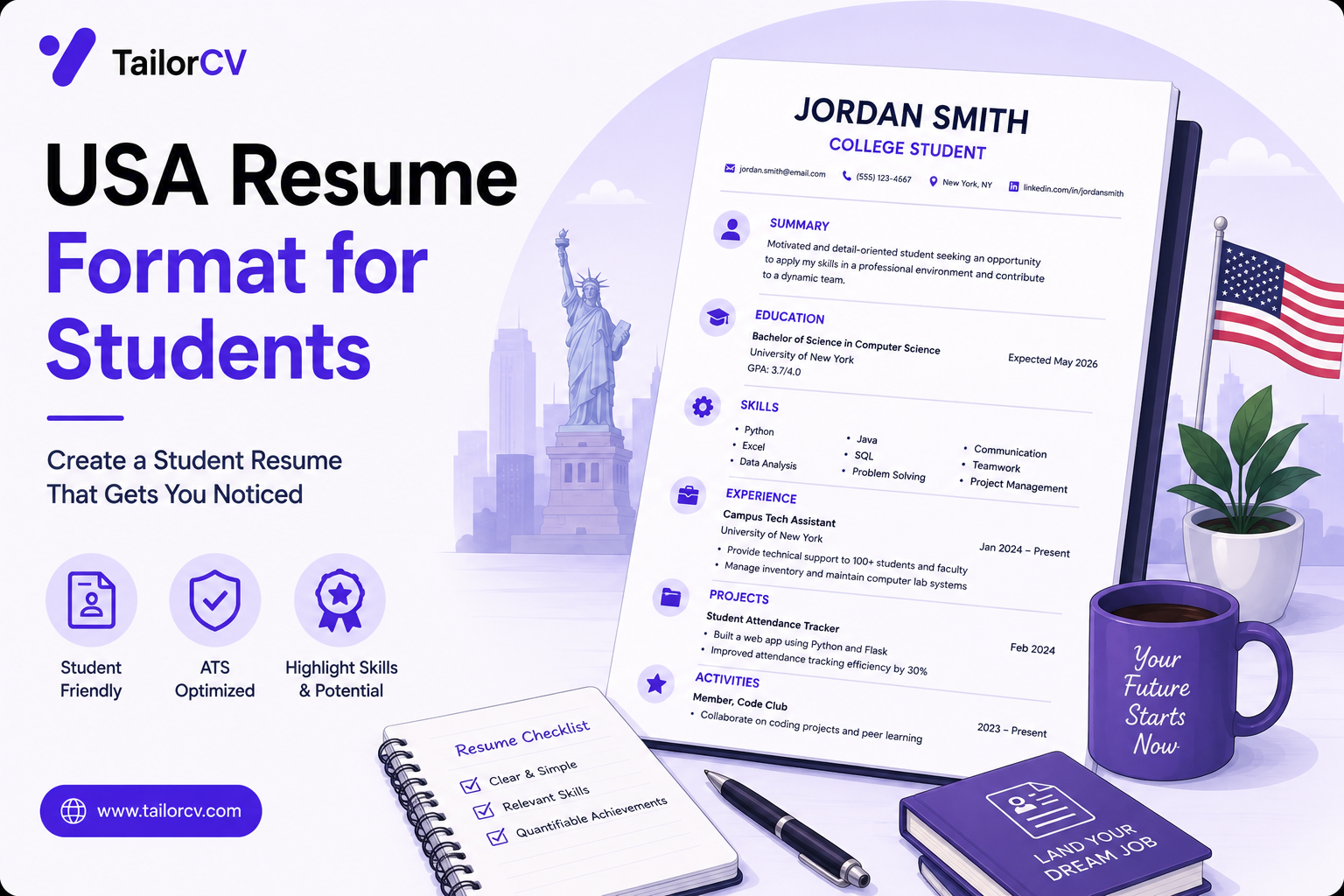
Check the resume before firing it out. If it has been sitting since last autumn it needs updating, and it needs to survive parsing at employers with harsher screens than the one that hired you.
Explaining it in interviews
Say it plainly and briefly:
"I had an offer from X, and they froze graduate hiring in March. I started looking again straight away."
That is a complete answer. It is a common situation, interviewers recognise it, and it needs no defensiveness. What reads badly is bitterness or a long explanation — both invite a follow-up you do not want.
If the rescission was because of a background or reference discrepancy, that is different and needs honest handling, because it will surface again in the next check.
The first conversation, question by question
You will be told by phone or email, usually briefly, and the instinct is to get off the call. Do not — this is the one conversation where the answers materially change what happens next, and nobody will volunteer them.
"Is this a cancellation, a deferral, or a redeployment?"
The most important question and the three are genuinely different. A cancellation ends it. A deferral moves your start date, which means you may still have a job and need a plan for the gap. A redeployment means another team or another location might take you, which is sometimes offered only to people who ask.
"Is any support available?"
Deferral payments, a signing bonus honoured anyway, extended benefits, career support, or a stipend. These exist at some employers and are rarely mentioned unprompted. Ask plainly: "Is there any financial support or transition assistance for people in my position?"
"Will you refer me?"
The recruiter or hiring manager who liked enough to hire you can introduce you elsewhere, and many will. This is the single highest-value thing you can extract from the conversation and almost nobody asks for it.
"Can I have it in writing?"
You need the date, the reason as they state it, and the terms. This matters for your university, for any authorisation questions, and for your own records.
"Would you consider me again in future?"
Get an answer and a name. Rescinded candidates are frequently rehired when the freeze lifts, and being the person who stayed in touch is what makes that happen.
Stay professional throughout. The frustration is entirely legitimate. The person telling you almost certainly did not make the decision, and they are also the person who can refer you. Anger costs you the one asset the call can produce.
Then write it all down immediately afterwards, while it is fresh.
Why it happens, and what it is not
The single most useful thing to understand in the first week: this was almost certainly not about you.
Hiring freezes. The most common cause. A company revises its plan, headcount approved in September is withdrawn in January, and every offer attached to it goes with it. Nothing in that sequence involves an assessment of the candidates.
Reorganisations. A team is restructured, a business line closed, a function moved. The role you were hired into stops existing.
Acquisitions and funding changes. Common at startups and mid-sized companies, where a change in the financial position can remove a graduate class immediately.
Overhiring corrections. An employer that extended more offers than it could absorb.
Background or verification issues. A much smaller category, and the only one that involves you — most commonly a discrepancy between something claimed and something verified. This is why accuracy on the resume matters: dates, degree titles and GPA are checked at exactly this stage.
Performance during a notice period. Very rare for graduates and essentially limited to serious conduct issues.
What this means practically. If the reason given is a freeze or a reorganisation, take it at face value. Candidates who spend weeks searching for a personal failing that was not there lose time they needed for the search, and they carry a defensiveness into interviews that is far more damaging than the rescission itself.
If you signed something, read it. Some offers include terms about withdrawal, and a signing bonus already paid may or may not be reclaimed. Where you gave up another offer in reliance on this one, it is worth saying so — some employers respond to that with a deferral payment or transition support. Do not expect a legal remedy in most cases, and do not spend the season pursuing one at the expense of applying.
The first two weeks, day by day
A plan matters here more than usual, because the emotional weight makes drift very easy.
Day one. Have the conversation, ask the five questions, get it in writing. Then stop for the day. This is the one day off you get.
Day two. Tell three groups: your international adviser if it applies to you, your university career service, and the people in your network who might know of openings. All three of these are more effective in the first week than in the third, and all three are commonly delayed out of embarrassment.
Day three. Rebuild the target list. It should look different from your autumn list: weighted toward employers who hire on demand, smaller and mid-sized companies, and anywhere a person reads applications. The structured programmes that rescinded you are not where a fast replacement comes from.
Day four. Fix the resume. It has been idle for months and the roles you are now targeting may not be the ones it was written for. Confirm it parses cleanly and matches the new postings.
Days five to ten. Apply at volume and message everyone. This is the week that determines how long the gap is. Use the rescission explicitly in outreach — it is specific, it is not your fault, and it gets replies that a generic message does not.
Day eleven onward. Settle into a sustainable routine — the weekly operating rhythm rather than a sprint, because this may take a few months and burning out in week three helps nobody.
Throughout: apply to things that are eighty percent right. A rescinded offer compresses your timeline, and an adjacent role that starts on time is worth considerably more than a perfect one that does not exist. You can move in two years, and lateral moves are how a great many people reach the employers they wanted.
The message that does the most work
Of everything in the first fortnight, one action produces more than the rest combined: telling your network, explicitly, in week one.
Hi Daniel — quick update. My offer at [company] was rescinded last week in a company-wide hiring freeze, so I'm back on the market for new grad data roles, ideally starting in June. If you hear of anything or know someone worth talking to, I'd really appreciate the steer. Resume attached either way, and thanks.
Four sentences. Send it to everyone from your search — people you spoke to, recruiters who were interested, classmates who took offers elsewhere, professors.
Why it works better than any application you will send. It is specific rather than a vague request for help. It carries no implication of failure, because everyone knows freezes happen. It states exactly what you need and when. And it gives the recipient something easy to act on — a name, a forward, a job link — rather than an open-ended ask.
The version that fails is not sending it at all, out of embarrassment. That is the single most common and most expensive response, and it converts a two-month gap into a five-month one.
Common Mistakes
- Accepting the first message as final. Deferral and redeployment are sometimes available if asked for.
- Not asking for a referral. The cheapest and most valuable thing they can offer.
- Burning the relationship. The recruiter usually did not decide, and they know who is hiring.
- Waiting to restart. Weeks of processing cost you roles that were open the day it happened.
- International students not contacting their DSO immediately. The authorisation clock is more urgent than the job search.
- Over-explaining in later interviews. One sentence is enough; more invites scrutiny.
For international students, the clock comes first
A rescinded offer is an income problem for a domestic classmate and two problems for you, and the second one is the more urgent.
Speak to your international student adviser within days. Not weeks. Your authorisation is frequently tied to employment or to a timeline with defined limits, and there are usually options — but they are time-bound and some of them close.
Recalculate your dates. Unemployment allowances during a post-graduation training period are limited and counted. Know exactly how many days you have and from when, in writing, from your adviser rather than from a forum.
Understand what a deferral does to your dates. A start date moved by six months may be entirely workable or may exceed a limit. This is a specific question for your adviser, and the answer determines whether the deferral is worth accepting.
Prioritise employers who can act quickly, and among them, those already enrolled and able to support the extension. Filtering for this now saves applications you cannot afford to waste.
Keep every document. The rescission letter, your original offer, all correspondence. You may need to evidence the sequence later.
Do not panic-accept something that creates a worse problem. A role at an employer who cannot support your authorisation solves this month and costs you next year.
Restarting, and how to talk about it
Start within days, not weeks. The instinct is to take time to process it. The market does not pause, and a week of grieving costs more than it gives back. Process it in the evenings; apply during the day.
Go where hiring is on demand. Smaller and mid-sized employers, roles filled as they open, and sectors that do not run cohort calendars. The structured programmes that rescinded you are the least likely place to find a quick replacement.
Use your network first. Your rescinded offer is, awkwardly, a good reason to contact people — it is specific, it is not your fault, and people respond to it. Message everyone from your search: "My offer at X was rescinded in a hiring freeze and I'm back on the market — do you know of anything?" This works better than any application you will send.
Tell your university. Career services frequently have relationships with employers who will look at rescinded candidates, and some schools maintain lists specifically for this. They cannot help if they do not know.
Check the resume before firing it out. It has been sitting unused since autumn. Confirm it still parses cleanly and matches the postings you are now targeting, which may not be the ones you targeted before.
Explaining it in interviews: one sentence, factual, no bitterness.
"I'd accepted an offer with [company] and it was rescinded in December in a company-wide hiring freeze. So I'm back in the market, and I'm being more deliberate about the kind of team I join this time."
That is the whole answer. Interviewers know this happens, it reflects nothing on you, and the only way to make it look bad is to sound aggrieved about it. Do not volunteer it unprompted either — it belongs in the answer to "why are you looking now", not in your opening.
What not to do
Predictable errors, each of which extends the gap.
Do not wait for them to change their mind. Rescissions from a hiring freeze are essentially never reversed within a useful timeframe. Hoping is not a plan and it costs weeks.
Do not go quiet on your network out of embarrassment. This is the single most damaging response. A rescinded offer is a common, blameless, easily-explained situation, and it is one of the few things that reliably gets people to reply to a message. Telling forty people in week one is worth more than any other action available to you.
Do not spend the season pursuing a remedy. Read what you signed, raise a genuine reliance loss with the employer, and then move on. Time spent litigating is time not spent applying, and the outcome is usually nothing.
Do not hide it in interviews. It comes up naturally in "why are you looking now", the answer is one factual sentence, and interviewers know these happen. Concealing it and having it surface later is far worse.
Do not sound aggrieved about it. The facts are neutral and only your delivery can make them look bad.
Do not apply exclusively to the same tier that rescinded you.
Structured programmes at large employers are precisely where a fast replacement is least likely to come from.
Do not stop after a month. Rescissions frequently happen in a broad hiring downturn, which means the recovery takes longer than a normal search, and the people who come out of it well are the ones still going in month three.
What it looks like a year later
Worth saying, because in the first week this feels career-ending and it is not.
Most people land somewhere within a few months. Frequently at a smaller or less well-known employer than the one that rescinded, and frequently in a role that turns out to teach them more.
Nobody asks about it afterwards. Once you have a year of work behind you, a rescinded offer from before you started is not part of your story. It does not appear on your resume, it does not come up in interviews, and it has no bearing on lateral moves.
Some people get rehired. Freezes lift, and candidates who stayed in touch with the recruiter or hiring manager are the ones who hear about it. This is the specific reason to end that first conversation gracefully rather than angrily.
The lasting damage is almost entirely from the response, not the event.
Candidates who go quiet, stop applying, or spend three months pursuing a remedy lose a season. Candidates who tell forty people in week one and keep applying rarely do.
It is a bad month. It is not a bad career, and the difference between those two outcomes is mostly decided in the first fortnight.
Frequently Asked Questions
Can a company legally rescind an offer?
Generally yes in at-will employment, and offer letters usually say so. Narrow exceptions exist where you took costly action in reliance on the offer, and that varies by state.
Should I ask for compensation?
Yes, if you incurred real costs — relocation, deposits, a declined alternative. Companies sometimes cover these, and almost never offer without being asked.
Will this hurt my next application?
No. Hiring freezes are common and well understood. Explained in one sentence, it is a non-event to most interviewers.
Can I ask to be reconsidered later?
Yes, and it is worth asking to stay in the pipeline for the next cycle. Some employers keep a list.
What if I already declined other offers?
Contact them. If the role has not been filled, some will reopen the conversation — an awkward call that occasionally works, and costs only pride.
How fast should I restart?
Within days. The market position changes with the calendar, and momentum matters more than a polished restart.
What is your resume scoring right now?
Scan it against a job description and get your ATS match score in about a minute.
Drop your resume here or choose a file
PDF only. Max 2 MB.
We never share your data or use it to train AI models.

Was this guide useful?
Be the first to rate it.