 TD
TD
Key Takeaways
- Transfer students land in the final two years, which is exactly when recruiting concludes — so the timeline is compressed by half.
- Recruiters mostly see your final institution and your evidence; the two-year college rarely disqualifies anyone at the screening stage.
- The real disadvantage is missed sophomore-year pipelines — internships, spring weeks, early programmes — not the credential.
- Work experience from the community college years is a genuine asset and is routinely undersold on the resume.
- Applying in the summer before transferring, rather than after arriving, is the single highest-leverage adjustment.
What the actual disadvantage is
It is worth being precise, because transfer students often worry about the wrong thing.
What is rarely a problem: the community college itself. Application screens match on degree, major, graduation year and the language of your experience. The two-year institution is generally listed as prior education and does not trigger a filter.
What is a real problem: timing. Graduate recruiting works backwards from graduation, and the decisive activity happens in the penultimate year. A transfer student arriving as a junior has weeks to do what continuing students spread over two years — join societies, build relationships, find a summer internship that converts.
The second real problem: the sophomore-year pipelines. Diversity programmes, first-year insight events, sophomore internships and early-identification schemes all recruit before you arrived. Several of those feed directly into junior-year internships, which feed graduate offers.
The third: network density. Continuing students have had two years to meet people, join clubs and be known by the careers office.
None of these is about your ability, and all three are addressable — but only if you start before you arrive rather than after.
Start before you transfer
The single most useful thing on this page. Almost everything below can begin in the spring and summer before you set foot on the new campus.
Apply for internships in the spring before transferring. Many summer internship applications for the following year open before your transfer term begins. You can apply as a student of your incoming institution once you have accepted a place — check with both schools, and most employers care about your graduation year rather than your current campus.
Contact the new careers office in the summer. Ask which employers recruit from your programme, when the deadlines fall, and whether transfer students can access the portal early. They generally can and generally do not know to ask.
Join the professional societies for your field before term starts. Many accept members over the summer, and the recruiting-relevant activity begins in week one.
Reach out to five students in your new programme. Ask what recruiting looked like for them and what they wish they had known. Fifteen minutes each, and it compresses a year of orientation into a fortnight.
Fix the resume over the summer. It should be in its final format, parsing cleanly, before the term starts — because from week one you will be applying rather than preparing.
What to put on the resume
Transfer students consistently undersell exactly the material that differentiates them.
Your degree institution leads. List the four-year institution with the expected graduation date first, and the community college beneath it as prior education. This is honest and it is also how a reader expects the document to be ordered.
Include the associate degree if you completed one — it is a completed credential.
Do not apologise or explain. No line about "transferred to complete my degree". It is unremarkable and drawing attention to it invites a question nobody was asking.
Take the work seriously. Many transfer students worked substantially while studying, and they routinely omit it as irrelevant. It is not — a job held for two years alongside full-time study is direct evidence of reliability, time management and working under pressure, which is exactly what the behavioural interview tests. Describe it with outcomes, not duties.
Include community college projects, leadership and competitions. They count.
Lead with evidence. Because your on-campus network is thinner, the document has to do more work. One substantial project that runs, described well, outweighs a longer list of coursework — the same logic that applies to any candidate outside the recruiting mainstream.
The compressed timeline, month by month
The spring before transferring. Resume finalised. Applications open for the following summer's internships at the earliest employers — apply. Contact the new careers office.
The summer before. Societies joined. Five conversations with students in your new programme. Target list of thirty employers built.
Junior autumn, weeks one to four. This is your critical window and it coincides with settling in. Careers fair, employer presentations, applications for the earliest industries. Applying in these weeks is worth more than anything else you do this year.
Junior autumn to winter. Interviews for summer internships. Keep applying while interviewing.
Junior spring. The second wave, which is real and less contested. Also: if the autumn produced nothing, this is when smaller employers hire.
Junior summer. The internship, which is the primary route to a graduate offer at most large employers.
Senior autumn. Graduate recruiting, with a return offer if the internship converted.
The uncomfortable truth in that sequence: your first four weeks on a new campus are the most consequential weeks of your recruiting life, and you will spend them lost. Doing the preparation in the preceding summer is what makes them survivable.
If you missed the internship cycle
Common, and recoverable — it just requires the alternatives to be run deliberately.
Research with a professor. Available on a shorter timeline than corporate recruiting, produces a real reference, and is frequently arranged by simply asking. Faculty are approached by fewer students than you would expect.
Campus employment with substance. Lab assistant, IT support, teaching assistant, tutoring. Real work, real references, and it fits around a heavy course load.
A project that ships. Entirely within your control and the strongest substitute for an internship, particularly in technical fields.
Smaller and local employers. They hire on need rather than on a calendar, they rarely visit campuses, and they take applications in April for June starts.
Off-cycle and winter internships. Less publicised and less contested.
Then target the second wave hard. Spring recruiting is genuinely substantial and it is largely ignored by students who concluded in December that the season was over.
Using both institutions
Transfer students have two alumni networks, two careers offices and two sets of faculty, and most use neither properly.
Your community college careers office still works for you. Many maintain relationships with local employers, and local employers hire year-round on need rather than on a campus calendar. Ask what they have.
Community college faculty know local industry. Instructors frequently come from the professions they teach and have current contacts. A recommendation from someone who taught you in a class of twenty carries more specificity than one from a lecturer who taught you in a hall of three hundred.
Former classmates are a real network. People from your community college cohort are entering the workforce now, at exactly the employers who hire on need. They are the easiest cold outreach you will ever do because the shared institution is genuine.
Your new institution's alumni network is the bigger one. Use the alumni search approach filtered by employer, and prioritise people one to four years out.
Faculty at the new institution take longer to reach. Office hours from week two, a specific question about their work, and an ask about research opportunities. Research with a professor is one of the fastest substitutes for a missed internship cycle.
And tell both careers offices you are a transfer. Some run specific support, some know which employers actively recruit transfers, and none of it is advertised.
What recruiters actually see
Worth demystifying, because transfer students routinely imagine a screening process that is more elaborate and more judgemental than what actually happens.
The applicant tracking system sees fields, not a story. Graduation date, degree, major, GPA if included, and the text of your experience. It does not see "spent two years at a community college first" as a category — it sees your degree institution and your dates.
A human, if one reads it, sees the same thing you would. A clean, well-organised resume with real evidence. Recruiters who have hired thousands of students are not scanning for institutional pedigree at this stage; they are scanning for whether the person can do the job, which is exactly what your projects and work history demonstrate.
Where it could come up is in conversation, and even then it is rare and never adversarial when it does. "Tell me about your path" is a genuine, curious question, not a challenge, and a calm one-sentence answer closes it completely.
The one place it can matter mechanically is a small number of programmes with an explicit continuous-enrolment requirement, which is unusual and worth checking for your specific target rather than assuming it applies broadly.
The overall picture: the imagined obstacle is much larger than the real one, and the actual constraint — the compressed timeline — is entirely solvable by starting early, which is the one thing within full control from day one.
The tracker adjustment for transfer students
The general application tracker works for everyone, and transfer students should add two columns most guides do not mention.
Pipeline source. Whether an application came through your new institution's careers portal, an employer's general site, your community college's remaining connections, or a personal referral. This tells you after a few weeks which channel is actually converting for you specifically, which matters more when your channels are less established than a continuing student's.
Days since transfer. A simple counter helps you see whether your application rate is keeping pace with the compressed calendar, since it is easy to lose a sense of urgency once term begins and the workload of a new campus takes over.
Review it weekly, not daily. The same discipline that prevents any student from over-reading short-term noise applies here, and it matters more for a transfer student because the season is shorter and every week carries more relative weight.
One thing to do first
If the compressed timeline feels overwhelming, the highest-return action is a single email, sent the day you accept your transfer place.
Write to the careers office at your incoming institution. Say you are transferring in, name your programme and graduation year, and ask three things: which employers recruit from this programme, when the main deadlines fall, and whether you can access the careers portal before your official start date.
That one message typically produces a target list, a calendar, and portal access weeks before you arrive — which converts your first four weeks on campus from orientation into applications. Almost no transfer student sends it, and it is the cheapest possible way to recover most of the timing disadvantage this whole page describes.
Two paths, compared
The same student, two approaches, to make the timing argument concrete.
Student A transfers in August as a junior. They spend September settling in, find the careers office in late October, discover the autumn deadlines have largely passed, apply to a handful of things in November, hear nothing, and conclude in December that they missed the year. They spend spring semester focused on coursework and start looking again the following autumn as a senior, competing for full-time roles without an internship behind them.
Student B transfers the same August. In June they emailed the careers office, got the employer list and the deadline calendar, and applied to eight internships citing their incoming institution. In July they joined the professional society and messaged five students in the programme. Week one of term they attended the careers fair with a finished resume. By November they had two interviews; by February, a summer internship. That internship converts to a graduate offer the following autumn.
The difference is not ability. It is roughly six hours of work done in June and July, before either student set foot on campus.
That is the entire argument of this page compressed into one comparison — and it is why the checklist for the summer before matters more than anything you do after arriving.
Where transfer students are actively wanted
Worth knowing, because the framing of catching up obscures the fact that several employers specifically seek this profile.
Employers with transfer-specific programmes. Some large companies run scholarship and internship schemes aimed at transfer and non-traditional students precisely because the pipeline is under-served. These are far less contested than general programmes and almost nobody applies to them.
Local and regional employers. They hire from nearby institutions, value people with roots in the area, and are indifferent to institutional prestige. Also the largest employer group by volume.
Employers who value work history. Many transfer students worked substantially while studying, and roles where reliability and customer contact matter — operations, client-facing work, healthcare administration, skilled technical roles — read that history as directly relevant rather than incidental.
Federal agencies and contractors. Federal hiring credits experience explicitly and cares about eligibility rather than pedigree, and the pathways programmes are open to any accredited degree.
Skilled technical fields. Applied programmes at community colleges frequently produce genuinely job-ready capability, and employers in manufacturing, energy, healthcare technology and infrastructure know it.
Companies that publish their intern conversion data. Not a category so much as a signal — employers who track and report it tend to run structured programmes that assess performance rather than background.
The practical instruction: build a target list weighted toward local, mid-sized and federal employers alongside the recognisable names. The ratio of applicants to seats is dramatically better, and the mid-market argument applies with particular force to anyone on a compressed timeline.
A checklist for the summer before you transfer
Twelve tasks, none longer than an evening, done before your new term begins.
- unchecked: Finalise the resume, ordered new institution first, community college beneath it, no explanation of the transfer
- unchecked: Confirm your work history is described with outcomes, not just duties
- unchecked: Run an ATS check to confirm it parses cleanly
- unchecked: Email the new careers office asking which employers recruit from your programme and when deadlines fall
- unchecked: Check whether you can access the careers portal before your official start date
- unchecked: Join the professional society for your field, even before you have a student ID
- unchecked: Build a list of thirty target employers, mixing recognisable names with local and mid-sized ones
- unchecked: Apply to any internship whose deadline falls before term starts, citing your incoming institution
- unchecked: Message five current students in your new programme and ask what recruiting looked like for them
- unchecked: Message two former community college classmates to compare notes and keep the relationship live
- unchecked: Identify one professor at the new institution whose research interests you, ready to approach in week two
- unchecked: Set a weekly recruiting time block for the autumn before the term itself creates its own competing schedule
Do this and the first four weeks of term — the ones that decide the year — arrive with a plan already running rather than a blank page.
Tip: Start applying for internships in your first year after transferring, not your second. Transfer students arrive with a compressed runway, and the recruiting calendar does not adjust for it.
Common Mistakes
- Waiting until you arrive to start. Waiting until you arrive to start the decisive weeks begin immediately and the preparation belongs to the preceding summer.
- Omitting work experience. Omitting work experience a job held through full-time study is evidence, not filler.
- Explaining the transfer on the resume. Nobody asked, and raising it creates a question.
- Assuming the pipelines are closed. Many employers recruit juniors directly and never asked where you spent freshman year.
- Networking only within your new cohort. Community college classmates, former colleagues and faculty from both institutions are all live contacts.
- Treating the autumn as the only season. Spring hiring is real and less contested.
Related Guides
Keep building on this with the related guides in this series:
- 401(k) and Benefits Explained for New Graduates
- US Background Checks - What Employers Actually See
- Cap-Exempt H-1B Employers - The Route Around the Lottery
- US Data Science New Grad Hiring - The Roles, the Loop and the Preparation
- Day-One CPT - What It Is and Why It Carries Real Risk
- The I-9 and Employment Verification - What New Graduates Need to Know
You can also check your resume's ATS score for free, generate a tailored cover letter, or build a portfolio website in minutes.
Frequently Asked Questions
Will a gap between the associate and bachelor's degree hurt me?
No, provided you can account for it in one sentence — working, saving, caring for family, or simply the ordinary timeline of a part-time transfer path. A recruiter reading a resume with continuous relevant activity across the gap does not treat it as a problem.
Should I list my associate degree's GPA?
Follow the same convention as any GPA — include it if it is strong, omit it if it is not, and let your evidence carry the weight either way.
Is it worth transferring to a less prestigious four-year school with a stronger internship pipeline?
Frequently yes. The target-school effect is about access to channels, not about the name on the degree, and a programme with genuine employer relationships in your field usually beats a more recognisable name with none.
What if I am transferring in my final year rather than as a junior?
The timeline compresses further, and the same principles apply with more urgency. Start the summer before, contact the careers office immediately, and weight your effort toward direct applications and outreach over campus channels, since you will have almost no time inside the traditional recruiting calendar at the new institution.
Do employers ever prefer transfer students?
Some genuinely do, for the same reason community college teaching experience reads well in healthcare hiring — a demonstrated path through cost or circumstance signals persistence, and interviewers who ask about it are usually looking for exactly that story rather than a weakness to probe.
Should I mention financial or family reasons for starting at community college?
Only if it comes up naturally and briefly. It is a completely normal and increasingly common path, and treating it as something to justify at length gives it more weight in the conversation than the interviewer was assigning to it.
How do I compete with students who had two internships already?
By having something they do not: real work history, a demonstrated ability to manage competing demands, and usually a clearer reason for being there. Lead with evidence of what you built and what you were relied on for, rather than trying to match internship count. The evidence-over-pedigree argument applies directly.
Is it worth doing a fifth year to get another recruiting cycle?
Occasionally, if it also gets you a meaningful credential or a co-op placement. Doing it purely to access one more autumn cycle is usually an expensive way to buy something that spring recruiting and a strong first job would provide anyway.
Should I retake courses to raise my GPA before applying?
Almost never worth it purely for applications. The time is better spent building a project or securing relevant work, both of which change what your application can claim rather than adjusting a number most employers do not screen on anyway.
Do I put my community college on LinkedIn?
Yes, listed as education alongside your degree institution. It is a completed part of your record and omitting it creates an unexplained gap that is more noticeable than the entry itself.
Do employers care that I started at a community college?
At the screening stage, almost never — the filters look at your degree institution, major and graduation year. In conversation it is unremarkable, and where it comes up it is usually read as evidence of determination.
Should I mention it in interviews?
Only if asked, and then briefly and without apology. If your path involved working through your studies, that is a genuinely strong story about reliability — tell it as one.
Can I apply for internships before I transfer?
Generally yes, once you have accepted a place, since employers screen on graduation year. Confirm with the employer if the application asks for current enrolment, and check what your incoming careers office allows.
Is a two-year gap in my timeline a problem?
There is no gap — you were studying. List both institutions with dates and it reads as a continuous record.
What if my new campus is not a target school for my industry?
Then run the non-target playbook: referrals, early applications, and evidence that removes doubt. It is the same problem with the same solution.
How do I catch up on networking?
Alumni from both institutions, faculty at both, and former colleagues. Three messages a day from the summer onward closes the gap faster than most people expect — the outreach mechanics are the whole method.
Find out where a fresher resume stands
Score yours against a real posting - no account, no cost.
Drop your resume here or choose a file
PDF only. Max 2 MB.
We never share your data or use it to train AI models.

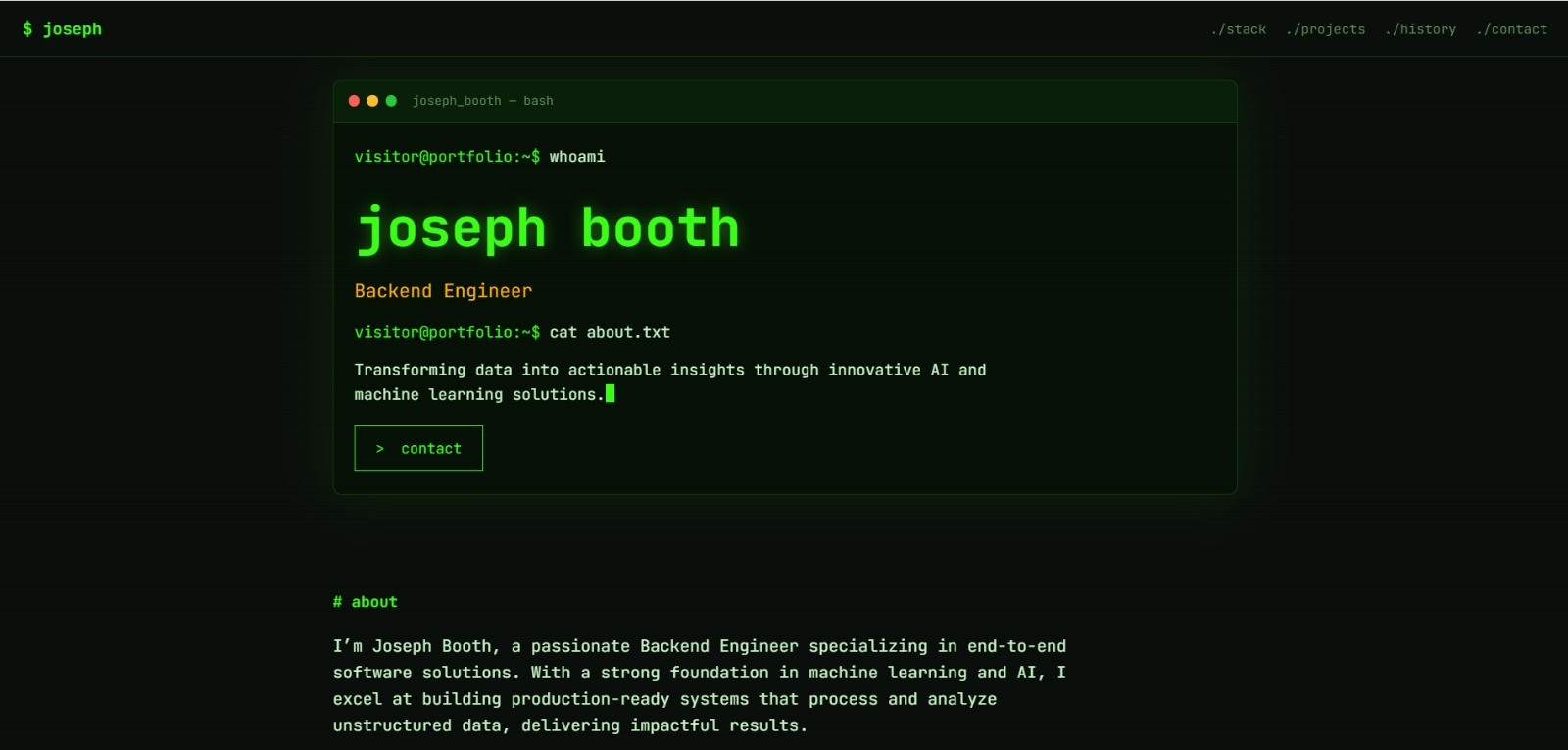
See what your portfolio could look like
This theme is built straight from your resume — pick one and your portfolio is live in minutes.
Was this guide useful?
Be the first to rate it.