 TD
TD
Key Takeaways
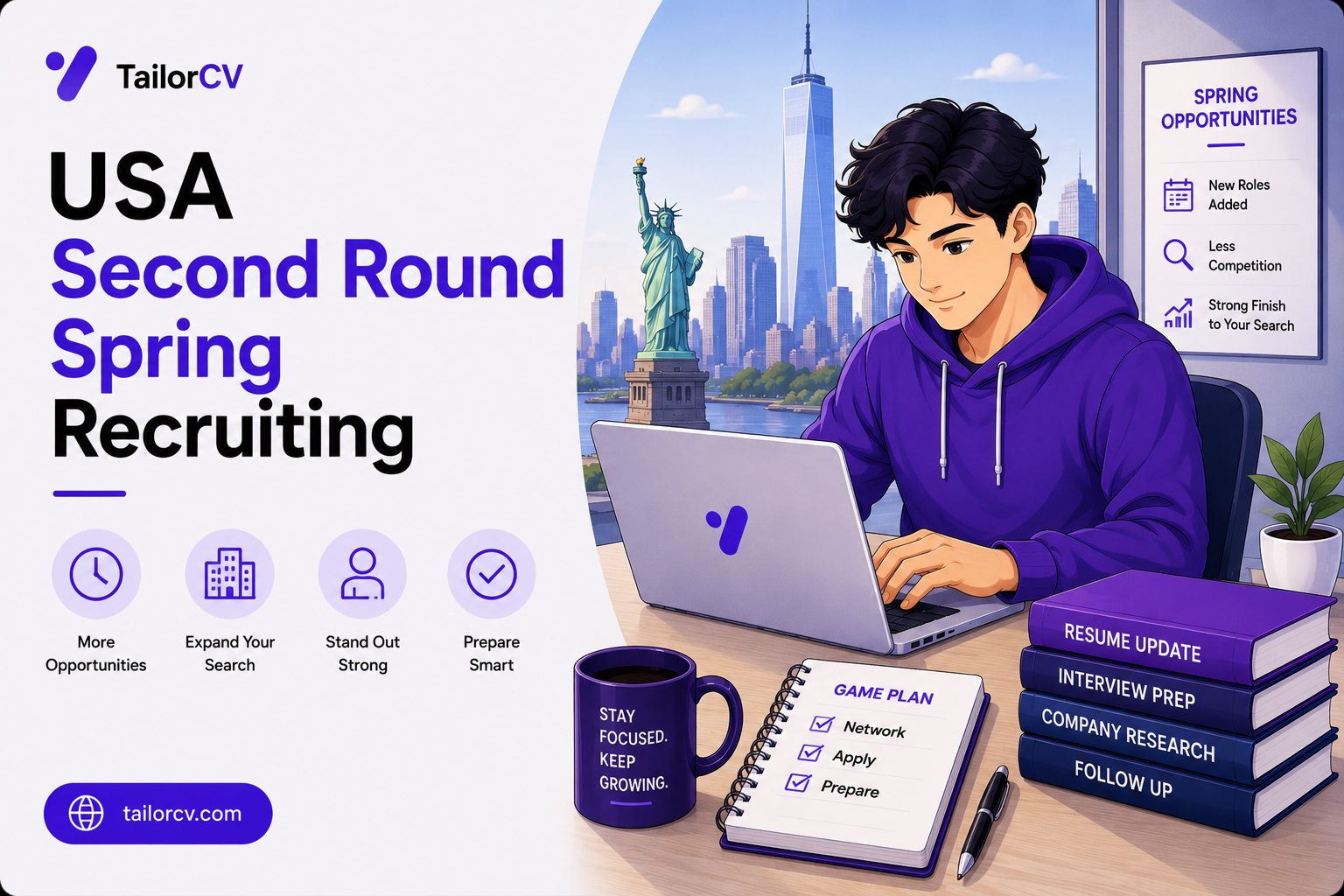
- A genuine second wave of hiring runs from January through May, driven by late-approved headcount, lost candidates and employers who never ran an autumn calendar at all.
- It is less contested than autumn recruiting, largely because most students have concluded the season is over.
- Spring roles convert to graduate offers at meaningfully similar rates to autumn ones at many employers, contrary to the perception that they are second-tier.
- The channel mix shifts — fewer campus fairs, more direct applications and outreach — and the tactics that worked in autumn need adjusting rather than abandoning.
- Treating December as the end of the search is the single most common and most costly assumption students make.
Why the spring wave exists
Autumn recruiting is loud, visible and finite. Career fairs, structured programmes, a defined calendar. It creates the impression that hiring for the year concludes with it. It does not.
Headcount approved late. Budgets and hiring plans are frequently finalised well into the new year, and roles that did not exist in October appear in February with a start date months away.
Candidates who decline. Every autumn cycle produces students who accepted offers, then received a better one, or changed their mind, or had a personal circumstance change. The seats they vacated reopen, and they reopen quietly.
Employers who never ran an autumn calendar. Most Canadian employers hire this way, and the pattern holds in the US too — small and mid-sized companies, most of the non-finance economy, and organisations without a formal graduate programme hire when they need someone, which is any time.
Growth that was not planned in autumn. A company that wins a contract or launches a product in January hires against that reality, not against a recruiting calendar set the previous September.
Structured programmes running a second, smaller intake. Some employers deliberately hold back a portion of headcount for a spring cohort, particularly where the autumn intake did not fill or where they want flexibility.
Why it is less contested
The mechanism is simple and it is the whole argument for paying attention to this season.
Most students have stopped looking. By January, a large share of the graduating class has either accepted an autumn offer or concluded, incorrectly, that the process has ended for the year. Application volume to spring postings is measurably lower than to equivalent fall postings.
Applicant quality is not lower. The students still searching in spring include people who were simply late to start, people whose target industry recruits later by nature, and people who declined an autumn offer for a good reason. This is not a weaker pool; it is a smaller one.
Recruiters notice persistence. A candidate applying in March with energy and a clear reason for their timing reads differently from one applying in October as part of the herd. Several recruiters describe spring candidates as, on average, more focused, precisely because they were not swept along by a season.
Where spring roles actually are
Direct applications on career pages, checked weekly. This channel does not slow down in spring the way campus events do, and it is where most spring hiring actually surfaces.
Smaller and mid-sized companies. These employers hire on need rather than on a calendar, and spring is simply another ordinary month for them.
Employers who under-filled in autumn. Search the same list of companies you applied to in the fall; some will have reopened requisitions.
Off-cycle and rolling programmes at larger employers, distinct from the named autumn cohort and often less publicised.
Referrals, which work at exactly the same rate in spring as in autumn, because the mechanism — a person routing your application past the general filter — has nothing to do with the calendar. The outreach approach is unaffected by season.
Government and public sector roles, which frequently run on their own long timelines independent of the campus cycle entirely — see the federal hiring guide.
Adjusting your approach
The fundamentals do not change; the emphasis does.
Fewer career fairs, more direct outreach. Spring campus events are thinner. Compensate with weekly career-page checks and active messaging rather than waiting for employers to come to you.
Explain your timeline in one honest sentence, if asked. "I was focused on a specific target in the fall that did not work out, and I'm applying more broadly now" is a complete and unremarkable answer. Nobody expects an elaborate justification.
Keep the resume current. If you built anything over the winter — a project, a certification, additional coursework — add it. A document unchanged since September signals a season of inactivity even if that is not true.
Confirm it still parses cleanly. The screen is the same in every season.
Widen the geography and the employer tier. Spring is a good time to add mid-sized companies and locations you had not considered, because your options have narrowed relative to autumn and broadening the search restores volume.
Move fast once something starts. Spring processes, particularly for roles with a summer start already approaching, often move faster than autumn ones. Be ready to interview on short notice.
Who this matters most for
Anyone who missed autumn recruiting entirely — a late decision to job search, a personal circumstance, or simply not knowing the calendar existed. This is the primary intended reader of this page and the good news is genuine: the season is real and it works.
Students in industries that recruit later by structure. Technology hiring reopens repeatedly through the year rather than closing after one autumn window, unlike banking and consulting.
International students whose autumn applications were narrowed by employer eligibility questions. Spring gives another pass at the same filtered list, plus new employers who did not appear in the autumn search.
Anyone whose autumn offer fell through. A rescinded offer or a declined one both land squarely in the spring recruiting window, and this is exactly the season built for restarting quickly.
Transfer and community college students on a compressed timeline who could not complete the full autumn cycle in their first term at a new institution.
A month-by-month spring plan
For anyone starting the search in January rather than September, this is a workable sequence.
January. Rebuild the resume with anything from the autumn — coursework, a project, a certification — added. Confirm it parses cleanly. Build a target list of thirty employers weighted toward mid-sized companies and organisations that hire year-round.
Early February. Begin weekly career-page checks across the whole list. Start outreach — three messages a day to alumni and recent joiners, using the same mechanics that work in any season.
Mid to late February. Applications at volume. Continue outreach in parallel rather than pausing it once applications go out.
March. Interviews for the earliest spring roles. Keep applying — a promising interview process is not a reason to stop the pipeline behind it.
April. A second smaller wave often appears here as summer-start roles get finalised. Widen geography if the search has been narrow.
May. Decisions and offers for roles with a summer or early-autumn start. If nothing has landed, this is not unusual — continue into the months immediately following graduation rather than treating commencement as a deadline.
Throughout: track everything in one place, review the funnel every few weeks rather than daily, and remember that the pool of active candidates is genuinely smaller in spring, which is the entire reason this season is worth running properly rather than apologetically.
What to build over the winter
The months between the autumn cycle ending and the spring wave opening are the most under-used period in a graduating student's year, and what you do with them changes what your spring applications can claim.
Ship one project properly. Not five tutorials — one thing that exists, runs, and can be opened by a stranger in thirty seconds. This is the single highest-leverage use of the winter, because it changes the substance of your resume rather than its formatting. The project standard is worth reading before you start.
Fix the document itself. Confirm it parses cleanly, and rewrite the bullets to describe outcomes rather than duties.
Diagnose the autumn honestly. If you sent forty applications and got no interviews, the problem is the document or the targeting, not the volume. If you got interviews and no second rounds, it is the first fifteen minutes of your interview. If you reached finals and lost, you were competitive and the fix is persistence rather than overhaul. The funnel diagnosis tells you which of the three you are in.
Practise the thing you failed at. Timed coding if the online assessments removed you, aloud storytelling if the behavioural rounds did, cases if you were targeting consulting.
Reconnect with everyone from the autumn. The recruiters who interviewed you, the alumni who spoke to you, the people who referred you. A short, non-desperate message saying what you have been working on keeps a relationship live and occasionally surfaces a role directly.
And keep a list of the employers who under-filled. Some of them will repost in February, and you will already know the process.
Where the roles actually surface in spring
Since the channel mix shifts, it is worth being specific about where to look rather than repeating that campus events are thinner.
Company career pages, checked weekly. The primary channel in spring by a wide margin. Build a list of thirty employers and work through it every Monday — most weeks nothing has changed and the weeks something has are the ones that matter.
Employers you already applied to in autumn. Some reopen requisitions after under-filling or losing candidates. It costs nothing to check and the process is already familiar to you.
Referrals. Unaffected by season, because the mechanism is a person routing your application past a filter. Three messages a day, using the outreach approach.
Mid-sized and local employers, which never ran an autumn calendar at all and are simply hiring as normal.
University job boards, which continue posting through spring even after the campus events wind down.
Government and public sector roles, running on their own long timelines entirely independent of the campus cycle — see the federal guide.
Professional society job boards in your field, which are consistently under-used by students and carry roles that never reach general boards.
And roles with immediate starts. Spring produces more of these than autumn does, because the vacancy is real and current rather than a cohort seat months away. If you can start soon, say so — it is a genuine advantage in this season and a non-factor in the autumn one.
Reapplying to employers who rejected you
A specific spring situation that comes up constantly and that students handle badly in both directions.
Check for a stated waiting period. Many large employers impose a cooldown after a rejection — commonly six to twelve months — and applying inside it wastes the application entirely. The rejection email usually says, and if it does not, a recruiter will answer the question directly.
Where no cooldown applies, reapplying is entirely normal. Requisitions differ, teams differ, and the person reviewing in March is frequently not the person who reviewed in October.
Only reapply with something changed. A project you shipped over the winter, a certification, a different role that better matches your evidence. Sending the identical application to the identical posting achieves nothing and is noticed.
Apply to a different team or function where possible. A candidate rejected for one role is frequently a good fit for an adjacent one, and large employers treat these as separate processes.
Use a referral this time if you did not before. The most effective single change available, because it moves your application out of the queue that rejected it.
And do not read the earlier rejection as a permanent judgement. At the volumes involved, rejection is a weak signal about you and a strong signal about the size of the applicant pool — the base-rate point holds in every season.
Employers who never had an autumn season
Worth naming explicitly, because "spring recruiting" implies a second round of the same process when a large part of it is really a different market that was always open.
Small and mid-sized companies. The majority of US employers. They have no graduate programme, no campus presence, and no calendar — a role appears when someone leaves or the work grows. The mid-market argument applies with particular force in spring, because these employers are unaffected by the season's rhythm entirely.
Healthcare systems. Hiring continuously rather than in cohorts, with residency intakes on their own schedule.
Government at every level. Federal, state and local, running on long timelines independent of any campus cycle.
Education. School districts recruit in spring for an autumn start, which is the opposite of the corporate calendar.
Universities and research institutions. Posting year-round, and frequently cap-exempt if that matters to you.
Non-profits. Frequently hiring only weeks before a start date, because funding decisions arrive late.
Startups. Hiring on need, always.
The reframe worth taking from this: a student in April has not missed the market. They have missed one visible slice of it and still have access to most of the economy, which is a very different situation from the one the autumn calendar implies.
The psychology of a second season
Worth addressing directly, because the practical advice above only works if you are still functioning well enough to execute it.
A quiet autumn is not a verdict. The base rates mean most applicants at most employers are rejected regardless of quality, and a season producing nothing is a common outcome rather than a diagnosis of your ability.
The comparison to classmates is misleading. People announce offers and not rejections, industries run on completely different calendars, and the person who accepted in November applied to sixty places and heard nothing from fifty-eight of them.
Isolation makes it worse. By spring, the students still searching frequently believe they are uniquely behind, because everyone who succeeded is visible and everyone still looking is quiet. Talking to one person honestly usually reveals that the cohort is far less settled than it appears.
Bound the time. Fixed slots for applications, outreach and practice, and then stop. A search that fills every waking hour produces less and costs more than one with edges.
Keep one thing in your life that has nothing to do with this. The people who cope worst are the ones whose entire identity has narrowed to the search.
And keep the timescale in proportion. This is a few months of a working life that will run four decades. First jobs are frequently not the intended one, lateral moves at the two-year mark are how a great many people reach the employers who filtered them out as graduates, and the spring season is a genuine channel rather than a consolation prize.
Tip: Do not write the year off in December. A genuine second wave runs in spring, and the candidates who assume otherwise stop applying right before it opens.
Common Mistakes
- Writing off the year in December. Concluding in December that the year is over. The single most costly assumption a graduating student can make.
- Waiting for career fairs. Relying on career fairs that no longer exist at this point in the year. Direct applications and outreach carry more weight in spring.
- Leaving the resume unchanged since autumn. Add anything built over the winter.
- Narrowing the search instead of widening it. Fewer autumn options is an argument for more spring applications, not fewer.
- Treating spring roles as inferior. Conversion and quality are comparable at many employers; the pool is simply smaller.
- Moving slowly once a process starts. Spring timelines can be compressed and candidates who delay lose roles to those who do not.
Related Guides
Keep building on this with the related guides in this series:
- HBCU Recruiting Pipelines in the US - What Actually Exists
- MBA Internship Recruiting Timeline in the US
- Quant and Trading Campus Recruiting in the US - How the Process Runs
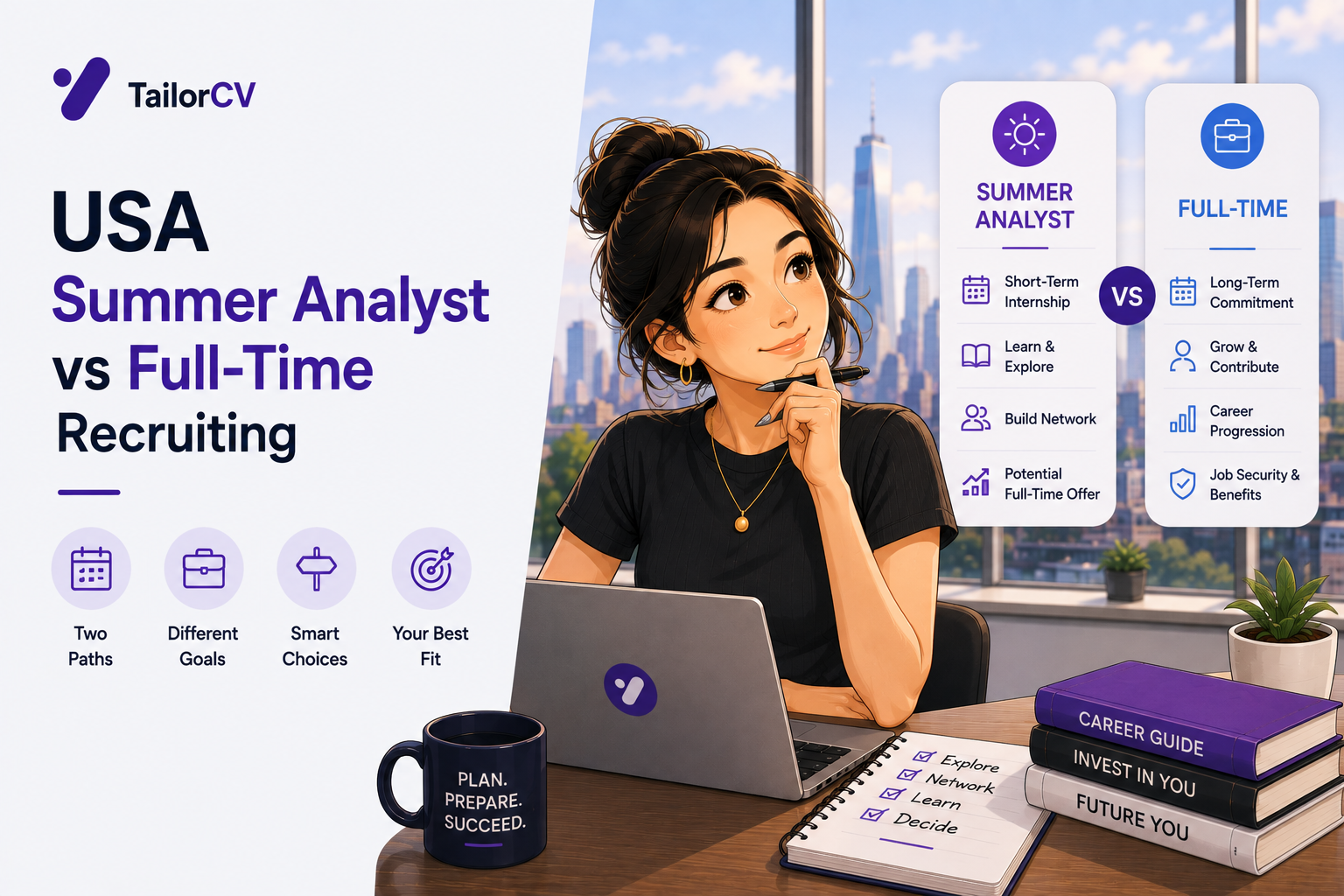
- Summer Analyst or Full-Time - Which US Recruiting Round Actually Matters
- 401(k) and Benefits Explained for New Graduates
- US Background Checks - What Employers Actually See
- Campus Placement Preparation in Second Year 2026 - The Highest-Leverage Time
You can also check your resume's ATS score for free, generate a tailored cover letter, or build a portfolio website in minutes.
Frequently Asked Questions
Do employers view spring applicants as leftovers?
Generally no. Recruiters filling a spring requisition are filling a live vacancy and care about whether you can do the job, not about which month you applied. The perception that spring candidates are weaker is held far more by students than by the people hiring them.
Should I mention that I applied in autumn and was rejected?
Not unprompted, and there is no need to volunteer it. If you are reapplying to the same employer, check whether they have a stated waiting period — many large employers do — and if not, a fresh application with genuinely improved evidence is entirely reasonable.
Is it worth applying to a role starting sooner than I can begin?
Say your availability plainly and let the employer decide. Spring roles frequently want someone soon, and a candidate who is honest about a June start is better than one who obscures it and creates a problem later.
How long should I keep searching after graduation?
As long as it takes, and treat it as a continuous process rather than one with a deadline. A meaningful number of graduates find their first role in the months after commencement, and there is no cliff at which the market closes to you.
Is a spring internship or job worse than an autumn one?
Not systematically. Conversion rates and role quality are comparable at many employers. What differs is visibility and volume, not calibre.
How do I explain applying later than my peers?
One honest sentence is enough, and it is rarely asked in detail. Recruiters see this pattern every year and do not treat it as unusual.
Should I still apply to autumn-cycle employers in spring?
Yes, particularly to check whether they reopened requisitions after under-filling. It costs nothing to check.
Does spring recruiting exist in every industry?
It is strongest in technology and most of the broader economy. It is weakest in investment banking and consulting, where the autumn window is closer to decisive — though even there, off-cycle and boutique opportunities exist in spring.
What if nothing comes through by graduation?
Keep going. The search does not stop at commencement, and a meaningful number of people find their first role in the months immediately after graduating rather than before it. Treat it as a continuous process rather than one with a hard deadline.
Is it too late to start now if I have not applied anywhere yet?
No. Spring is precisely the season built for exactly this situation, and starting properly now — resume fixed, target list built, outreach running — puts you in a genuinely live channel rather than a closed one.
Find out where a fresher resume stands
Score yours against a real posting - no account, no cost.
Drop your resume here or choose a file
PDF only. Max 2 MB.
We never share your data or use it to train AI models.

Was this guide useful?
Be the first to rate it.