 TD
TD
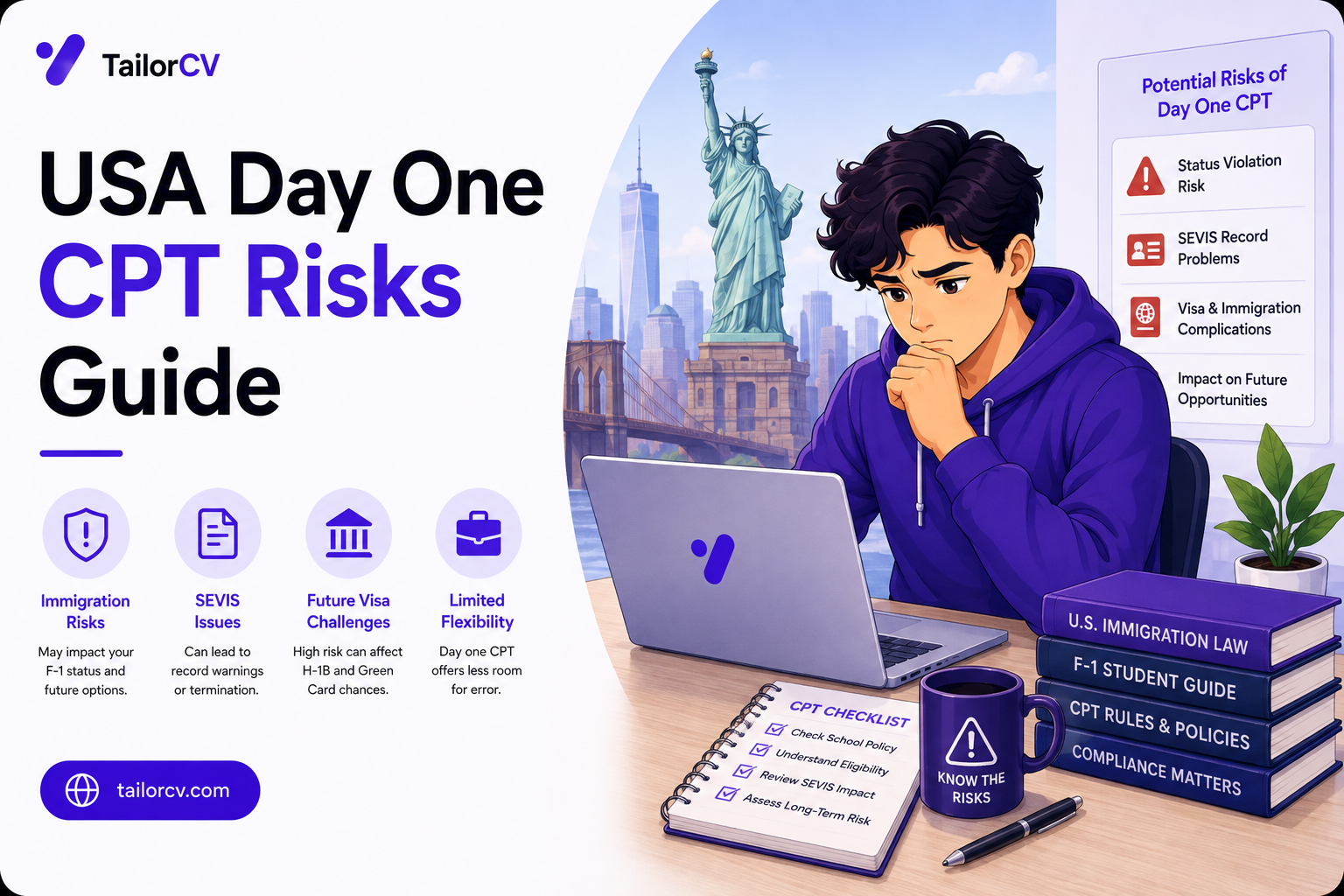
Key Takeaways
- Day-one CPT means working from your first term rather than after the usual academic year, and it is offered by a small number of institutions rather than by most.
- The arrangement is not automatically unlawful, and it draws far more scrutiny than ordinary CPT — at status changes, at visa interviews and at petition stage.
- Twelve months or more of full-time CPT eliminates your OPT eligibility entirely, which is the most common and most expensive consequence.
- The risk lands on you, not on the school. A programme's willingness to authorise it is not a legal opinion about your case.
- If you are considering it, get advice on your own facts from an immigration attorney before you enrol, not after.
What it actually is
Curricular practical training is work authorisation tied to your academic programme. The standard pattern is straightforward: you complete an academic year, the work is an integral part of your curriculum, your designated school official authorises it, and you work.
Day-one CPT describes programmes that authorise training from a student's very first term, on the basis that the practical component is integral to the curriculum from the outset rather than something that follows a year of study. A small number of institutions build their programmes this way, frequently at master's level, frequently with heavy enrolment from students already in the country.
The mechanism is not exotic and the regulation does contemplate an exception to the one-academic-year requirement for graduate programmes where immediate participation is required. The question is never whether such programmes can exist in principle. It is whether a particular arrangement genuinely meets the requirement, and whether the person relying on it can demonstrate that later.
Why it attracts scrutiny
Three features of the typical day-one arrangement invite attention, and understanding them tells you what you would have to defend.
The work looks like employment rather than curriculum. In an ordinary CPT placement, the connection to coursework is visible — a co-op module, a supervised project, credit awarded against defined outcomes. In some day-one programmes the student works full-time at a job they already had, attends class occasionally or remotely, and the academic content is thin. That gap between the stated integration and the observable reality is exactly what an adjudicator looks for.
Attendance patterns. Programmes where students live and work hundreds of miles from campus and attend in concentrated weekend blocks are common in this space. This is not automatically improper, and it is a pattern that has been examined.
The population. Programmes drawing overwhelmingly from students who need continued work authorisation, rather than from applicants attracted by the academic content, look like an immigration product rather than an education.
None of this means every day-one programme is a problem. It means the arrangement sits in a category that receives disproportionate examination, and that the examination happens later — at a change of status, at a consular interview when you travel, at a petition, sometimes years afterwards.
Where the consequences actually land
This is the part students underestimate. If an arrangement is questioned, the school does not bear the outcome. You do.
A denied petition. An employer sponsoring you later may find the petition questioned on the basis of how you maintained status. The employer is inconvenienced; you lose the job.
A finding that you failed to maintain status. This is the serious one. Working without valid authorisation is a status violation, and the consequences run from a denied application to a bar on returning.
A visa refused at a consulate. Students who travel home and apply for a new visa stamp are asked about their programme and their employment. A consular officer who is unconvinced has broad discretion, and the person is outside the country when it happens.
Complications years later. Permanent residence applications ask you to account for your entire immigration history. An arrangement that went unexamined at the time can surface at the point where you have built a life around staying.
The asymmetry is the thing to hold on to: the institution collects tuition regardless of the outcome, and every downside is yours.
The OPT trap, which catches people who never had a problem
Set the legality question aside entirely, because there is a second consequence that applies even to arrangements nobody ever challenges.
Twelve months or more of full-time CPT eliminates your eligibility for OPT.
Not reduces it — eliminates it.
Part-time CPT does not carry the same effect. Full-time CPT under twelve months does not eliminate it either. But a student who works full-time on CPT for a full year has, at that moment, given up post-graduation training entirely — and with it the STEM extension and the multiple H-1B lottery attempts that the extension makes possible.
Students discover this at exactly the wrong moment. They complete the programme, go to apply for OPT, and are told they have none. By then it is not recoverable.
Count carefully, and count in advance. Track the months, know whether each authorisation is full-time or part-time, and confirm your position with your international office in writing before accepting an additional term.
Why people do it anyway
It is worth being fair about the reasons, because they are usually not carelessness.
A lost lottery. Someone finishes OPT, does not get selected in the H-1B lottery, and faces leaving a job and a life. Enrolling in a programme that authorises immediate work looks like a bridge to the next lottery cycle.
A gap in authorisation. A period between one status and another, where the alternative is departure.
An employer who cannot wait. A company willing to keep someone on but unable to sponsor immediately.
These are real pressures and they are why the market for such programmes exists. Understanding the motivation does not change the risk profile — it explains why people accept a risk they would otherwise avoid.
Questions to ask before enrolling
If you are considering one of these programmes, these questions separate a genuine graduate programme with an integrated practical component from something that is not.
"How many credit hours is the practical component, and how is it assessed?"
A real curricular element has defined outcomes, a supervisor, deliverables and a grade. "You submit a reflection at the end of term" is thin.
"What proportion of students are enrolled primarily for the work authorisation?"
You will not get an honest answer, and how the question is handled tells you something.
"Is the degree accredited, and by whom?"
Check the accreditor independently rather than accepting a name.
"What happens to my status if the programme loses certification?"
Institutions have lost the ability to enrol international students, and the students enrolled at the time bore the consequences.
"Can I see the CPT authorisation policy in writing?"
A programme confident in its arrangement documents it.
"How many of your graduates went on to have petitions approved?"
Vagueness here is informative.
And the question to ask someone else entirely: an immigration attorney, about your specific facts. This is the single most important line in this article. A school authorising CPT is not giving you a legal opinion on whether your arrangement will withstand examination — the designated school official's role is to administer the programme, not to defend your case later.
Safer alternatives, considered honestly
Most people arrive at day-one CPT after concluding they have no other option. Frequently there are others, and they are worth exhausting first.
A genuine degree programme with a real co-op component. Longer, more expensive in time, and it puts you in the ordinary CPT position rather than the scrutinised one.
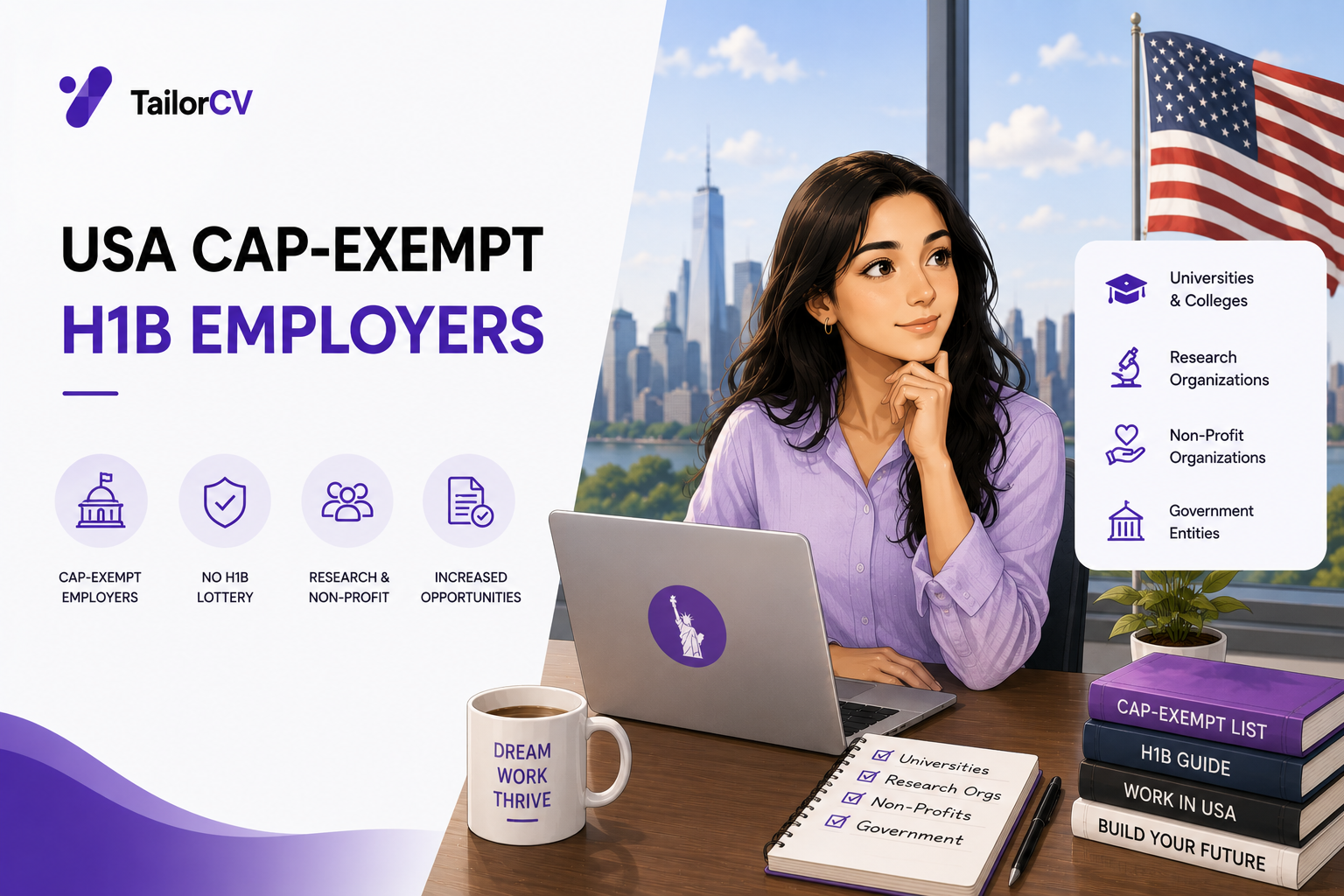
Cap-exempt employers. Universities, affiliated non-profits, research institutions and some healthcare organisations can sponsor outside the annual cap and the lottery entirely. This route is under-known and it is a genuine alternative for the right candidate — see the cap-exempt guide.
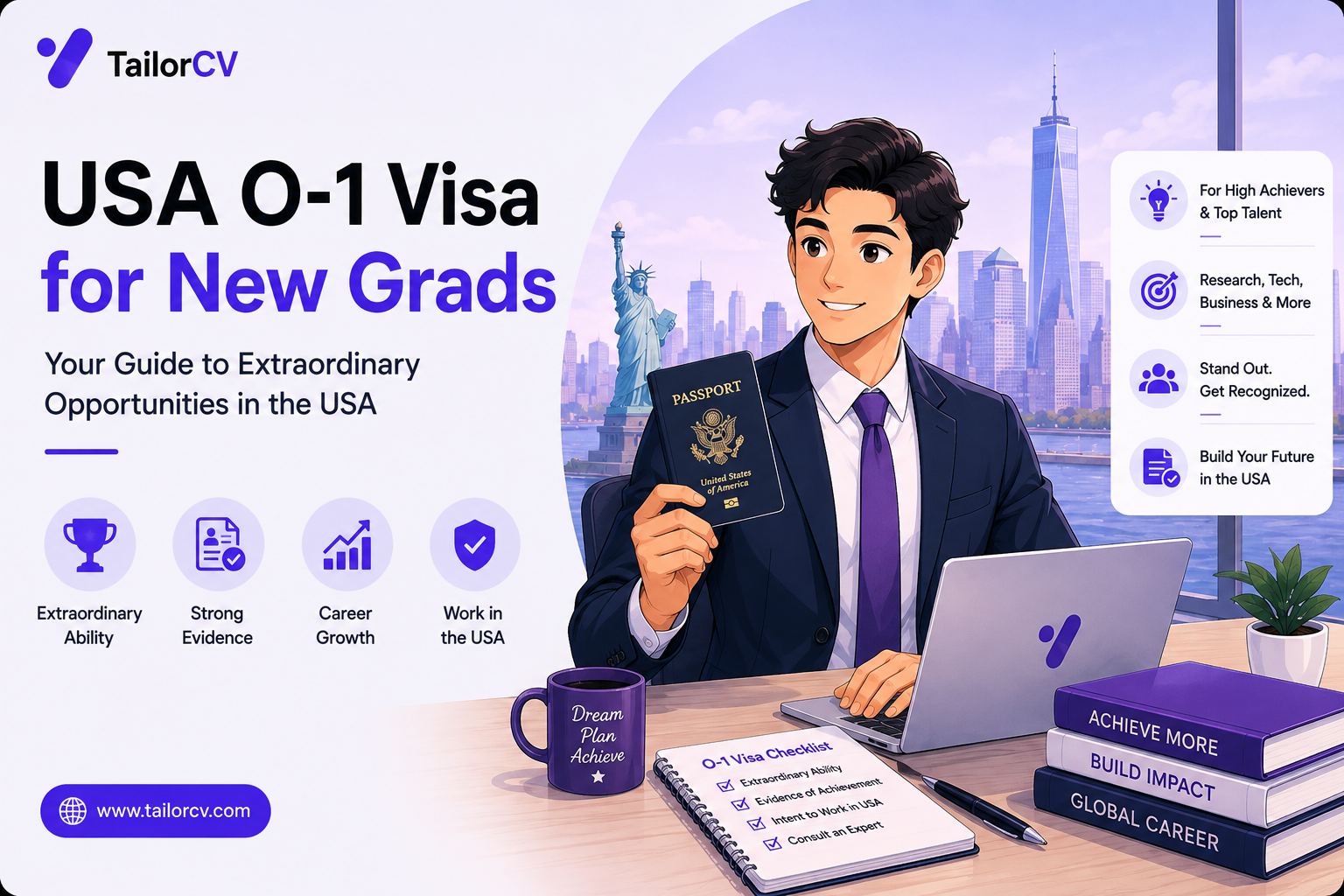
Other visa categories. The O-1 for people with a strong record, treaty-based categories for nationals of certain countries, and intracompany transfer where your employer has an overseas entity.
Working abroad for the same employer, then transferring back later. Slower, and it keeps the relationship and the career moving.
A different country. The four-country comparison sets out routes where the graduate holds an open permit rather than depending on an employer, and for many people the Canadian or UK route is a better fit than a contested US one.
Going home and returning later. Unpalatable and frequently the lowest-risk option, and it preserves a clean immigration history that has real value.
What to do if you are already in one
Do not panic, and do not stop attending. Withdrawing abruptly creates its own status problem.
Get an independent legal opinion on your specific facts. Not a forum, not the school, not a classmate. An attorney who reviews your documents and your history.
Assemble your record now. Every CPT authorisation with dates and whether it was full-time or part-time. Every I-20. Transcripts. Course syllabi showing the practical component. Employment letters. Evidence of attendance. If your arrangement is ever examined, contemporaneous documentation is what you will need, and it is far harder to assemble later.
Count your full-time CPT months and work out where you stand on OPT eligibility.
Attend genuinely. Whatever the programme's design, your own compliance with its requirements is within your control and it is the part you would be asked about.
And plan the exit. Day-one CPT is at best a bridge. Have a view on what it bridges to — a cap-exempt employer, a different category, a lottery cycle — rather than renewing indefinitely.
How adjudicators actually look at this
Useful to understand, because it tells you what documentation matters and why contemporaneous records are worth keeping.
Nobody reviews your CPT at the time you use it. The examination, if it comes, happens later and from a different angle — someone assessing a subsequent application looks backwards at whether status was properly maintained throughout.
What gets looked at. The pattern of your enrolment and employment together. Whether the practical training was plausibly integral to a curriculum. Whether you were physically attending in any meaningful sense. Whether your employment began before or after your enrolment, and whether the enrolment looks like it followed the job rather than the other way round.
What is unhelpful. An employment start date that precedes your programme's start date. Continuous full-time work with a course load that appears nominal. A programme that appears in adverse findings elsewhere. Long distances between your residence, your employer and your campus.
What helps. Syllabi describing the practical component and how it is assessed. Graded work. Attendance records. A supervisor who confirms the training relationship. Evidence you were actually taught something.
Why you should gather this now. Institutions close, systems are replaced, and staff leave. A syllabus you can download today may be unobtainable in three years, at exactly the point someone asks you to describe the academic content of a programme you finished. Ten minutes a term, saved somewhere permanent.
The general principle worth holding: your ability to explain your own history later depends almost entirely on what you kept at the time. That applies to any work authorisation record, and it applies with particular force here.
Two situations, compared
The same decision looks very different depending on the facts around it, so it helps to see both.
Where the risk is lower. A student finishing a bachelor's degree enrols in a genuinely accredited master's programme with a substantial taught component, attends in person, and takes a part-time curricular placement in the second half of the programme that is assessed for credit by a faculty supervisor. The employment follows the enrolment. Part-time CPT means no accumulation toward the twelve-month OPT bar. This is close to ordinary CPT and it is not what people mean by day-one CPT at all.
Where the risk is high. Someone whose OPT is ending and who was not selected in the lottery enrols in a programme they found through an immigration forum, at an institution whose enrolment is overwhelmingly students in the same position. They continue full-time at the job they already had, attend occasional weekend or remote sessions several states away, and take full-time CPT continuously. Twelve months in, their OPT eligibility is gone. The employment preceded the enrolment. The academic content is thin enough that they would struggle to describe it.
The distinction is not the label. Both might be described as CPT; only one would be comfortable to explain to a consular officer three years later. What separates them is whether the education is real, whether the work follows from the curriculum rather than the reverse, and whether the arrangement has an end.
If you are considering something closer to the second sketch, that is exactly the point at which an hour with an immigration attorney is worth far more than any article — including this one — because the facts that matter are yours.
Deciding, with clear eyes
If you are weighing this, the honest way to frame it is as a risk trade rather than as a yes or no.
What you gain: continued presence and continued income, immediately, without waiting for a lottery cycle. For someone facing departure in weeks, that is not a small thing and it is why the market exists.
What you risk: a status finding, a denied petition later, a refused visa at a consulate, complications in a residence application years afterwards, and — separately and regardless of legality — your OPT eligibility if full-time CPT reaches twelve months.
What changes the balance toward acceptable: a genuinely accredited institution with a real curriculum you would attend anyway; a practical component with actual academic content, assessment and a supervisor; a short, defined bridge to something specific rather than an indefinite arrangement; careful attention to the twelve-month count; and legal advice on your own facts before you enrol.
What changes the balance toward unacceptable: an institution with a thin academic offering and heavy enrolment from students who need authorisation; a plan with no exit; full-time CPT that will cross twelve months; and reliance on a school's assurance in place of independent advice.
And the question worth asking yourself plainly: is this a bridge to a specific destination, or a way of postponing a decision? A bridge to a cap-exempt employer, to an O-1 petition you are actively building a case for, or to a defined number of remaining lottery cycles is a plan. Enrolling repeatedly because the alternative is leaving is not a plan, and it accumulates risk for years without resolving anything.
Many people in this position have not seriously priced the alternatives — a country where the graduate holds an open permit, an employer outside the cap, or a period working abroad for the same company. Those options are frequently better than they look from inside the pressure of an expiring authorisation, and they are worth exhausting before accepting a risk that lands entirely on you.
The paperwork to keep, specifically
If you take nothing else operational from this page, keep these. They are cheap to save now and frequently impossible to obtain later.
- Every I-20, including every reissued version, in the order they were issued
- Every CPT authorisation with its exact dates and whether it was full-time or part-time
- A running total of full-time CPT months, updated each term, against the twelve-month limit
- Course syllabi for every term, especially anything describing the practical component and how it was assessed
- Transcripts each term rather than only at the end
- Employment letters stating your role, dates and hours
- Evidence of attendance — anything showing you were present and participating
- Your designated school official's name and contact details, updated when staff change
Save it outside any account the institution controls. Schools lose certification, systems get replaced, and a portal you cannot log into is not a record.
Tip: Consult an independent immigration attorney — not the school offering the programme — before enrolling in any day-one CPT arrangement. The school has an obvious interest; an attorney does not.
Common Mistakes
- Treating the school's authorisation. It is an administrative act, and the risk stays with you.
- Accumulating twelve months of full-time CPT. It destroys OPT eligibility, and students find out when it is too late to change.
- Not keeping documentation. If the arrangement is questioned years later, contemporaneous records are what you would need.
- Relying on forum advice. Situations differ, rules change, and confident posts are frequently wrong about someone else's facts.
- Choosing it before exhausting alternatives. Cap-exempt employers, other categories and other countries are routinely overlooked.
- Travelling without advice. Travelling without advice a consular interview is where an unexamined arrangement most often gets examined, and you are outside the country when it happens.
Related Guides
Keep building on this with the related guides in this series:
- 401(k) and Benefits Explained for New Graduates
- US Background Checks - What Employers Actually See
- Cap-Exempt H-1B Employers - The Route Around the Lottery
- Community College Transfer Students - Building a Career Strategy That Works
- US Data Science New Grad Hiring - The Roles, the Loop and the Preparation
- The I-9 and Employment Verification - What New Graduates Need to Know
You can also check your resume's ATS score for free, generate a tailored cover letter, or build a portfolio website in minutes.
Frequently Asked Questions
Does using day-one CPT mean I can never get a green card?
No. It means an arrangement in your history may attract questions during a residence application, which asks you to account for how you maintained status throughout. Many people have used CPT without difficulty. The risk is real, case-specific, and the reason to keep documentation and to take advice on your own facts rather than to assume either the best or the worst.
Can I switch to a normal programme partway through?
Frequently yes, and it is often a sensible move. Transferring to an institution with a conventional curriculum puts you in the ordinary CPT position for the remainder. Speak to both international offices before doing anything, because transfers have their own status implications and timing rules.
Is it different if my employer is large and well known?
Not materially. The scrutiny attaches to the academic arrangement and to how you maintained status, not to the reputation of the company paying you. A recognisable employer does not validate a thin programme.
What if I have already crossed twelve months of full-time CPT?
Your OPT eligibility is gone and that cannot be reversed. What remains is planning around it: cap-exempt employers, the O-1 if you have a genuine record, an employer willing to run the lottery while you remain in status some other way, or a different country. Get advice quickly, because the options narrow with time.
Is day-one CPT illegal?
Not inherently. The regulations contemplate graduate programmes where immediate practical participation is required. Whether a specific arrangement genuinely meets that standard is a factual question, and it is one that gets examined later rather than at the time.
Will it affect my H-1B petition?
It can. Petitions ask about how status was maintained, and arrangements at institutions known for this pattern attract additional questions. Many petitions proceed without issue; the risk is real rather than universal.
Does part-time CPT count toward the twelve-month OPT rule?
No. Only full-time CPT accumulates toward the twelve months that eliminates OPT eligibility. Count carefully and confirm the classification of each authorisation with your international office in writing.
Can I do day-one CPT and then still get OPT?
Only if your full-time CPT stays under twelve months. At twelve months or more, OPT eligibility is gone entirely — and with it the STEM extension and the additional lottery attempts.
Should I tell employers about it?
Answer questions about your authorisation accurately if asked, using the same brief approach that applies to any status question. Do not volunteer a lengthy explanation, and never state something that a document would contradict.
What if my school says it is completely fine?
Get a second opinion from an attorney who is not connected to the institution. The school has an enrolment interest, its role is administrative rather than advisory, and it does not carry any of the downside if an arrangement is later questioned.
What is your resume scoring right now?
Scan it against a job description and get your ATS match score in about a minute.
Drop your resume here or choose a file
PDF only. Max 2 MB.
We never share your data or use it to train AI models.

Was this guide useful?
Be the first to rate it.