TD
TD
Key Takeaways
- Co-op alternates academic terms with paid work terms, so graduates leave with a year or more of real experience.
- International students need a co-op work permit in addition to their study permit, and it is free but must be applied for.
- Work terms are competitive and run on a fixed cycle with employer rankings and matching.
- Co-op experience is genuine Canadian experience, which directly addresses the objection newcomers face.
- Many students receive full-time offers from a co-op employer before final year.
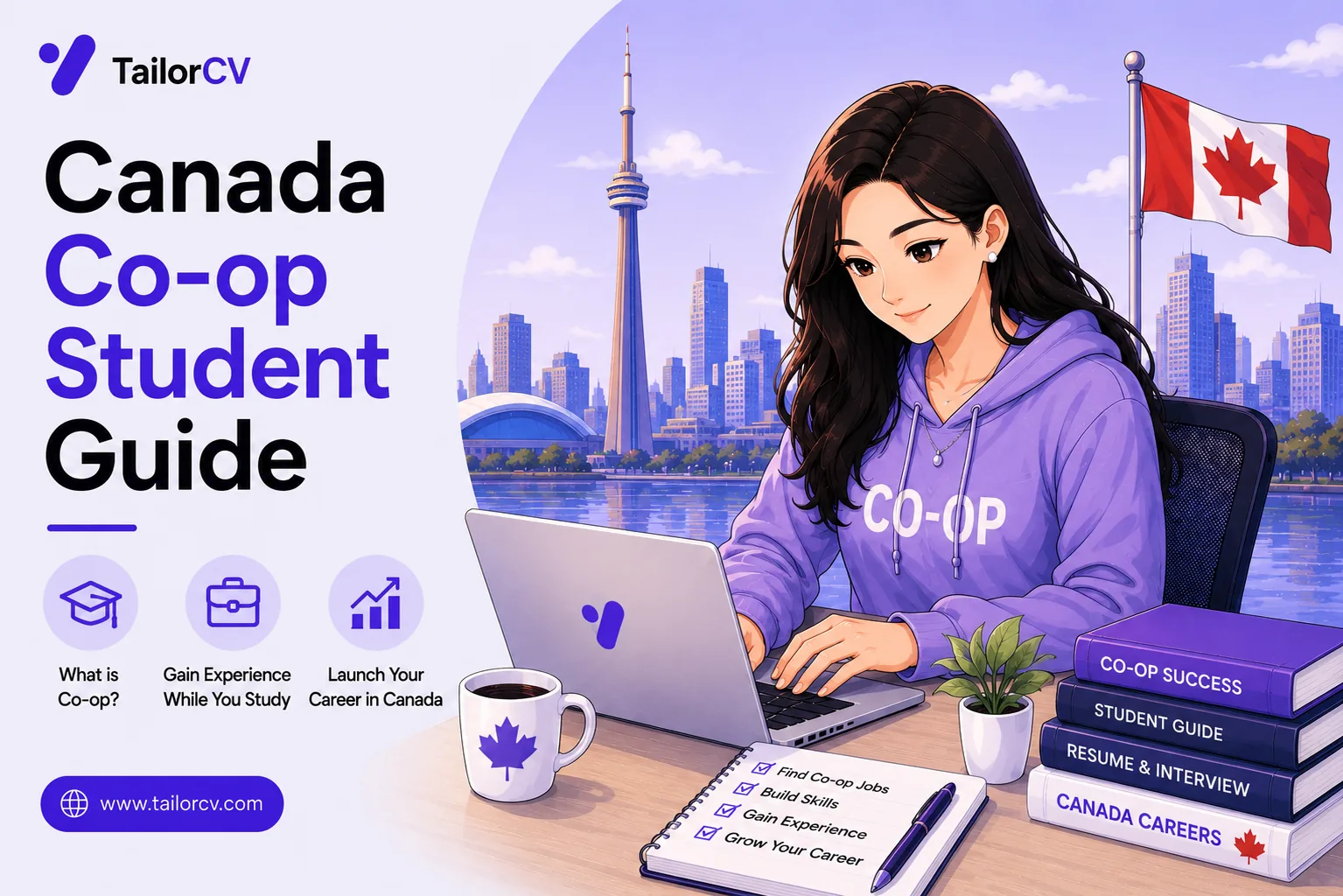
Canadian co-operative education is one of the better-designed systems anywhere for turning students into employable graduates. Rather than a single summer internship, co-op alternates study terms with paid work terms across the degree — so students graduate with twelve to twenty months of professional experience and, frequently, an offer already in hand.
For international students it does something additional: it produces Canadian experience before you ever need to explain the absence of it.
This guide covers how it works, the permit requirement, and how to convert a work term.
Before applying, check your resume parses — the free ATS score checker.
How co-op works
Alternating terms. You study, then work, then study, then work. Work terms are typically four months, and programs commonly include four to six of them across the degree.
Paid. Work terms are salaried, and rates for technical disciplines are frequently substantial. Many students significantly offset tuition.
Credited. Work terms count toward your degree and appear on your transcript, which is why they are structured and assessed rather than casual.
Widely available. Many Canadian universities and colleges run co-op programs, and some institutions are known internationally for the scale of theirs.
Employer-heavy. Programs maintain large employer networks, and the university's placement infrastructure does work that an individual student could never do alone.
The co-op work permit
The detail international students most often miss.
A study permit alone does not authorise co-op work terms. You need a separate co-op work permit, which is free but must be applied for.
Requirements typically include:
- A valid study permit
- Work being an essential part of your program
- Confirmation from your institution that the co-op is required
- The work component not exceeding a defined proportion of the program
Apply early. Processing takes time, and starting a work term without the permit is not an option.
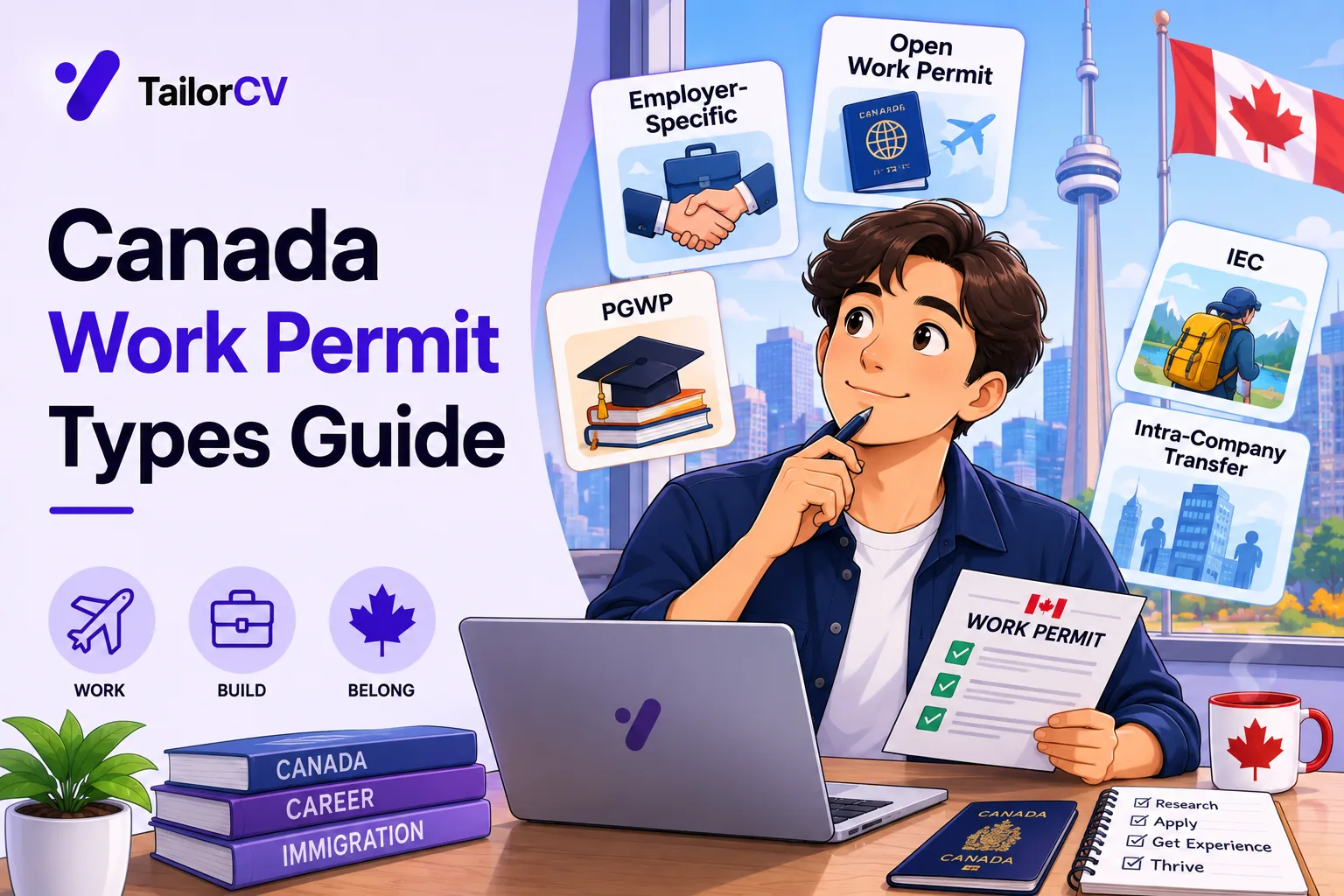
It is separate from the general study permit work allowance, which covers part-time work during term — a different thing entirely. Your wider status obligations are covered in the Canada work permit types guide.
Getting a work term
Competitive, and run on a structured cycle.
The typical process:
- Postings open on the university's co-op system for the upcoming term
- You apply to multiple employers, usually with limits on how many
- Employers interview during a defined window
- Ranking and matching. Both students and employers rank preferences, and a matching algorithm produces placements
- Placements are confirmed, and unmatched students continue in later rounds
What this means practically:
Apply broadly in the first round. Later rounds have fewer and less desirable postings.
Rank honestly. Matching systems generally work best when preferences are genuine rather than strategic.
Interview preparation matters. These are real interviews, frequently with the same rigour as graduate hiring — see the Canada tech interview guide and the US behavioral interview STAR guide.
Your first work term is the hardest. With no prior experience you are competing on academics, projects and enthusiasm. Once you have one term completed, subsequent placements get substantially easier.
Making work terms count
Treat each as an extended interview, because employers hire from their co-op students routinely.
Ask in week one what a successful term looks like and whether they hire co-op students into full-time roles. Very few students ask, and the answer is the criteria.
Communicate progress. Send a short weekly update — almost no co-op student does, and it is remembered.
Ask when stuck rather than going quiet for days. This is the single most damaging pattern.
Finish things, including documentation and handover.
Keep a written record of what you built and what it achieved. Four-month terms blur together and you will need the detail for your resume and every interview afterwards.
The conversion behaviours are the same as in the internship to PPO conversion guide and the US internship to full-time guide.
Why it matters for international students
It produces Canadian experience while you study. By graduation you have a year or more of it, which pre-empts the objection described in the Canadian experience problem.
It builds a Canadian reference, which is the asset newcomers most struggle to obtain.
It creates employer relationships that convert into post-graduation offers.
It supports the PGWP path, since you graduate employable rather than starting from zero — see the Canada work permit types guide.
And it pays, which materially reduces the cost of studying in Canada.
Common Mistakes
Not applying for the co-op work permit. A study permit alone does not authorise work terms, and processing takes time.
Applying to too few employers in the first round. Later rounds carry fewer and weaker postings, so breadth early matters.
Treating work-term interviews casually. They are real interviews, frequently as rigorous as graduate hiring.
Going quiet when stuck during a term. Four months is short, and days of silence are disproportionately damaging.
Not asking about full-time conversion. Employers hire from their co-op students routinely, and asking in week one gives you the criteria with time to meet them.
Not recording what you did each term. Four-month placements blur, and reconstructing them later produces a much weaker resume.
Giving up after an unmatched first round. The first term is the hardest by design; subsequent ones get substantially easier.
Treating a work term as a break from studying. It is the part of the degree that produces the job offer.
Frequently Asked Questions
What is co-op?
A program alternating academic terms with paid, credited work terms, so students graduate with a year or more of professional experience.
Do international students need a special permit?
Yes — a co-op work permit in addition to the study permit. It is free but must be applied for, and processing takes time.
Are co-op work terms paid?
Yes, and rates in technical disciplines are frequently substantial enough to offset a significant share of tuition.
How competitive are placements?
Competitive, particularly the first term when you have no prior work experience. Applying broadly in the first round matters, and later terms get easier.
Does co-op lead to full-time jobs?
Frequently. Employers hire from their co-op students routinely, and many students hold an offer before final year.
How is co-op different from an internship?
It is structured, credited, part of the degree, and repeated across multiple terms rather than being a single summer placement.
Does co-op count as Canadian experience?
Yes, which is precisely why it matters so much for international students facing the Canadian experience objection.
Check your resume before applying to work terms. Check your ATS score free.
Make This Practical
Apply for the co-op work permit as soon as you are eligible if you are an international student. A study permit alone does not authorise work terms, processing takes time, and this is the most common avoidable delay.
Then treat the first round as the one that matters. Apply broadly, prepare properly for interviews that are as rigorous as graduate hiring, and rank honestly — the first work term is the hardest by design, and everything afterwards gets easier once you have one completed.
Finally, run each term as the extended interview it is. Ask in week one what success looks like and whether they hire co-op students full-time, send an unprompted weekly update, ask for help after an hour rather than going quiet, and write down what you built before the term ends — four months blur quickly and that record becomes your resume.
Find out where a fresher resume stands
Score yours against a real posting - no account, no cost.
Drop your resume here or choose a file
PDF only. Max 2 MB.
We never share your data or use it to train AI models.

Was this guide useful?
Be the first to rate it.