 SS
SS
Key Takeaways
- Employers ask two separate questions: are you authorised to work now, and will you need sponsorship in future. They have different answers.
- Answer both precisely with dates and durations. Vagueness reads as risk far more than a "yes, eventually" does.
- Never misrepresent your status. It is verified at offer stage and discovering it late ends the process.
- Do not raise sponsorship in the first thirty seconds of an interview. Answer when asked, clearly and briefly, then return to the role.
- Knowing which employers sponsor before you apply saves more time than any answer technique.
The two questions, and why the distinction matters
Application forms almost always ask two things:
"Are you legally authorised to work in the United States?"
If you are on OPT or CPT with valid authorisation, the answer is yes. Students frequently answer no here because they think it means permanently, and screen themselves out of jobs they were eligible for.
"Will you now or in the future require sponsorship for employment visa status?"
If your authorisation expires and you would need H-1B afterwards, the answer is yes. Answering no because you have two years of OPT left is a misrepresentation, and it surfaces later.
These are separate questions with separate answers. The common failure is treating them as one and getting both wrong — "no" to the first out of caution, or "no" to the second out of hope.
What a strong verbal answer sounds like
When it comes up in conversation, the goal is to sound like someone who has read their own paperwork.
"Yes — I'm authorised to work now on OPT, which runs through August 2028 with the STEM extension. After that I'd need sponsorship."
That is three facts in one sentence: authorised now, for how long, and what happens after. It takes eight seconds and it closes the topic.
Compare with what students often say:
"Um, I think I have OPT, and then maybe there's an extension, so possibly three years? I'd have to check."
Identical legal position. Completely different impression. The first sounds like someone who manages their own affairs; the second creates work for the recruiter and a suspicion that the paperwork might go wrong.
Know your dates before the interview. Your authorisation start and end, whether your degree is STEM-designated, and what the extension would give you. Write it on one line and rehearse it.
When to raise it yourself
The default is: answer when asked, do not volunteer it early.
Two exceptions where raising it yourself is right:
Late in the process, if nobody has mentioned it. Before a final round or an offer conversation, confirming that sponsorship is understood protects you from a withdrawn offer. "I want to make sure we're aligned — I'll need sponsorship after August 2028. Is that something the team supports?"
When the recruiter asks what questions you have, in a first screen.
If sponsorship is a dealbreaker for them, finding out in week one is better than week six.
What not to do is open with it. Leading an interview with your visa status frames you as an immigration case rather than a candidate. Let them see the work first.
What not to say
Do not say you will not need sponsorship if you will. This is the one genuinely damaging mistake. It is checked at offer stage, and being caught turns a manageable constraint into a trust problem.
Do not say "I have three years so it's not an issue." It is an issue eventually and the employer knows it. Minimising it reads as either naive or evasive. Better: acknowledge it and show you understand the mechanics.
Do not over-explain. A two-minute account of visa categories signals anxiety. State the facts and stop.
Do not apologise. Sponsorship is a normal administrative process that thousands of companies complete every year.
When the answer is no
Some employers do not sponsor, and some cannot for a specific role — federal contracts and clearance-required positions have genuine legal constraints.
If you learn this early, thank them and move on. Arguing does not work; the decision usually sits with legal or finance, not the interviewer.
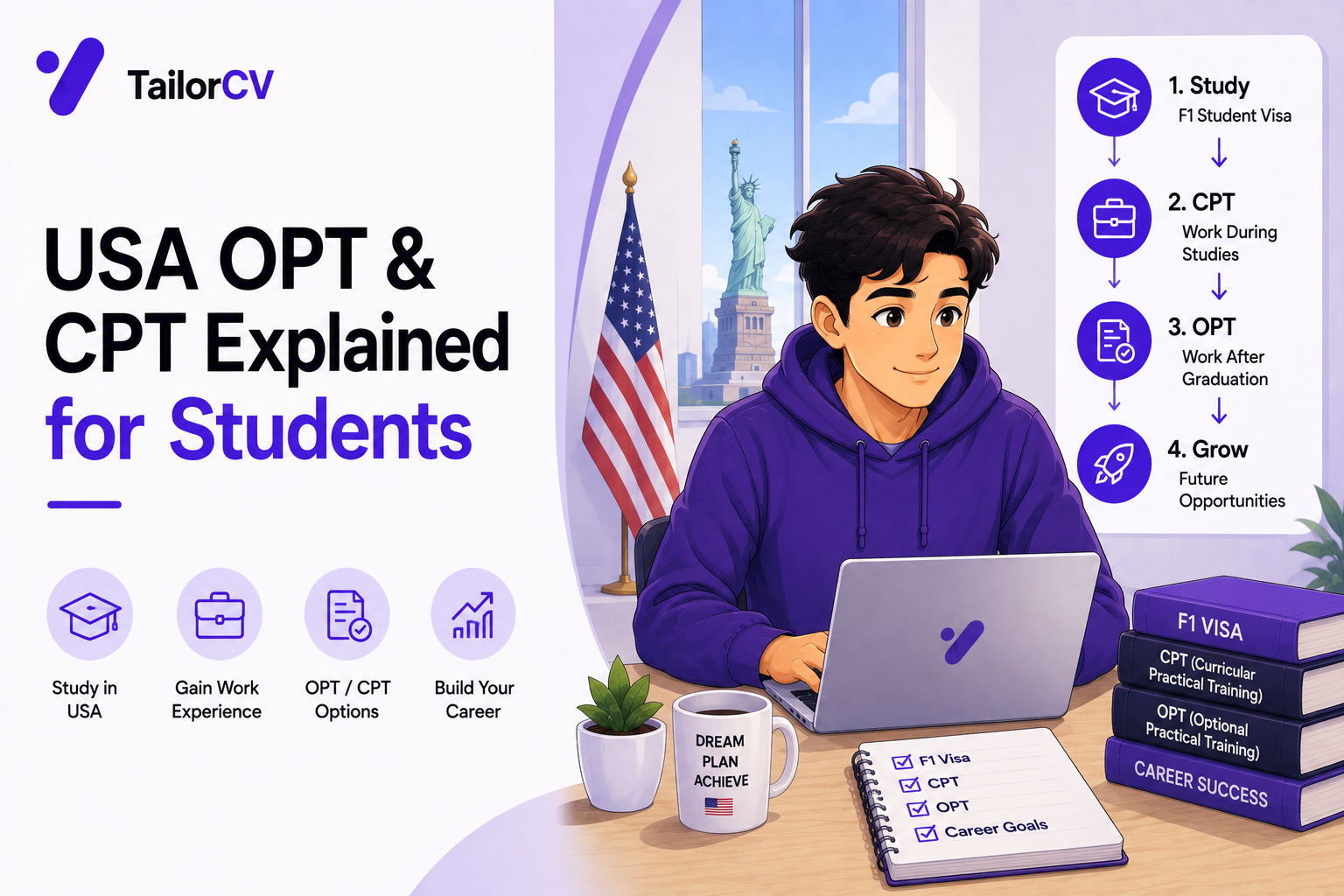
The better strategy is filtering before you apply. Many companies state their position on careers pages. For STEM OPT specifically, the employer must be enrolled in E-Verify, which quietly excludes many small firms — worth checking before you invest in an application. The mechanics of OPT and the STEM extension determine which employers are viable for you at all.
How this fits the wider search
Sponsorship makes you a slower hire, so being early matters more for you than for domestic classmates. The autumn recruiting window is where structured roles are decided, and being in the pipeline in September rather than November is worth more than any interview technique.
It also means volume with targeting. Your viable employer pool is smaller, so you need more applications in flight — but a generic resume sent widely produces rejections at scale rather than interviews. Keeping documents tailored to each posting while raising volume is the balance that works.
Your resume should carry none of this. Visa status is not a screening credential and does not belong on a document being machine-read; it takes space from evidence. Keep the US resume format clean and let the question come up in conversation.
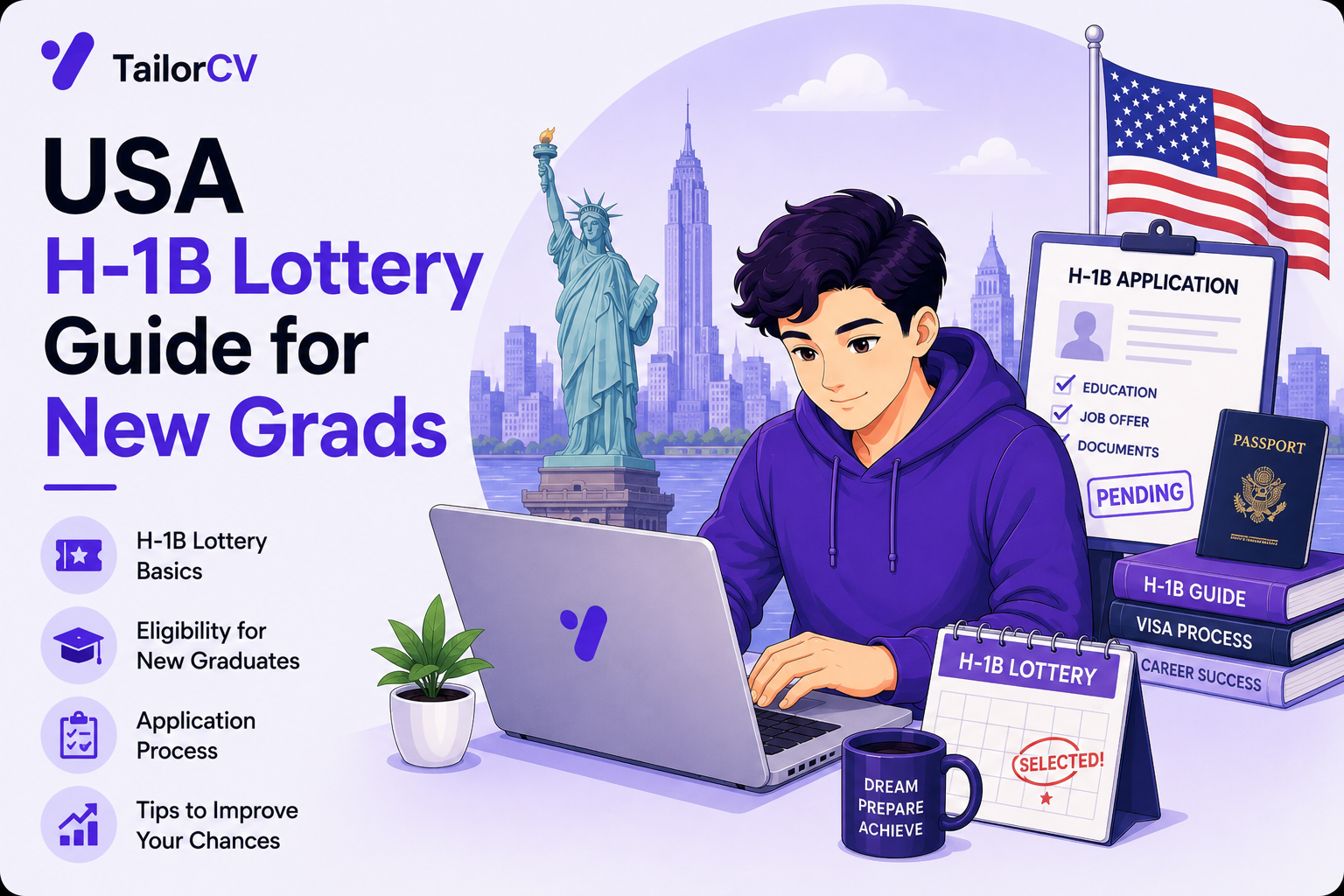
For roles requiring H-1B eventually, understanding how the lottery and cap-exempt employers work lets you have a substantive conversation rather than a nervous one — and cap-exempt employers remove the lottery from the equation entirely.
Where in the process it comes up
The question appears at different points and means something different each time. Reading which conversation you are in prevents over-answering.
On the application form. Two checkboxes, no context. Answer both truthfully and move on. This is a data field, not a discussion.
In the recruiter screen. A filter. The recruiter is checking whether the role can proceed with your status. Answer in one sentence with your dates, and let them tell you if it is a problem.
With the hiring manager. Usually not asked at all, because it is not their department. If it comes up, they are often asking out of curiosity or mild concern about the process. A brief, confident answer that makes clear it is routine is what they need.
At the offer stage. Now it is operational. This is where specifics matter: exact dates, what the employer needs to do, when. Have your paperwork organised.
The mistake is treating all four as the same conversation. A two-minute explanation of visa categories in a recruiter screen creates anxiety where a sentence would have closed the topic.
When you are not sure of the answer
Sometimes you genuinely do not know your position, particularly early in your studies or when rules have changed.
Say that precisely rather than vaguely:
"My programme is STEM-designated, so I should be eligible for the extension, but I am confirming the exact dates with my international office this week. I can send you the specifics by Friday."
That is a much stronger answer than guessing. It shows you know the shape of your situation, you know who the authority is, and you follow up on commitments.
Then actually send it by Friday. That single follow-through does more for your credibility than a confident wrong answer would have.
What to avoid is the reflex to sound certain about something you have not checked. Immigration details are verified later, and a confident inaccuracy discovered at offer stage is far more damaging than an honest "let me confirm".
A note on honesty
Everything above is about framing, and framing has a limit: none of it works if the underlying facts are wrong.
Immigration details get verified. Not at the recruiter screen, but at offer stage, when HR asks for documents and a lawyer looks at dates. A confident inaccuracy discovered then is far more damaging than an honest uncertainty raised early — offers do get withdrawn over it, and the reason given is rarely the immigration detail itself. It is that the candidate said something that turned out not to be true.
So: check your dates with your international office rather than a forum. Say "I'm confirming that" when you are confirming it. And never round a date in the direction that makes your answer easier.
Common Mistakes
- Answering "no" to "are you authorised to work now" when you hold valid OPT. This screens you out unnecessarily.
- Answering "no" to the future sponsorship question because your authorisation has time left. It is a misrepresentation.
- Not knowing your own dates. The most avoidable weakness in the entire conversation.
- Raising it in the first minute. It reframes you as a paperwork problem before they have seen your work.
- Applying to employers who never sponsor. Wasted applications that could have gone to viable ones.
- Assuming a large company automatically sponsors. Many do not for every role, particularly government-adjacent work.
The three sentences, written out
Most of the difficulty here is that people improvise under pressure. Writing your position once, in advance, removes nearly all of it. Four common situations and the sentence for each.
You are on OPT with a STEM degree, no sponsorship needed yet.
"I'm authorised to work for the next three years on my post-graduation training and its STEM extension, so nothing needs to be filed to start. After that I'd need sponsorship, and I'm happy to talk through the timing whenever it's useful."
You are on OPT with a non-STEM degree.
"I'm authorised to work for the next twelve months on my post-graduation training. After that I'd need sponsorship — happy to go through the details if that's helpful."
You are a student applying for an internship.
"For an internship I'm authorised through my programme's curricular training, which my university approves — there's nothing the company needs to file."
You already hold status that does not require sponsorship.
"I'm authorised to work in the US without sponsorship, now and in future."
That last one is the only case where a single sentence genuinely ends the topic, and it is worth saying plainly rather than leaving to be inferred from a checkbox.
Two rules apply to all of them. Say it in the same tone you would use for your start date — this is logistics, and treating it as delicate makes it delicate. And stop talking afterwards. The silence that follows is not an invitation to elaborate; it is the interviewer moving on.
What the employer is actually weighing
Understanding the other side makes the conversation much easier, because you stop imagining objections that are not there.
Cost. Real but usually modest relative to a graduate salary, and at any employer with an established process it is a budgeted line item rather than a decision.
Administrative effort. Frequently the larger factor at smaller employers. An organisation with an immigration counsel and an HR function experiences this as paperwork; one without either experiences it as a project nobody has time for.
Uncertainty. The genuine concern, particularly where an outcome depends on a lottery. An employer investing in training a graduate reasonably wants to know they will still be there in two years.
Precedent. The most underrated factor, and the one that most affects your strategy. An employer who has done this before has a template, a law firm on retainer and someone who knows the calendar. An employer who has not is being asked to invent a process. This is why targeting employers with a track record matters more than the strength of any individual application.
What is generally not on the list: doubt about your ability. By the time this question is asked, they have already decided you can do the work. Answering as though you need to compensate for a weakness signals a problem where none existed.
When it goes badly
Sometimes the answer is a rejection, and it is worth being clear about what that means.
If a recruiter says the role cannot support sponsorship, that is information, not a verdict on you. Thank them, ask whether other teams at the company are positioned differently, and move on. Some organisations sponsor in one function and not another, and recruiters will usually tell you.
If the process goes quiet after you answered, resist the urge to reopen it with a longer explanation. A follow-up email restating your authorisation reads as anxiety and rarely changes an outcome. One normal follow-up about the process, then let it go.
If you are asked a question that seems inappropriate — about your country of origin, your family, your intentions to remain — answer only the part relating to your work authorisation and let the rest pass. Most such questions are clumsy rather than hostile, and a candidate who redirects calmly handles it better than one who either over-shares or takes offence.
If you keep hitting the same wall, change the targeting rather than the answer. Volume into employers who cannot sponsor is the most common way international students spend an entire autumn without a result, and the fix is a list rebuilt around employers with a filing history, not a better-phrased sentence.
Preparing the paperwork before it is needed
When the offer arrives, the employer's next question is administrative, and being able to answer it the same day is a small but real advantage.
Keep one folder with: your current authorisation document and its exact dates; your degree conferral date and whether the programme is STEM-designated, with the code if it is; your passport details; a record of every prior authorisation you have held, with dates; and your international office's contact details.
None of this is difficult. All of it is annoying to assemble in the two days after an offer arrives, at which point you are also negotiating a start date and telling three other employers you are withdrawing. Assemble it during a quiet week in the autumn instead.
What to do before you are asked
Two pieces of preparation, both taking under an hour, remove most of the difficulty from this topic permanently.
Write your position down with actual dates. Not "about three years" — the date your current authorisation begins and ends, the date your degree is conferred, whether your programme is STEM-designated. Get these from your international office rather than from memory or a forum, and update the note whenever anything changes.
Say your sentence out loud, five times, to nobody. This sounds trivial and is the difference between an answer that closes the topic and one that opens a concern. The facts are easy; delivering them without a flicker of apology is what takes repetition.
Then stop thinking about it. The most expensive thing this question does to international students is not the occasional rejection — it is the months of pre-emptive worry that leads people to apply less widely, hedge in interviews, and treat a routine logistical fact as a disqualification they need to apologise for.
What this looks like from the other side of the table
A useful thought experiment. You are a hiring manager with a headcount to fill and eleven candidates. You have narrowed to two. One of them mentions, in a sentence, that they will need sponsorship in three years and moves on. The other spends four minutes explaining their immigration situation, unprompted, in a voice that suggests they expect this to end the conversation.
The second candidate has not given you more information. They have given you a reason to wonder whether there is a problem you have not understood, and hiring managers who are unsure tend to route the question to HR, which adds two weeks and one more chance for the process to stall.
This is the whole argument for brevity, and it is not about hiding anything. Every fact in the four-minute version is in the one-sentence version. What differs is the framing — routine logistics versus an issue requiring justification — and the framing is the only part of this you control.
Two situations that need a different answer
The standard sentence covers most cases. Two do not.
You will need sponsorship immediately, with no training period first.
Less common for new graduates and it does happen — a candidate outside the US applying to a role that starts before any work authorisation exists. Here the honest framing is that the employer is being asked to file from day one, and there is no version of the sentence that makes it small. What helps is precision and evidence that you have done the homework:
"I'd need sponsorship from the start date rather than after a training period. I know that means filing before I begin, and I've looked at the timelines — if it's useful I can walk through what the process would involve."
That answer will lose you some processes. It will lose you fewer than a vague answer that turns into a surprise at offer stage, and the employers who proceed are the ones who were ever going to.
Your status is about to change and you do not yet know the outcome.
A pending application, a change of category, a rule under revision. Say the shape of it and name the date you will know:
"My current authorisation runs to March. There's an application pending that would extend it, and I should have the outcome by early February. Either way I'm authorised through March, so nothing changes for a start date before then."
Both answers share the same structure as the simple case — what is true now, for how long, what happens next — and both work for the same reason: they treat an uncertain fact as a fact rather than as a confession.
The shortest version of all of this
If you remember one thing: the length of your answer is the message.
A sentence says this is routine. A paragraph says this is complicated. Four minutes says this is a problem you expect them to solve.
Every fact is present in all three versions. Only the framing differs, and the framing is what the interviewer actually responds to.
Frequently Asked Questions
Should I mention sponsorship on my resume?
No. It is not a credential and the resume is being screened by software against the posting. Answer the question on the application form, and in conversation when asked.
What if the application form only asks one question?
Answer what is asked, precisely. If the only question is about future sponsorship and you will need it, answer yes. Some forms combine them badly — if it is genuinely ambiguous, answer in the way that is truthful about your future need.
Can I ask whether a company sponsors before applying?
Yes, and it saves time on both sides. A short message to a recruiter asking whether the role supports sponsorship is a normal question and is usually answered directly.
Does saying I need sponsorship end my chances?
At companies that do not sponsor, yes — but that outcome was fixed before you answered. At companies that do, it is an administrative fact they have handled before. The answer changes nothing except how competent you appear.
What if my status changes during the process?
Tell them. An extension approved, or a delay, is normal and easily absorbed if communicated. Discovered late without warning, it damages trust.
Is it different for internships?
Usually simpler, because CPT covers the internship without employer sponsorship. The complication arrives at conversion to full-time, which is when the future-sponsorship question matters — worth raising before you accept, not after.
Was this guide useful?
Be the first to rate it.