SS
SS
Key Takeaways
- Most large US campus applications either do not ask for a cover letter or mark it optional, and many recruiters never open it.
- Where it still matters: smaller employers, non-profits, government, academia, and career changers.
- "Optional" is worth doing when you have something the resume cannot carry — otherwise it adds risk without upside.
- A generic letter is worse than none. It signals mass application and gives a reason to reject.
- Half a page is enough, and the opening line does most of the work.
Who actually reads them
Honest answer: fewer people than the advice industry suggests.
At large employers running structured campus hiring, the first pass is automated and the second is a recruiter working through hundreds of resumes. A cover letter is rarely part of either. Many campus application systems do not even have a field for one.
Where cover letters genuinely still count:
- Small and mid-sized employers, where a human reads every application
- Non-profits and mission-driven organisations, where motivation is a real screening criterion
- Government and public sector, which often have formal requirements
- Academia and research, where a statement of interest is standard
- Anyone with a story the resume cannot tell — a career change, a gap, an unusual path, a relocation
When "optional" means write one
The optional field is a genuine judgement call. Use this test: do you have something specific that the resume cannot carry?
Write one when:
- You are applying to a smaller organisation where a person reads applications
- You have a real, non-generic reason for wanting this employer
- Your background needs a sentence of explanation — moving cities, changing fields, a non-obvious degree
- You have a connection worth naming: "I spoke with Priya on the platform team about..."
Skip it when:
- The application is one of forty you are sending this week and you have nothing specific to say
- You would be restating the resume in paragraphs
- It is a large employer with a structured process and a required online assessment
A generic letter actively hurts. "I am writing to express my strong interest in this exciting opportunity at your esteemed organisation" tells a reader you sent the same thing everywhere, which is a reason to deprioritise you.
Structure that works
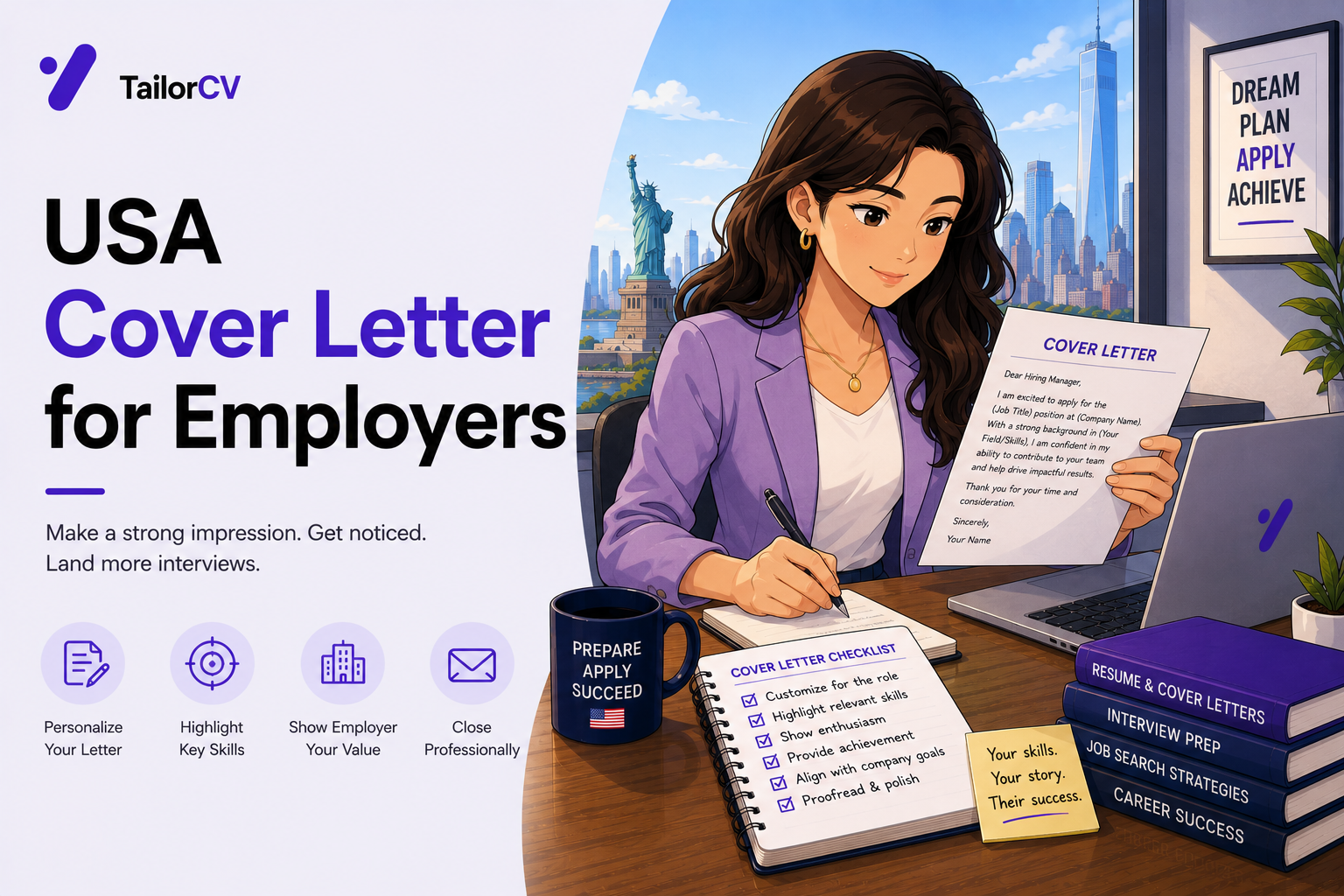
Half a page. Four short paragraphs at most.
Open with the specific thing. Not "I am writing to apply for". Start with the reason you are worth reading:
I built a transit-delay dashboard last spring that pulled from the same GTFS feeds your routing team works with, and I would like to bring that to your data engineering internship.
Second paragraph: the strongest evidence. One piece of work, with what it did and what changed. Not a list — a single concrete thing, explained slightly beyond what the resume can fit.
Third: why this employer. Something a competitor's name could not be substituted into. A product, a team, a technical decision they published, a conversation you had.
Close simply. Availability, thanks, no elaborate sign-off.
Address a person if you can find one. "Dear Hiring Manager" is fine; "To Whom It May Concern" reads as dated.
What not to do
Do not restate the resume. The reader has it. A letter that lists the same bullets in prose wastes the one chance to add something.
Do not explain how much you would learn. The employer is hiring for what you contribute, not for your development. Enthusiasm about learning reads as a request rather than an offer.
Do not use the phrase "I am a hard worker and a fast learner."
It appears in a large share of student letters and carries no information.
Do not run to a full page. Nobody is reading 600 words from a candidate they have not met.
Do not mention visa status. Same reasoning as the US resume format — it comes up in the process and does not belong in the pitch.
The one-per-application problem
The reason most cover letters are generic is that writing a fresh one for every application is impossible at volume, and volume is necessary in autumn recruiting.
The workable compromise: a fixed structure with two genuinely variable parts — the opening line and the "why this employer" paragraph. Everything else can be stable. That makes a real letter a ten-minute job rather than an hour.
If you cannot write a specific opening and a specific third paragraph for an employer, that is a signal you do not know enough about them to be applying with a letter at all — and probably a signal to spend the time on researching them properly instead.
Where the effort is better spent
For most US campus applications, the resume carries almost all the weight. Time spent on cover letters that nobody opens is time not spent on the document that is definitely screened.
The higher-return work: making sure the resume parses cleanly, and matching its language to each posting. That is what determines whether a human ever sees your application.
Use cover letters where they are read. Do not use them as a substitute for a resume that is not working.
A worked letter, annotated
Advice about structure is easier to use with a finished example in front of you. This is a complete letter for a final-year student applying to a mid-sized company, at the length that actually works.
Dear Ms Okafor,
I built a tool last spring that scrapes fifteen job boards and deduplicates the postings, and the interesting problem turned out not to be the scraping — it was that the same role appears under four different titles across boards, and matching them required something smarter than string comparison. That is the kind of messy data problem I want to work on, which is why I am applying for your data engineering associate role.
Most of what I have done is in the resume. The part that is not: the deduplication work started because I was job searching myself and could not keep track of what I had applied to. It ran for four months, it handled about 3,000 postings a week, and the two things I would do differently are obvious to me now in a way they were not then.
I am applying here rather than to a larger company because your team is small enough that I would see the whole pipeline. I spoke with Daniel on your data team at the career fair in October, and what he described — owning something end to end within the first year — is specifically what I am looking for.
I graduate in May and am available from mid-June. Thank you for your time.
Sincerely, Priya Sharma
Around 240 words. What each part is doing:
The opening starts with a concrete thing and a specific difficulty. It does not announce that this is an application, which the reader already knows, and it does not describe the writer's qualities, which the reader will not believe.
The second paragraph does the one job a cover letter can do that a resume cannot: adds context and scale, and names what the writer would change. That last clause signals engineering judgement in nine words.
The third paragraph is the only paragraph that cannot be reused. It names a person, an event, and a specific reason for this employer over an alternative. If a competitor's name could be substituted, the paragraph has failed.
The close is administrative. No expressions of eagerness, no "I look forward to hearing from you at your earliest convenience".
Weak and strong, side by side
The gap between generic and specific is easier to see in pairs.
| Weak | Strong |
|---|---|
| "I am a highly motivated senior with strong problem-solving skills." | "I spent six weeks on a bug that turned out to be a timezone assumption in a library I did not write." |
| "Your company is an industry leader with a great culture." | "You are one of the few companies of this size still running your own infrastructure, which is what I want to learn." |
| "I would learn so much from this opportunity." | "I have done the analysis half of this before and not the pipeline half, which is the part I am applying for." |
| "I am passionate about technology." | "I have maintained the same side project for two years, which is longer than I have maintained most things." |
| "I am confident I would be a valuable addition to your team." | "I graduate in May and am available from mid-June." |
The pattern in every strong version: it contains something checkable, and something the writer would not have written unless it were true.
The opening line, specifically
The first sentence does most of the work, because it decides whether the rest gets read. Four openings that work, and why.
The concrete thing you made. "I built X and the interesting problem was Y." Strongest option when you have something real, which most students do and most undersell.
The specific connection. "Daniel on your data team suggested I apply after we talked at the career fair." When you have a referral or a genuine conversation, lead with it — it is the highest-value fact in the letter.
The unexpected relevance. "I spent two years working retail overnight shifts, which is where I learned to debug things at 3am with nobody to ask." Works when your background is unusual and you can connect it honestly.
The specific reason for this employer. "You are the only company I have applied to that publishes its incident reports, and I have read about six of them." Requires actual research and is correspondingly rare.
What does not work is any variant of "I am writing to express my interest in the [role] position at [company]", which uses the most valuable line in the document to tell the reader something they already know.
When the letter is doing real work
Three situations where the letter genuinely changes outcomes, and it is worth knowing which one you are in.
You are changing direction. A mechanical engineering degree applying to software, a humanities degree applying to analytics. The resume shows a mismatch and cannot explain it. One honest paragraph — what changed, what you did about it, what you have built since — resolves a question that would otherwise be a rejection.
There is a gap or an oddity. A year out, a transfer, a semester with no coursework. Two sentences, factual, no apology. Silence invites more curiosity than a brief explanation does.
Your evidence is not the kind that survives a resume. Work that is hard to compress into a bullet — a long research project, something with an unusual scale, a role where your actual contribution needs a sentence of context.
Outside these three, the letter is a small positive at best. Which is the honest argument for spending the time on tailoring the resume instead, since that document is read in every application and this one is not.
The volume problem, solved properly
The real reason cover letters get skipped is arithmetic. Autumn recruiting requires applying at volume, and a genuinely specific letter takes twenty-five minutes. Forty applications means seventeen hours, which is a week of evenings you do not have.
The solution is not writing faster. It is deciding in advance which applications get one.
Tier one — a real letter. Your top ten employers, the ones where you have a referral or a genuine reason. Twenty-five minutes each, and the third paragraph written from scratch.
Tier two — a short letter, reused structure. Two paragraphs of your standard evidence plus one new paragraph of specific reasoning. Eight minutes each.
Tier three — no letter unless required. Large employers with structured processes where nobody opens it. Put the time into tailoring the resume instead, which is read.
That framework turns seventeen hours into about five, and the five hours go where they change something. The other realistic accelerant is removing the friction from the resume side — a browser extension that tailors against the posting you are looking at does the per-application work that actually gets read, which frees the writing time for the ten applications that warrant it.
What "optional" actually signals
Applications mark the field optional for one of three reasons, and reading which one you are looking at tells you whether to spend the twenty-five minutes.
The employer is large and the field is legacy. The applicant tracking system supports an upload, nobody removed it, and no human opens it. Common at large employers with structured graduate programmes and high application volume. Skip it; put the effort into the resume, which is definitely read.
The employer is small and "optional" means "we do not want to require it".
A person reads every application here, and a specific letter is a genuine advantage. Write one.
The application has other free-text fields. "Why are you interested in this role", "anything else we should know". These are the letter, they are read, and they matter more than an uploaded document would. Put your effort there.
Two signals that tell you which situation you are in. The number of other questions — a form with three thoughtful free-text prompts is run by someone who reads. And whether a person is named anywhere in the posting; postings with a named contact are more often read by that contact.
Where the effort actually converts
An honest ranking, because the time is finite and the letter is rarely the highest-value use of it.
First: the resume matches the posting. Every application is screened against the posting's requirements before a person sees it, and a generic document matches nothing in particular. Tailoring per posting moves your interview rate more than any other single change, and unlike the letter it affects one hundred percent of your applications rather than the fraction where someone opens the attachment.
Second: the resume survives parsing. A document that extracts badly fails silently in every channel. Test it once with an ATS scan and you never have to think about it again.
Third: referrals. One referral converts at a rate no letter approaches. If you have an hour, spending it on contacting someone who works there beats spending it on prose.
Fourth: applying early. Postings that open in September and get applied to in October are competing against a full pile. The autumn calendar rewards being early more than it rewards being polished.
Fifth: the cover letter, in the specific situations where it does real work.
None of this means never write one. It means that a student who writes forty careful letters and sends an untailored resume with each has optimised the wrong half of the application, and that mistake is extremely common.
Common Mistakes
- Sending a generic letter. Worse than sending none.
- Restating the resume in prose. Adds length without information.
- Writing a full page. It will not be read to the end.
- Focusing on what you will gain. The employer is buying, not donating.
- Skipping it for small employers. This is exactly where it counts.
- Spending hours on letters while the resume fails the ATS screen. Wrong order of operations.
The half-hour version
If you have decided a letter is warranted and you have thirty minutes, spend them like this.
Five minutes: find the specific thing. Read the posting properly, look at the team page, check whether you know anyone there, find one recent thing the company did. You are looking for one fact you can use in the third paragraph.
Five minutes: pick the evidence. One piece of work from your resume that maps to the posting. Not the most impressive one — the most relevant one.
Fifteen minutes: write it. Opening with the concrete thing. Evidence paragraph with the context the resume cannot hold. Specific reason for this employer. Availability. Stop.
Five minutes: cut. Read it once and delete every sentence that describes your qualities rather than your actions. That pass typically removes a third of a first draft and improves all of it.
Under 300 words, one specific fact the reader recognises, no adjectives about yourself. That is the whole standard, and most letters fail it by trying to do more.
What to do with the time you save
If you take the argument here seriously, you have just freed several hours a week that were going into letters nobody opens. Three places that time converts better.
Contacting one person a day at a target company. Fifteen minutes, and referrals convert at a rate no letter approaches.
Checking career pages the day postings open. Some new grad roles cap applications within days, so being early is worth more than being polished.
Making the resume match each posting. This document is read on every application, unlike the letter, and the match is what determines whether a human sees it at all.
The letters still get written — for the ten employers where someone reads them. The other thirty applications get a better resume instead, which is the trade that actually improves outcomes.
Frequently Asked Questions
Should I write one if it says optional?
Only if you have something specific to say — a real reason for this employer, a connection, or context the resume cannot hold. Otherwise skip it.
How long should it be?
Half a page. Three or four short paragraphs.
Do I need one for big tech?
Usually not. Those processes are resume, assessment and interview loop. Effort is better spent on the technical preparation.
What if I have no relevant experience?
Lead with a project. Something you built and can explain is stronger evidence than employment history for an entry-level role.
Can I reuse the same letter?
Reuse the structure, not the content. The opening and the "why this employer" paragraph must be specific or the letter works against you.
Should I attach it or paste it into the email?
If emailing directly, put it in the body — attachments add friction. If uploading through a system, follow whatever the form asks for.
Should I write one for a role found through a referral?
Yes, and it is one of the highest-value cases. Name the person in the first line, say what they told you, and keep it short. The letter's job here is to give the reader context for a name they will recognise.
What if the application has a text box instead of an upload?
Paste the letter without the formal address block. Keep it to three short paragraphs, because text boxes are read on screen and long pastes are skimmed.
Does a cover letter help if my resume is weak?
It helps if the weakness is explainable — a change of direction, an unusual background. It does not help if the weakness is a genuine lack of relevant evidence, in which case the time is better spent building something.
Should I follow up by email after applying?
Once, after about two weeks, short, to a named person if you can find one. Repeated follow-ups do not help and are remembered for the wrong reason.
Was this guide useful?
Be the first to rate it.