 SS
SS
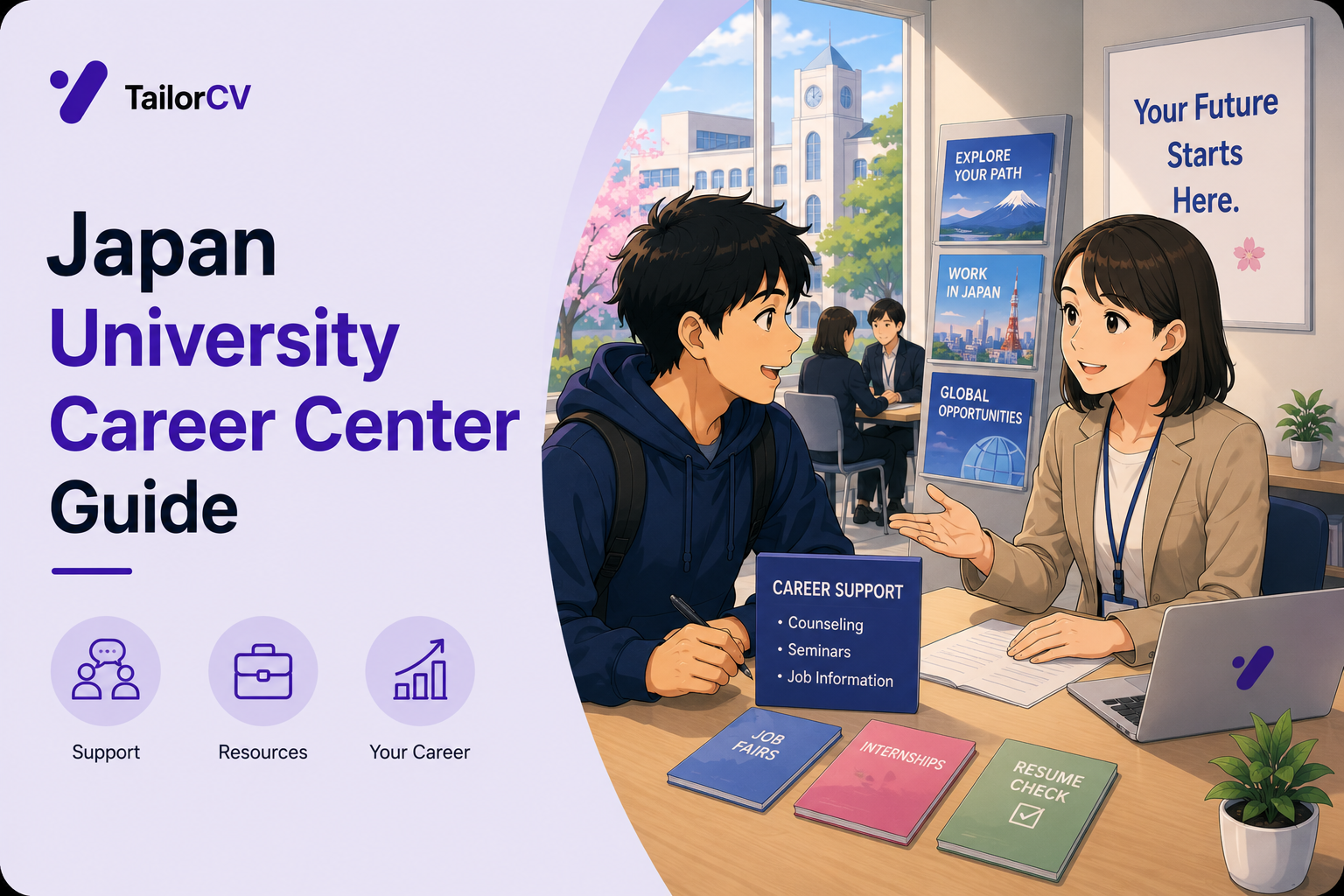
Key Takeaways
- Japanese university career centres are deeply embedded in the recruiting system and hold employer relationships that do not exist publicly.
- They run the calendar — sessions, deadlines, on-campus events — which is the structure the whole shūkatsu process depends on.
- Many institutions run dedicated support for international students, and it is frequently separate from the main service.
- Going in your penultimate year rather than your final one is the difference between using the system and chasing it.
- Document review, mock interviews and aptitude test practice are free and heavily used by Japanese students, which is the standard you are competing against.
What they actually hold
Employer relationships. Japanese companies maintain long-standing relationships with specific universities, and the career centre is where those relationships live. Some recruiting happens through channels that only exist because of an institutional relationship, and they are not advertised publicly.
Exclusive listings. Roles posted to the university rather than to public job boards, seen by a fraction of the number who see a general posting.
The recruiting calendar. Session dates, application deadlines, on-campus company visits. Missing the calendar is the most common failure mode in Japanese job hunting, and the career centre is where the calendar is published.
Alumni data. Which companies hired from your programme, in what numbers, in which years. This turns a vague target list into a specific one and it is data they already have.
Document review. Checking your rirekisho and work history document against convention. For a foreign student writing formal Japanese, this alone justifies the visit — set phrases and register are conventional and errors in them are conspicuous.
Mock interviews. Practising the standard question set with someone who knows what interviewers are listening for.
Aptitude test practice materials. Japanese students prepare extensively for the standardised tests, and the career centre is where the practice materials are.
Support specifically for international students
Many institutions run this separately from the main career service, and students frequently do not know it exists.
What it typically covers. Guidance on the work visa process and the status change from student to employee. Lists of employers who have hired international graduates. Japanese-language document support. Sometimes dedicated advisers who understand both the recruiting system and the immigration side.
The question worth asking first: which employers have hired international graduates from this university recently. The answer is a target list of companies with a demonstrated willingness, which is worth more than any general advice.
Ask about the job-hunting extension. Graduates of Japanese universities who have not secured employment may be able to extend their stay to continue searching, subject to institutional support. This provision is genuinely useful and many students never hear of it — the visa guide covers the mechanics, and your institution is the authority on your own eligibility.
Ask about language support. Some institutions run business Japanese classes aimed specifically at job hunting, which addresses exactly the gap between conversational and business ability that the language requirements guide describes.
When to go
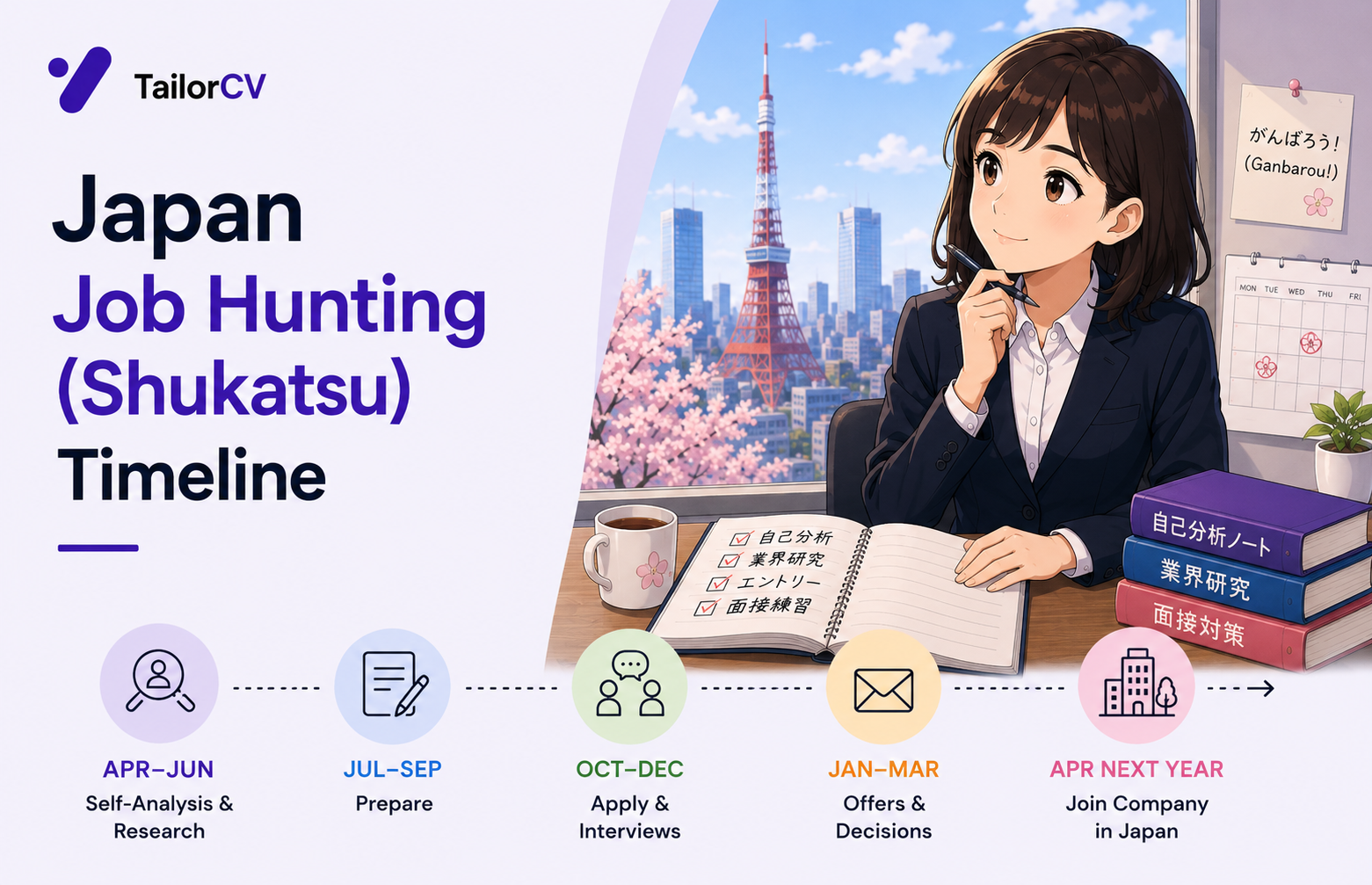
Penultimate year, spring. This is the moment. The conventional cycle begins with preparation in the spring of your penultimate year, summer internships that same year, and the main selection period the following spring. A student arriving at the career centre in their final autumn has missed most of the sequence.
First and second year, once. Just to find out what exists and what the calendar looks like. Twenty minutes, and it prevents the far more expensive discovery two years later.
Final year. Still worth using heavily for document review, mock interviews and the roles that continue to appear, and the structural advantages of early engagement are gone.
The pattern is the same everywhere. The Canadian career services point applies identically — these offices are designed to be used before the search is urgent, and most students arrive when it already is.
Using it well
- Book a proper appointment rather than dropping in, and bring specific questions.
- Ask for the alumni employment data by programme, not the institution-wide figures.
- Ask which employers have hired international graduates, if that applies to you.
- Get your documents reviewed early, before you need them for a deadline.
- Book mock interviews before your first real one, not after.
- Ask which on-campus sessions are worth attending — advisers know which companies are genuinely recruiting from your programme and which are running a branding exercise.
- Ask about the second new graduate route if you are already past the standard cycle, since some employers recruit recent graduates outside it.
- Ask what you have not thought to ask. An adviser who has run hundreds of students through this system knows the failure modes, and a direct question about what typically goes wrong for students like you produces unusually useful answers.
What they cannot do
They cannot get you hired. They hold access, structure and advice. The applications, the self-analysis, the language ability and the interviews are yours.
They cannot substitute for language ability. No amount of career support closes the gap if your Japanese is below what a target employer requires — that is a study problem with a study solution.
They may not know immigration in depth. Career support and international student services are frequently separate functions, and anything touching status, eligibility or the extension should be confirmed with whoever actually handles it.
Quality varies by institution. Some are exceptionally well-resourced; others are stretched. If your first appointment is unhelpful, that is information about that adviser rather than the whole service.
And they cannot replace your own network. Alumni introductions are a starting point; what converts them is what you do afterwards.
What these offices actually provide
Structured guidance specifically on the broader shinsotsu hiring process, including how to prepare application documents like the rirekisho and shokumu keirekisho properly, worth using this guidance seriously, since these offices are specifically experienced with the local system's particular conventions.
Direct relationships with specific employers, some career centres maintain established connections with companies who have hired from that institution previously, worth asking directly which employers have a track record with your specific university.
Mock interview practice, genuinely valuable given the distinct local interview conventions, worth using this resource actively rather than assuming general interview skills transfer without adjustment.
For international students specifically
Ask directly whether the office has specific experience and resources for international students, some institutions have dedicated support for this population, understanding what genuinely exists at your specific institution matters more than a general assumption about what career centres typically offer.
Ask specifically which employers at your institution have a track record of hiring international students, this is genuinely useful, targeted information that a general search will not surface as easily.
Building a productive relationship with your career centre over time
Visit early in your studies, not only when you are ready to begin actively applying, understanding what resources and relationships exist well in advance lets you plan your own preparation, including any language study, around realistic timelines.
Return regularly rather than treating a single visit as sufficient, staff genuinely get to know students who engage consistently, and this familiarity can translate into more specific, useful guidance and introductions over time.
Making the most of limited appointment availability
Book appointments early, particularly during the busiest periods of the hiring cycle when demand for career centre time is highest, waiting until the last moment often means limited or no availability precisely when you most need guidance.
Prepare specific questions before each appointment, rather than arriving with an open-ended general request for help, this lets you extract considerably more value from a limited time slot, since staff can address your specific situation directly rather than starting from general advice.
Tip: Go in the spring of your penultimate year, not your final autumn. By the final autumn the structural advantages the office offers are already gone, and you are chasing the calendar rather than using it.
Common Mistakes
- Arriving in the final year. Arriving in the final year the system is built around engagement from the penultimate spring.
- Not asking about international student support specifically. It frequently exists as a separate service.
- Skipping document review. Formal Japanese convention is exactly what an adviser can fix quickly.
- Not asking for alumni employment data. It converts a vague search into a target list.
- Assuming the main service covers immigration. Usually a separate function.
- Using it as the only channel. It is one of several, alongside direct applications and outreach.
Related Guides
Keep building on this with the related guides in this series:
- English-Speaking Jobs in Japan - Where They Actually Are
- Group Discussions and Aptitude Tests in Japanese Recruiting
- Internships in Japan for International Students
- Japanese Language Requirements for Jobs in Japan
- Teaching in Japan - The JET Programme and the Alternatives
- JLPT N2 and N1 - What They Actually Mean for Employment in Japan
You can also check your resume's ATS score for free, generate a tailored cover letter, or build a portfolio website in minutes.
Frequently Asked Questions
Are university career centres actually useful for the Japanese job hunting process?
Yes, genuinely, they are specifically experienced with local conventions around application documents and interview format, worth using this resource actively rather than navigating the process entirely independently.
Do career centres have specific support for international students?
Varies by institution, worth asking directly whether dedicated support and resources exist for your specific situation.
Should I use the mock interview service?
Yes, genuinely valuable given how distinct local interview conventions are from what many international students may be more familiar with.
How do I find out which employers have a relationship with my specific university?
Ask the career centre directly, this is genuinely useful information that is not easily surfaced through a general independent search.
When should I first visit?
Once early, just to learn the calendar and what exists, then seriously from the spring of your penultimate year.
Do they help international students specifically?
Many institutions run dedicated support, frequently separate from the main service. Ask explicitly rather than assuming the general service covers it.
Can they help with my visa?
They can point you to the process and to the international student office, which is usually the function that actually handles status questions.
Will they review documents written in Japanese?
Generally yes, and it is one of the most valuable things they do for foreign students, since formal convention and set phrases are where errors are most conspicuous.
What if my Japanese is not strong enough for most employers?
Ask them which employers hire in English and which have hired international graduates, and look at the English-conducted market and technology route in parallel with continuing to study.
Is it worth using if I want to work outside Japan?
Less directly, and they may still know which employers offer overseas placement, particularly trading companies where international assignment is standard.
What is your resume scoring right now?
Scan it against a job description and get your ATS match score in about a minute.
Drop your resume here or choose a file
PDF only. Max 2 MB.
We never share your data or use it to train AI models.

Was this guide useful?
Be the first to rate it.