 TD
TD
Key Takeaways
- Japanese graduate interviews run over multiple rounds with a stable, predictable question set.
- Consistency across rounds matters considerably, because interviewers compare notes and progression is cumulative.
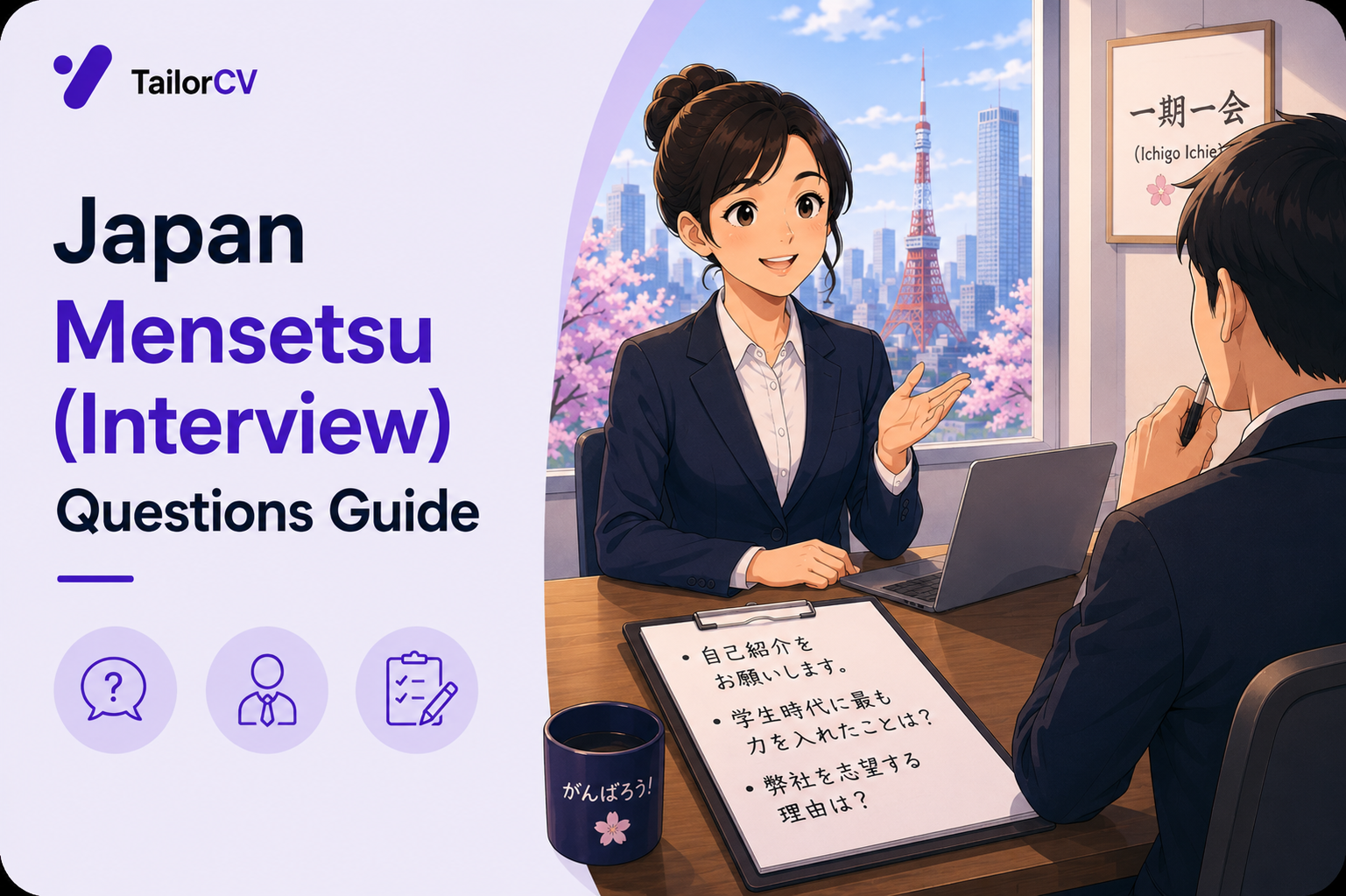
- Three questions dominate: tell us about yourself, what you worked hardest at as a student, and why this company.
- Answers are expected to be structured, modest in register, and grounded in specific personal experience.
- The self-analysis that underpins the answers is a formal expected step, not optional preparation.
The three questions that dominate
"Tell us about yourself" (自己PR, jiko PR — literally "self-PR"). Not a recitation of your resume. Expected is a coherent account of who you are, drawn from your self-analysis, delivered concisely. Roughly a minute, ending at why you are sitting in this interview. Knowing the term jiko PR matters practically — it's what appears on the application form itself as a labeled field, so your written answer and your spoken answer need to be consistent, not two different stories.
"What did you put the most effort into as a student?" — universally referred to as ガクチカ (gakuchika, a contraction of "gakusei jidai ni chikara wo ireta koto"). This is the single most characteristic question in Japanese graduate interviews, and knowing the term matters because it's how the question gets referenced in every prep guide, career-center session, and casual conversation with other job-hunters — if a senpai or advisor asks "what's your gakuchika," this is what they mean. It asks for something you committed to seriously — a club, a research project, part-time work, a competition, an activity you sustained. What is assessed is not the achievement's scale but your commitment, what you learned, how you handled difficulty, and what it reveals about your character.
The structure that works: what the situation was, what problem you faced, what you specifically did, what resulted, and what you took from it. Concrete throughout, and honest about the difficulty — an account with no obstacle in it is less convincing, not more.
"Why our company?" (志望動機, shibou douki — "motivation for application"). The deciding question, here as in every market, and like jiko PR, it's a labeled field on the application form itself, not just a spoken question — write it before the interview, don't improvise it there for the first time. Generic answers about reputation and stability fail. What works is something specific — a business area, a product, something you learned at an information session, a conversation with an employee, a genuine contrast with a competitor. This is why attending company information sessions matters beyond the information itself.
Other questions to expect
"Why this industry?" Asked alongside why this company, and requiring a separate answer.
"What are your strengths and weaknesses?" The weakness should be real, with what you do about it. A disguised strength reads as evasion here as anywhere.
"Tell us about a failure." Assessing self-awareness and resilience. Real failure, honest reflection, changed behaviour.
"How do you work in a team?" Frequently probed, since collaborative capability is weighted heavily.
"What do you want to do at our company?" Complicated by the fact that many companies assign roles after joining. A good answer expresses a direction and an openness to where the company places you, rather than a rigid demand.
"Where do you see yourself in ten years?" Longer horizon than in many markets, reflecting the long-term employment model.
"Do you have any questions for us?" Always have some, and make them about the work and the company rather than conditions.
What is actually being assessed
Consistency. Multiple rounds, with interviewers comparing notes. A story that changes between rounds is noticed and it is damaging. This is the strongest argument for doing the self-analysis properly once rather than improvising per interview.
Character and fit. Whether you would work well within the organisation over years. This is weighted more heavily than in markets hiring for a specific role.
Genuine motivation. Whether you actually want this company or are applying broadly. Companies invest substantially in training new graduates and are assessing whether you will stay.
Communication. Structure, clarity and appropriate register. Rambling is penalised; so is over-assertion.
Self-awareness. Whether you understand your own history and can articulate it coherently.
Register and delivery
Modest, structured, specific. Confidence conveyed through evidence rather than through assertion. The over-selling that works in some markets reads poorly here — closer to the measured register expected in Singapore than to US convention.
Formal language throughout. Business Japanese, appropriate politeness levels, and conventional interview phrasing. For foreign candidates this is frequently harder than the content itself, which is why mock interviews in Japanese are the highest-return preparation available.
Concise. Aim for around a minute per answer unless invited to expand.
Prepared but not recited. Memorised answers sound memorised and collapse when the question is phrased differently.
Punctuality and presentation are taken seriously. Arrive early, dress conservatively, and follow the conventions around greetings and entering the room, which are more formalised than in many markets.
The questions that recur, and what they are actually testing
"Why did you choose our company specifically, rather than a comparable competitor?" A genuinely important question here, requiring a specific, researched answer connected to the company's actual business or a particular aspect of the role, rather than general praise applicable to any similar employer, exactly the same principle that decides outcomes in structured interviews internationally.
Questions about your long-term commitment and career intentions are asked more directly here than in some other markets, reflecting the traditional expectation of longer-term employment within the local system, a vague or dismissive answer is noticed, worth having a genuine, considered response prepared.
Questions probing your understanding of teamwork and your ability to work within a group or organisational structure appear consistently, reflecting a genuine cultural emphasis on collaborative, harmonious working relationships.
Register and presentation expectations
Formal, measured presentation and appropriate politeness toward interviewers, particularly more senior ones, are genuinely valued and expected, arriving well ahead of the scheduled time, and maintaining a respectful, composed manner throughout, matters considerably here.
Confident, substantive answers are still expected within this formal register, this is not passivity, it is a specific manner of confident presentation that differs from a more casual or assertive style that might read well in some other markets.
Practising properly before the real interview
Use your university's career centre mock interview service if available, covered in more depth in the career centre guide, this is genuinely valuable given how distinct local interview conventions are.
Practise with a native Japanese speaker if your interviews will be conducted in Japanese, beyond language correction, this helps you internalise the appropriate register and formality expected, which differs meaningfully from casual conversational Japanese.
Handling a question you are not prepared for
If asked something you have not specifically prepared for, take a brief, composed moment before answering rather than rushing into a response, a short pause to genuinely think is well received within the measured, formal register expected here, considerably better than an unprepared or rambling answer delivered too quickly.
If you genuinely do not understand a question, particularly relevant if interviewing partly in your non-native language, ask for clarification politely rather than guessing at the intent, this is understood and accepted rather than viewed negatively.
Do's and Don'ts
Do
- Prepare your ガクチカ once, properly, and reuse the structure
- Give a specific reason for this company, not the industry
- Include a real obstacle in your story
- Have an honest answer about long-term plans
- Arrive with clear margin before the scheduled time
Don't
- Improvise the self-PR or motivation answers on the day
- Praise the company in terms that fit any competitor
- Tell a story where nothing went wrong
- Dismiss the commitment question as a formality
- Arrive exactly on time
Tip: Write your ガクチカ (gakuchika) once, properly, then reuse the structure. It appears in nearly every interview and on most entry sheets, so one well-built answer does an enormous amount of work.
Common Mistakes
- Inconsistency across rounds. Interviewers compare notes and a changing story is damaging.
- Generic answers to why this company. Generic answers to why this company the most common cause of rejection at every stage.
- Skipping self-analysis. It underpins every answer and its absence is audible.
- Over-selling. Over-selling the register is modest and evidence-led.
- Demanding a specific role. Many companies assign after joining; rigidity reads as poor fit.
- Reciting memorised answers. They sound memorised and break under rephrasing.
Related Guides
Keep building on this with the related guides in this series:
- Group Discussions and Aptitude Tests in Japanese Recruiting
- English-Speaking Jobs in Japan - Where They Actually Are
- Internships in Japan for International Students
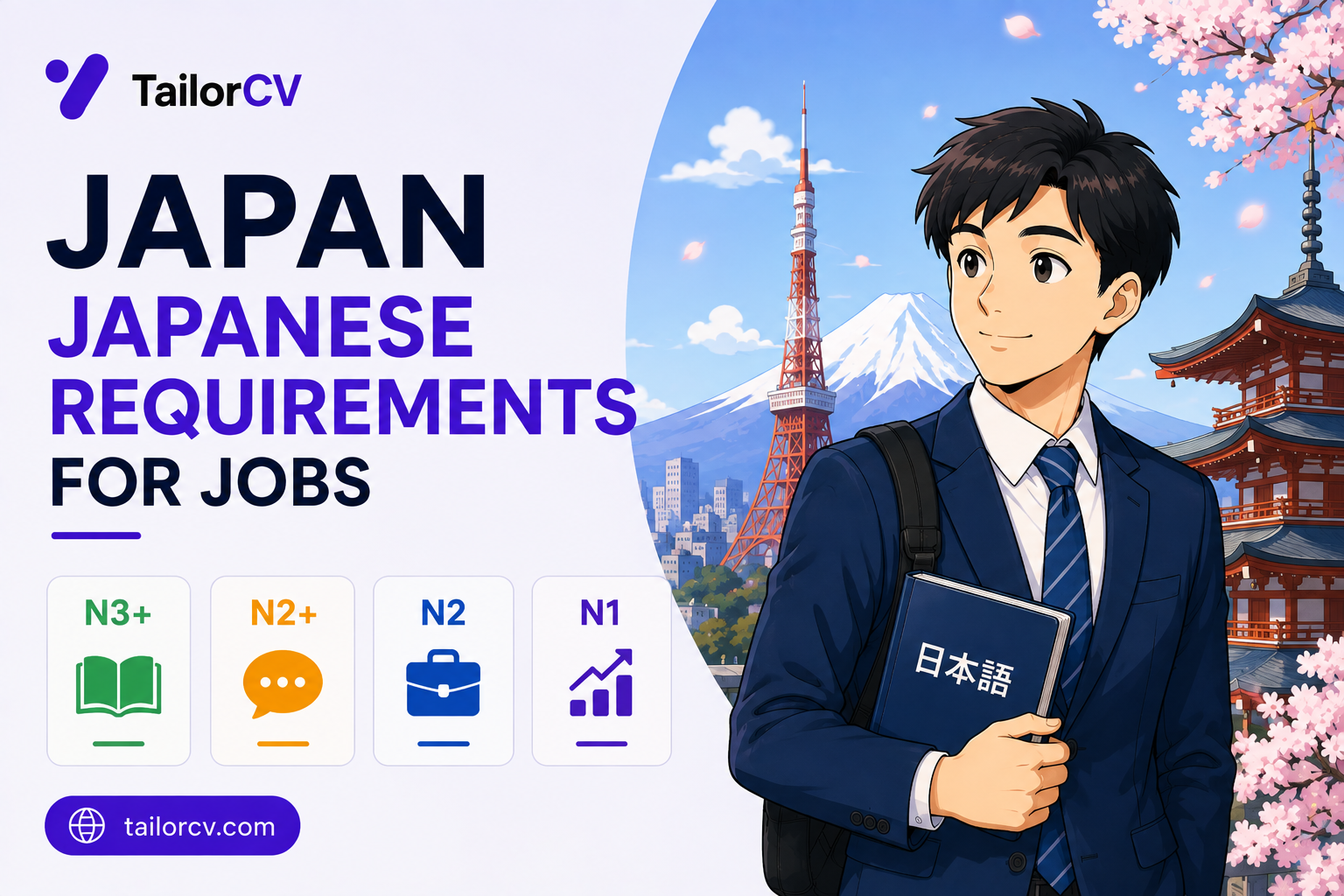
- Japanese Language Requirements for Jobs in Japan
- Teaching in Japan - The JET Programme and the Alternatives
- JLPT N2 and N1 - What They Actually Mean for Employment in Japan
- Machine Learning Interview Questions and Answers (2026 Guide)
You can also check your resume's ATS score for free, generate a tailored cover letter, or build a portfolio website in minutes.
Frequently Asked Questions
How formal should I be in a Japanese job interview?
Generally quite formal, in both dress and manner, with genuine politeness toward interviewers, particularly more senior ones, this is the expected register here.
What is the most important question to prepare for?
A specific, genuine answer to why this particular company, rather than a comparable competitor, this is weighted heavily and a generic answer is noticed.
Are group interviews common?
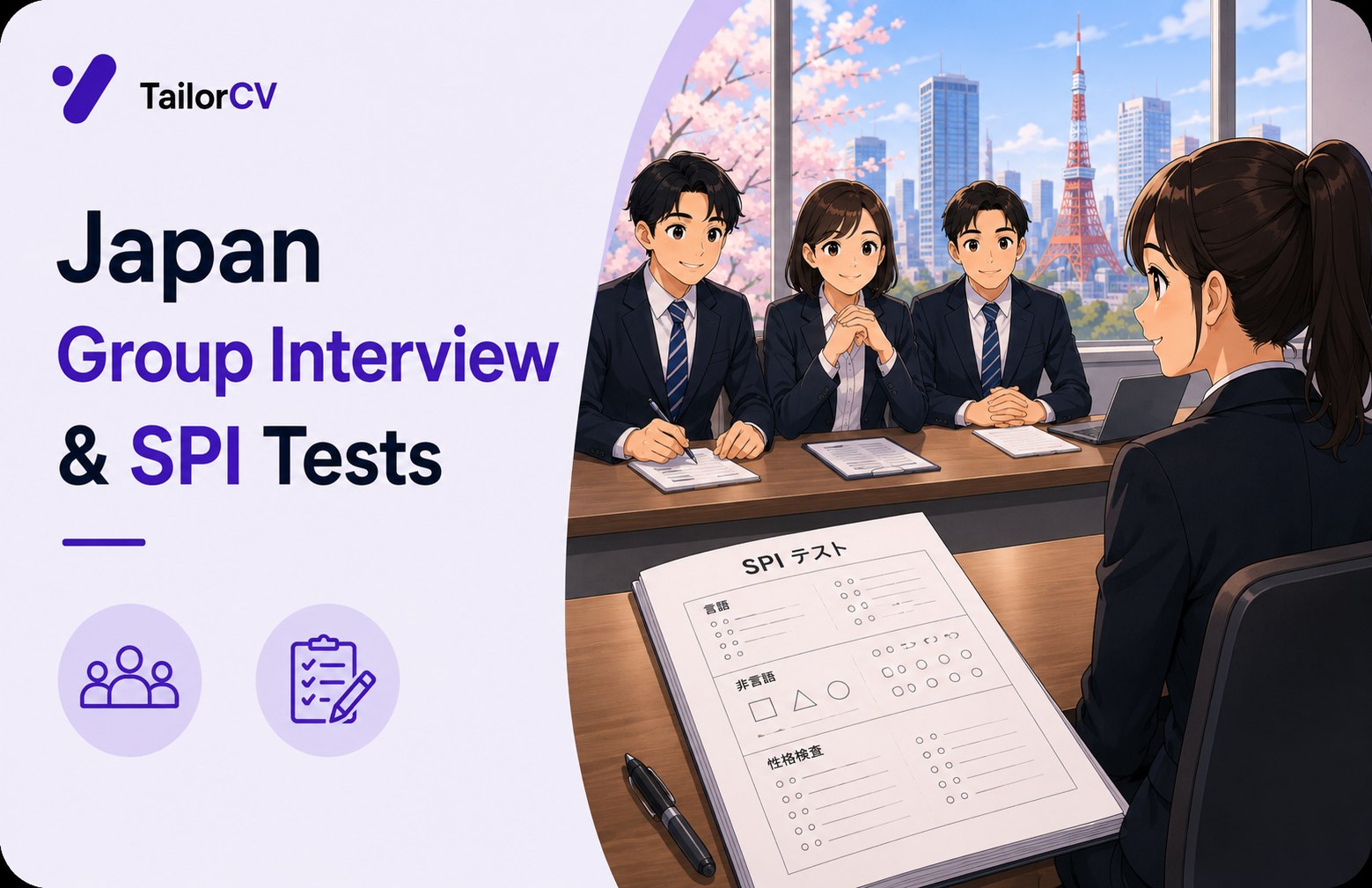
Yes, covered in more depth in the group interview and aptitude testing guide, a genuinely distinct format worth preparing for specifically.
How should I answer questions about long-term career plans?
Honestly and with genuine thought, this is asked more directly here than in some other markets and a vague or dismissive answer is noticed.
How many interview rounds are there?
Frequently three or more, progressing from junior staff toward senior management, with the final round often as much about character and commitment as capability.
What is the question about effort as a student really asking?
What you committed to seriously, how you handled difficulty, and what it shows about your character. The scale of the achievement matters much less than the specificity and honesty of the account.
Can I interview in English?
At foreign-affiliated companies and some technology employers, frequently yes — see the English-conducted market. At traditional Japanese companies, generally not.
How formal should I be?
Formal. Conservative dress, appropriate politeness levels, and conventional phrasing. Under-formality is more costly here than over-formality.
Should I ask about salary?
Not in early rounds. It is generally addressed later in the process or at offer stage, and raising it early reads as focused on the wrong thing.
How do I prepare if I am not a native speaker?
Mock interviews in Japanese, repeatedly. The gap between reading ability and speaking under pressure is where foreign candidates actually struggle, and it closes only with practice.
Was this guide useful?
Be the first to rate it.