 SS
SS
Key Takeaways
- The main working status for graduates covers engineering, specialist and humanities roles, and is broad enough to include most professional office work.
- Your employer sponsors the application, so you need a job offer before the status can be applied for.
- The relationship between your degree and the role matters — the work generally needs to relate to what you studied.
- Students in Japan change status from student to working; applicants from overseas obtain a certificate first and then a visa.
- There are separate routes for highly skilled professionals, and a job-hunting extension for graduates of Japanese universities still searching.
The main working status
What it covers. A broad category encompassing engineering, natural sciences, humanities and international services work. In practice this covers most professional roles a graduate would take — software development, engineering, marketing, sales, translation, international business, design and much of general office work.
The degree relationship. The role generally needs to relate to your field of study or to relevant experience. This is the requirement that most often creates difficulty, and it is assessed on the substance of the job rather than its title. An engineering graduate taking an engineering role is straightforward; the further the role sits from your studies, the more explanation is required.
Your employer applies. As with most working statuses internationally, this is not something you obtain independently. The company sponsors the application and provides documentation about the role, the salary and the company itself.
Salary and conditions. The role must offer conditions comparable to those a Japanese national would receive for equivalent work.
Duration and renewal. Granted for a defined period and renewable while you remain employed in qualifying work.
Two different paths
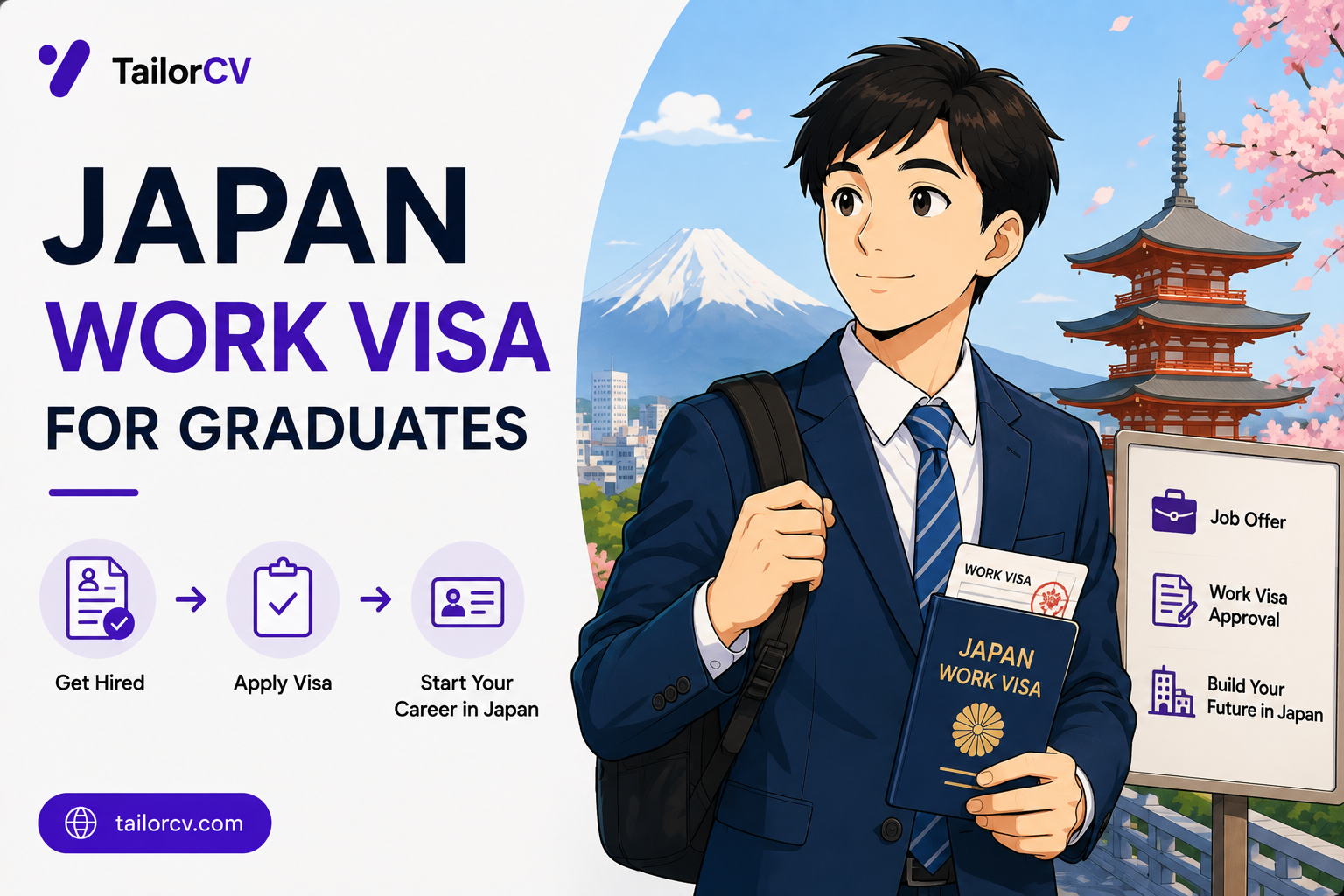
If you are already in Japan on a student status, you apply to change your status of residence from student to the working category, once you have an offer. This is generally done in the months before you start work, and timing matters because the process takes time and you cannot begin work in the new category before it is approved.
If you are applying from overseas, your employer typically first obtains a certificate confirming you meet the requirements, which you then use to apply for the visa at a Japanese diplomatic mission in your country. This route takes longer and requires more coordination with the employer.
Either way, the sequence is: offer first, status second. You cannot secure the status speculatively and then look for work.
The job-hunting extension
A genuinely useful provision that many graduates do not know exists.
Graduates of Japanese universities who have not yet found employment may be able to extend their stay for a period specifically to continue job hunting, subject to conditions including a recommendation from their institution.
Why it matters. The shūkatsu cycle concludes months before graduation, and a student who did not secure an offer would otherwise face leaving. This provision creates room to continue searching.
Conditions apply, including institutional support and evidence that you are genuinely job hunting. Confirm the current requirements with your university's international office well before graduation rather than assuming eligibility.
Other routes worth knowing
The highly skilled professional system uses a points-based assessment covering education, career history, salary, age and Japanese language ability among other factors. Meeting the threshold brings advantages including longer periods of stay and a faster route toward permanent residence. Worth assessing if you have an advanced degree, strong language ability or a high salary — the permanent residency guide covers how this connects to longer-term status.
Working holiday arrangements exist with a number of countries, allowing young people to work in Japan for a limited period. Conditions and eligibility depend on the specific bilateral arrangement.
Teaching-specific routes apply to some instruction roles, covered in the teaching guide.
Intra-company transfer applies if you already work for a company with a Japanese entity.
Practical points
Start the conversation with your employer early. Companies that regularly hire international graduates have a process; those that do not may need guidance, and the timeline is not something to discover late.
Check the degree-to-role relationship before accepting. If the connection is not obvious, ask how the employer intends to present it.
Keep your documentation organised. Degree certificates, transcripts, and anything establishing your qualifications, following the same record-keeping discipline that pays off throughout an international career.
Verify current requirements officially. Immigration rules change, and the authoritative source is the Japanese immigration authority rather than any article, including this one.
Understand what happens if you change jobs. The status is tied to qualifying work, and a change of employer or a substantially different role has implications that are worth understanding before you move.
The application process in more detail
The employer generally files the application on your behalf, similar to employer-driven work authorisation processes in many countries, you cannot independently apply without an employer's sponsorship, meaning your options are shaped by which employers are willing and experienced with this process.
A key requirement is that your intended work genuinely relates to your field of study or relevant professional background, this is a real substantive requirement, not a formality, worth understanding clearly before assuming any job offer automatically qualifies regardless of the connection between your degree and the actual role.
Processing generally takes real time, factor this into your planning around a start date, and confirm with your employer what the realistic timeline looks like for your specific situation.
Choosing employers with genuine sponsorship experience
Ask directly whether the company has sponsored this category of visa for international graduates before, an employer with genuine experience has an established internal process, while one without may still be willing but face a steeper learning curve, worth understanding which situation you are in.
Larger companies and those with an established international hiring track record generally have more developed internal processes, though smaller companies do sponsor as well, particularly where they specifically want a candidate with skills genuinely relevant to the role.
Renewal and longer-term status
This work visa category generally requires periodic renewal, tied to your continued employment in a genuinely qualifying role, understand what this means practically for your ongoing status and what happens if your role or employer changes.
Longer-term permanent residency is a separate, further process, generally requiring a substantial period of continuous qualifying residence, worth understanding this as a distinct longer-term consideration from the initial work visa itself, similar to how permanent residency is a separate question from an initial work pass in other countries.
Preparing your own documentation in advance
- Gather educational certificates, transcripts and any relevant qualification documents well before your employer needs them, authentication of foreign documents can genuinely take real time, and starting this process only once formally requested by an employer risks delaying your intended start date unnecessarily.
- Keep a clear, organised record of your own visa history from the outset, including exact dates and any renewal correspondence, exactly the same discipline that matters for any international work authorisation, this becomes genuinely important if you later change employers or apply for a status upgrade.
- If you are uncertain whether your specific intended role genuinely satisfies the field-of-study connection this category requires, raise this directly and honestly with your prospective employer before accepting an offer, rather than discovering a problem during the formal application process itself.
What to do if your application faces difficulty
If an initial application is refused or faces genuine difficulty, understand the specific reason given rather than assuming a general explanation, the specific documented reason determines whether a revised application, additional documentation, or a genuinely different approach is the appropriate next step.
Consider consulting a qualified immigration specialist for a complex or refused case, rather than attempting to navigate a difficult situation entirely independently, particularly where the stakes involve your ability to remain and work in the country.
Keep your employer informed throughout any difficulty, since they are a party to the application and may have their own channels or experience that can help resolve a specific issue.
Tip: Ask whether your degree field matches the work you would actually do. The status of residence is granted on that relationship, and a mismatch is the most common reason a graduate application runs into trouble.
Common Mistakes
- Assuming you can get the status. The employer sponsors it; the job comes first.
- Ignoring the degree-to-role relationship. Ignoring the degree-to-role relationship the most common source of difficulty in an otherwise straightforward application.
- Leaving the status change too late. Processing takes time and you cannot start qualifying work before approval.
- Not knowing about the job-hunting extension. It exists specifically for graduates still searching and many never hear of it.
- Relying on outdated information. Rules change; check the official source for anything decision-critical.
- Not asking about their track record. Not asking the employer whether they have done this before. A company with a process is a materially easier path than one improvising.
Related Guides
Keep building on this with the related guides in this series:
- Your First Job in Japan - What the Workplace Is Actually Like
- English-Speaking Jobs in Japan - Where They Actually Are
- Group Discussions and Aptitude Tests in Japanese Recruiting
- Internships in Japan for International Students
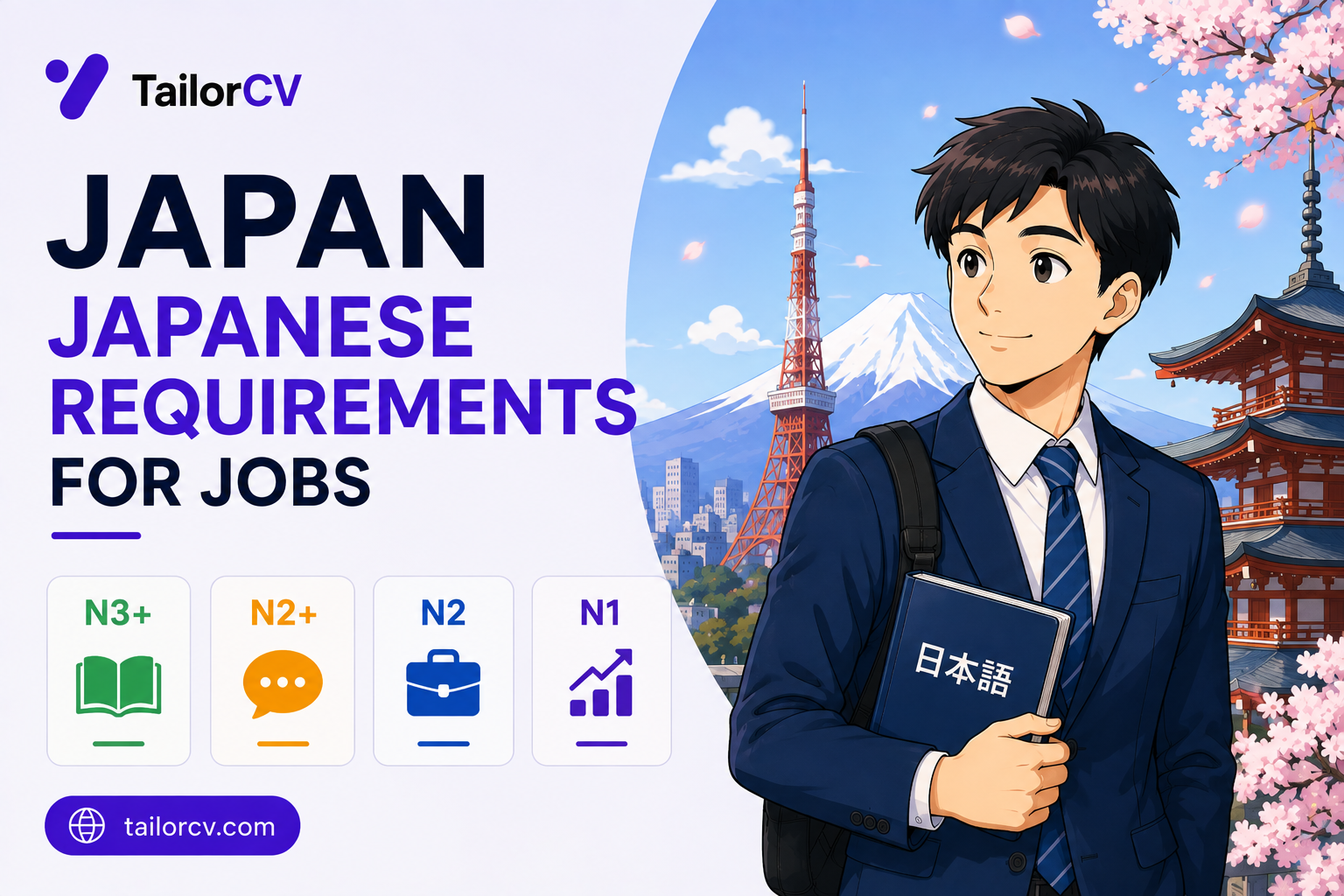
- Japanese Language Requirements for Jobs in Japan
- Teaching in Japan - The JET Programme and the Alternatives
You can also check your resume's ATS score for free, generate a tailored cover letter, or build a portfolio website in minutes.
Frequently Asked Questions
Does my job need to relate directly to what I studied?
Generally yes, a genuine connection between your field of study or relevant background and the actual work is a real requirement, not a formality, worth confirming this connection is clear before assuming any offer automatically qualifies.
How long does the visa application process take?
Real processing time is involved, ask your specific employer what timeline they realistically expect based on their own experience, and plan your intended start date with this in mind.
Can I switch employers while on this visa?
Generally requires notification and, depending on the specifics, potentially a new application process, worth understanding the current specific requirements rather than assuming this is entirely seamless.
Does this visa lead to permanent residency eventually?
It can, over a longer timeframe requiring substantial continuous qualifying residence, a separate and further process from the initial work visa itself.
Can I look for work in Japan before having a visa?
Students already in Japan job hunt on their student status. Graduates of Japanese universities may be able to extend specifically to continue searching. Applying from overseas generally means securing an offer first.
Does my degree have to match the job exactly?
Not exactly, and there generally needs to be a demonstrable relationship between your field of study or experience and the work. The further apart they are, the more explanation is required.
How long does the process take?
It varies and it is not immediate. Start the conversation with your employer well before your intended start date rather than assuming it can be arranged quickly.
Can I change jobs on this status?
Generally yes, provided the new role still qualifies, and there are notification requirements and implications worth understanding before moving.
What is the highly skilled professional route?
A points-based system offering advantages including longer stays and a faster path toward permanent residence, assessed on education, experience, salary, age and language ability among other factors.
Do I need Japanese language ability for the visa itself?
Not as a formal requirement for the main working status, though it affects the highly skilled points assessment and, far more importantly, which jobs you can actually get.
What is your resume scoring right now?
Scan it against a job description and get your ATS match score in about a minute.
Drop your resume here or choose a file
PDF only. Max 2 MB.
We never share your data or use it to train AI models.

Was this guide useful?
Be the first to rate it.