

Keyword Stuffing vs Keyword Coverage - The Line Recruiters Notice
Both put the posting's words on your resume. One reads as a qualified candidate, the other as a document written for a machine. Here is exactly where the line sits.
Actionable guides to improve ATS score, resume quality, and job search outcomes.
Both put the posting's words on your resume. One reads as a qualified candidate, the other as a document written for a machine. Here is exactly where the line sits.

The posting names something you have never used. Here are the four honest moves that work, the three that get found out in the interview, and how to tell whether the gap is worth applying around.

Ninja, Evangelist, Analyst IV, Grade 7. If your title means nothing outside your employer, recruiters cannot find you. Here is the fix that stays honest.
A whole role can vanish between your PDF and the recruiter's screen, with no error and no warning. Here are the five structures that cause it.

Postings are assembled by several people with different agendas. Knowing who wrote which part tells you which requirements are real.

Your resume looks good and still scores badly. There are only three causes - parsing, vocabulary, or placement - and this guide shows how to tell which one is costing you interviews.

Nine checks, in order, that take ten minutes. Built to be run every time without thinking about what comes next.

A timed, repeatable routine for adapting a resume to one posting. Five steps, a clock, and a rule for when to stop.

Reframing your experience for a job is normal and expected. Inventing it is not. Here is where the line sits, with examples on both sides.
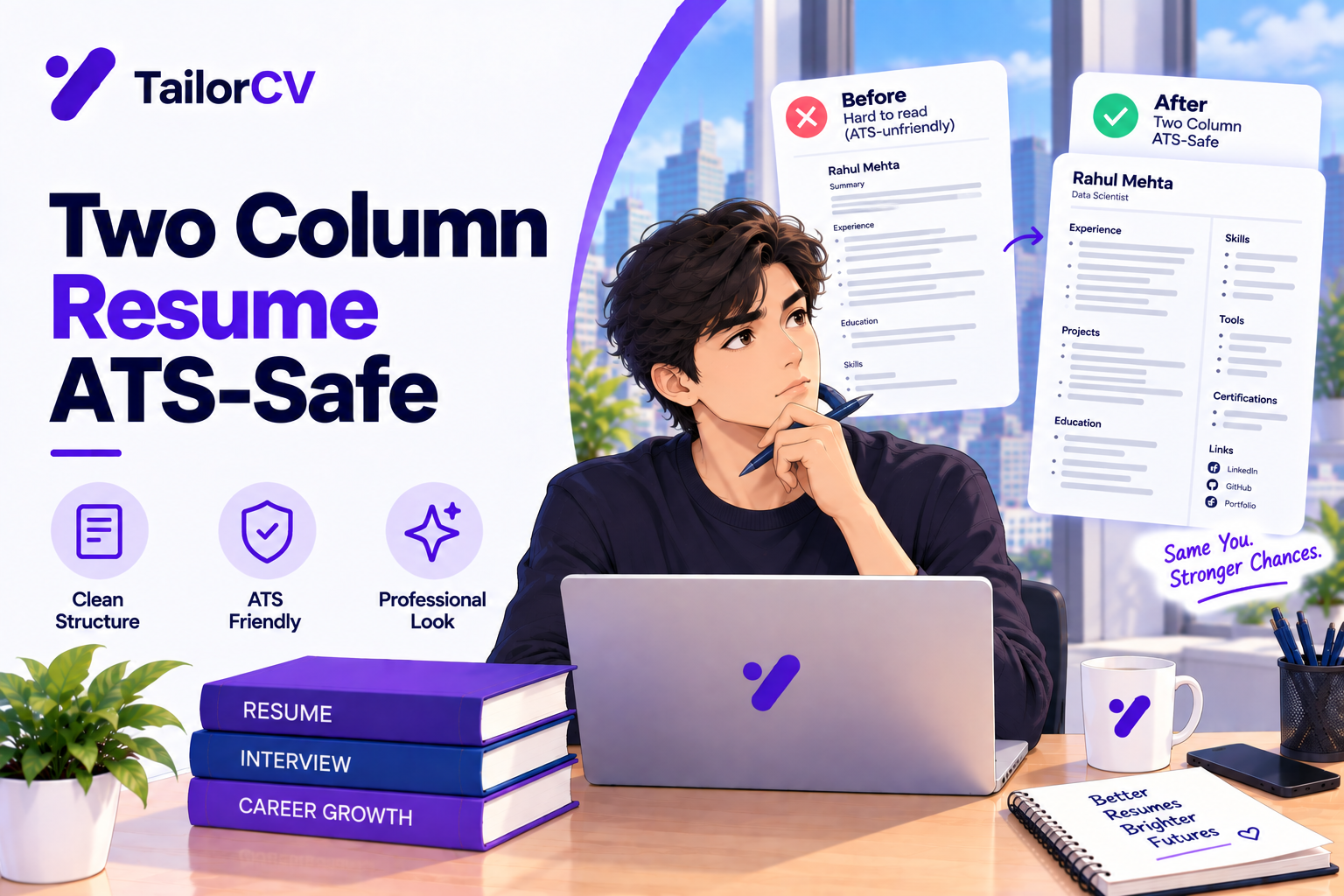
Two-column layouts are not automatically disqualifying, but they fail in specific, predictable ways. Here is which structures survive parsing and which scramble.

Your title line carries more weight than any other text on your resume. Here is when matching the posting is legitimate, when it is a lie, and how to bridge the gap honestly.

Keyword coverage and persuasiveness are different properties. A scanner measures the first and is blind to the second, which is why good scores and no callbacks coexist.

Tailoring is not rewriting. Four things change for every application, five things almost never should, and knowing the difference turns an hour into ten minutes.

The same word carries different weight depending on where it sits. Here is the placement hierarchy, from strongest to weakest, and what to do with each tier.

You do not have time to rewrite twenty bullets per application. Here is how to find the three that decide whether you get read.

Pasting invisible keywords into a resume is still circulating as advice. Here is how it is detected, what happens when it is, and what to do instead.

The same resume and the same posting can score 62% in one tool and 84% in another. Here is what causes the spread and which number to act on.
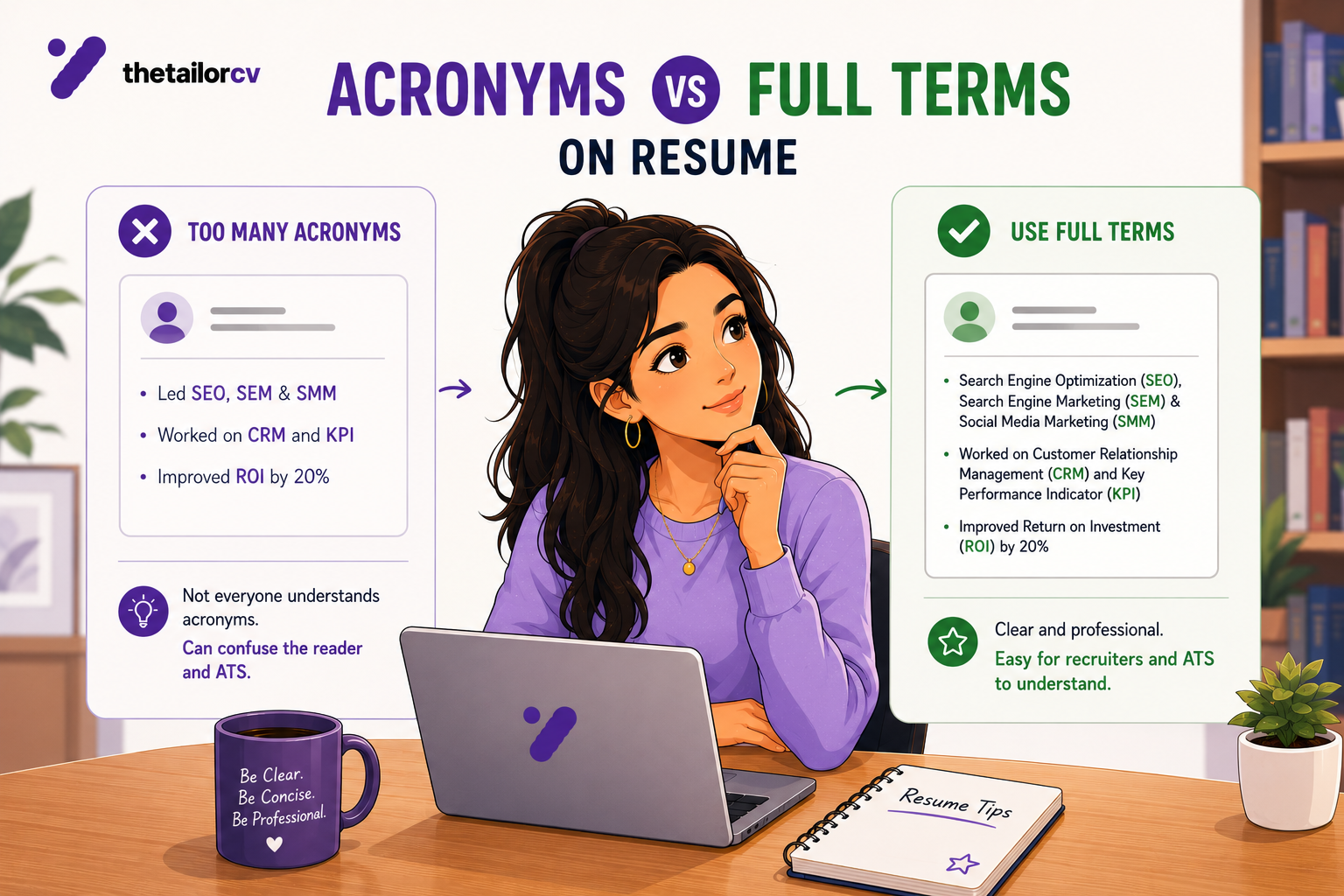
Writing only "SEO" or only "Search Engine Optimization" can cost you the match. Here is the rule, where to put each form, and which acronyms need spelling out.

A viewed status with silence usually means one of three things. Here is how to tell which, and how long to actually wait before assuming rejection.

If 100 applications produced no interviews, the problem is systematic, not bad luck. Here is how to diagnose it in 20 minutes and what to fix first.