 SS
SS

Key Takeaways
- There is no shared standard - each tool invents its own scoring formula, so the numbers are not comparable.
- Differences come from weighting, synonym handling, what counts as a keyword, and how the posting is tokenised.
- None of the scores is the employer's number, which you cannot see.
- Use one tool consistently and treat movement within it as the signal, not the absolute figure.
- The missing-terms list is more useful than the score in every tool.
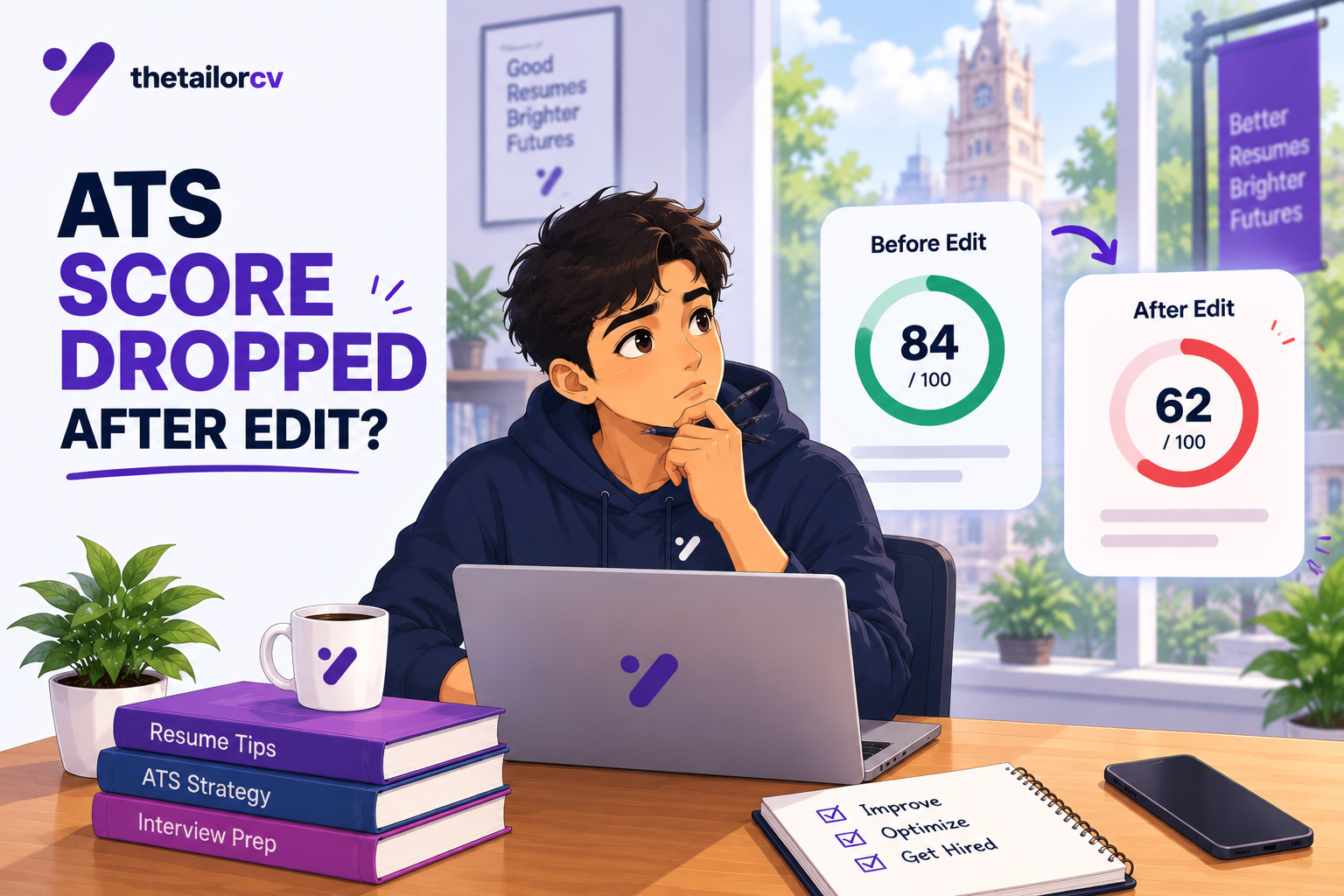
Run the same resume and the same job posting through two checkers and you can easily get 62% and 84%. Neither is lying. They are measuring different things and calling both a score.
Where the Spread Comes From
Different weighting. One tool weights the skills section heavily; another weights terms inside experience bullets; a third factors in title match and years of experience. Identical inputs, different formulas.
Different synonym handling. A strict string matcher gives nothing for "client relationship management" against a requirement for "stakeholder management." A semantic matcher gives most of the credit. That single difference can move a score twenty points.
Different keyword extraction. Before comparing anything, each tool decides which words in the posting are requirements. One might extract 40 terms including "fast-paced" and the company name; another extracts 12 genuine skills. The denominators are not the same.
Different handling of repetition. Some tools count each occurrence; some count a term once however often it appears; some penalise unnatural repetition.
Different parsing. If one tool reads your two-column layout correctly and another scrambles it, they are scoring different documents.
What This Means Practically
Do not compare scores across tools. A 70% in one is not better or worse than a 65% in another. The numbers share a percentage sign and nothing else.
Do not chase the highest number. Running your resume through five checkers and optimising for the most generous one optimises for that tool's quirks, not for employability.
Pick one and stay with it. Consistency is what makes the number informative. Within a single tool, a move from 58% to 74% after tailoring tells you the tailoring connected. That relative movement is the real signal.
Read the list, not the score. Every tool's most useful output is the found/missing breakdown. That is concrete and largely tool-independent - if a term is genuinely absent from your resume, every tool will say so.
The Number You Cannot See
None of these scores is the employer's.
Unless you are scanning inside the employer's own system, you are seeing an approximation built by a third party. The employer's system has its own extraction, weighting and thresholds, configured by whoever set it up, and often further filtered by knockout questions on the application form that have nothing to do with your resume text.
This is not a reason to ignore checkers. It is a reason to treat them as a proxy for legibility and relevance, rather than as a prediction.
What All Tools Agree On
The useful thing is that the tools converge on the fundamentals. If a term is missing from your resume, every tool reports it missing. If your skills section did not parse, every tool loses it. If your dates are detached, every tool computes your experience wrongly.
So the findings worth acting on are the ones that would show up anywhere:
- A central requirement from the posting that appears nowhere on your resume
- A section that did not parse
- Experience computed lower than your actual tenure
- Your job title not registering against the posting's title
These are real problems. A twelve-point disagreement between two tools about your overall percentage is not.
A Sensible Routine
1. Choose one checker and use it for everything, so your history is comparable.
2. Scan before tailoring to get a baseline for this posting.
3. Read the missing list, sort it into things you can honestly claim and things you cannot.
4. Tailor once, addressing the claimable items.
5. Re-scan once in the same tool and check the number moved.
6. Stop. A third pass in the same tool, or a second opinion from a different tool, adds noise rather than information.
Frequently Asked Questions
Which ATS checker is the most accurate? There is no meaningful answer, because there is no standard to be accurate against. Judge tools on whether their missing-terms list is specific and actionable.
Should I test my resume in several tools to be safe? No. You will get several numbers, no way to reconcile them, and a temptation to optimise for whichever is most generous.
Why did my score change when I rescanned without editing anything? Some tools re-extract keywords each run and may tokenise slightly differently, or you pasted the posting with different surrounding text. Small variation is normal.
If tools disagree, are they worth using at all? Yes, for what they reliably show: whether your document parses, and which of the posting's terms are genuinely absent. Both are useful and neither depends on the score being precise.
Does a paid checker score more accurately than a free one? Not inherently. Paid tools often give more detail; the underlying score is still that vendor's formula.
Use One Consistently
The value is in the breakdown and in tracking movement within a single tool, not in the headline figure.
Run a free scan and use it as your consistent baseline - then judge your edits by whether the missing list shortens, which is the part that means the same thing everywhere.
Related: what counts as a good score and how to read an ATS report.
What is your resume scoring right now?
Scan it against a job description and get your ATS match score in about a minute.
Drop your resume here or choose a file
PDF only. Max 2 MB.
We never share your data or use it to train AI models.

Templates that keep this structure intact
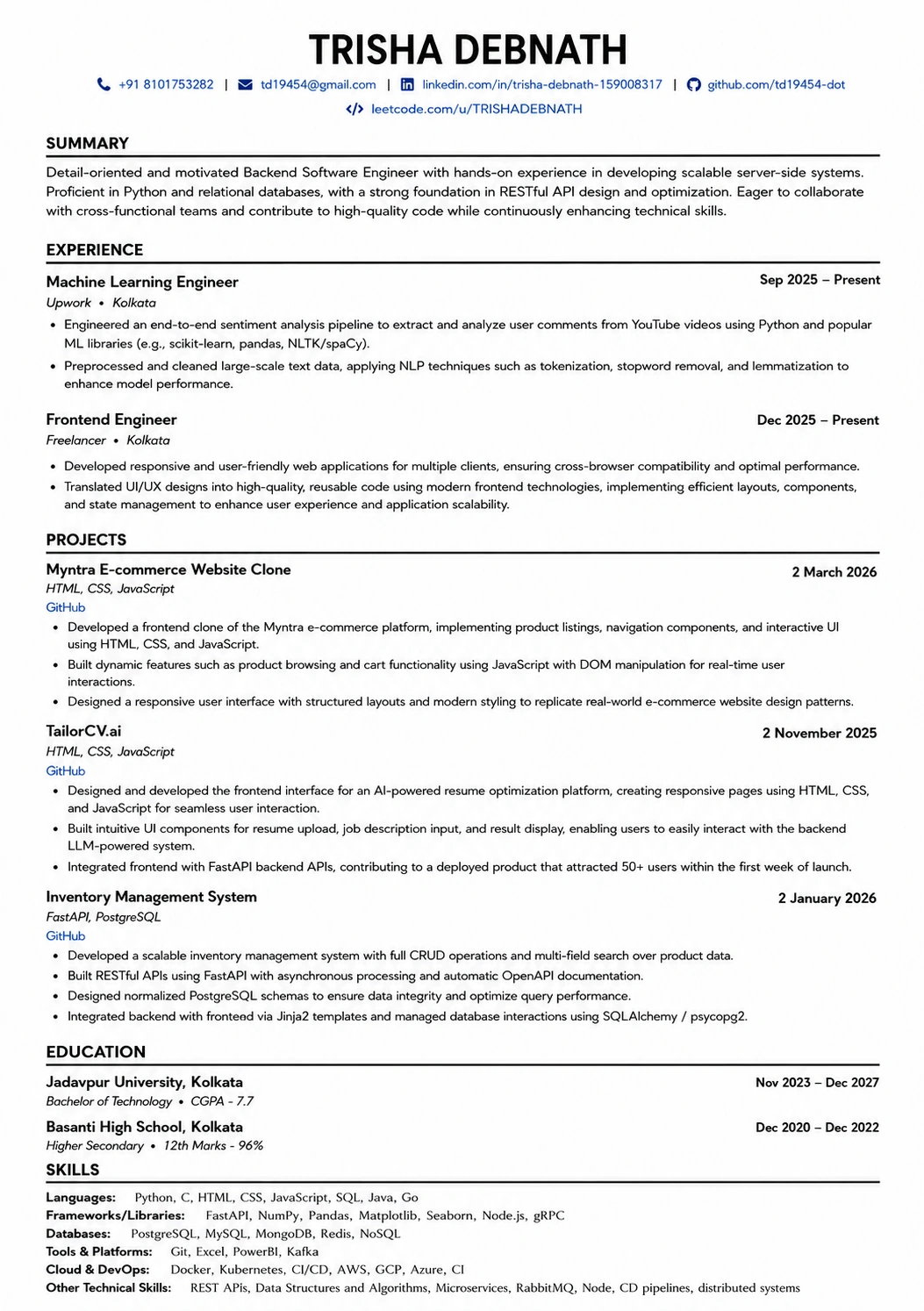
This template is ATS-tested — start from it and the formatting rules in this guide are already handled.
Was this guide useful?
Be the first to rate it.