 TD
TD
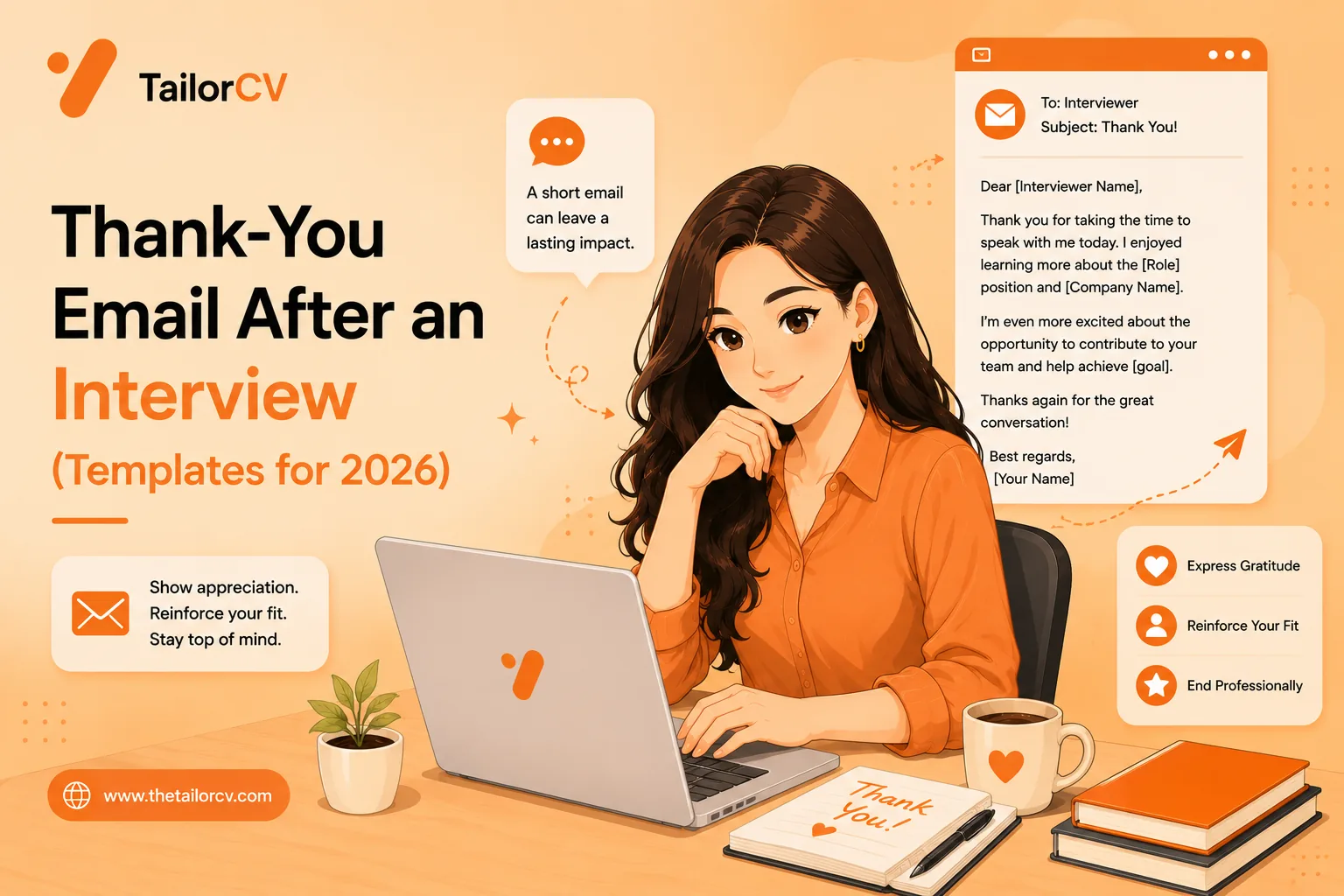
Key Takeaways
- Send it within 24 hours, while the conversation is still fresh for the interviewer.
- Reference one specific thing you discussed — this is what separates a real note from a template.
- Reinforce one reason you are a strong fit, briefly.
- Send a separate note to each interviewer on a panel, not one group email.
Why It Still Matters
A thank-you email rarely wins a job on its own, but a missing one can lose a close race. It shows follow-through, keeps you top of mind during the decision, and gives you one last chance to address something you fumbled or forgot in the room.
The Structure
- Thanks — specific, not generic.
- A callback — one thing from the conversation you genuinely found interesting.
- Reinforcement — one sentence on why you fit.
- Close — availability and a warm sign-off.
Standard Template
Subject: Thank you — [Role] interview
Hi [Name],
Thank you for taking the time to talk today. I especially enjoyed our discussion about [specific topic] — it made me even more excited about [specific aspect of the role].
Everything we covered reinforced that my experience with [relevant skill] would let me contribute to [specific goal] quickly. Please let me know if there is anything else I can share.
Best, [Your name]
Panel Interview
Send an individual note to each person, and vary the specific detail so they do not read like carbon copies if forwarded. Reference what that person asked about — the engineer got a technical question, the manager a team-fit question.
When You Fumbled a Question
The thank-you email is your redo:
See it in action: a resume-based mock interview
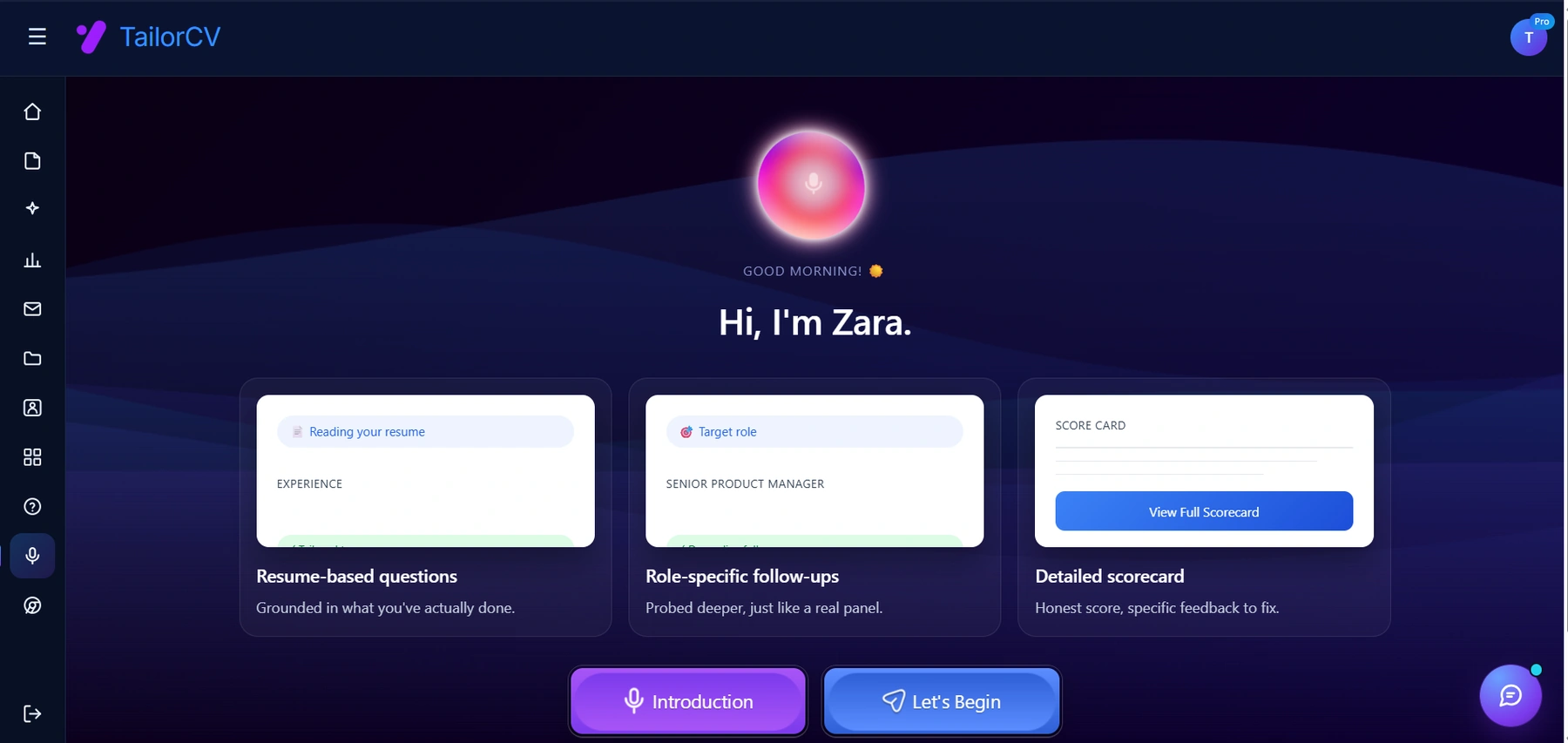
You can rehearse this before the real thing. The interviewer reads your resume first, so the questions come from your actual experience rather than a generic list.
"One more thought on the scaling question you asked — I would also add a read replica before sharding, which I should have mentioned in the moment."
This shows reflection and can genuinely change an interviewer's impression.
After a Final Round
Keep it short and confident, and confirm timeline:
"Thank you for the final conversation. I am very enthusiastic about the role and happy to provide anything else you need. I understand you expect to decide by [date] — I look forward to hearing from you."
What Makes a Thank-You Email Actually Work
The difference between a note that helps and one that is instantly forgotten is specificity. A generic "thank you for your time, I'm very interested" could have been sent to any company for any role, and it reads that way. The three ingredients that make a thank-you land:
- A real callback to the conversation. Reference something specific you discussed — a project they mentioned, a challenge the team is facing, a point you connected on. This proves you were present and engaged, not running through a script.
- A forward-looking line. Show you are already imagining yourself in the role: "I keep thinking about the onboarding problem you described — I would love to dig into it."
- Brevity. Four to six sentences. A long note is a chore to read and dilutes the one or two points that matter.
Timing: Why 24 Hours Matters
The decision conversation often happens within a day or two of your interview, while impressions are fresh. A thank-you that arrives the same evening or the next morning lands inside that window and can nudge a close call your way. One that arrives three days later shows up after the discussion has happened and the momentum has passed. If you interviewed in the morning, aim to send it that afternoon; if late in the day, that evening or first thing the next morning.
Handling Special Situations
You forgot to mention something important. The thank-you is your second chance: "I realized I didn't mention that I've led exactly this kind of migration before — happy to walk through it if useful."
You stumbled on a question. Address it briefly and show growth: "On the system-design question, I'd revise my answer to start with the read path — I think that's the cleaner approach."
The interview went badly. Send the note anyway, warm and professional. A gracious thank-you after a rough interview can partially reset the impression, and it costs nothing.
You interviewed with a panel of five. Send five individual notes, each referencing what that person actually discussed. If you cannot get everyone's email, send to the ones you have and ask the recruiter to pass along your thanks to the rest, naming each person.
A Template Library
After a recruiter screen:
"Thanks for the call today, [Name]. It clarified exactly what the team needs, and it made me more excited, not less. My experience with [skill] lines up closely with the [specific] part of the role. Looking forward to the next step."
After a technical interview:
"Thank you for the technical discussion, [Name]. I enjoyed working through the [specific problem] — it's the kind of problem I like most. One follow-up thought: [brief, sharp addition]. Happy to go deeper anytime."
After a hiring-manager interview:
"Thank you for the conversation, [Name]. Hearing how you think about [team goal] confirmed this is where I want to do my next few years of work. I'm confident I could help with [specific challenge] and would be glad to share more."
Mistakes to Avoid
- Sending one group email to a panel — it reads as low-effort and impersonal.
- Copy-pasting identical notes that get exposed the moment interviewers compare inboxes.
- Over-apologizing for the interview — it draws attention to a weakness the interviewer may not have weighted heavily.
- Restating your entire resume — the note should add warmth and one sharp point, not repeat your pitch.
- Waiting "to seem less eager" — promptness reads as professional, not desperate.
The Difference Between a Note That Helps and One That's Ignored
Send two thank-you emails to the same interviewer and one advances you while the other vanishes — the difference is always specificity. "Thank you for your time today, I'm very interested in the role" is polite and instantly forgettable; it could have been sent to any company for any job. "I keep thinking about the migration challenge you described — I've actually led exactly that kind of move, and I'd love to dig into it" proves you were present, engaged, and can already picture yourself in the work. The specific callback is what makes the reader remember you. Before you hit send, ask: could I have sent this exact email to a different company? If yes, it is too generic — add the detail only this conversation produced.
A Follow-Up Timeline for the Whole Process
The thank-you email is one moment in a longer sequence of staying appropriately visible:
- Within 24 hours of each interview: an individual thank-you referencing that conversation.
- If a stated decision date passes: a brief, warm check-in a day or two later.
- After a final round with no word for a week: one polite status-and-interest note.
- After a rejection: a gracious thank-you asking to be kept in mind — genuinely underused, and it has reopened doors months later.
Two touches beyond the thank-yous is the ceiling; past that, redirect your energy. The full follow-up guide covers the cadence in detail.
Sending to a Panel Without Sounding Copy-Pasted
When five people interviewed you, five identical notes are worse than none — the moment two of them compare inboxes, the thank-you reads as a form letter. The fix is to anchor each note to what that person actually discussed: the engineer who gave you a systems question gets a note about that problem; the manager who probed team fit gets one about collaboration; the skip-level who asked about your long-term goals gets one about direction. Same warmth, same structure, genuinely different middle. If you cannot get everyone's email, send to those you have and ask the recruiter to pass your thanks to the rest, naming each person so it lands as personal rather than generic.
Frequently Asked Questions
Email or handwritten note?
Email, almost always. It arrives inside the 24-hour window that matters; a mailed card arrives after the decision.
What if I don't have their email?
Ask the recruiter to pass along your thanks, or send it through the recruiter and mention each interviewer by name.
Is it too late to send one two days later?
Send it anyway — a late thank-you beats none. But aim for 24 hours next time; the sooner it lands, the more it helps.
Should I send a thank-you after every round?
Yes, after each interview with a new person or panel. Each is a fresh impression and a fresh decision conversation. Keep later notes short so they do not feel repetitive.
What subject line should I use?
Simple and clear: "Thank you — [Role] interview" or "Great speaking with you today." Avoid anything cute; the subject line's job is to get opened and filed correctly.
Is it okay to reiterate my interest strongly?
Yes, once and genuinely. "This is my top choice and I'm confident I'd contribute quickly" is fine if true. Just avoid repeating it in every sentence, which tips from confident into anxious.
Should I mention salary or logistics in the thank-you?
No. Keep the thank-you about the conversation and your fit. Save compensation and logistics for the recruiter and the offer and negotiation stage, where they belong.
What if I interviewed with someone very senior, like a founder or VP?
Send them a note too, kept slightly more concise and focused on the strategic or vision-level topics you discussed. Senior leaders appreciate brevity and a sharp, specific point over a long message.
Can a thank-you email actually change the decision?
It rarely overturns a clear no, but in a close race between similar candidates it genuinely tips decisions — and a missing one can cost you. Its real power is reinforcing a good impression and keeping you top of mind during the deliberation.
Should I connect on LinkedIn after the interview too?
It is fine to send a connection request with a brief, warm note after your thank-you, especially to the hiring manager. Keep it professional and low-pressure; the email is the priority, and the connection is a nice supplement.
How to Write One Fast Without Sounding Generic
The excuse for not sending a thank-you is usually time, but a genuine one takes five minutes if you prepare during the interview itself. As you talk, mentally note one moment worth referencing — a problem the interviewer described, a point you connected on, a topic that lit them up. The instant the interview ends, jot that note down before it fades. Then your email writes itself: thank them, reference that exact moment, add one sentence reinforcing your fit, and close warmly. The whole thing is four to six sentences. The preparation is not extra work; it is just paying attention during a conversation you are already having. Candidates who treat the thank-you as an afterthought scramble for something generic; candidates who capture one specific detail in the moment send a note that proves they were genuinely present.
The Rejection Thank-You (Yes, Really)
Almost nobody sends a thank-you after being rejected, which is exactly why doing so is powerful. A brief, gracious note — "Thank you for the opportunity and the thoughtful process; I really enjoyed meeting the team, and I'd welcome being considered for future roles" — leaves a lasting impression on a hiring manager who is used to candidates going cold or bitter after a no. Roles reopen, chosen candidates decline, and hiring managers move to new companies with their impressions intact. More than one person has been called back weeks or months later precisely because they handled a rejection with grace. It costs two minutes and it keeps a door open that most people slam. In a job search, the relationships you maintain after a "no" are often worth as much as the ones you build during a "yes."
Putting It All Together
A thank-you email rarely wins a job outright, but a thoughtful one can tip a close decision and a missing one can quietly cost you. Send it within 24 hours, reference something real from the conversation, reinforce one reason you fit, and keep it short. Do that after every round — individually to each interviewer — and you leave a final impression of someone engaged, professional, and easy to say yes to.
Was this guide useful?
Be the first to rate it.