 TD
TD
Key Takeaways
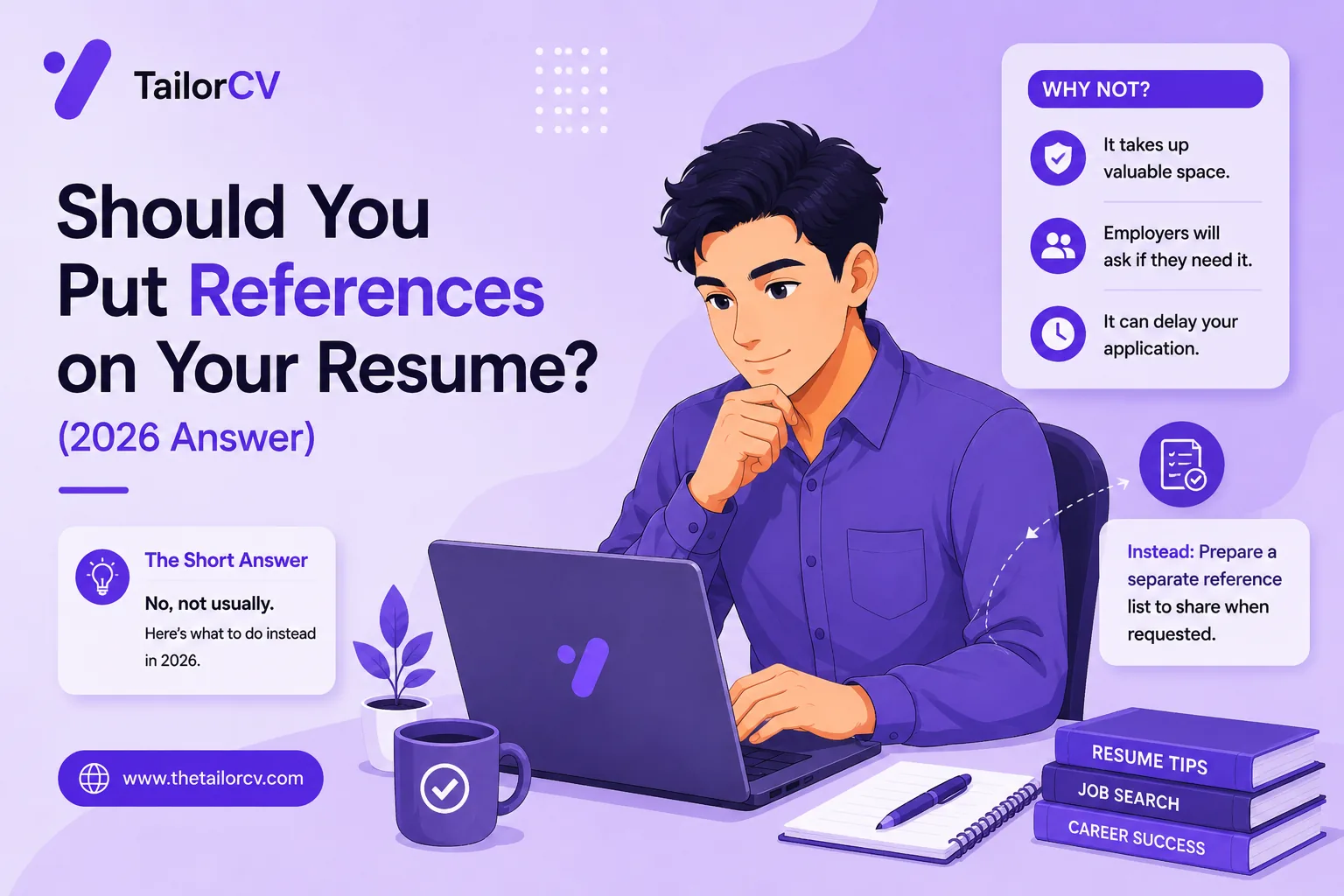
- Do not put references on your resume, and skip "references available on request" too.
- Keep a separate reference sheet ready to send the moment it is asked for.
- Always ask a reference before listing them, and brief them on the role.
- Choose references who can speak to your actual work, not just your title.
The Short Answer
Leave references off your resume entirely. Space on a resume is scarce, and references are only relevant at the offer stage — long after the resume has done its job. Listing them early gives away nothing useful and wastes room you could use for a stronger bullet.
Skip "References Available on Request" Too
This line is a relic. Everyone knows you will provide references if asked, so the phrase adds no information and quietly signals an outdated resume. Delete it and use the line for something that helps you get the interview.
Keep a Separate Reference Sheet
When an employer asks — usually near an offer — send a clean, separate document that matches your resume's header. For each reference include:
- Name and job title
- Company
- Relationship to you ("Former manager at [Company]")
- Phone and email
- One line on what they can speak to
Choose the Right People
The best reference is someone who directly supervised or worked closely with you and can speak to specific results. A senior title who barely knew you is weaker than a direct manager who can say "she rebuilt our reporting pipeline." Aim for two to four references, ideally including at least one recent manager.
Always Ask First — and Brief Them
Never surprise a reference. Ask permission, then set them up to help you: send them the job description, remind them of a couple of your relevant wins, and tell them what the role emphasizes. A briefed reference gives a specific, glowing answer instead of a generic "yes, they were fine."
What a Reference Sheet Looks Like
When an employer asks, send a clean document whose header matches your resume, so the two look like a set. For each reference:
Priya Sharma Engineering Manager, Acme Corp (former direct manager) priya.sharma@email.com · (555) 123-4567 Can speak to: backend architecture, on-call ownership, mentoring juniors.
Three to four references formatted this way is plenty. The "can speak to" line is the secret weapon — it quietly steers each reference toward the strengths most relevant to the role, and it signals to the employer that you chose your references deliberately.
How to Brief a Reference Well
A briefed reference gives a specific answer; an unbriefed one gives a vague one. Before you list someone, send them a short note:
"Thanks again for being a reference! I'm interviewing for a [Role] at [Company] that emphasizes [key skills]. If it helps, two things I'd love for you to mention if it comes up: [win 1] and [win 2]. I'll let you know if they reach out."
This does three things: it refreshes their memory, it aligns their answer with what the employer cares about, and it warns them a call may be coming so they respond promptly.
Who Makes a Weak Reference
- A big title who barely knew you. "The VP" sounds impressive but gives a generic answer that helps no one.
- A friend or family member. Employers discount personal references heavily; they want professional context.
- Someone you left on bad terms with. Never assume — always confirm they will speak positively.
- An out-of-date contact you have not spoken to in five years. Reconnect first, or choose someone current.
The best reference is a recent manager or close colleague who can describe specific results in their own words.
Timing: When References Actually Come Up
References are almost always a late-stage step, requested at or near the offer. That is exactly why they do not belong on your resume — they are irrelevant to getting the interview and only matter once the employer is seriously considering you. Keep your sheet ready so you can send it the moment it is asked for, but keep it off the resume itself, where the space is better spent on a result that helps you stand out.
How Reference Checks Actually Work
Understanding what happens on the other end helps you prepare the right people. When an employer reaches the reference stage, they are rarely looking for dirt — they are looking to confirm what they already believe and to fill in any gaps. A typical reference call covers a handful of predictable questions:
- "In what capacity did you work with the candidate, and for how long?"
- "What were their main responsibilities?"
- "What are their biggest strengths?"
- "Where could they still grow?"
- "How did they handle pressure or conflict?"
- "Would you hire or work with them again?"
That last question carries the most weight. A reference who answers "absolutely, in a heartbeat" moves you forward; one who pauses and says "I think so" quietly hurts you. This is exactly why you choose references who genuinely rate your work — and why you brief them, so their specific examples line up with what the role needs.
Some companies now use automated reference-checking platforms that email your references a short survey instead of calling. These still benefit from a heads-up from you, since a reference who is expecting the request responds faster and more thoughtfully than one who assumes it is spam.
A Reference Strategy for Every Stage of Your Career
Early career. You may not have former managers yet. Professors who supervised a project, internship mentors, a part-time job supervisor, or a client from freelance work all make legitimate references. Choose the person who saw you actually do something, not just the most senior name you can find.
Mid career. Aim for a mix: a former direct manager, a senior peer, and ideally someone who can speak to a specific, relevant strength. Avoid using your current manager unless you are comfortable with your job search being known — most employers understand and will accept "available once we're further along."
Senior and executive. References are often more thorough at this level, sometimes including skip-level leaders, board members, or major clients. Curate references who can speak to strategic impact and leadership, not just competence, and brief them carefully on the narrative you want reinforced.
Managing References Discreetly While Employed
The trickiest situation is job-searching while employed, when you cannot use your current manager without revealing your search. The solution is a tiered approach: use former managers and senior colleagues from previous roles as your primary references, and if an employer specifically wants a current-employer reference, offer it "once we're at the offer stage." Most reasonable employers accept this — they have hired people who were quietly looking before. Never list your current manager without permission, and never assume a colleague will keep your search confidential unless you have explicitly asked.
Keeping Your References Warm
A reference relationship is not a one-time transaction. The people who vouch for you are part of your professional network, and they deserve to be maintained like any other relationship. Check in occasionally, congratulate them on their own moves, and always close the loop after they help — "I got the offer, thank you so much for speaking with them" costs nothing and keeps them glad to help again next time. A reference who feels used once will be lukewarm the second time you ask; one who feels appreciated becomes a lifelong advocate.
Frequently Asked Questions
What if the application form has a references field?
Fill it in there — that is a request. The rule is only about not volunteering references on the resume itself.
Can I use a peer or a client as a reference?
Yes, if a manager reference is not available. A client who can speak to your delivery, or a senior peer who led projects with you, both work well.
How many references should I prepare?
Three is the standard ask. Line up three to four so you have a backup if someone is unreachable.
What if I can't use my current manager as a reference?
That is common and expected — you may not want your current employer to know you are looking. Use a former manager, a senior colleague, or a client instead, and mention to the employer that your current manager is available "once we're further along," if asked.
Do employers always check references?
Not always, but many do before an offer, and some use automated reference-check services. Assume they will, and prepare accordingly — a strong, briefed reference can seal a decision.
Can I put "references available on request" to save an awkward gap?
No — the line adds nothing and dates your resume. Everyone knows references are available on request. Use that space for a stronger bullet.
How far in advance should I contact my references?
Reach out as soon as you are actively interviewing, not the moment an employer asks. Giving your references a heads-up early means they are ready and briefed when a call comes, rather than caught off guard, and it lets you confirm they will speak positively before you list them.
What if a reference gives a lukewarm review?
That is exactly why you choose and brief references carefully. Only list people you are confident will advocate for you enthusiastically, and prepare them with the specifics of the role. If you have any doubt about how someone will speak of you, choose someone else.
Do references matter for internal transfers or promotions?
Less formally, but reputation matters even more — your future manager can simply ask around internally. The same principle applies: do consistently good work and maintain good relationships, because in an internal move, everyone is effectively a reference.
Can I use a professor as a reference?
Yes, especially early in your career or as a recent graduate. A professor who supervised a substantial project or capstone can speak credibly to your ability, work ethic, and how you handle challenges. Choose one who knew your work closely, not just a name from a large lecture, and brief them like any other reference.
What Recruiters Notice About Your References
The references you choose quietly say something about you before they even speak. A candidate whose references are all recent direct managers signals a track record of good relationships with the people who supervised them — the strongest possible signal. A candidate who offers only peers, or only contacts from many years ago, or who cannot produce a recent manager, prompts quiet questions. This does not mean you must have a perfect roster; plenty of good candidates have complicated situations, from a current employer they cannot alert to a former manager who has left the industry. But it does mean you should think about the story your references tell, and fill obvious gaps thoughtfully — a senior peer who led projects with you, a skip-level who knew your work, a client who can speak to your delivery. Curate references the way you curate the rest of your application: deliberately, with an eye to what a thoughtful reader will infer.
A Reference Sheet Template You Can Reuse
Keep a ready-to-send document, matching your resume's header, that you can produce the moment an employer asks:
Your resume after optimization
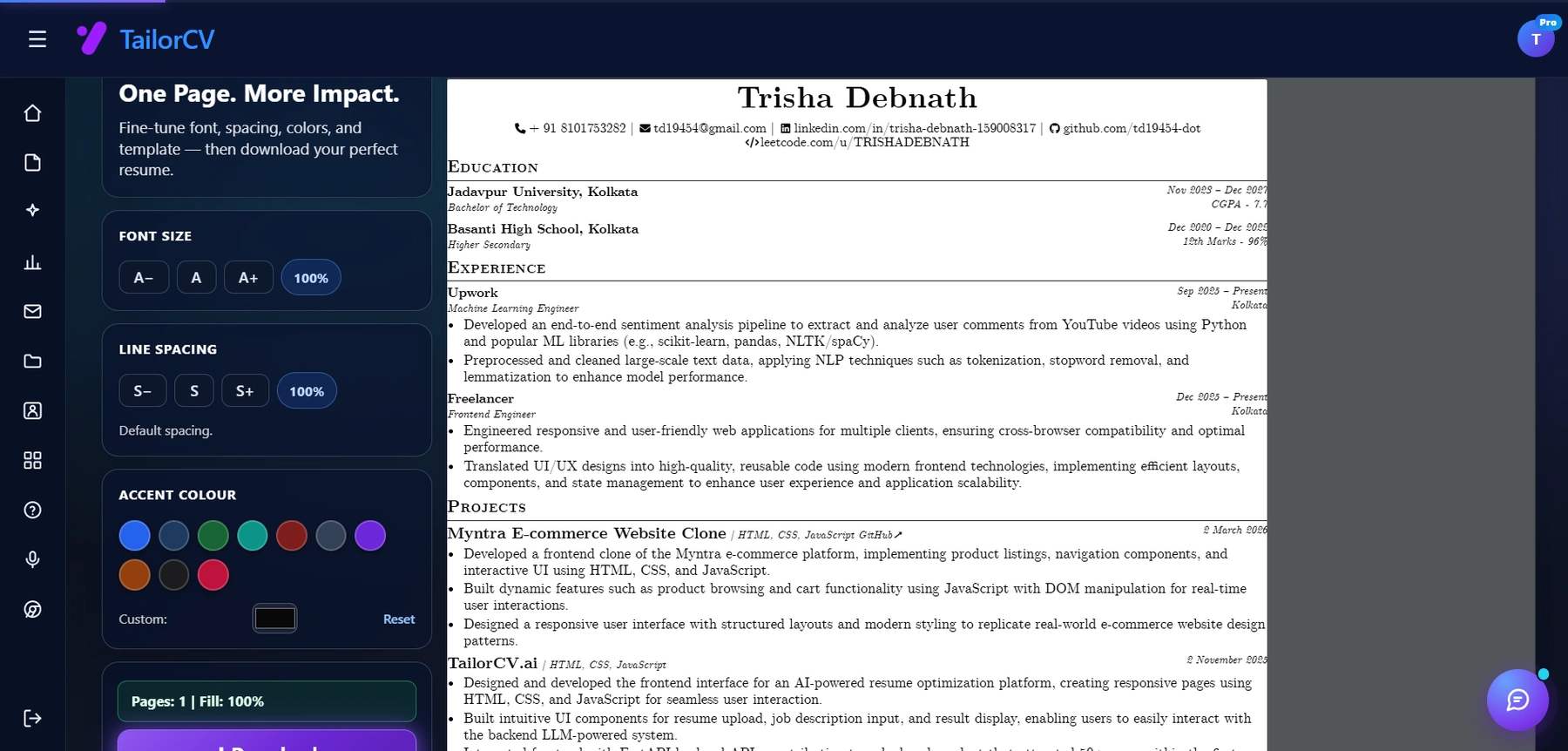
This is the resume after tailoring - the content is already matched, and these controls are how you fit it onto one page.
[Your Name] — References [same contact header as your resume]
Priya Sharma — Engineering Manager, Acme Corp (former direct manager) priya.sharma@email.com · (555) 123-4567 · Can speak to: backend architecture, on-call ownership, mentoring.
David Okoro — Senior Product Manager, Acme Corp (cross-functional partner) david.okoro@email.com · (555) 234-5678 · Can speak to: collaboration, delivery under deadline.
Lena Fischer — Founder, Freelance client (2023–2024) lena@studio.com · (555) 345-6789 · Can speak to: independent delivery, communication.
Three to four references in this format, each with a "can speak to" line steering them toward a relevant strength, is all you need — and having it ready means you never scramble at the offer stage.
Putting It All Together
Keep references off your resume and skip the "available on request" line entirely — both waste space that a strong achievement could fill. Instead, prepare a separate, well-formatted reference sheet of three to four people who can speak to specific results, ask each of them first, and brief them on the role before any call. Handled this way, your references become a closing asset at the offer stage rather than clutter at the top of the funnel.
What is your resume scoring right now?
Scan it against a job description and get your ATS match score in about a minute.
Drop your resume here or choose a file
PDF only. Max 2 MB.
We never share your data or use it to train AI models.

Templates that keep this structure intact
This template is ATS-tested — start from it and the formatting rules in this guide are already handled.
Was this guide useful?
Be the first to rate it.