SS
SS
Key Takeaways
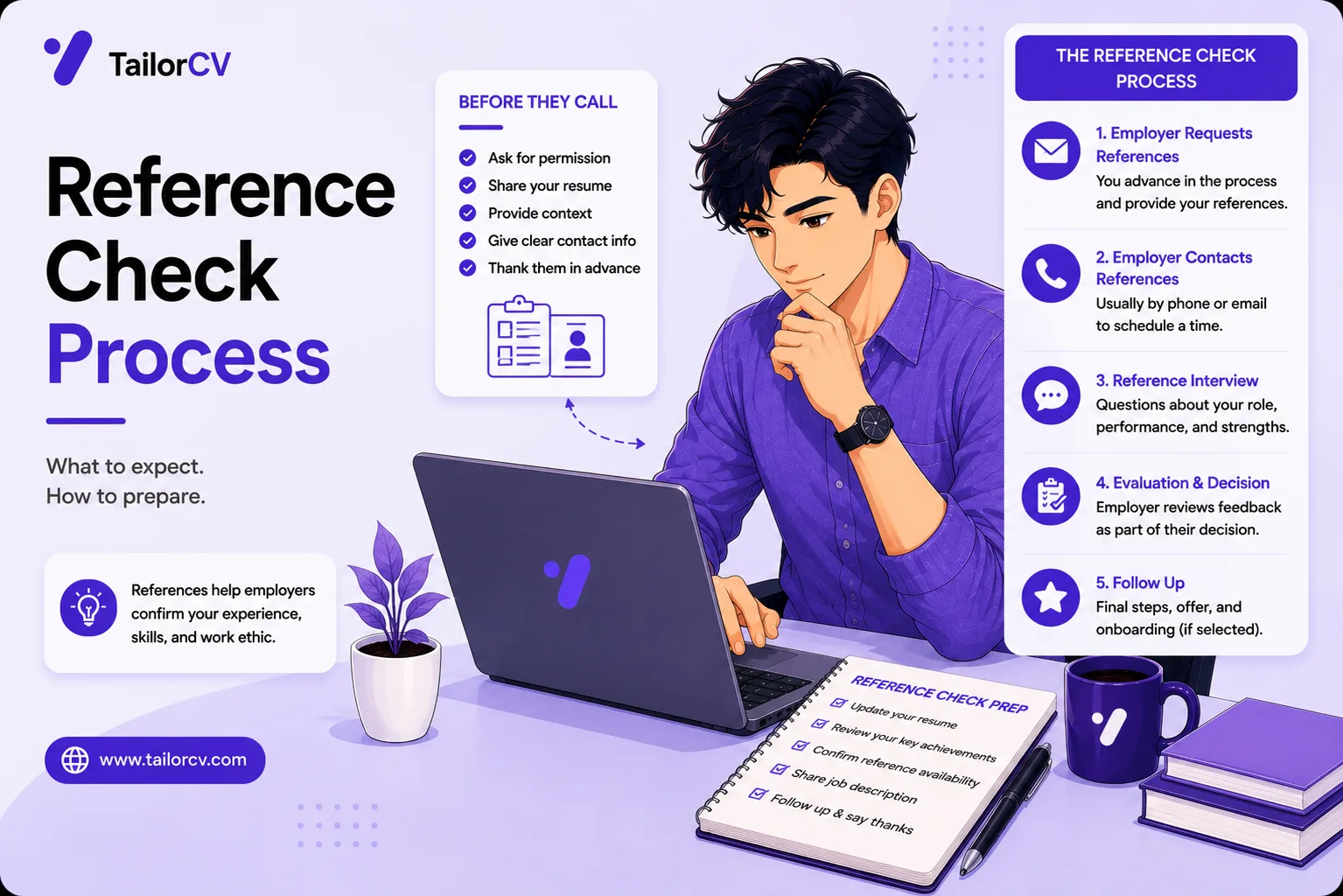
- Reference checks come after you have impressed in interviews, to confirm your experience and what you are like to work with.
- Pick people who know your work well and will speak specifically and positively.
- Never list someone without permission - ask directly whether they can give a strong reference.
- Once someone agrees, set them up to succeed by sending them the details they need.
- Only share references when asked, which is usually late in the process.
Reference checks are one of the last steps before an offer is finalized, and a lukewarm reference can quietly sink an otherwise strong candidacy. Most candidates treat references as an afterthought — they scramble to list three names at the last minute and hope for the best. A little preparation turns your references into a genuine asset that closes the deal. This guide explains how reference checks work, who to choose, and how to prepare them.
Reaching the reference stage means you're close, often alongside or just before a background check. Keep the momentum by staying organized and professional right through to the offer.
How reference checks work
After you've impressed in interviews, an employer contacts your references to confirm your experience and get a sense of what you're like to work with. They typically ask about your role and responsibilities, your strengths, how you handled challenges, and whether they'd rehire or recommend you. Some employers call; others send a short form. The tone is usually confirmatory — they want reasons to feel confident, not to dig for dirt — but a vague or unenthusiastic reference plants doubt at the worst possible moment.
What optimizing actually does to your resume
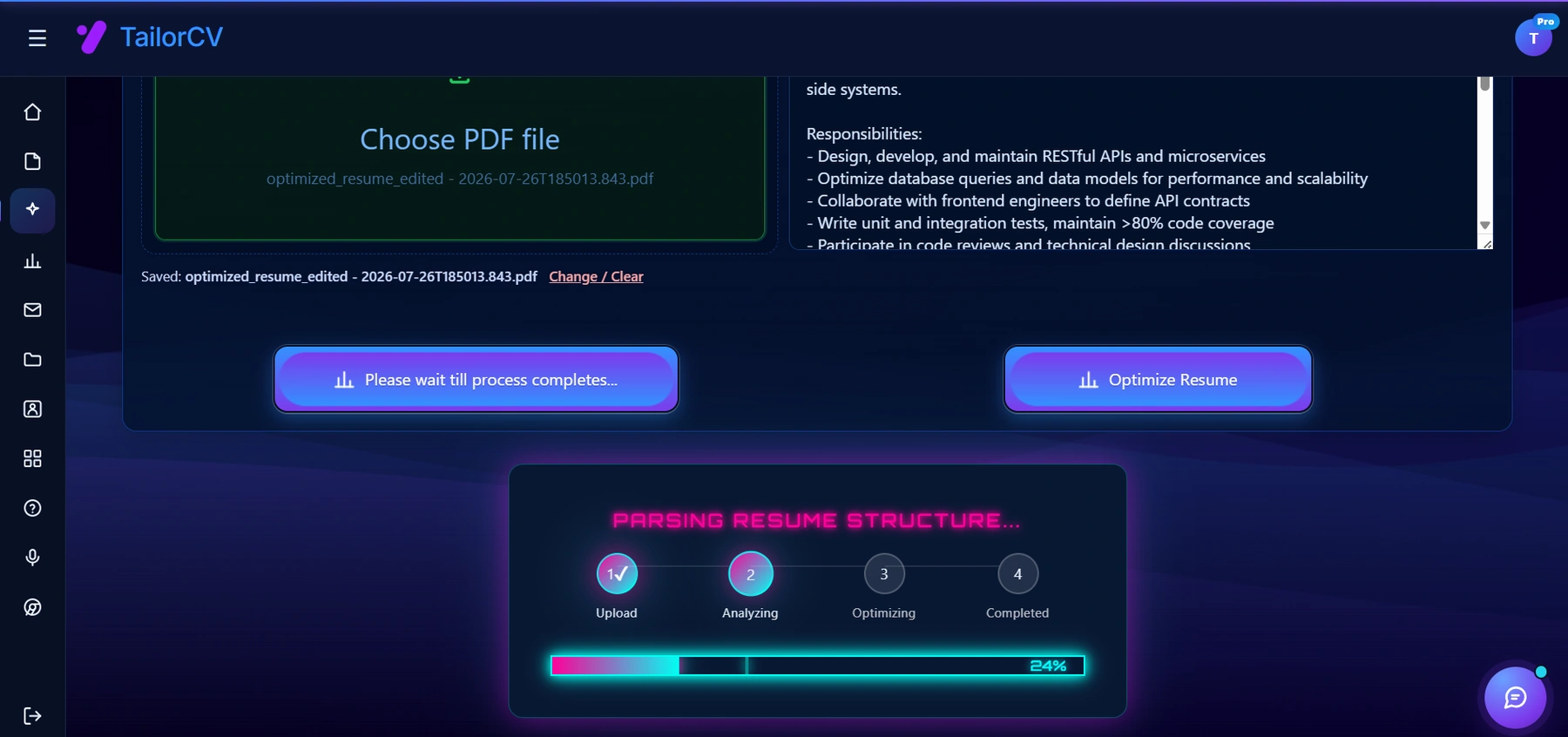
Optimising runs against the specific job description you paste in, not in the abstract.
Who to choose as references
Pick people who know your work well and will speak specifically and positively:
- Former managers — the strongest choice, because they speak directly to your performance.
- Colleagues or clients who saw your work firsthand and can vouch for how you operate.
- Mentors or professors for early-career candidates with limited work history — the same logic as the resume with no experience guide.
Avoid friends, family, and anyone who'll be vague or hard to reach. Aim for three references, with at least one direct supervisor if possible.
Always ask first
Never list someone as a reference without permission. Reach out ahead of time, confirm they're comfortable giving a strong reference (ask that directly — "Would you be able to give me a strong reference?"), and confirm their current contact details. A surprised reference gives a hesitant answer; a prepared one gives a compelling one. This courtesy also keeps the relationship warm for future opportunities, which ties into broader networking.
Prepare your references to help you
Once someone agrees, set them up to give the best possible reference. Send them:
- The role you're applying for and a link to the job description.
- A few strengths you'd love them to highlight, ideally aligned to the role's keywords.
- A copy of your current resume so their memory is fresh and their answers align with your story.
A prepared reference who knows what the employer is looking for gives a far more targeted, persuasive answer than one caught off guard. It's the same idea as quantifying achievements — make the value easy to see.
Timing and etiquette
Only share references when asked, which is usually late in the process — don't put "References available upon request" or list them on your resume, as covered in should you put references on your resume. When you do provide them, give the employer names, titles, relationships, and contact details in a clean format. Afterward, thank your references and let them know the outcome — they invested time in you, and keeping them updated maintains the relationship.
What if you can't use a current employer?
It's completely normal not to want your current employer contacted before you've resigned. Simply tell the hiring company that, and offer former managers, colleagues, or clients instead. Employers understand this constantly and won't hold it against you. If your references are thin because you're early-career or changing fields, lean on professors, mentors, and people from volunteer or project work — see volunteer work on a resume and the career change resume guide.
Reference check checklist
To make your references work for you:
- unchecked: Choose former managers and colleagues who'll speak specifically and positively.
- unchecked: Always ask first and confirm they'll give a strong reference.
- unchecked: Prep them with the role, your target strengths, and your resume.
- unchecked: Share references only when asked, then thank them and share the outcome.
Do this and your references become one more reason to hire you, not a wildcard. Keep the rest of your process just as sharp — a tailored resume, the ATS checker, and a prompt thank-you email after each interview.
What is your resume scoring right now?
Scan it against a job description and get your ATS match score in about a minute.
Drop your resume here or choose a file
PDF only. Max 2 MB.
We never share your data or use it to train AI models.

Was this guide useful?
Be the first to rate it.