 SS
SS
Key Takeaways
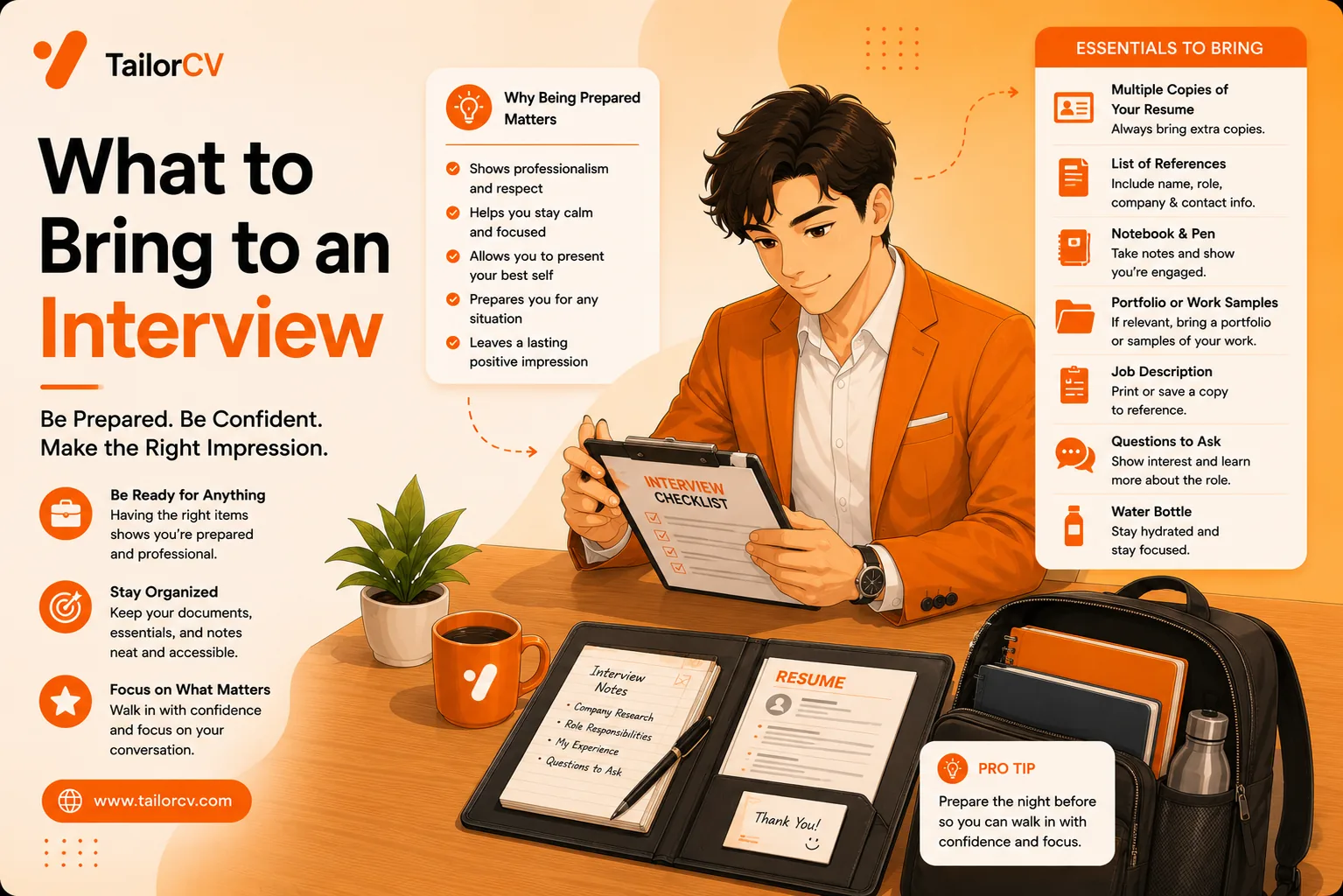
- For an on-site interview there is a short list of essentials worth arriving with.
- For a remote interview, "bringing" the right setup matters just as much as carrying the right items.
- What you leave at home or off-screen matters as much as what you bring.
- The physical items matter, but the real preparation is mental - research the company and build a STAR story bank.
- Arriving prepared is the best antidote to nerves, and planning your route removes one more variable.
Showing up prepared is half the battle in any interview. Bringing the right things signals organization and respect for the interviewer's time — and it spares you the quiet panic of realizing you forgot something important. This guide gives you a complete checklist for both in-person and virtual interviews, plus what to leave at home.
Preparation is more than packing a bag, of course. The best thing you bring is a well-rehearsed set of stories and a clear understanding of the role, so pair this checklist with a free AI mock interview and the interview prep tool.
What to bring to an in-person interview
For an on-site interview, arrive with:
See it in action: a resume-based mock interview
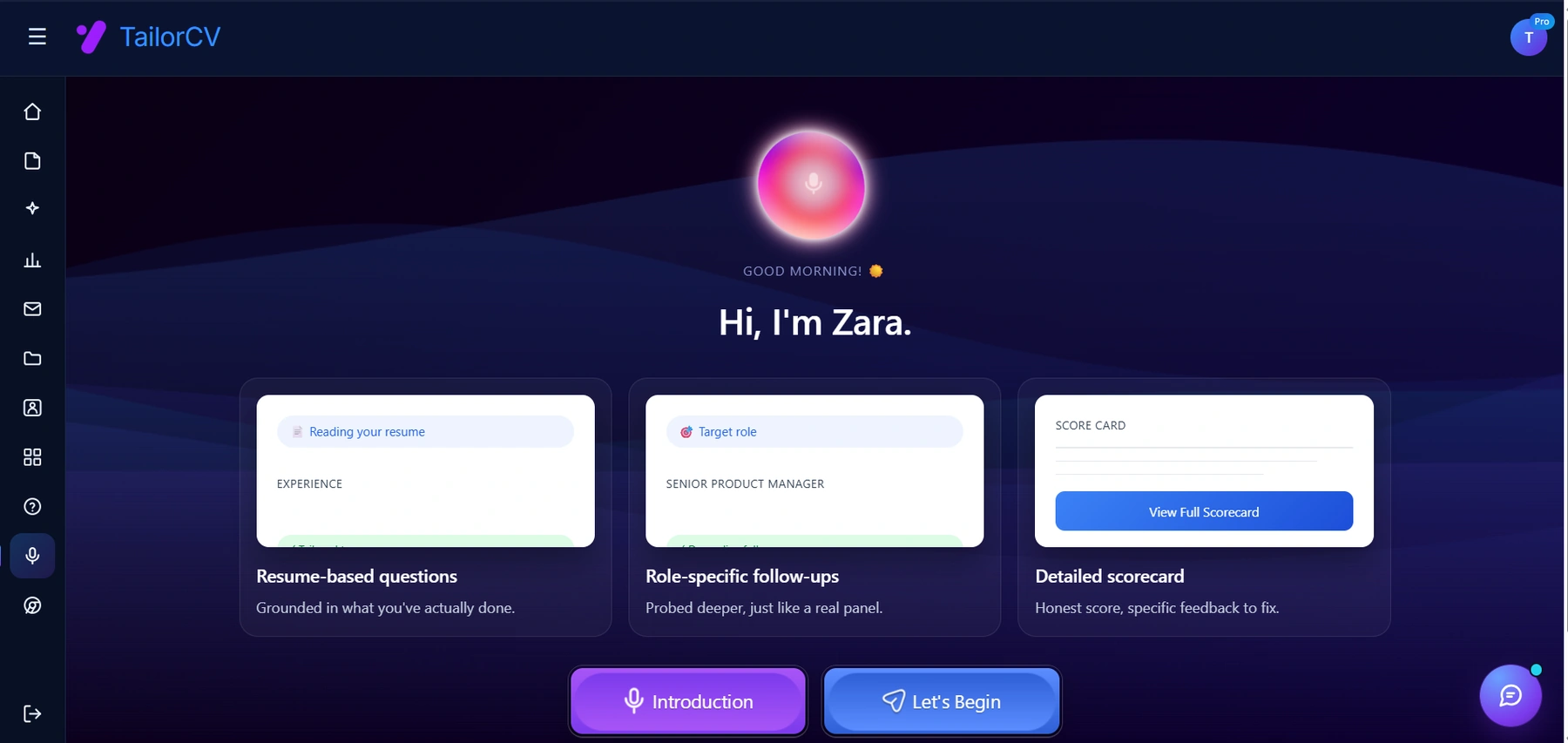
You can rehearse this before the real thing. The interviewer reads your resume first, so the questions come from your actual experience rather than a generic list.
- Several copies of your resume — one per interviewer, plus a spare. Print clean copies from your resume builder on quality paper. Even in a digital age, offering a copy is a professional touch.
- A notepad and pen for jotting notes and questions. Taking a few notes shows engagement.
- A list of questions to ask — thoughtful questions signal genuine interest, per questions to ask in an interview.
- A portfolio or work samples if relevant to the role — designers, writers, and developers should bring or be ready to show a portfolio.
- Directions, the address, a contact name, and a phone number so you arrive on time and can reach someone if plans change.
- ID if the building requires check-in.
Arriving 10–15 minutes early with these in hand sets a confident, organized tone from the first handshake.
What to bring to a virtual interview
For a remote interview, "bringing" the right setup matters just as much:
- A tested camera, microphone, and internet connection — check them beforehand, as covered in video interview tips.
- Your resume open on-screen or printed for quick reference.
- A quiet, tidy background with good lighting.
- The meeting link and a backup — the interviewer's phone number or email in case the tech fails.
- Notes and your question list just off-camera.
- A glass of water within reach.
Test everything 15 minutes early so a technical hiccup doesn't rattle you at the start.
What to leave at home (or off-screen)
Just as important as what to bring is what to skip:
- Silence your phone and put it away — a buzzing phone is distracting and reads as disrespectful.
- Skip food and strong-smelling drinks — water is fine.
- Don't bring anyone with you — arrive alone and professional.
- Leave heavy bags or clutter in the car or by the door.
Minimizing distractions keeps the focus where it belongs: on the conversation.
Bring your preparation, not just your bag
The physical items matter, but the real preparation is mental. Research the company so you can speak to why you want this role. Build a STAR story bank of examples you can adapt to any question, and rehearse common behavioral questions and classics like tell me about yourself and why do you want this job. Plan what to wear the night before so nothing is rushed.
Handle nerves and logistics
Arriving prepared is the best antidote to nerves, but a little anxiety is normal — the interview anxiety tips guide helps you channel it. Plan your route or your tech setup in advance so logistics never become a stressor. And know how you'll follow up afterward — a prompt thank-you email within 24 hours reinforces the strong impression you made.
Interview checklist
Bring, in short:
- unchecked: In person: resume copies, notepad, question list, portfolio if relevant, directions, and ID.
- unchecked: Virtual: tested tech, resume on-screen, backup contact, notes, and water.
- unchecked: Always: rehearsed stories, company research, and a plan to follow up.
Show up with these and you'll radiate the calm, prepared confidence that gets offers. Keep the rest of your process just as sharp: a tailored resume scored with the ATS checker and a strong cover letter.
Was this guide useful?
Be the first to rate it.