 TD
TD
Key Takeaways
- Job descriptions often rank qualifications, distinguishing between required non-negotiable filters and preferred wish-list items.
- Required qualifications are typically listed first, use definitive language, and are tied to legal or safety needs, while preferred qualifications use softer language and are secondary.
- ATS systems prioritize required qualifications heavily; missing them can lead to disqualification, while missing preferred qualifications rarely does.
- Applicants should consider applying if they lack one or two required skills but are strong in other areas, while missing most required qualifications suggests seeking other opportunities.
- To effectively tailor a resume, create separate lists for required and preferred qualifications from the job posting and audit your resume accordingly.
Every job description is a ranked list, even when it does not look like one. Some qualifications are non-negotiable filters. Others are wish-list items a hiring manager would love but will not reject a strong candidate over. Treating every line of a job posting with equal weight is one of the most common resume matching mistakes job seekers make.
Knowing the difference between required and preferred qualifications changes how you should match your resume, what you should prioritize, and whether a job is even worth applying to in the first place.
Paste any job description into the TailorCV resume optimizer to see exactly how your resume stacks up against the posting's true priorities.
How to Spot Required vs Preferred Qualifications
Most job postings signal the difference through structure and language, even without explicit labels.
Required Qualifications Usually Look Like:
- Listed under a heading like "Requirements," "Minimum Qualifications," or "What You'll Need"
- Phrased with definitive language: "must have," "required," "X years of experience required"
- Listed first, often before responsibilities
- Tied to legal, licensing, or safety-critical needs (certifications, degrees, work authorization)
Preferred Qualifications Usually Look Like:
- Listed under a heading like "Preferred," "Nice to Have," or "Bonus Points"
- Phrased with softer language: "preferred," "a plus," "ideally," "familiarity with"
- Listed after the required section, often shorter
- Tied to specific tools, secondary skills, or industry exposure rather than core competency
If a posting does not clearly separate the two, read it three times: once for overall role understanding, once to identify hard filters, and once to catalog the wish-list items. This mirrors the process in the resume matching guide.
Why This Distinction Matters for ATS Matching
Most ATS systems, and the recruiters who configure them, weight required keywords more heavily than preferred ones. A resume missing a single preferred qualification rarely gets filtered out. A resume missing multiple required qualifications almost always does.
This means your resume-matching effort should follow the same weighting:
| Priority | Where to Focus | Resume Impact |
|---|---|---|
| Required qualifications | Summary, top skills, first bullet under each role | High — often a hard filter |
| Preferred qualifications | Skills section, secondary bullets | Moderate — improves ranking, rarely disqualifying |
| Unlisted but implied skills | Context within bullets | Low — supports credibility, not scored directly |
Read ATS keywords to boost score for more on how keyword placement affects scoring.
Should You Apply If You Are Missing Required Qualifications?
It depends on how many, and which ones.
- Missing a hard credential (a specific license, degree, or years-of-experience minimum tied to legal or safety requirements): applying is usually a low-probability effort unless you can address the gap directly in your application.
- Missing one or two required skills, but strong elsewhere: applying is often worthwhile, especially if you can address the gap honestly in a cover letter.
- Missing most required qualifications: your time is better spent elsewhere.
Read matching your resume when overqualified and resume matching for underqualified candidates for guidance on both ends of the qualifications spectrum.
How to Prioritize Your Resume Around Required Qualifications
Step 1: Build Two Lists
Create a "required" list and a "preferred" list from the posting, following the job description keyword extraction guide.
Step 2: Audit Your Resume Against the Required List First
Check each required item against your resume. Every one you can honestly claim should appear clearly, ideally in your summary or top bullets, not buried at the bottom of a long list.
Step 3: Layer In Preferred Qualifications Where Genuine
Once required qualifications are represented clearly, add preferred qualifications you genuinely have into your skills section or supporting bullets. Do not force ones you lack.
Step 4: Check Your Match Score
Use the TailorCV ATS score checker to confirm your resume reflects the posting's required qualifications strongly, not just its overall keyword volume.
A Common Mistake: Over-Indexing on Preferred Qualifications
Some candidates chase every "nice to have" item in a posting while under-representing the required core skills. This backfires. A resume packed with preferred-tier keywords but thin on required ones can score lower than a shorter, sharper resume that nails the must-haves.
Review ats keyword mistakes to avoid diluting your resume with lower-priority terms at the expense of what actually gets you filtered in.
How TailorCV Helps You Prioritize the Right Qualifications
TailorCV's resume optimizer reads the job description, separates required from preferred qualifications automatically, and shows you exactly which required items are missing from your resume before you apply. This means you spend your editing time where it actually moves your match score, not chasing every keyword in the posting equally.
Practical Examples of Prioritizing Qualifications
When you're faced with a job description, it can be challenging to determine how to present your qualifications effectively. Here are a few scenarios to illustrate how you can prioritize your qualifications based on the required and preferred distinctions.
Scenario 1: Marketing Manager Position
- Required Qualifications: 5 years of experience in digital marketing, proficiency in Google Analytics.
- Preferred Qualifications: Familiarity with SEO best practices, experience managing a team.
Approach:
- Highlight your 5 years of digital marketing experience prominently at the top of your resume.
- Mention your proficiency in Google Analytics in the skills section.
- In your experience section, include specific projects where your SEO knowledge contributed to success, even if it’s not a requirement. This shows you can meet the preferred qualifications, enhancing your candidacy.
Scenario 2: Software Developer Role
- Required Qualifications: Proficiency in Python, experience with RESTful APIs.
- Preferred Qualifications: Knowledge of cloud services (AWS, Azure), experience in Agile methodology.
Approach:
- List Python proficiency first and provide examples of projects where you utilized RESTful APIs.
- If you have experience with cloud services, mention it in a separate section titled "Additional Skills," ensuring it stands out without overshadowing the required qualifications.
Step-by-Step Guide to Tailoring Your Resume
Tailoring your resume can significantly improve your chances of landing an interview. Here's a step-by-step guide to ensure you effectively prioritize required and preferred qualifications.
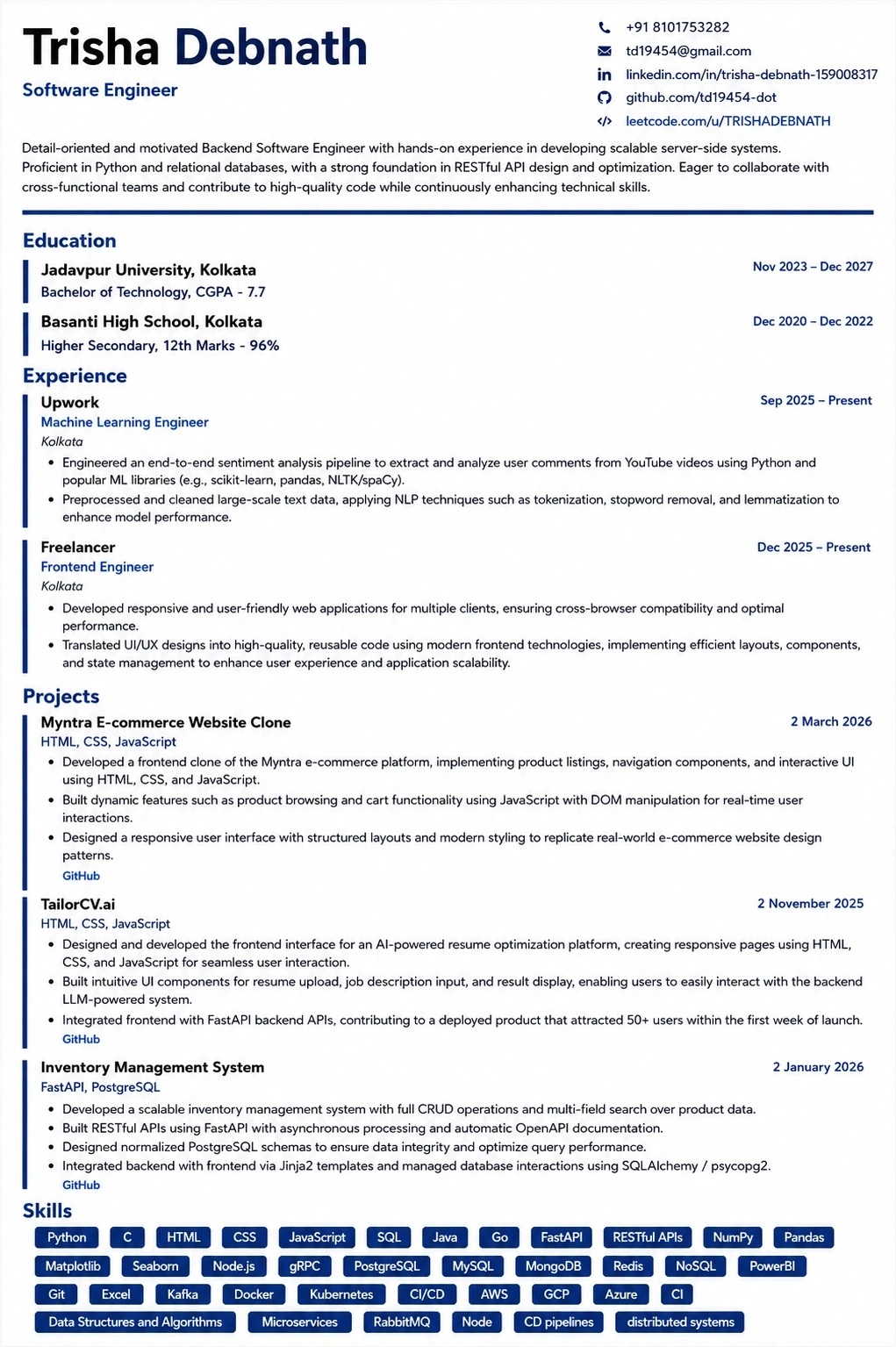
Your resume after optimization
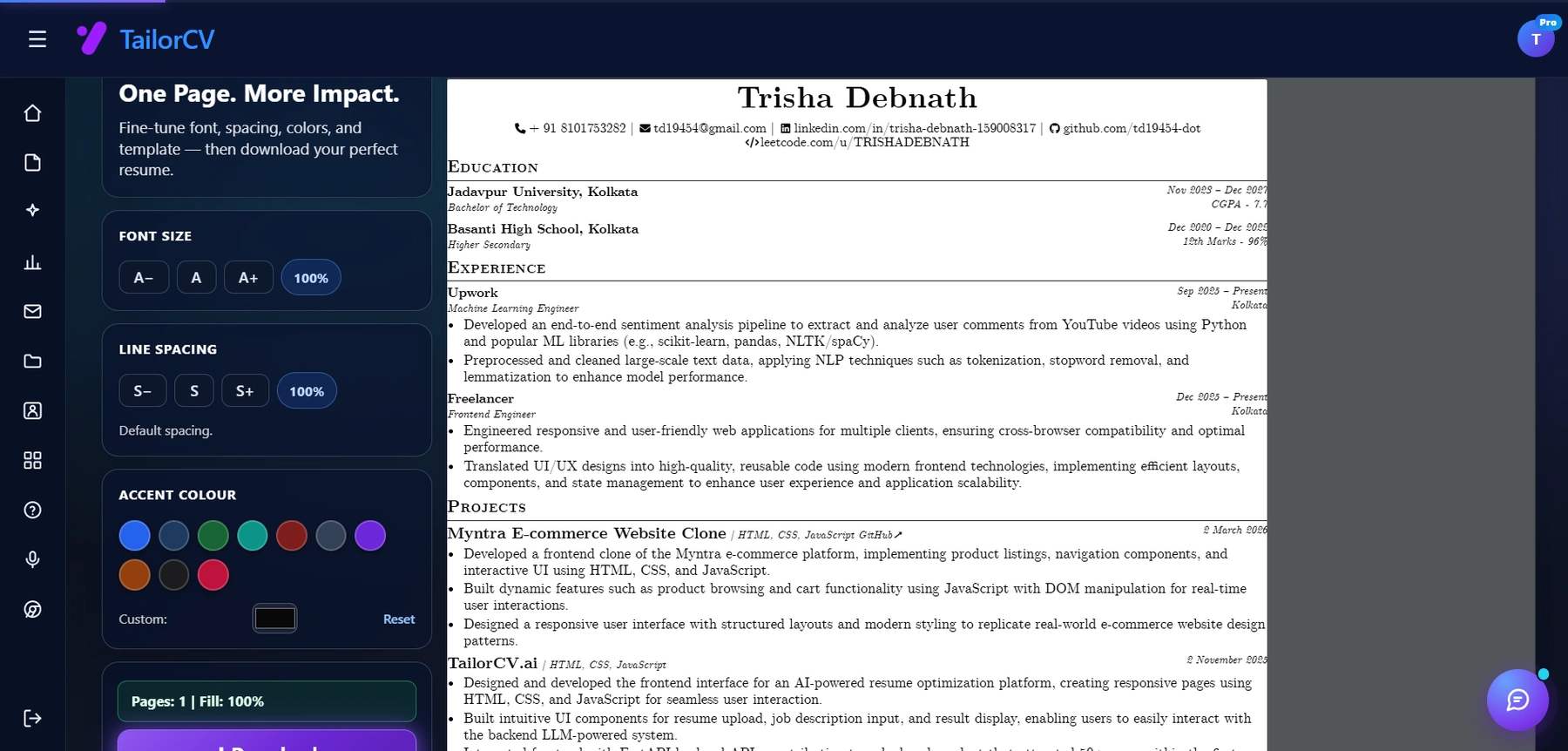
This is the resume after tailoring - the content is already matched, and these controls are how you fit it onto one page.
-
Analyze the Job Description: - Identify and list all required and preferred qualifications. Highlight keywords and phrases used.
-
Match Your Experience: - For each required qualification, find a corresponding experience or skill in your background. Use specific metrics when possible (e.g., "Increased sales by 20% through digital marketing strategies").
-
Showcase Preferred Qualifications: - If you meet any preferred qualifications, integrate them into your resume but do not let them overshadow the required ones. They should enhance your application, not distract from it.
-
Use Action-Oriented Language: - Start each bullet point in your experience section with action verbs (e.g., "Developed," "Led," "Executed") to convey your contributions effectively.
-
Tailor for ATS: - Use tools like ATS checker to analyze how well your resume matches the job description. Make adjustments based on the feedback.
Common Mistakes to Avoid
When prioritizing qualifications, candidates often make several missteps that can hurt their chances. Here are some common mistakes to watch out for:
- Ignoring the Required Qualifications:
-
Focusing too much on preferred qualifications can lead to neglecting the critical required ones. Always address the requirements first.
-
Overloading with Irrelevant Experience:
-
Including too much information that doesn’t align with the job can dilute your main qualifications. Stick to relevant experiences that highlight your suitability for the role.
-
Using Generic Language:
-
Avoid vague statements like “good team player.” Instead, provide concrete examples that demonstrate how you’ve successfully collaborated with others.
-
Failing to Update for Each Application:
- Reusing the same resume for different applications can lead to missed opportunities. Always customize your resume for each job, focusing on the specific qualifications requested.
Do's and Don'ts for Resume Prioritization
Here’s a quick reference to ensure you’re on the right track when prioritizing required vs. preferred qualifications:
Do's:
- Do read the job description thoroughly.
- Do highlight metrics and specific achievements.
- Do use keywords from the job description.
- Do keep your resume concise and relevant.
Don'ts:
- Don't exaggerate or fabricate qualifications.
- Don't include outdated skills or experiences.
- Don't forget to proofread for grammar and spelling errors.
- Don't submit a one-size-fits-all resume.
Mini Checklist for Job Applications
Use this checklist to ensure you’ve covered all bases before submitting your application:
- unchecked: Have I identified all required qualifications in the job description?
- unchecked: Have I matched my relevant experiences to those required qualifications?
- unchecked: Have I highlighted any preferred qualifications I possess?
- unchecked: Is my resume tailored to include keywords from the job description?
- unchecked: Have I checked my resume with an ATS checker?
- unchecked: Have I proofread my resume for clarity and errors?
By following these practical examples, step-by-step guides, and checklists, you can enhance your application strategy and improve your chances of landing that coveted job interview.
Frequently Asked Questions
How can I tell if a qualification is truly required if the posting doesn't label it?
Look for definitive language ("must have," "required," specific years of experience) and placement early in the posting. Softer language ("preferred," "a plus") and later placement usually signal a nice-to-have.
Should I apply if I'm missing one required qualification?
Often yes, especially if your other qualifications are strong and you can address the gap honestly in your cover letter or application. Missing several required qualifications is a different story.
Do preferred qualifications ever matter as much as required ones?
Occasionally, when a role has few applicants or when a preferred qualification is genuinely rare and valuable. But by default, required qualifications carry more weight in both ATS scoring and human review.
Should my resume list preferred qualifications I don't actually have?
No. Never claim qualifications you do not have. Focus on genuinely representing what you do have clearly and prominently.
How do I check whether my resume properly prioritizes required qualifications?
Use the TailorCV ATS score checker to see a breakdown of how well your resume covers the posting's required versus preferred qualifications. You can also refer to our Resume Matching with Job Description - Complete Guide for 2026 for more insights on aligning your resume with job postings.
Related Guides
- Resume Matching with Job Description - Complete Guide
- Job Description Keyword Extraction Guide
- Job Description Analysis Checklist
- Matching Your Resume to Certification Requirements You Don't Have Yet
- Common Resume and Job Description Mismatch Mistakes
- ATS Keywords to Boost Score
- Overqualified Resume Match Job Description
- Resume Tailoring for Underqualified Candidates
- ATS Score Guide 2026
- Cover Letter Guide 2026
Conclusion
Not every line in a job description carries the same weight. Learn to separate required qualifications from preferred ones, prioritize your resume around the required list first, and layer preferred qualifications in only where they are genuine.
Check how well your resume covers a posting's required and preferred qualifications with TailorCV before you apply.
Match My Resume to This Job - Free
What is your resume scoring right now?
Scan it against a job description and get your ATS match score in about a minute.
Drop your resume here or choose a file
PDF only. Max 2 MB.
We never share your data or use it to train AI models.

Templates that keep this structure intact
This template is ATS-tested — start from it and the formatting rules in this guide are already handled.
Was this guide useful?
Be the first to rate it.