 TD
TD
Key Takeaways
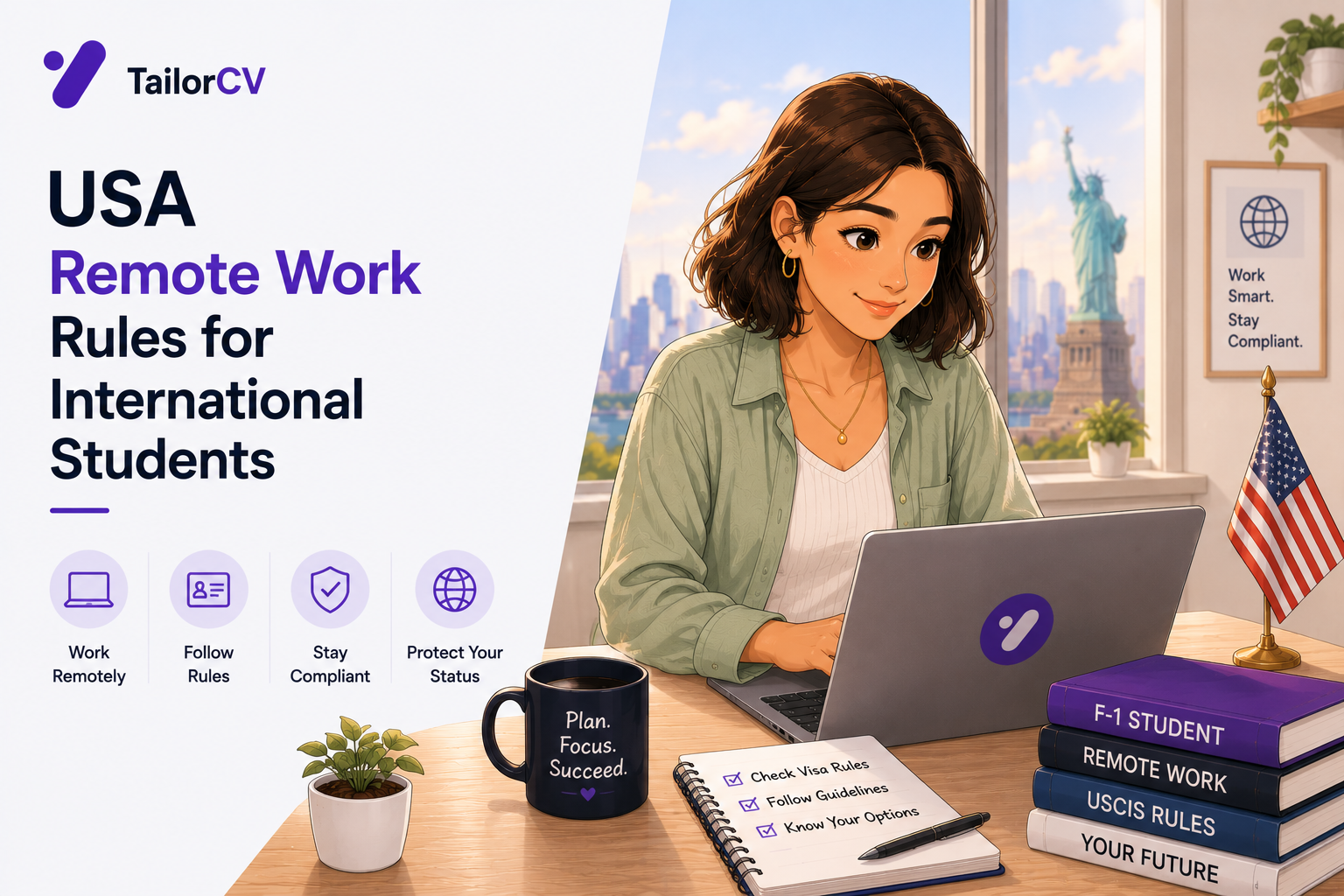
- Work authorization attaches to you and your status, not to whether the work happens in an office or at a laptop.
- Remote work for a US employer while physically inside the US generally requires the same authorization as in-person work would.
- Working remotely from outside the US is a genuinely different question with different answers, and it depends heavily on the employer and the arrangement.
- Reporting obligations still apply to remote roles — employer name, address and job details must be kept current.
- Verify anything decision-critical with your international student office rather than reasoning from general principles.
The principle that governs everything
Authorization is about you, not about the desk you happen to be sitting at. Whether you may work depends on your immigration status and the specific permission attached to it. It does not depend on whether the work is performed in an office, at home, or in a library.
This sounds obvious and it is routinely misunderstood, usually in the direction of assuming remote work is somehow informal or outside the system. It is not. A remote role for a US employer, performed while you are in the US, is employment in every sense that matters, and it requires exactly the same authorization an in-person role would.
The corollary catches people out too. Unpaid remote work, freelance projects, contract work, and "just helping out" a company are all still work. The absence of a formal office, and sometimes the absence of payment, does not remove the requirement.
Remote work inside the US
On curricular training during your studies. The training must be an integral part of your curriculum and authorized by your school. A remote placement can satisfy this — the location is not the issue — but the authorization must be in place before you begin, exactly as it would for an in-person role. The mechanics of curricular and post-graduation training apply identically.
On post-graduation training. The role must relate to your field of study, and that requirement does not change because the work is remote. Reporting requirements also continue: your employer's name and address, your job title and the start date all need to be kept current with your school regardless of where you physically work.
On the STEM extension. The additional requirements — the employer being enrolled in the federal verification system, and a signed training plan — apply to remote roles just as they do to in-person ones, with no reduced standard for a distributed team. A fully remote employer is not exempt, which is why the employer eligibility questions matter as much for a remote job as any other.
A practical wrinkle worth knowing. Some reporting fields expect a physical employer address. For a distributed company with no office near you, ask your international office how they want this recorded rather than improvising, because inconsistency in these records is exactly what creates problems later.
Working remotely from outside the US
A genuinely different question, and one where general advice is least reliable.
Your US authorization is not the constraint when you are not in the US. If you are physically in another country, US work authorization is not what governs the arrangement.
What governs it instead is the law of the country you are physically in, your immigration status there, and the employer's ability to employ someone in that jurisdiction. Many US employers are simply unable to employ someone sitting in another country without a legal entity there — which is where Employer of Record (EOR) services come in. Companies like Deel, Remote.com, and Papaya Global act as the legal employer in a given country on behalf of a US company, handling local payroll, tax withholding, and compliance so the US company doesn't need its own local entity. If a US employer says they "can't" employ you from your home country, asking specifically whether they use an EOR provider, or would consider one, is a concrete, actionable question — some companies simply haven't considered the option rather than having ruled it out deliberately.
Tax follows physical presence more than employment. Working from another country can create tax obligations in that country, and potentially complicate your US position — the relevant US concept is the "substantial presence test," which determines whether the IRS treats you as a tax resident based on the number of days you're physically in the country, and extended time abroad can shift where you land on it. Whether a US-China, US-India, or other bilateral tax treaty applies to your specific situation can also change the answer meaningfully. This is genuinely complex and worth proper advice from a tax professional familiar with international student situations rather than assumption.
It can affect your US status. Extended time outside the US during a training period, or working abroad while holding US authorization, can have implications for how that authorization is treated, including how it interacts with reporting requirements tied to your school and your program. This is precisely the kind of question to take to your international office in advance, not to resolve afterwards once a problem has already developed.
Employers frequently say no for their own reasons, unrelated to your status — payroll, tax, data and legal exposure. A refusal is often about their constraints rather than yours, and often reflects a company simply not having set up (or considered) an Employer of Record arrangement, rather than a considered decision that your specific situation doesn't work.
Questions worth asking before accepting
"Is this role fully remote, hybrid, or remote-with-travel?" Determines what you are actually agreeing to.
"Where is the company legally established, and where would I be on payroll?" Central to whether an arrangement works at all, and often the question that surfaces whether an Employer of Record would even be necessary.
"Is the company enrolled in E-Verify?" Relevant if you are relying on the STEM extension, and it applies to remote roles.
"Would you use an Employer of Record if I needed to work from outside the US temporarily?" A specific, answerable question rather than a vague "would remote from abroad be okay" — naming the EOR option (Deel, Remote.com, and Papaya Global are the best-known providers) signals you understand the actual mechanism a company would need, and gives them something concrete to check with their own HR or legal team rather than defaulting to a reflexive no.
"Has the company employed international students on training authorization before?" A yes means a process exists; a no means you may be explaining the requirements yourself.
"What address would be recorded as the worksite?" Practical, and it prevents a reporting problem later.
"Would the company support remote work from outside the US, even temporarily?" Ask before assuming, because many cannot, and discovering this after accepting is a real problem.
Tip: Confirm authorisation before your first day of remote work, exactly as you would for an office role. Remote does not make the work informal, and starting early is the most serious avoidable error here.
Common Mistakes
- Assuming remote means unregulated. Authorization requirements are identical regardless of where the work happens.
- Treating unpaid work as not-work. Treating unpaid or freelance remote work as not-work. It is work, and it requires authorization.
- Starting before authorization is in place. Starting before authorization is in place the most serious error, and it is not made less serious by the role being remote.
- Neglecting reporting obligations. Employer details must stay current for a remote role exactly as for an in-person one.
- Assuming you can simply work from abroad. It depends on the employer's legal ability, local law, and your own status.
- Reasoning from a forum post. The rules are specific and the consequences of getting them wrong are disproportionate.
Related Guides
Keep building on this with the related guides in this series:
- Teaching Jobs in the US for International Graduates
- 401(k) and Benefits Explained for New Graduates
- US Background Checks - What Employers Actually See
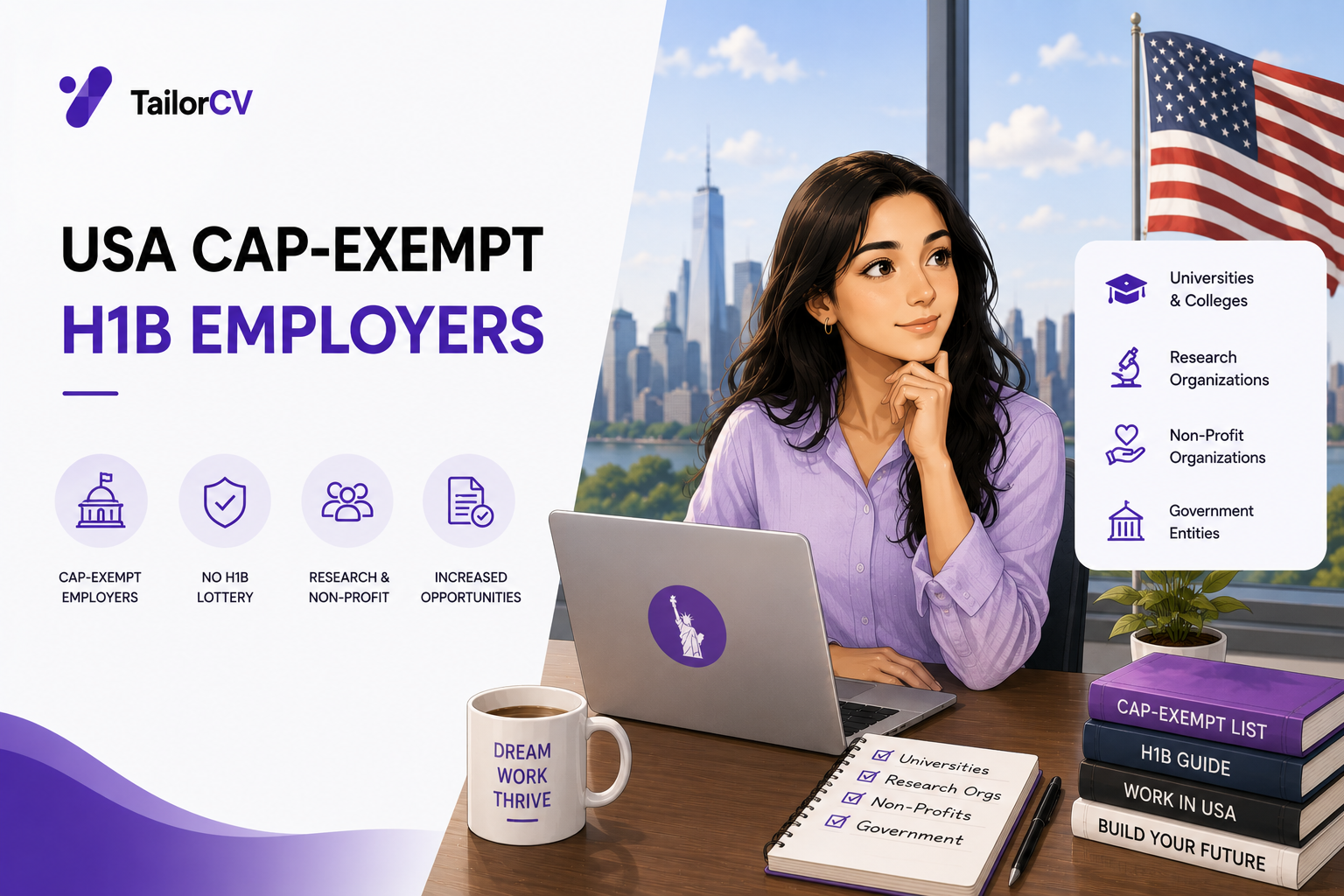
- Cap-Exempt H-1B Employers - The Route Around the Lottery
- Community College Transfer Students - Building a Career Strategy That Works
- US Data Science New Grad Hiring - The Roles, the Loop and the Preparation
- Conferences and Professional Events for US Students
You can also check your resume's ATS score for free, generate a tailored cover letter, or build a portfolio website in minutes.
Frequently Asked Questions
Can I do a remote internship on curricular training?
Generally yes, where the placement genuinely relates to your curriculum and is authorized by your school before you begin. The remote format is not the obstacle; the authorization is still required.
Does remote work count toward the requirement that the job relates to my field?
Yes, and the requirement is unchanged. The relationship between the role and your field of study is what matters, not the location.
Can I work remotely for a US company from my home country over the summer?
Sometimes, and it depends on the employer's legal ability to employ someone there — directly, or through an Employer of Record service like Deel or Remote.com — the law of that country, and the implications for your US status and the "substantial presence test" that governs your US tax residency. This is a question for your international office and, where money is involved, potentially a tax advisor.
What do I put as the employer address if the company has no office?
Ask your international office how they want it recorded. There are established conventions and improvising creates inconsistency in your record.
Does a fully remote employer still need to be enrolled in E-Verify for the STEM extension?
Yes. The requirement attaches to the employer, not to the format of the work.
Is a remote job worse for my longer-term prospects?
Not inherently, and it is worth asking how the employer handles sponsorship and progression for remote employees, since some companies are structurally better set up for it than others.
Find out where a fresher resume stands
Score yours against a real posting - no account, no cost.
Drop your resume here or choose a file
PDF only. Max 2 MB.
We never share your data or use it to train AI models.

Was this guide useful?
Be the first to rate it.