 SS
SS
Key Takeaways
- Core branch students face two distinct routes - core companies and IT companies - and they require different resumes and different preparation.
- Trying to look equally suited to both usually produces a resume that convinces neither.
- For core roles, named software, standards, and lab or workshop experience carry the weight that programming languages carry in a CSE resume.
- For IT roles, you compete directly with CSE students on the same coding rounds, so branch is not an excuse the process makes allowance for.
- Explaining why you are moving to IT is a required part of the application, and a vague answer costs offers.
Core branch students get less useful placement advice than CSE students, because most of what circulates assumes a software career. Meanwhile the practical situation is genuinely different: fewer companies visit for your branch specifically, and a large number of the ones that do visit are IT companies hiring from all branches.
That creates a fork, and the students who do well are the ones who choose deliberately rather than drifting. A resume aimed at both simultaneously reads as unfocused to core recruiters and underprepared to IT recruiters.
This guide covers how to write for each route, and how to decide.
Whichever route you take, the document has to parse - run it through the free ATS score checker.
First: Choose Your Primary Route
Be honest with yourself by semester 6, because the preparation diverges.
Core route
You want to work in your discipline - design, manufacturing, construction, power systems, process engineering.
Realities: fewer companies visit campus for core roles, and the ones that do may recruit smaller numbers. Compensation at entry level is often below IT. The work is in your field, progression is domain-based, and the competition per role is frequently lower.
IT route
You want a software, data, or IT services role despite your branch.
Realities: far more companies, more openings, generally higher entry compensation. But you compete directly with CSE students on identical coding and technical rounds, and the process makes no allowance for your branch.
Which to choose
Core, if: you have genuine interest in the discipline, you have done core internships or projects, and you are prepared for a narrower search.
IT, if: you have genuinely built programming ability, you can compete on DSA, and you can explain the switch convincingly.
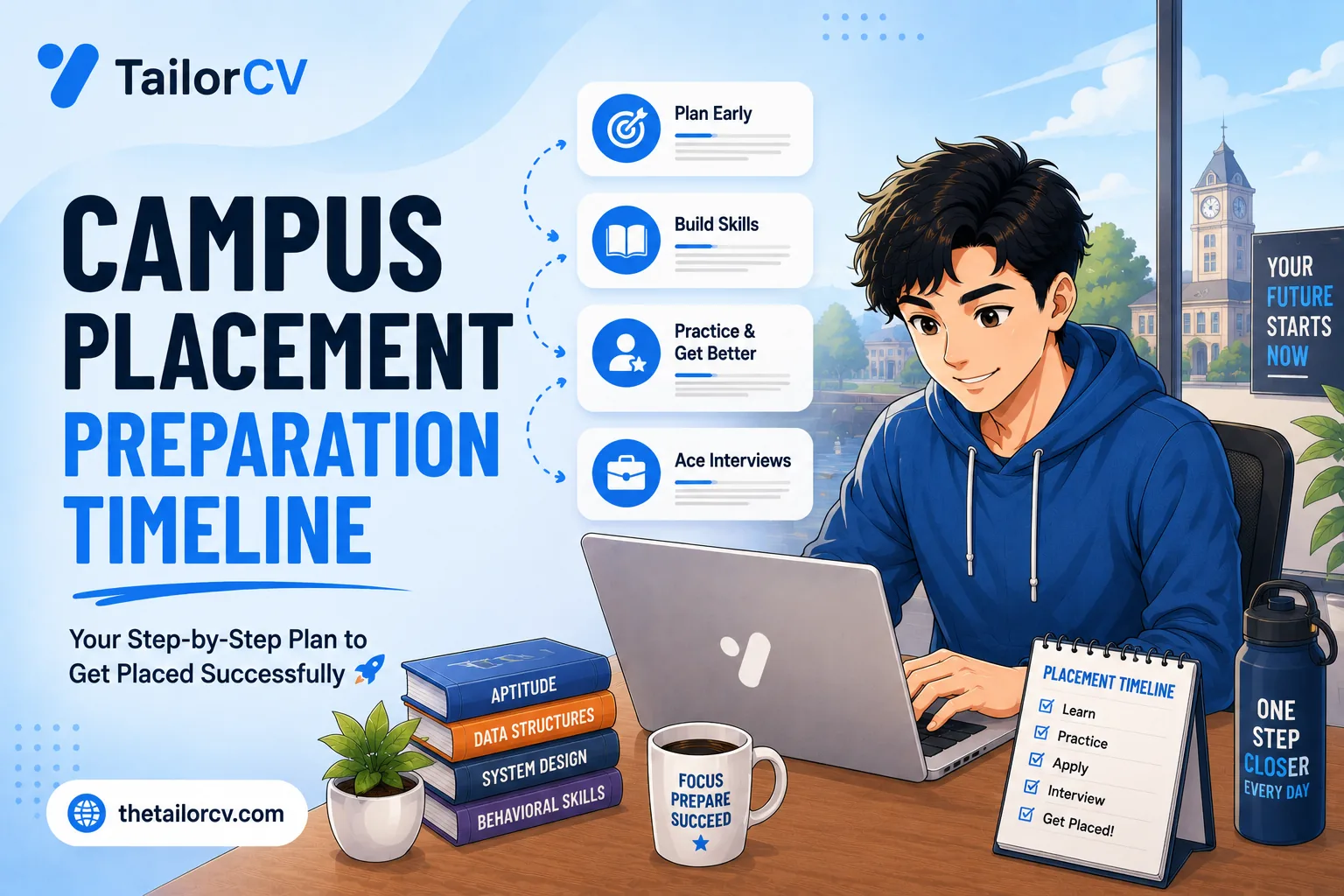
The failure mode: treating IT as a fallback without preparing for it. Students who spend three years on core subjects, then apply to IT companies in semester 7 with no programming depth, generally clear neither route. The sequencing that avoids this is in the campus placement preparation timeline.
Writing a Core Branch Resume
The structure resembles any fresher resume, but the content that carries weight is different.
Technical skills: name the software
This is the core equivalent of a programming languages section, and students consistently under-populate it.
Mechanical: AutoCAD, SolidWorks, CATIA, ANSYS, Creo, Fusion 360, MATLAB, GD&T Civil: AutoCAD, STAAD Pro, ETABS, Revit, Primavera, MS Project, QGIS Electrical: MATLAB/Simulink, PSpice, ETAP, PLC and SCADA, AutoCAD Electrical Electronics: Verilog, VHDL, Cadence, Xilinx, embedded C, Arduino, ARM Chemical: Aspen Plus, HYSYS, MATLAB, process simulation
Name specific versions or modules where relevant. Recruiters search these terms exactly, so "design software" is worthless where "SolidWorks" is searchable.
Standards, codes, and certifications
A significant differentiator that most students omit entirely. IS codes, ASME, ASTM, ISO standards you have actually worked with. Safety certifications. Six Sigma, if genuine. NDT certifications. These are concrete, verifiable, and rare on fresher resumes.
Projects with engineering substance
Core projects are frequently described in a way that hides the engineering:
Weak:
Design of a Gearbox - Designed a gearbox using SolidWorks.
Strong:
Two-Stage Reduction Gearbox - SolidWorks, ANSYS Designed a 15:1 reduction gearbox for a college go-kart, running FEA to verify shaft deflection under peak torque. Reduced housing weight 22% by switching to a ribbed aluminium design after the initial steel version exceeded the chassis mounting limit.
The second version shows analysis, a constraint, and a decision - which is exactly what a core interviewer probes. The technique is in how to write resume bullet points.
Workshop, lab, and site experience
Hands-on exposure is genuinely valued in core hiring and rarely highlighted. Machine shop work, site visits, plant training, lab testing, industrial visits. Name what you actually operated or observed.
Internships and industrial training
Often mandatory in core programmes and treated as a formality by students. Write it properly - what the plant made, what you observed, what you contributed, and what you learned about how the process actually works.
The general errors to avoid are in campus placement resume mistakes.
Writing a Resume for IT Roles From a Core Branch
Here the challenge is different: convincing a recruiter that your programming ability is real and your interest is genuine.
Lead with programming evidence
Your branch is on the resume already. What is not obvious is that you can code, so make that impossible to miss.
Put your technical skills and projects above your coursework. If your strongest evidence is a deployed application, it belongs in the top third of page one - not after a list of mechanical engineering subjects.
Explain the switch in one line
Recruiters will wonder, and an unexplained switch reads as a fallback plan. One sentence in your summary handles it:
Mechanical engineering student who moved into software after automating our lab's data collection in second year; since then I have built three full-stack projects and interned as a backend developer.
That is honest, specific, and it converts the obvious question into a strength - you chose this rather than defaulted to it.
Prove it with the same evidence CSE students use
You are assessed identically, so you need the same assets:
- Deployed projects with live links - see choosing a final year project for placements
- A real GitHub profile with commit history and READMEs - see how to optimise your GitHub profile
- DSA preparation at the same level, since coding rounds do not differ by branch - see the campus placement coding round guide
- CS fundamentals - OOP, DBMS, operating systems - which you have not covered in coursework and must learn separately. See campus placement technical interview questions.
That last point is the most common gap. CSE students have three years of DBMS and OS coursework. You do not, and interviewers ask the same questions regardless.
Use your branch as a differentiator where you can
A mechanical student targeting IoT or manufacturing analytics, a civil student targeting construction technology, an electrical student targeting embedded systems - these combinations are genuinely valuable and rare. Domain plus software is a stronger position than software alone, and it turns your branch from a question into an asset.
Which Companies to Target
Core companies visiting campus. Fewer in number, so know exactly which ones come and what they require. Ask your placement cell for last year's list early.
IT service companies. Most hire across all branches and are the largest source of offers for core students. They weight aptitude and communication heavily, which is a route that does not require competing with CSE students on algorithmic depth - see service-based vs product-based companies and the campus placement aptitude test guide.
Analytics and consulting. Frequently branch-agnostic and heavy on aptitude and case reasoning.
Public sector and core PSUs. Separate examination processes with their own timelines - worth knowing about early if core is your route.
Off-campus core roles. Many core employers never visit campuses, so off-campus applications matter more for core students than for CSE students - see campus placement vs off-campus.
Common Mistakes
Not choosing a route. A resume aimed at both convinces neither.
Omitting the software list on a core resume. It is the searchable, screenable content.
Describing core projects without the engineering. Analysis, constraints, and decisions are what get discussed.
Treating industrial training as a formality. Written properly it is real experience.
Applying to IT roles without DSA preparation. Coding rounds do not adjust for branch.
Not learning CS fundamentals. OOP, DBMS, and OS are asked regardless of what your syllabus covered.
Leaving the switch unexplained. It reads as a fallback rather than a choice.
Hiding your branch. You cannot, and the combination is often your advantage.
Ignoring off-campus for core roles. Many core employers never visit any campus.
Frequently Asked Questions
Can non-CSE students get software jobs?
Yes, and many do - IT service companies in particular hire heavily across all branches. The requirement is real programming ability, since coding and technical rounds are identical regardless of branch.
Should I put my core projects on an IT-focused resume?
Include one if it involved programming, automation, or analysis. Otherwise keep core projects brief and give the space to software work, since that is what the role is being assessed on.
Is it worth targeting core companies at all?
If you have genuine interest and relevant projects or internships, yes - competition per role is often lower than in IT, and domain expertise compounds over a career. The trade-off is fewer campus opportunities and generally lower entry compensation.
How do I explain why I am switching to IT?
One honest sentence naming what triggered the interest and what you have built since. A specific origin story reads far better than "I am passionate about technology".
Do I need to learn DBMS and operating systems?
Yes, if you are targeting IT roles. These are standard interview topics and CSE students have covered them in coursework while you have not, so they need separate study.
Which software should I learn for my branch?
Whatever your target companies actually use - check job descriptions from last year's campus drives, which your placement cell usually retains. Depth in the two or three that recur matters more than familiarity with eight.
Is my branch a disadvantage for IT placements?
For eligibility, sometimes - some roles are restricted to CSE and IT. For assessment, no: you are judged on the same rounds. The combination of domain knowledge and software ability is frequently an advantage rather than a handicap.
Whichever route you choose, the resume has to clear screening. Check your ATS score free.
Make This Practical
Decide your primary route by semester 6 and let it govern your preparation, because core and IT reward different things and a divided effort clears neither. Write down which one you are targeting and what evidence you need for it.
If core is your route, populate the software list with exact names, add any standards and codes you have worked with, and rewrite each project to show the analysis, the constraint, and the decision rather than just what you designed. Write up your industrial training properly instead of listing it.
If IT is your route, build the same assets CSE students have - a deployed project with a live link, a real GitHub profile, DSA at the same level, and CS fundamentals your syllabus never covered - then add one honest sentence explaining what triggered the switch. Either way, avoid the errors in campus placement resume mistakes and confirm the file parses with the free ATS score checker.
What is your resume scoring right now?
Scan it against a job description and get your ATS match score in about a minute.
Drop your resume here or choose a file
PDF only. Max 2 MB.
We never share your data or use it to train AI models.

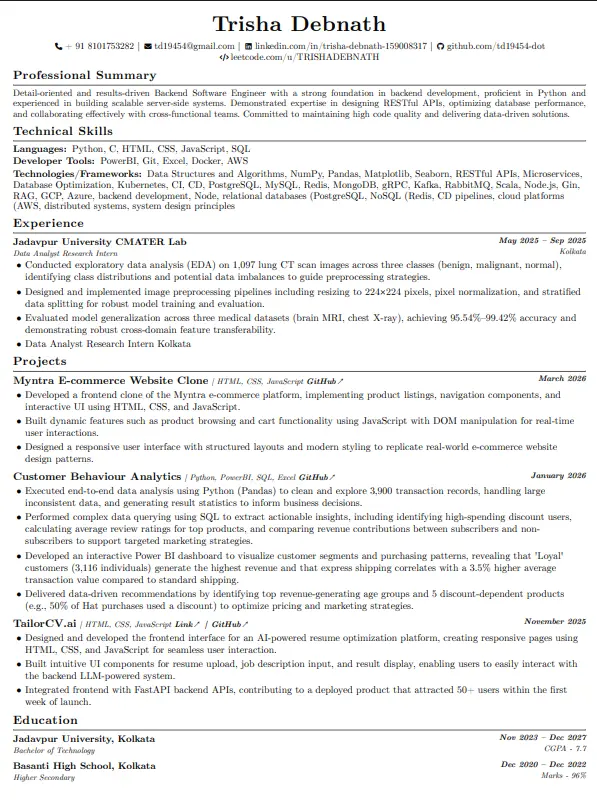
Templates that keep this structure intact
This template is ATS-tested — start from it and the formatting rules in this guide are already handled.
Was this guide useful?
Be the first to rate it.