 TD
TD
Key Takeaways
- Canadian resumes should exclude personal details like photos, age, or marital status to prevent bias.
- Resumes can be two pages long, especially for candidates with significant experience, and should use Canadian English spelling.
- Tailor your resume to each job by analyzing descriptions, using relevant keywords, and highlighting pertinent experiences.
- Structure your resume with clear sections including a header, summary statement, work experience, education, skills, and certifications.
- Ensure your resume is ATS-friendly by using standard headings, avoiding graphics, and saving in readable formats like .docx or .pdf.
When applying for Express Entry and Permanent Residency (PR) in Canada, your resume is not just a summary of your work history; it’s a critical tool that can influence your immigration journey and job search. In a competitive job market, especially for newcomers and international students, understanding the nuances of Canadian resume standards is essential. In this article, we will provide specific, practical advice tailored to help you craft a resume that meets Canadian expectations and maximizes your chances of securing a job.
Understand Canadian Resume Norms
Before diving into writing your resume, familiarize yourself with the specific norms and expectations in Canada. Here are key elements to keep in mind:
| Rule | What it means |
|---|---|
| No Personal Details | Canadian resumes do not typically include personal details such as photos, age, or marital status. This practice helps avoid bias in the hiring process |
| Length | While many countries prefer a one-page resume, Canadian employers often accept resumes that are two pages long, especially for candidates with extensive experience |
| Spelling and Language | Use Canadian English spelling (e.g., "colour" instead of "color") and ensure your language is clear and professional |
| Contact Information | Format your phone number and address correctly. For instance, use (123) 456-7890 for phone numbers and follow the Canadian address format |
| References | It’s customary to state "References available upon request" rather than listing them directly on your resume |
For more in-depth guidance, check out our Canadian Resume Format Guide (2026).
Tailor Your Resume for the Job
One of the most effective strategies for creating a standout resume is tailoring it to match the specific job you are applying for. Here’s how to do it:
Your resume after optimization
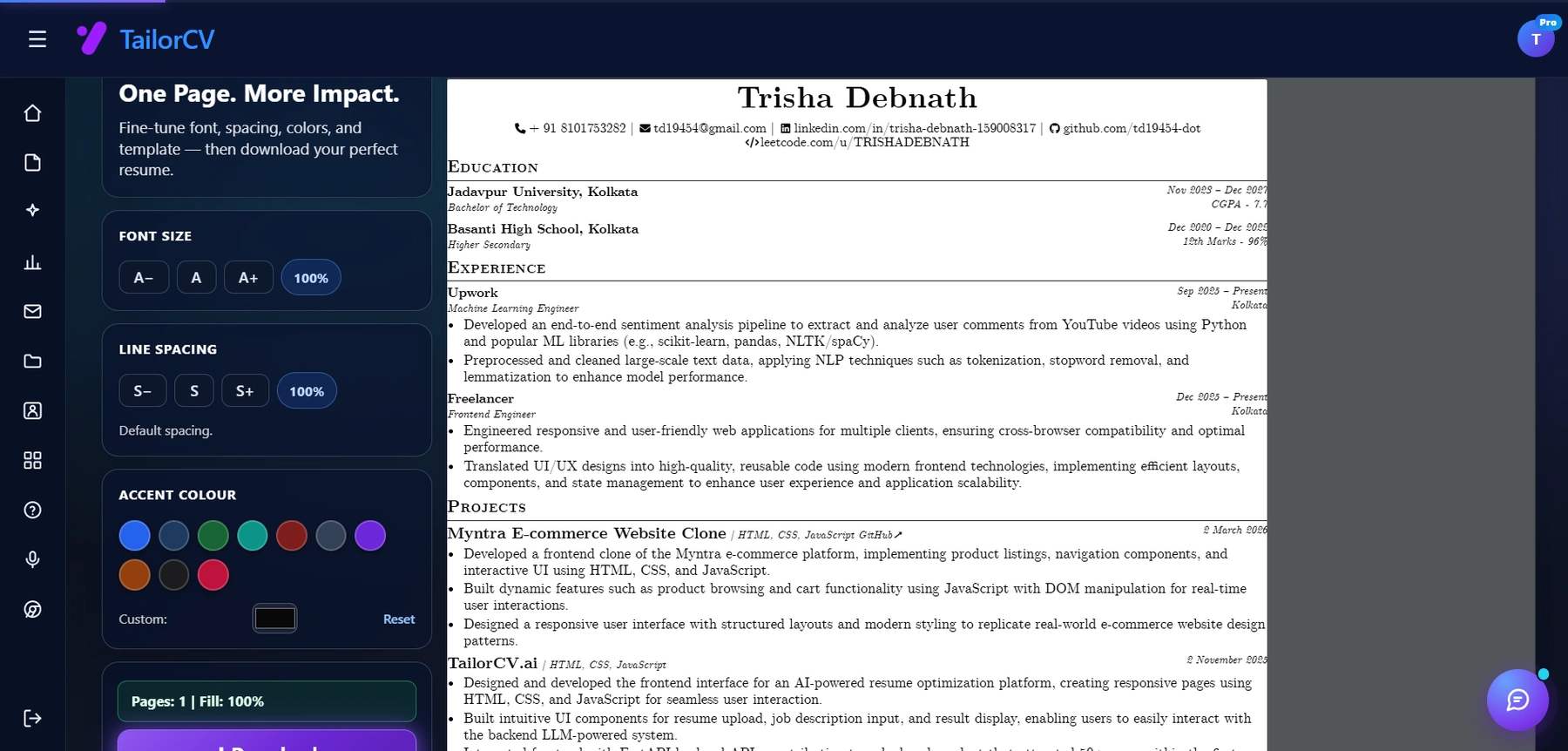
This is the resume after tailoring - the content is already matched, and these controls are how you fit it onto one page.
- Analyze Job Descriptions: Carefully read job postings and note the skills and experiences that are frequently mentioned.
- Use Keywords: Incorporate relevant keywords from the job description into your resume. This practice not only aligns your qualifications with the job but also enhances your ATS score, which is crucial given that many Canadian employers utilize Applicant Tracking Systems (ATS).
- Highlight Relevant Experience: Focus on showcasing experiences and skills that directly relate to the job. This might mean adjusting or rephrasing your past duties to emphasize the most relevant tasks.
For a comprehensive guide on this topic, refer to our article on resume matching with job description.
Structure and Format Your Resume Effectively
A well-structured resume is easier to read and can help highlight your strengths effectively. Here’s a recommended structure:
- Header: Your full name, phone number, email address, and LinkedIn profile (if applicable).
- Summary Statement: A brief, compelling summary that provides an overview of your qualifications and career goals. Tailor this to the job you are applying for.
- Work Experience: List your relevant work experience in reverse chronological order. Include job title, company name, location, and dates of employment. Use bullet points for responsibilities and achievements, starting each point with action verbs.
- Education: Include your degrees in reverse chronological order. Mention the institution, degree, and graduation date.
- Skills: A section highlighting relevant skills, particularly those mentioned in the job description.
- Certifications and Additional Information: Any relevant certifications or additional information that can enhance your candidacy.
For visual guidance, explore our collection of resume templates.
Make Your Resume ATS-Friendly
Applicant Tracking Systems (ATS) are commonly used by Canadian employers to filter resumes before they reach human eyes. To ensure your resume passes through these systems, follow these tips:
- Use Standard Headings: Stick to conventional headings like “Work Experience” and “Education” so that the ATS can easily categorize your information.
- Avoid Graphics and Images: ATS software can struggle with parsing graphics or images, so it’s best to keep your resume text-based.
- Optimize File Format: Save your resume in a format that ATS can read, such as .docx or .pdf. For more information, refer to our resume file format guide.
To check your ATS compatibility, use our free ATS score checker.
Include an Engaging Cover Letter
While your resume is crucial, a well-crafted cover letter can complement your application and make a strong impression. Here are some tips for writing an effective cover letter:
- Personalize It: Address the letter to a specific person if possible. This shows you’ve done your research about the company.
- Connect Your Experience: Use the cover letter to elaborate on your resume and explain how your experiences make you a suitable candidate for the position.
- Call to Action: End with a strong closing statement that encourages the employer to contact you for an interview.
For additional tips on cover letter writing, check out our cover letter guide 2026.
Prepare for Interviews
Once your resume and cover letter have opened the door, the next step is to prepare for interviews. Here are some strategies to enhance your interview skills:
- Research the Company: Understand the company’s mission, values, and recent developments. This knowledge will help you tailor your responses.
- Practice Common Questions: Prepare answers to common interview questions and rehearse them. This practice will help you feel more confident.
- Mock Interviews: Consider using our AI mock interview tool to simulate the interview experience and receive feedback.
For a comprehensive preparation strategy, consult our interview preparation guide.
Leverage Networking and Online Platforms
Networking plays a vital role in the Canadian job market. Here’s how to enhance your networking efforts:
- LinkedIn: Optimize your LinkedIn profile to reflect your resume. Connect with industry professionals and join relevant groups. For more insights, read our article on LinkedIn for job search.
- Attend Networking Events: Participate in industry-related events and workshops to meet potential employers and other professionals.
Common Mistakes to Avoid in Your Resume
When crafting your resume for Express Entry and PR applications in Canada, avoiding common pitfalls can significantly enhance your chances of making a positive impression. Here’s a list of frequent mistakes to watch out for:
-
Using Outdated Formatting: Stick to contemporary formatting styles. Overly creative designs can confuse ATS and hiring managers alike.
-
Including Irrelevant Work Experience: Tailor your resume by omitting jobs that do not relate to the position you’re applying for. Focus on relevant skills and accomplishments.
-
Neglecting Language Proficiency: For many positions in Canada, language skills can be vital. If applicable, include your proficiency in English and French, along with any certifications.
-
Failing to Quantify Achievements: Instead of saying "managed a team," specify "managed a team of 10 to achieve a 20% increase in sales."
-
Ignoring Keywords: Pay attention to job postings and include relevant keywords in your resume. This will help your application get past ATS filters.
-
Using Passive Language: Active language conveys confidence and competence. Instead of saying "responsible for," use "managed," "led," or "developed."
-
Lack of Customization: A generic resume is less likely to catch attention. Tailor your resume for each position to align with the job description.
-
Inconsistent Information: Ensure that your resume matches your LinkedIn profile and any other professional documents. Discrepancies can raise red flags.
Step-by-Step Guide to Tailoring Your Resume for Canadian Job Applications
Customizing your resume for each job you apply to can significantly increase your chances of being noticed. Here’s a straightforward process to follow:
-
Analyze the Job Description: Identify key responsibilities and required skills. Highlight specific phrases and terminology used.
-
Match Your Experience: List your relevant experiences, skills, and accomplishments that align with the job description. Use the same terminology wherever possible.
-
Reorganize Your Sections: Prioritize sections based on relevance. If a particular job title or project is crucial, consider placing it higher in your resume.
-
Update Your Summary Statement: Write a tailored summary statement that reflects your alignment with the company’s values and the position’s requirements.
-
Proofread and Edit: After making adjustments, proofread your resume for grammatical and spelling errors. Consider using tools like ATS checker to ensure compatibility.
Mini Checklist for a Successful Resume
Use this checklist to ensure your resume is ready for submission:
- unchecked: Contact Information: Up-to-date and professional email address.
- unchecked: Tailored Summary: Reflects the job and company values.
- unchecked: Relevant Work Experience: Customized to highlight pertinent achievements.
- unchecked: Education: Includes relevant certifications and degrees.
- unchecked: Skills Section: Keywords aligned with the job description.
- unchecked: Formatting: Clean, professional, and ATS-friendly.
- unchecked: Proofreading: Checked for spelling and grammatical errors.
- unchecked: Cover Letter: Customized and engaging, complementing your resume.
Scenarios: Resume Adjustments Based on Job Type
Scenario 1: IT Professional
Job Description Highlights: Requires experience in cloud computing and project management.
Adjustment: Emphasize projects where you led cloud initiatives and detail your role in managing cross-functional teams. Include specific technologies used.
Scenario 2: Marketing Specialist
Job Description Highlights: Seeks expertise in social media marketing and analytics.
Adjustment: Shift focus to your experience with social media campaigns, highlighting metrics such as engagement rates and conversion statistics. Mention tools like Google Analytics or Hootsuite that you’ve used.
Scenario 3: Healthcare Worker
Job Description Highlights: Needs strong interpersonal skills and experience in patient care.
Adjustment: Highlight your experience in patient interactions, emphasizing your ability to communicate effectively with diverse populations. Include any relevant certifications, such as CPR or First Aid.
Do's and Don'ts of Resume Writing
Do's:
- Do Tailor Each Resume: Customize for every job application.
- Do Use Action Verbs: Start bullet points with strong action verbs.
- Do Keep It Concise: Limit your resume to one or two pages.
Don'ts:
- Don’t Include Personal Information: Avoid details like marital status or age.
- Don’t Use Jargon: Keep language clear and professional.
- Don’t Lie or Exaggerate: Authenticity is crucial; misrepresentation can backfire.
By actively avoiding these common mistakes, following a structured approach to tailoring your resume, and utilizing the provided checklist, you can create a compelling resume that stands out to Canadian employers. For further guidance, check out our article on Resume for Newcomers to Canada: Land Your First Canadian Job.
Related Guides
Keep building your Canadian job search with these related TailorCV guides:
- How ATS Works in Canada: Beating Applicant Tracking Systems for Canadian Jobs
- Canadian Resume Format Guide (2026): How to Write a Resume for Canada
- How to Write a Cover Letter for Canadian Jobs (With Structure)
- How to Get a Job in Canada in 2026: A Step-by-Step Guide
- Entry-Level Jobs in the USA: A New-Grad Resume and Job Search Guide
- How to Get a Job in the USA in 2026: A Step-by-Step Guide
- How to Find Remote Jobs in the USA (2026 Guide)
- Resume for H-1B Visa Sponsorship Jobs: How to Stand Out
You can also check your resume's ATS score for free, generate a tailored cover letter, or build a portfolio website in minutes.
Frequently Asked Questions
1. What is the best format for a Canadian resume?
The best format for a Canadian resume is a clean, structured layout with clearly defined sections such as contact information, summary, work experience, education, and skills. For more details, see our Canadian Resume Format Guide (2026).
2. How can I improve my ATS score?
To improve your ATS score, ensure you use relevant keywords from the job description, avoid graphics, and stick to standard headings. For a detailed approach, refer to our guide on how to make a resume ATS-friendly.
3. Should I include volunteering experience on my resume?
Yes, including relevant volunteering experience can showcase your skills and commitment, especially if you are new to the Canadian job market. Highlight any transferable skills acquired during your volunteer work.
4. How long should my resume be?
A resume can be up to two pages long in Canada, particularly if you have extensive experience. Ensure all information is relevant and enhances your application.
5. How can I find job opportunities in Canada?
Utilize job search websites, LinkedIn, and networking events to find job opportunities. For more strategies, check out our guide on how to get a job in Canada in 2026.
What is your resume scoring right now?
Scan it against a job description and get your ATS match score in about a minute.
Drop your resume here or choose a file
PDF only. Max 2 MB.
We never share your data or use it to train AI models.

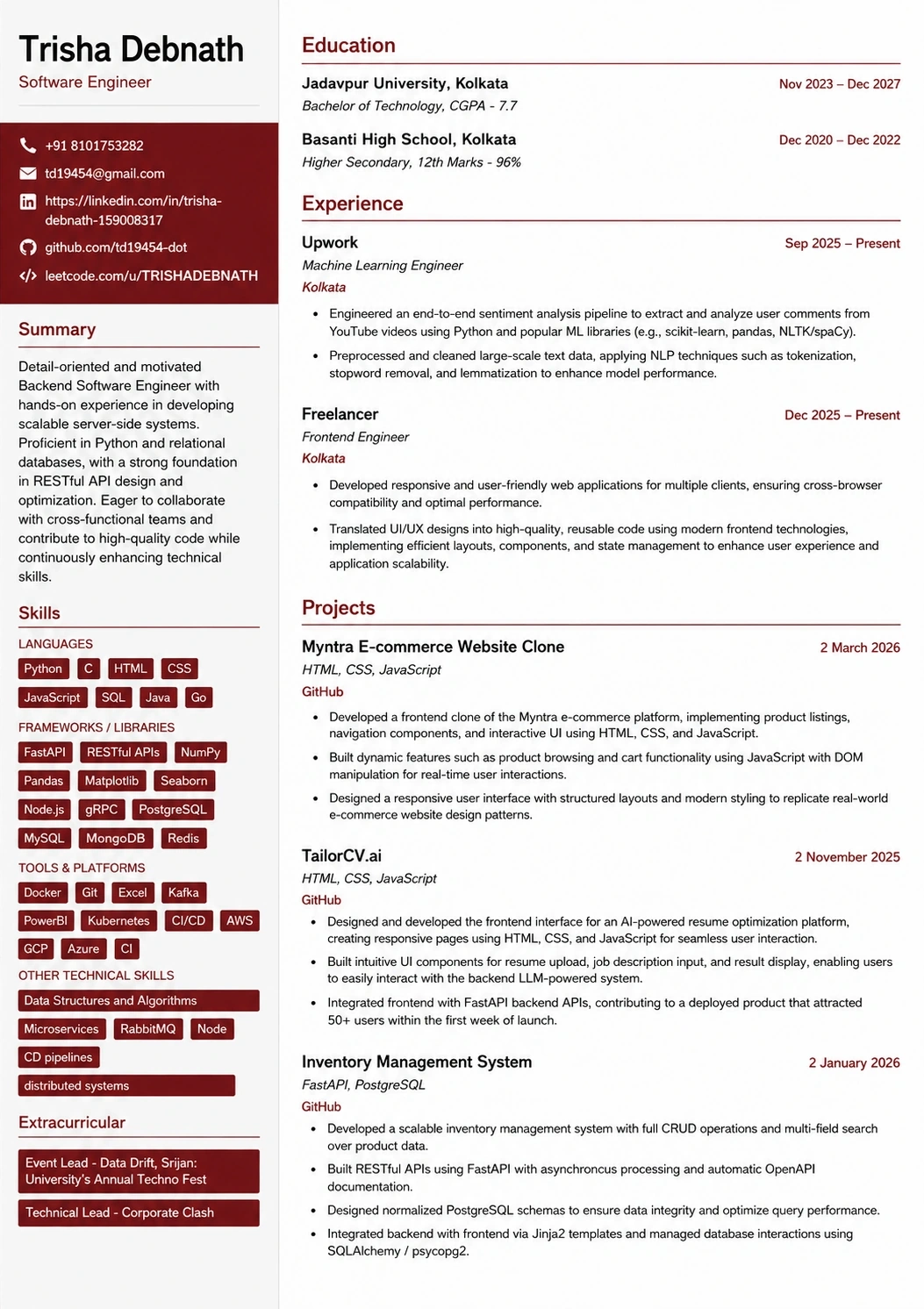
Templates that keep this structure intact
This template is ATS-tested — start from it and the formatting rules in this guide are already handled.
Was this guide useful?
Be the first to rate it.