TD
TD
Key Takeaways
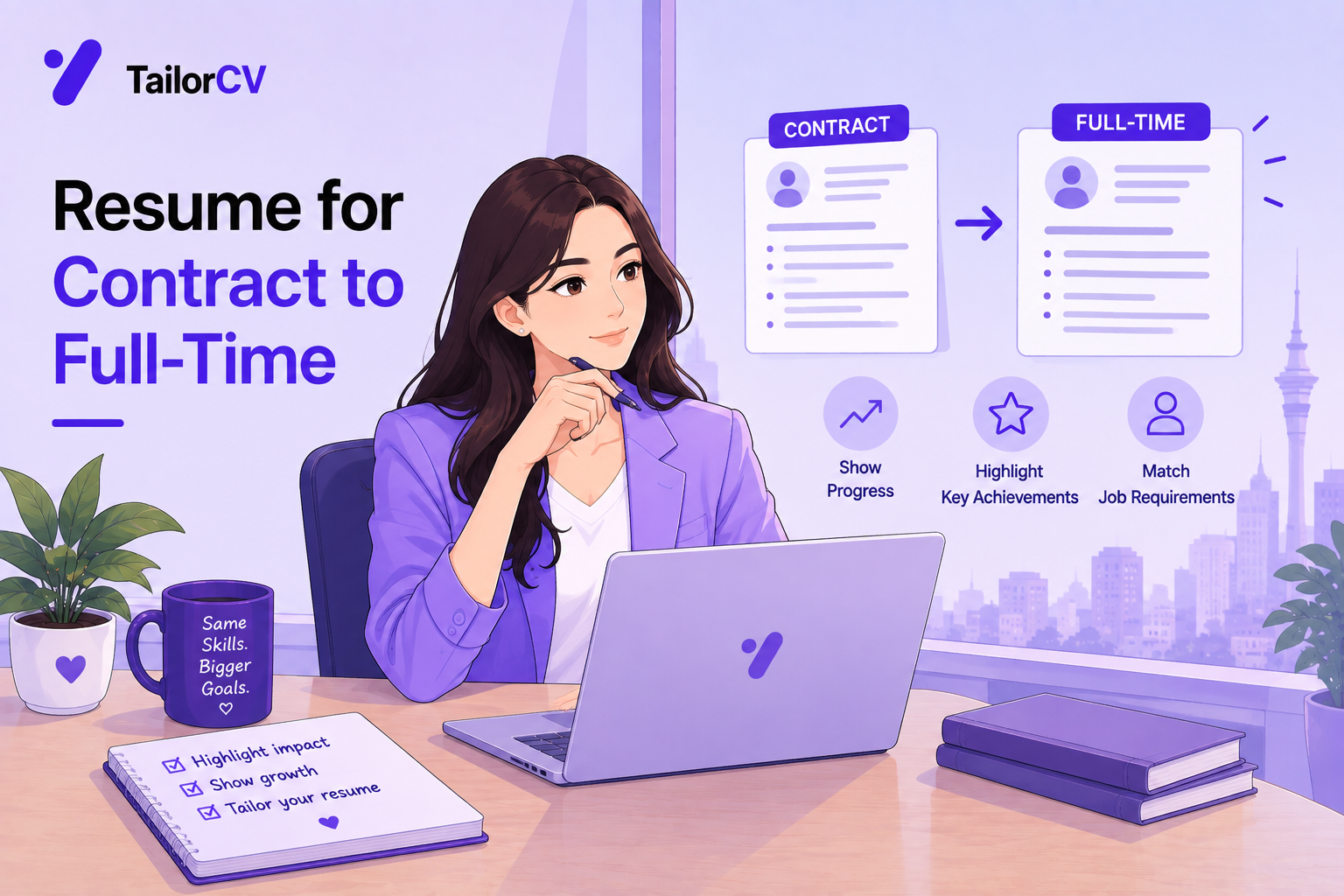
- Group contract work so a series of engagements does not read as a series of short jobs.
- The concern is commitment, and addressing it directly is more effective than hoping it passes.
- Contract experience is genuinely valuable, covering more environments than most permanent careers.
- State why you want permanent work clearly, because the question will be asked.
- The strongest route is conversion with a client who already knows your work.
Presenting contract history
Formatting that prevents the wrong impression.
Group engagements under one heading, using your own name or a trading name with the full date range, then list clients beneath it.
This is the single most effective change, because it converts eight short entries into one continuous period of self-employment.
Give the client and the outcome for each engagement, keeping the detail proportionate to relevance.
Note the engagement length where it was substantial, since long contracts argue against the instability concern directly.
Include repeat clients prominently. A client who rehired you is the strongest available evidence that your work was good.
Compress the small engagements into a single summarising line rather than listing every short piece of work.
And label it clearly as contract work, since ambiguity about employment type raises questions that clarity avoids.
Addressing the commitment question
What hiring managers are actually worried about.
| Their concern | What answers it |
|---|---|
| You will leave for the next contract | A clear reason for wanting permanence now |
| You cannot work in a team long-term | Evidence of long engagements and repeat clients |
| You will resist process and structure | Examples of working inside client organisations |
| You are between contracts, not committed | Directness about what changed |
| Your rate expectations are high | Understanding of the total package difference |
Answer it before it is asked. A single line in the cover letter stating why you want permanent work now removes the question far more effectively than a good answer at interview.
Have a real reason. Stability, depth on one problem, building something over years, or wanting to develop a team are all credible, and a vague answer is not.
And understand the compensation difference. A permanent salary is not directly comparable to a day rate, and a candidate who has not thought this through appears unprepared during negotiation.
What contracting genuinely gives you
The advantages worth stating explicitly.
Breadth of environments. A contractor may have worked inside a dozen organisations, seeing more approaches in five years than a permanent employee sees in twenty.
Rapid onboarding as a skill. Being productive within days rather than months is a genuine capability, and permanent hires who can do it are unusually valuable.
Exposure to varied stacks and processes, which makes you harder to surprise and quicker to adapt.
Commercial awareness. Running your own engagements means understanding cost, scope and delivery pressure directly rather than abstractly.
Comfort with ambiguity, since contractors are frequently brought in precisely when a situation is unclear.
And a demonstrated ability to deliver without a long ramp, which is the thing a hiring manager most wants and most rarely gets.
Say these things directly. Contractors routinely undersell this breadth because it feels ordinary to them, while it is genuinely distinctive to the reader.
The practical differences to prepare for
What changes when you move across.
Compensation is structured differently, with a lower headline figure covering paid leave, sick pay, pension contributions and employment protections.
Notice periods apply in both directions, which is a constraint contractors are unused to.
Performance review cycles and objective-setting become part of the job, where a contractor was assessed on delivery alone.
Internal politics matter more, since you are now inside the organisation rather than adjacent to it.
Career progression becomes relevant in a way it was not, and the questions about where you want to be in three years are genuine rather than formalities.
Your time is bought rather than your output, which is a real cultural adjustment for people used to being paid for delivery.
And you will be expected to invest in things that pay off slowly — relationships, documentation, mentoring — which a short engagement never required.
Mini checklist
- unchecked: Contract work grouped under a single heading
- unchecked: Full continuous date range shown
- unchecked: Clients and outcomes listed beneath
- unchecked: Repeat clients highlighted
- unchecked: Long engagements emphasised
- unchecked: Reason for wanting permanent work prepared
- unchecked: Rate to salary comparison worked out honestly
- unchecked: Employment type labelled clearly
Scenarios
Scenario 1: You have contracted for several years
Group everything, lead with the breadth of environments you have worked in, and address the commitment question directly. Breadth is your genuine advantage and it is worth stating.
Scenario 2: You are contracting at a company you want to join permanently
This is the best position available. Say so to your manager rather than waiting for an opening, since internal conversion avoids the entire external process.
Scenario 3: Your contracts have been short
Compress the shortest into a summary line and lead with the longest. Emphasise the reasons where they were structural, such as project-length engagements or agency placements.
Tip: Say why you want permanent work in the first three lines of your cover letter. It is the only real objection to a contractor's application, and answering it unprompted removes it before the reader has finished forming it.
Do's and Don'ts
Do
- Group contract work under one heading
- Show the continuous date range
- Highlight repeat clients
- State your reason for wanting permanence
- Emphasise breadth of environments
- Work out the rate to salary comparison
Don't
- List every engagement as a separate job
- Leave the commitment question unaddressed
- Disguise contract work as permanent
- Give a vague reason for the change
- Expect a rate-equivalent salary
- Undersell the range of your experience
Common Mistakes
- Listing engagements separately. It reads as constant job changing.
- Ignoring the commitment question. It is the only real objection.
- A vague reason. It confirms the concern rather than removing it.
- Hiding the contract status. Ambiguity creates worse questions.
- Rate-to-salary confusion. It derails otherwise good negotiations.
- Underselling breadth. It is the genuine advantage of contracting.
Related Guides
Keep building on this with the related guides in this series:
- Freelancers Moving to Full-Time Work
- Part-Time to Full-Time
- How to Explain Job Hopping
- Resume Red Flags Recruiters Notice
- How to Negotiate a Salary Offer
You can also check your resume's ATS score for free, generate a tailored cover letter, or build a portfolio website in minutes.
Frequently Asked Questions
How do I list contract work on a resume?
Group it under one heading with your own name or trading name and the full date range, then list clients beneath. This converts many short entries into one continuous period.
Will contract work count against me?
Only if it reads as instability. Grouped properly and paired with a clear reason for wanting permanent work, it reads as breadth of experience instead.
What is the main objection to hiring a contractor?
Commitment — the worry that you will leave for the next engagement. Address it directly in your cover letter rather than waiting for it to be raised.
Should I expect the same money?
No, and understanding why matters. A day rate covers unpaid time, benefits and self-employment costs, so the equivalent permanent salary is lower while the total package may not be.
What if my contracts were short?
Compress the shortest into a summary line, lead with the longest, and explain structural reasons where they apply. Project-length engagements are self-explanatory to most readers.
What is the easiest route to permanent work?
Conversion with a current client. They already know your work, which removes the entire assessment problem, so raise it directly rather than waiting for an opening.
What does contract experience actually give me?
Breadth across many organisations, rapid onboarding as a genuine skill, exposure to varied stacks, commercial awareness and comfort with ambiguity. Contractors routinely undersell all of it.
What changes when moving to permanent work?
Compensation is structured differently, notice periods apply, review cycles and progression become relevant, internal politics matter more, and you are expected to invest in work that pays off slowly.
What is your resume scoring right now?
Scan it against a job description and get your ATS match score in about a minute.
Drop your resume here or choose a file
PDF only. Max 2 MB.
We never share your data or use it to train AI models.

Was this guide useful?
Be the first to rate it.