 SS
SS
Key Takeaways
- Check whether the specific missing item cleared, not just whether the number rose.
- A score that does not move means your edit did not address what the posting asked for. That is information, not failure.
- Typical honest gains: naming a skill you have, +3-8 points. Summary rewrite, +5-10. Fixing a parse failure, +20 or more.
- A large jump from small edits usually means you added generic language rather than evidence.
- Two or three re-scans is a workflow. Ten is a sign you are optimising the number rather than the resume.
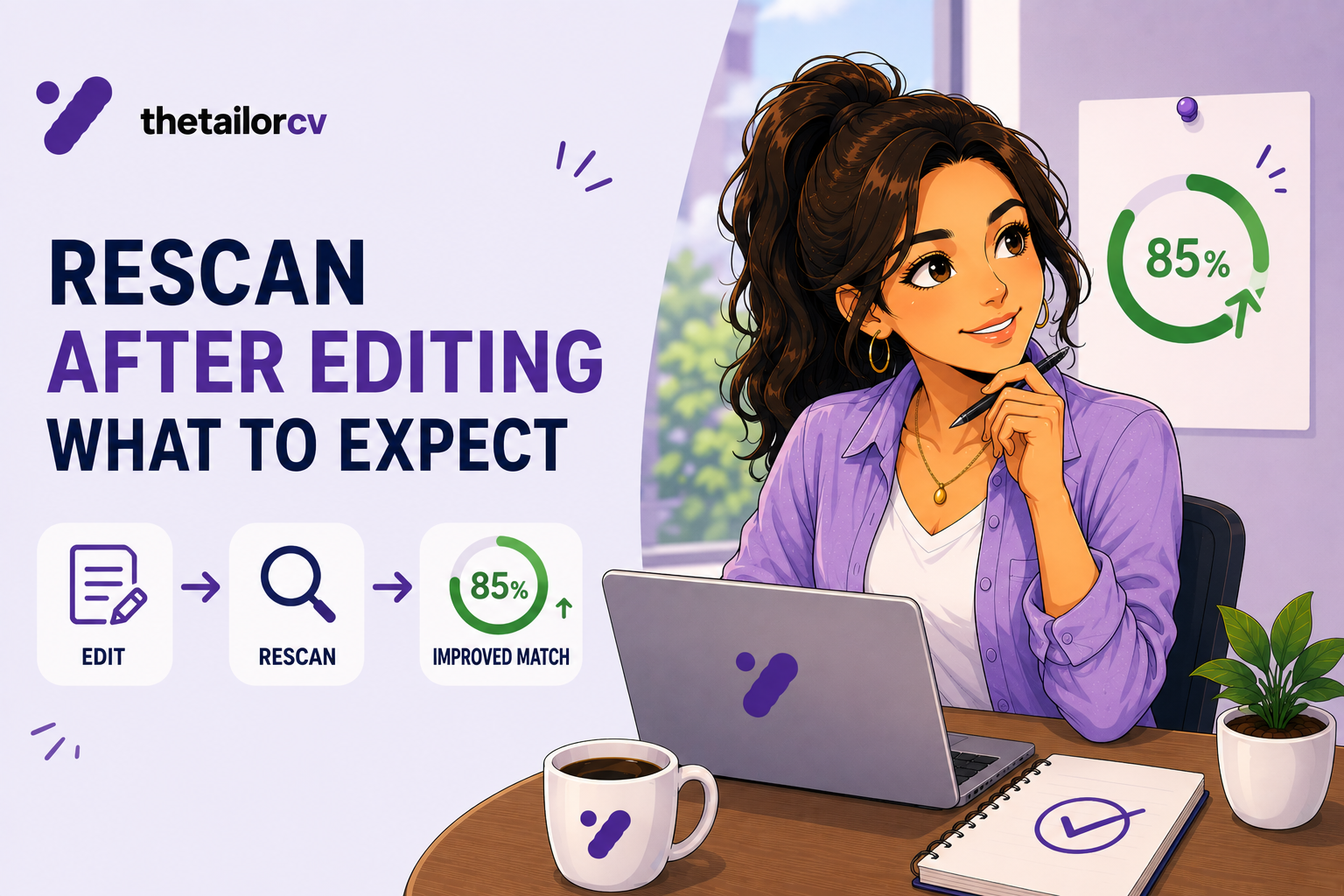
You made the edits and ran the scan again. Here is how to read what came back.
Look at the List, Not the Number
The percentage is a summary. The useful signal is whether the item you were trying to fix disappeared from the missing list.
Item cleared, score rose. The edit worked. Move to the next item.
Item cleared, score barely moved. Normal. That item was lightly weighted — often a preferred rather than required one. The fix was still correct.
Item still listed, score rose. Warning sign. You added language that matched something else, probably generic. The gap you meant to close is still open.
Item still listed, score flat. Your edit did not land. Usually the term is in the wrong place — see below.
That third case is the one to watch, because a rising number feels like progress while the actual requirement remains unevidenced.
Why an Edit Sometimes Does Nothing
Four common reasons, in order of frequency:
1. You put the term in the skills list instead of the evidence. Adding "stakeholder management" as a bare skill bullet is weaker than putting it in the bullet describing the work. Context matters to modern matching, and to the human reading afterwards.
2. You used a different form of the word. The posting says "data visualisation"; you wrote "dataviz". Match the posting's phrasing where it is true of you — and where an acronym is involved, write both forms.
3. The edit is in a section the parser did not read. If you added it to a header, footer, text box or table cell, it may not have been extracted at all. See ATS formatting mistakes.
4. You edited the wrong file. More common than anyone admits. Check you exported and uploaded the version you actually changed — see formatting that broke after export.
What Normal Gains Look Like
Rough expectations for honest edits:
| Edit | Typical movement |
|---|---|
| Naming one skill you have but had not stated | +3-8 |
| Rewriting the summary for the posting | +5-10 |
| Reordering the skills section | +2-5 |
| Adding industry/context ("retail", "B2B SaaS") | +3-6 |
| Rewriting top bullets toward the posting | +5-12 |
| Fixing a parsing failure | +20 or more |
The last row is why checking extraction first matters. If your file was not parsing, every other edit was being measured against garbage.
When a Big Jump Is Bad News
If three small edits moved you from 62% to 91%, be suspicious rather than pleased.
Large gains from small changes usually mean you added broad, generic language that matched many terms at once — the adjective-and-buzzword layer. The number rises; the resume gets worse to read, and the human at the other end is the one who decides.
The check: read your new bullets aloud. If they sound like they were written to be scanned rather than read, you have optimised the wrong thing. And apply the two-minute test to anything new — could you discuss it under questioning? See improving your score without lying.
How Many Times Should You Re-Scan?
Two or three per posting is a healthy workflow:
- Baseline scan — before editing, to get the gap list.
- After the main edits — confirm the required items cleared.
- Optional final check — after a last pass.
Beyond that you are usually tuning a number rather than improving a document. The score is a proxy for "does this evidence what they asked for," and once the answer is yes, further points come from padding.
A useful stopping rule: when every required item has cleared and the remaining gaps are preferred items you genuinely lack, you are done. Send it.
The Score Changes on the Next Job — That's Correct
People sometimes re-scan an edited resume against a different posting and are alarmed when it scores lower.
That is expected. The score measures coverage of one posting's requirements. A resume tailored to Posting A will score lower on Posting B, because you optimised for different requirements. It is the mechanism described in why one resume cannot serve every application.
If you want a version per posting without redoing the work each time, keep them — My Resumes stores versions, and the extension generates them from the job page.
A Practical Loop
- Scan against the posting. Read the extraction first, then the gaps.
- Sort gaps: required vs preferred, have it vs do not.
- Fix the "required + have it" items by putting the posting's term into the bullet that proves it.
- Rewrite the summary. Reorder skills.
- Re-scan. Check the named items cleared.
- If an item did not clear, move the term into the evidence bullet rather than repeating it.
- Stop when required items are covered.
How to tailor a resume in 5 minutes covers steps 3-4 at speed.
Frequently Asked Questions
My score went down after editing. What happened? Usually you removed or reworded something that was matching. Compare the two gap lists to see what newly appeared.
How high should I get before stopping? Until required items are covered. There is no universal target — see what is a good ATS match score.
Does re-scanning repeatedly hurt anything? No, but past two or three passes you are usually optimising the number rather than the resume.
Should the score be the same across tools? No. Different models weight differently. Compare a tool against itself over time, not across tools.
My score is high but the resume reads badly now. What do I do? Trust the reading. Roll back the generic additions and keep the specific ones — a human makes the final decision.
Re-Scan Properly
The habit that separates useful editing from guessing is checking the gap list rather than the headline number.
Run your edited resume against the same posting and compare the missing items to what they were before. If the ones you targeted are gone, the edit worked. If they are still there, the fix is usually to move the term into the bullet that already proves it.
Free, about a minute. See also which missing skills actually matter and our ATS score guide.
What is your resume scoring right now?
Scan it against a job description and get your ATS match score in about a minute.
Drop your resume here or choose a file
PDF only. Max 2 MB.
We never share your data or use it to train AI models.

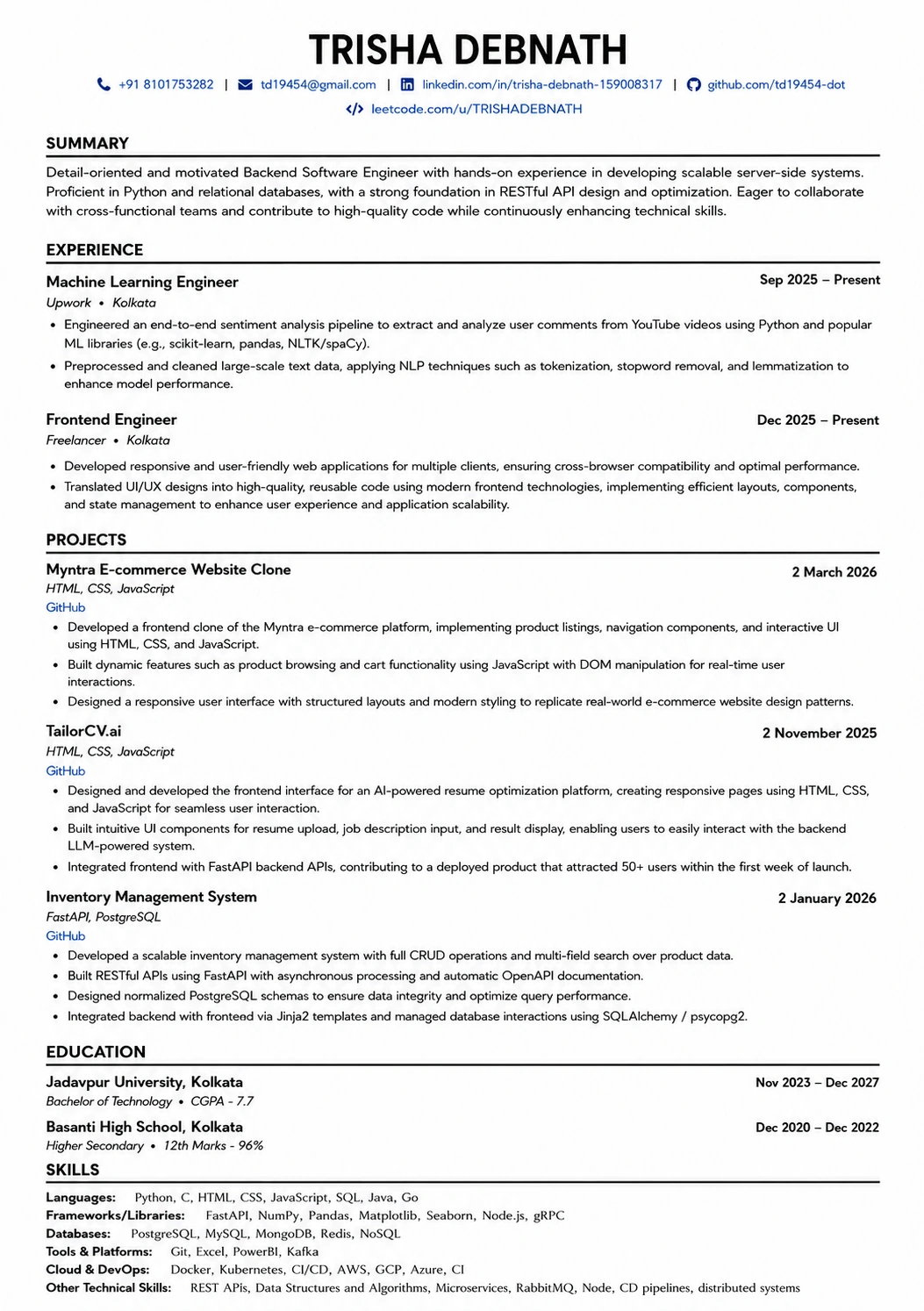
Templates that keep this structure intact
This template is ATS-tested — start from it and the formatting rules in this guide are already handled.
Was this guide useful?
Be the first to rate it.