 TD
TD
Key Takeaways
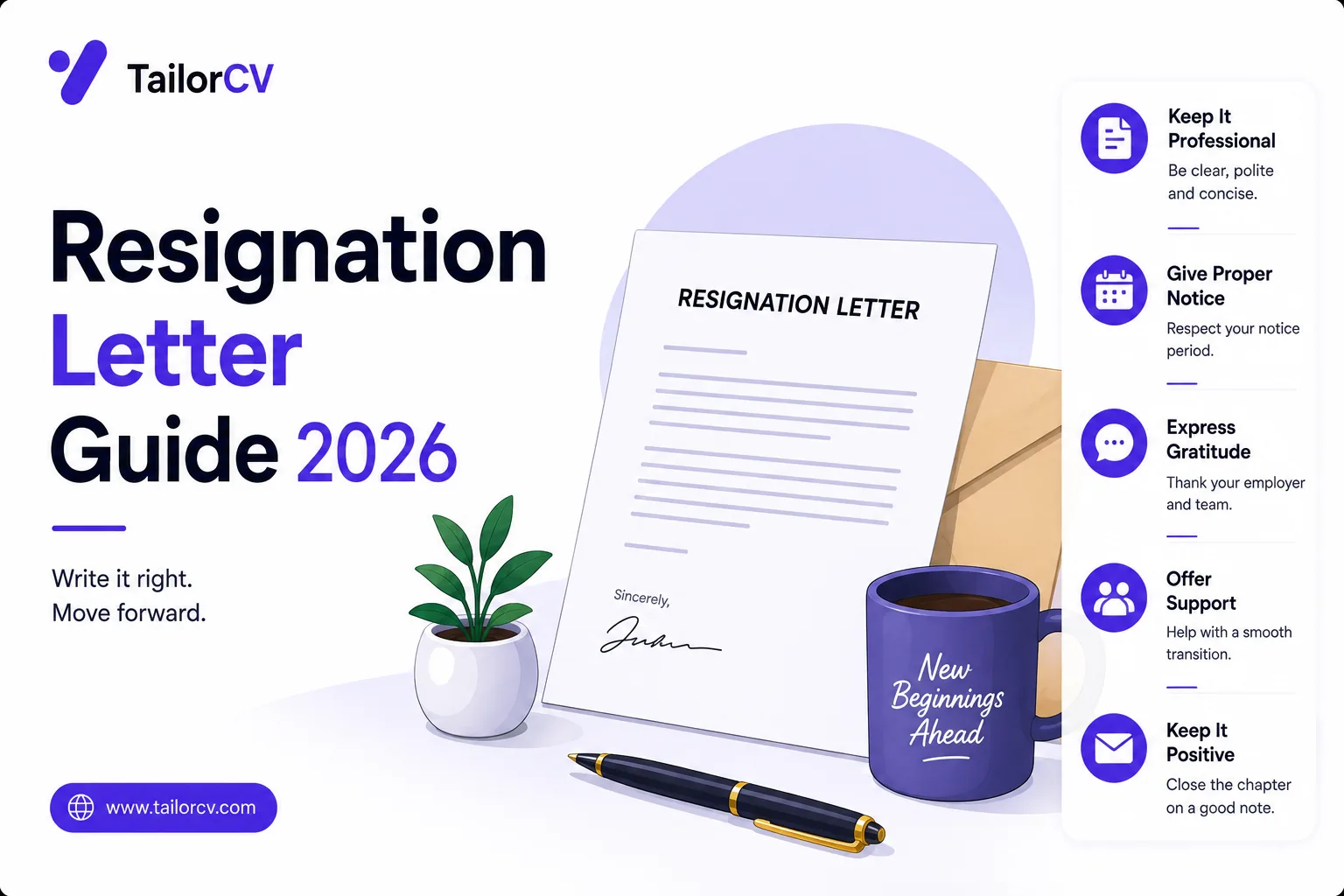
- A resignation letter is a formality, not a place to explain yourself - short, dated, and neutral is correct.
- Tell your manager in person or on a call first, then send the letter to confirm.
- Never put grievances in it, because it goes in your file permanently and may be read by people you have not met.
- Have the new offer in writing and signed before you resign anything.
- Your notice period is set by your contract or local law, not by the two-week convention you read online.
Resignation letters cause disproportionate anxiety for what they actually are: a brief administrative document confirming a decision you have already communicated verbally.
Most of the difficulty comes from people trying to make the letter do too much - explain their frustrations, justify the move, or settle a score. It should do none of those. It should state that you are leaving, when, and thank them. That is the whole job.
This guide covers the structure, the templates, and the situations that need more care.
If you have not lined up the next role yet, start with a resume that works - the free ATS score checker.
Before You Write Anything
Have the offer in writing and signed. Verbal offers get withdrawn, background checks fail, and reorganisations happen. Do not resign on a handshake.
Check any contingencies. Background checks, reference checks, medical clearance, or visa approval. If your new role depends on something unresolved, wait.
Read your contract. Your notice period, any garden leave provision, restrictive covenants, and what happens to unused vacation, bonuses, and equity. The "two weeks" convention is American practice, not universal law - many markets require one to three months, and your contract governs.
Know your vacation position. Some employers pay out unused days, some do not, and some allow you to use them during notice. Check before you resign rather than after.
Consider timing. If a bonus vests next month, resigning now may forfeit it. This is not disloyalty; it is reading your own contract.
Tell Your Manager First
Do not let your manager learn from HR, a colleague, or a system notification.
In person if possible, on a video call if remote. It is a two-minute conversation.
Keep it simple:
I wanted to let you know I have accepted a position elsewhere and I will be resigning. My last day would be [date], in line with my notice period. I have really valued working here and I want to make the handover as smooth as possible.
Expect a reaction. Some managers are gracious, some are disappointed, and some make a counter-offer on the spot. You do not need to decide anything in that meeting - see should you accept a counter-offer.
Then send the letter the same day, confirming what you discussed.
What Goes in the Letter
Four elements, and nothing more:
- A clear statement that you are resigning
- Your last working day, stated as a date
- An offer to help with the transition
- A brief thank you
What does not go in:
- Why you are leaving
- Where you are going
- Complaints, grievances, or feedback
- Salary comparisons
- Anything you would not want read aloud in five years
That last point is the important one. The letter goes in your personnel file permanently. It may be read by people who were not there, in contexts you cannot predict, including future reference checks.
If you have genuine feedback, the exit interview is the appropriate venue - and even there, measured is better than cathartic.
Template: Standard
[Date]
Dear [Manager's name],
I am writing to formally notify you of my resignation from my position as [job title] at [Company]. My final day will be [date], in accordance with my [X-week/month] notice period.
I am grateful for the opportunities I have had here, particularly [one specific thing - a project, the team, something you learned]. I have appreciated working with you and the team.
I am committed to making the transition as smooth as possible and am happy to help document my responsibilities and hand over to whoever takes them on.
Thank you for your support during my time here.
Sincerely, [Your name]
Template: Short and Neutral
Use this when the relationship is strained and you want to give nothing away.
[Date]
Dear [Manager's name],
Please accept this letter as formal notice of my resignation from my position as [job title]. My last day of employment will be [date].
I am happy to assist with the handover during my notice period.
Thank you.
Sincerely, [Your name]
Nothing in that letter can be used against you, quoted back, or misread.
Template: Leaving on Very Good Terms
[Date]
Dear [Manager's name],
After [X] years at [Company], I have decided to accept a new opportunity, and I am writing to give formal notice of my resignation. My final day will be [date].
This was a genuinely difficult decision. [Specific thing you valued - a project you are proud of, what you learned, how the team supported you]. I am leaving with a great deal of respect for this team and what it does.
I want to make sure the handover is thorough. I will document my current projects and I am glad to help train my replacement or brief whoever picks up my work.
Thank you for the support and the opportunities.
Warm regards, [Your name]
Working Your Notice
How you behave in your final weeks is what people actually remember.
Keep working properly. Coasting is noticed and it is what colleagues will recall about you.
Document everything. Write handover notes covering your ongoing work, where files live, who the contacts are, recurring tasks, and anything only you know. This is the single most valuable thing you can leave, and it takes a few hours.
Train your replacement if there is one, or brief whoever is absorbing your work.
Do not badmouth on the way out. The industry is smaller than it looks, and the person you vent to may interview you in six years.
Do not take anything. Client lists, code, documents, and templates belong to the employer. Check your contract on this and assume the answer is no.
Say proper goodbyes. A short message to colleagues you worked closely with, with your personal contact details, keeps a network alive that took years to build.
Ask for a reference or a recommendation before you leave, while the work is fresh in people's minds.
The negotiation around your leaving date is covered in notice period negotiation.
Difficult Situations
Your manager reacts badly. Stay calm, stay factual, and do not be drawn into an argument. Send the letter and continue professionally.
You are asked to leave immediately. Some employers walk people out, particularly in sales or where you are joining a competitor. Understand your contractual position on pay during notice.
You are leaving because of a genuine problem - harassment, discrimination, or something serious. Keep the resignation letter neutral and address the substance separately through HR or professional advice. Mixing the two weakens both.
You have no new job lined up. Resigning without one is a legitimate choice in some circumstances, though it weakens your position in the next search. If you do, prepare an explanation for the gap - see career gap explanation.
You are on a work visa. Resigning can affect your immigration status, sometimes seriously. Confirm the position before resigning, not after.
Common Mistakes
Resigning before the new offer is signed. Verbal offers get withdrawn and background checks fail, and there is rarely any way back once you have given notice.
Putting grievances in the letter. It stays in your file permanently and may be read years later by people you have never met, in contexts you cannot control.
Letting your manager hear it from someone else. Tell them directly first - learning about it secondhand damages a relationship you may need for references.
Assuming two weeks is the rule. That is American convention rather than universal law, and your contract or local statute governs - many markets require one to three months.
Not reading your contract before resigning. Restrictive covenants, bonus vesting, unused vacation, and garden leave provisions all have financial consequences worth knowing in advance.
Coasting through your notice period. It is what colleagues will remember about you, and it is the impression that follows you into reference conversations.
Not writing handover notes. A few hours of documentation is the most valuable thing you can leave and the thing most likely to make people speak well of you afterwards.
Leaving without asking for a reference. Ask while your work is fresh in people's minds rather than reaching out cold two years later.
Resigning on a work visa without checking your status. It can affect your right to remain, sometimes seriously, and the time to find out is before you give notice.
Frequently Asked Questions
How much notice do I have to give?
Whatever your contract or local employment law requires. Two weeks is American convention; many countries and contracts require one to three months. Read your contract rather than assuming.
Should I say why I am leaving in the letter?
No. Keep it neutral. If you want to give feedback, the exit interview is the appropriate venue, and even there measured is better than cathartic.
Do I have to tell them where I am going?
No, and you are not obliged to. If you are joining a competitor, expect it to come up and be aware of any restrictive covenants in your contract.
Can I resign by email?
Tell your manager in person or on a call first, then send the letter by email to confirm. Resigning by email alone reads poorly and damages a relationship you may need later.
What if they make a counter-offer?
You do not have to decide immediately. Take time to consider what would actually change - see should you accept a counter-offer.
What happens to my unused vacation?
It depends on your contract and local law - some employers pay it out, some do not, and some let you use it during notice. Check before resigning.
Should I resign without another job lined up?
It is sometimes the right call, but it weakens your negotiating position and creates a gap you will need to explain. If you do, plan the search and the explanation deliberately.
Lining up the next role first? Start with a resume that clears screening. Check your ATS score free.
Make This Practical
Do the preparation before you say anything. Get the new offer in writing and signed, confirm any contingencies are cleared, read your contract for notice period, restrictive covenants, bonus vesting, and vacation payout, and check your immigration position if you are on a work visa.
Then handle the conversation properly. Tell your manager directly, in person or on a call, before anyone else hears it - then send a short letter the same day confirming what you discussed. Keep the letter to four elements and put nothing in it you would not want read aloud in five years.
Finally, use your notice period to protect the relationship. Write thorough handover notes, keep working properly, brief whoever absorbs your work, ask for a reference while your contribution is fresh, and leave your personal contact details with colleagues worth keeping. The leaving date itself is negotiable more often than people assume - see notice period negotiation and the first 90 days in a new job for what comes next.
Does your formatting survive the parser?
Upload your resume and see what an ATS actually reads back.
Drop your resume here or choose a file
PDF only. Max 2 MB.
We never share your data or use it to train AI models.

Was this guide useful?
Be the first to rate it.