 SS
SS
Key Takeaways
- U.S. resumes should exclude personal information like photos, age, and nationality to prevent bias.
- Early-career candidates should aim for a one-page resume, while experienced candidates may extend to two pages.
- Use strong action verbs and quantify achievements to demonstrate impact in your work experience.
- Tailor your resume with relevant keywords to pass Applicant Tracking Systems (ATS) and use simple formatting.
- Clearly state your work authorization status if seeking visa sponsorship to inform potential employers.
When you're an international candidate seeking employment in the United States, crafting a resume that meets U.S. norms is crucial. The U.S. job market is competitive, and employers often rely on Applicant Tracking Systems (ATS) to screen resumes before they even reach human eyes. Understanding the nuances of U.S. resume expectations, coupled with strategic job search techniques, will significantly enhance your chances of landing interviews and job offers. This guide will provide you with the essential steps to create a compelling resume tailored for U.S. employers, whether you're a new graduate, an experienced professional, or seeking visa sponsorship.
Understand U.S. Resume Norms
Before you begin crafting your resume, familiarize yourself with the typical structure and content expected by U.S. employers. Here are some key points to consider:
-
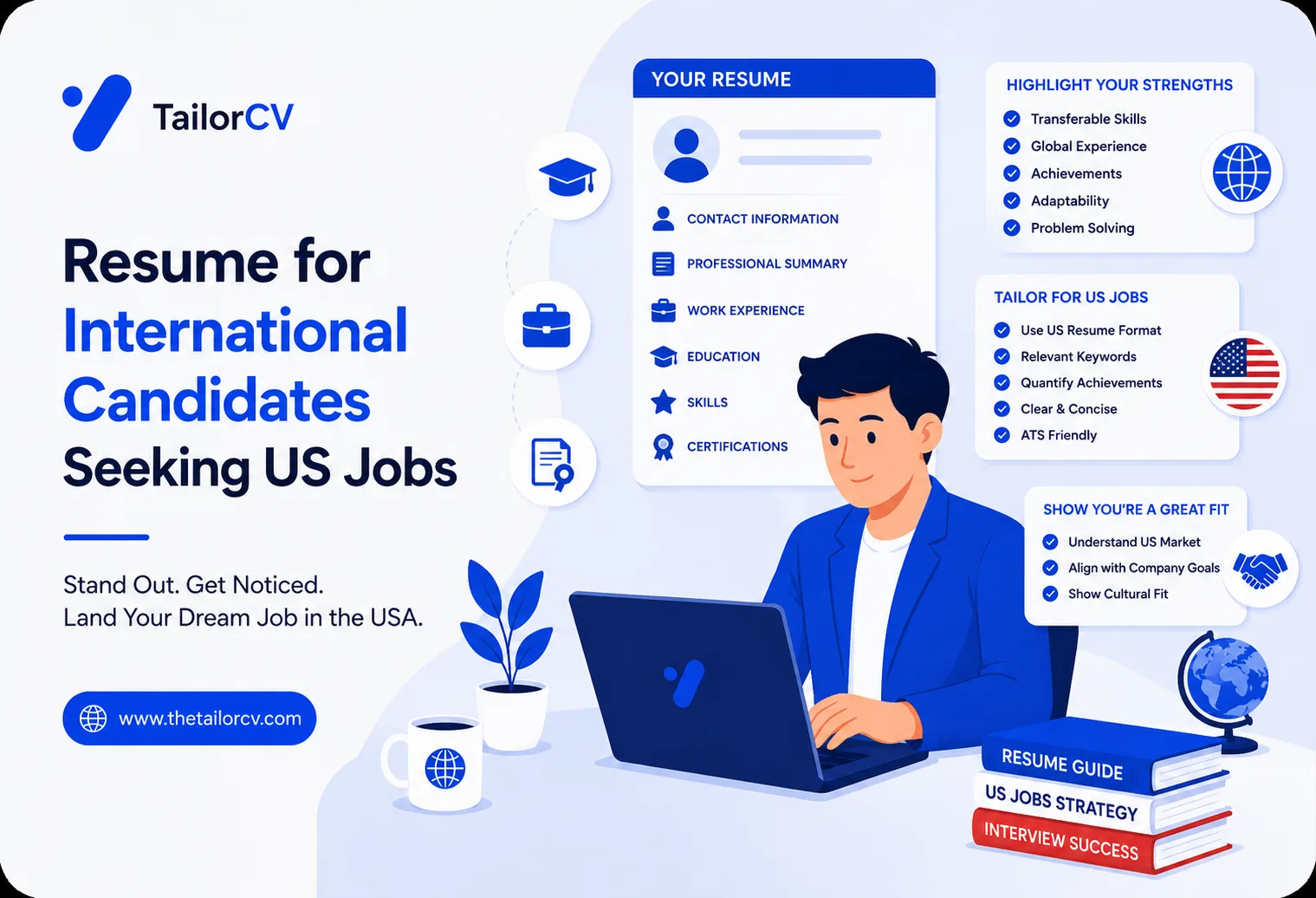
No Personal Information: Unlike many other countries, U.S. resumes should not include personal details such as your photo, age, marital status, or nationality. This is to avoid any potential bias during the hiring process.
-
Length and Format: Early-career candidates (0-5 years of experience) should aim for a one-page resume. More experienced candidates can extend to two pages if necessary. Use a clear, professional font and a straightforward layout.
-
Contact Information: Include your name, a U.S.-formatted phone number, and an email address. Avoid including your physical address; a city and state are sufficient.
-
Action Verbs and Quantified Achievements: Use strong action verbs and quantify your accomplishments. This helps to illustrate your impact in previous roles.
Key Sections of Your Resume
A well-structured resume typically consists of several key sections. Here’s how to organize yours:
Your resume after optimization
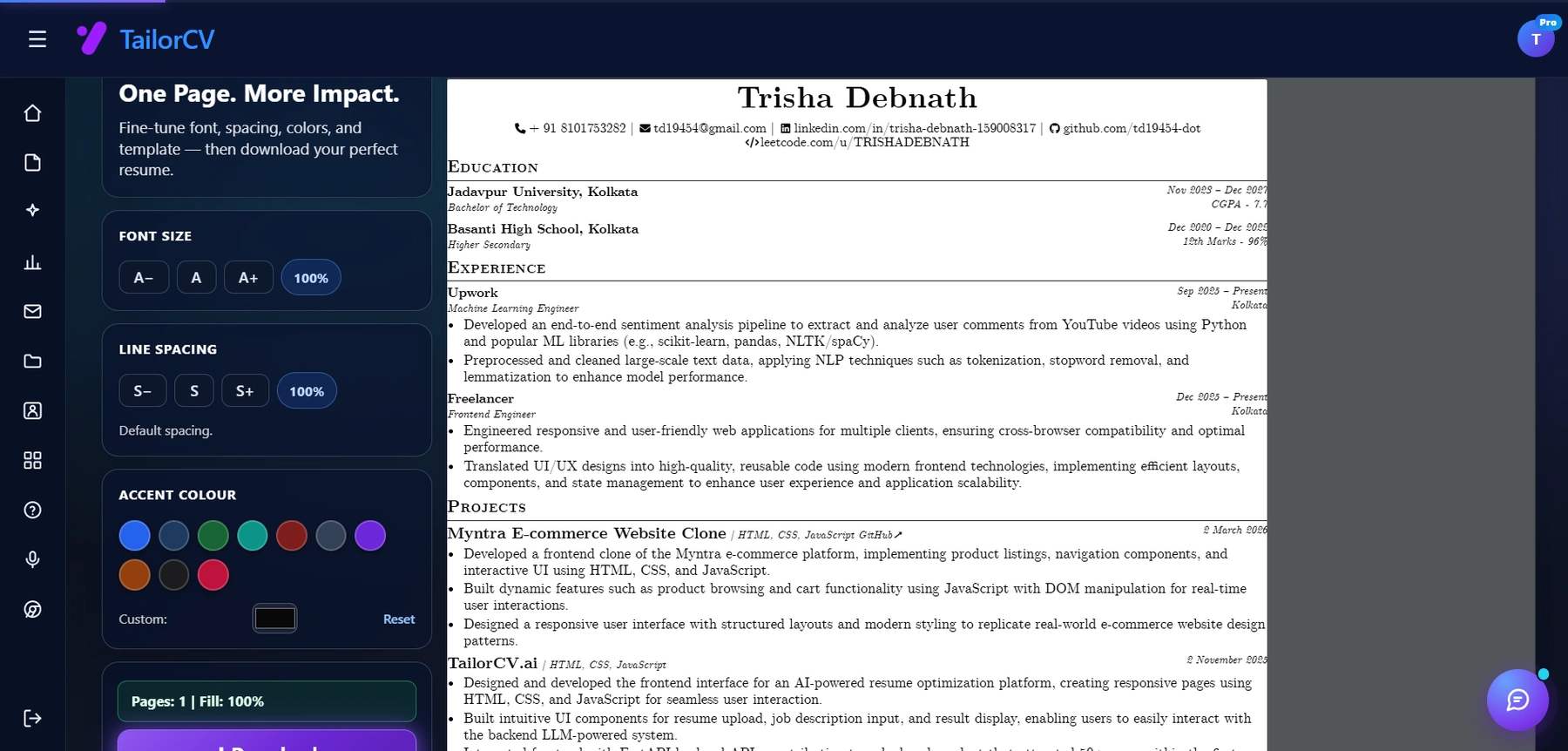
Font size, spacing, accent colour and template are all adjustable, with a live page counter.
1. Contact Information
- Name
- Phone number (U.S. format)
- Email address
- LinkedIn profile (optional, but recommended)
2. Summary or Objective
Write a brief summary (2-3 sentences) highlighting your career goals and what you bring to the table. Tailor this section to align with the job you’re applying for.
3. Education
- Degree(s) obtained
- Institution name and location
- Graduation date (month and year)
- Relevant coursework or honors (if applicable)
4. Work Experience
List your work experience in reverse chronological order. Include:
- Job title
- Company name and location
- Dates of employment (month and year)
- Bullet points detailing your responsibilities and achievements, focusing on quantifiable results.
Example:
Software Engineer
XYZ Tech Solutions, San Francisco, CA
June 2021 - Present
- Developed and implemented a customer feedback system that improved user satisfaction ratings by 20% within six months.
- Collaborated with cross-functional teams to streamline project workflows, reducing project delivery time by 15%.
5. Skills
Include a mix of technical and soft skills relevant to the job you're targeting. Examples might include programming languages, software tools, or interpersonal skills.
6. Certifications and Additional Information
If applicable, include relevant certifications, volunteer work, or professional organizations.
Tailor Your Resume for ATS
Many U.S. companies use ATS to filter resumes before they reach hiring managers. To ensure your resume gets through the system, consider the following:
-
Use Keywords: Analyze the job description and incorporate relevant keywords into your resume. This increases your chances of matching the criteria set by the ATS.
-
Simple Formatting: Avoid complex layouts, graphics, or unusual fonts. Stick to a standard format that ATS can easily read.
-
Free ATS Score Checker: Use tools like the free ATS score checker to evaluate how well your resume aligns with the job description.
Highlight Work Authorization
If you're seeking visa sponsorship, it’s essential to address your work authorization status clearly. You can include a statement in your resume or cover letter indicating your eligibility to work in the U.S. For instance:
- "Eligible for H-1B sponsorship" or "Authorized to work in the U.S. without sponsorship."
Leverage Networking and LinkedIn
Networking is crucial in the U.S. job market. Here are some strategies to enhance your networking efforts:
-
LinkedIn Profile: Maintain an updated LinkedIn profile that reflects your resume. Use the platform to connect with professionals in your field and engage with relevant content.
-
Attend Industry Events: Participate in job fairs, workshops, and networking events to meet potential employers and learn about job opportunities.
-
Informational Interviews: Reach out to professionals in your desired industry for informational interviews. This can provide insights into the job market and help you build valuable connections.
For more details on optimizing your LinkedIn presence, check out our guide on LinkedIn for job search.
Preparing for Interviews
Once you secure interviews, preparation is key. Here are some tips:
-
Research the Company: Understand the company’s mission, values, and recent developments. Tailor your responses to reflect your knowledge.
-
Practice Common Interview Questions: Use resources like the AI mock interview tool to practice your answers to common questions.
-
Behavioral Interview Techniques: Familiarize yourself with the STAR method (Situation, Task, Action, Result) to effectively structure your responses.
Related Guides
Keep building your US job search with these related TailorCV guides:
- US Resume Format Guide (2026): How to Write a Resume for American Jobs
- How to Get a Job in the USA in 2026: A Step-by-Step Guide
- Resume for H-1B Visa Sponsorship Jobs: How to Stand Out
- How ATS Works in the USA: Beating Applicant Tracking Systems for US Jobs
- Job Application Tracker Template - What to Track After Every Application
- LinkedIn Referral Message Template - Ask Without Sounding Awkward
- Video Resume Guide 2026 - When to Use One and What to Say
- Entry-Level Jobs in the USA: A New-Grad Resume and Job Search Guide
You can also check your resume's ATS score for free, generate a tailored cover letter, or build a portfolio website in minutes.
Frequently Asked Questions
How do I tailor my resume for a specific job?
Tailoring your resume involves aligning your skills and experiences with the job description. Use keywords from the job posting, and highlight relevant achievements that demonstrate your fit for the role. For more tips, refer to our guide on resume matching with job description.
Should I include my GPA on my resume?
If you are a recent graduate and your GPA is impressive (generally 3.0 or higher), you may include it. Once you have more work experience, it's usually best to omit it. For detailed resume writing tips, see our article on how to write a resume from scratch.
Is it necessary to have a cover letter?
While not always required, a well-crafted cover letter can enhance your application by providing context to your resume and showing your enthusiasm for the position. Use our AI cover letter generator to create a strong letter tailored to each job.
How can I improve my ATS score?
To improve your ATS score, focus on using relevant keywords, maintaining a simple format, and ensuring that your resume matches the job description closely. For more insights, check out our guide on how to make a resume ATS-friendly.
What should I do if I don’t have U.S. work experience?
Highlight your international experience and transferable skills, emphasizing how they relate to the job you're applying for. Employers often value diverse perspectives and skills. For more job search strategies, refer to our guide on how to get a job in the USA.
Find out where a fresher resume stands
Score yours against a real posting - no account, no cost.
Drop your resume here or choose a file
PDF only. Max 2 MB.
We never share your data or use it to train AI models.

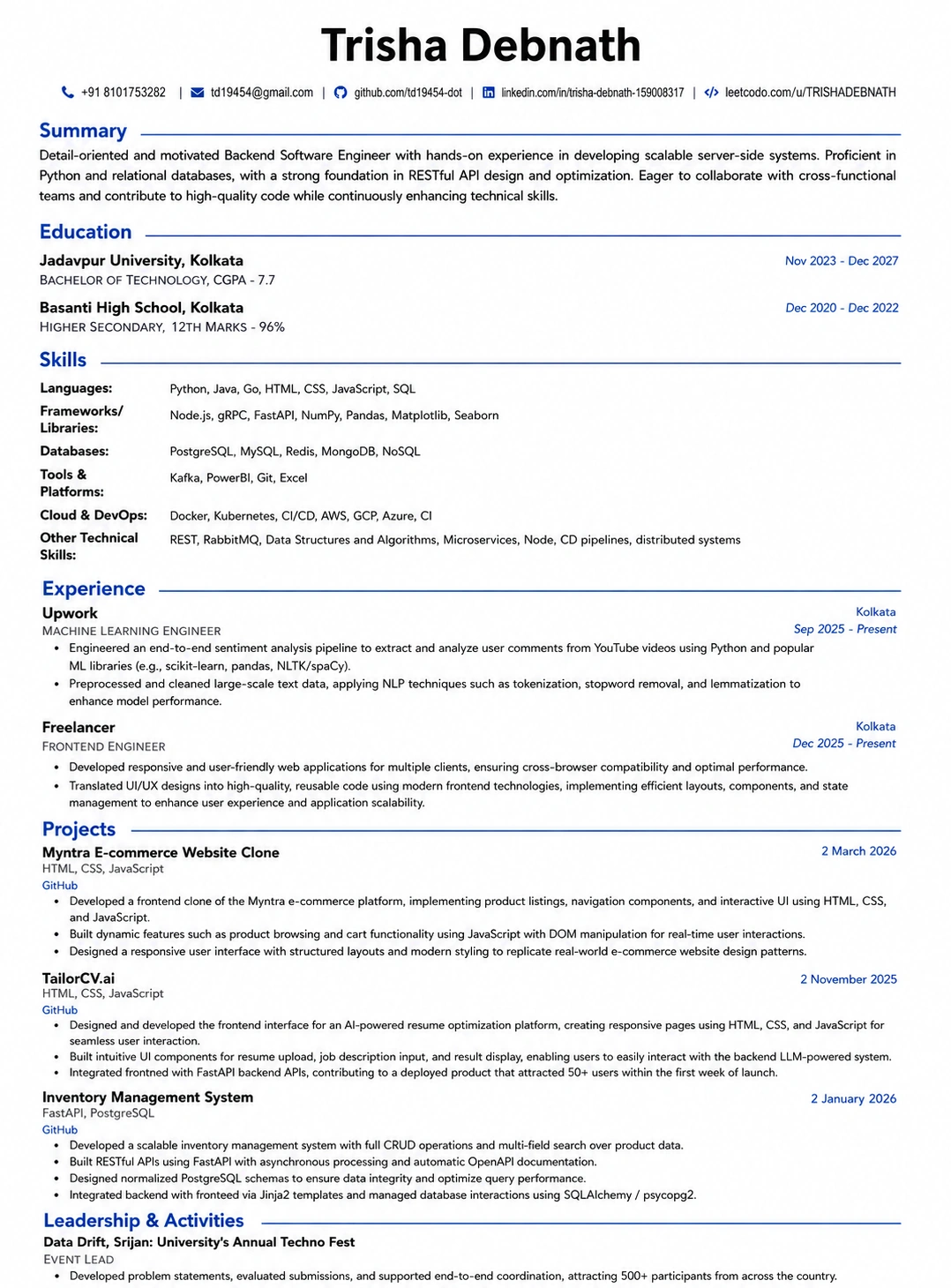
A layout that works with a short history
Leads with skills and projects instead of years of experience you do not have yet.
Was this guide useful?
Be the first to rate it.