 SS
SS
Key Takeaways
- Different real estate roles require distinct resume strategies, with specific emphasis on skills and metrics relevant to each category.
- Larger firms often use ATS software to screen resumes, making keyword alignment crucial for job applications.
- Tailor your resume to match the job description by focusing on relevant production numbers, software proficiency, and market segment language.
- Common mistakes include using a generic resume for different roles and failing to clearly state required licenses or credentials.
- Utilize specific keywords related to licensing, software, and skills to enhance your resume's match score for the desired position.
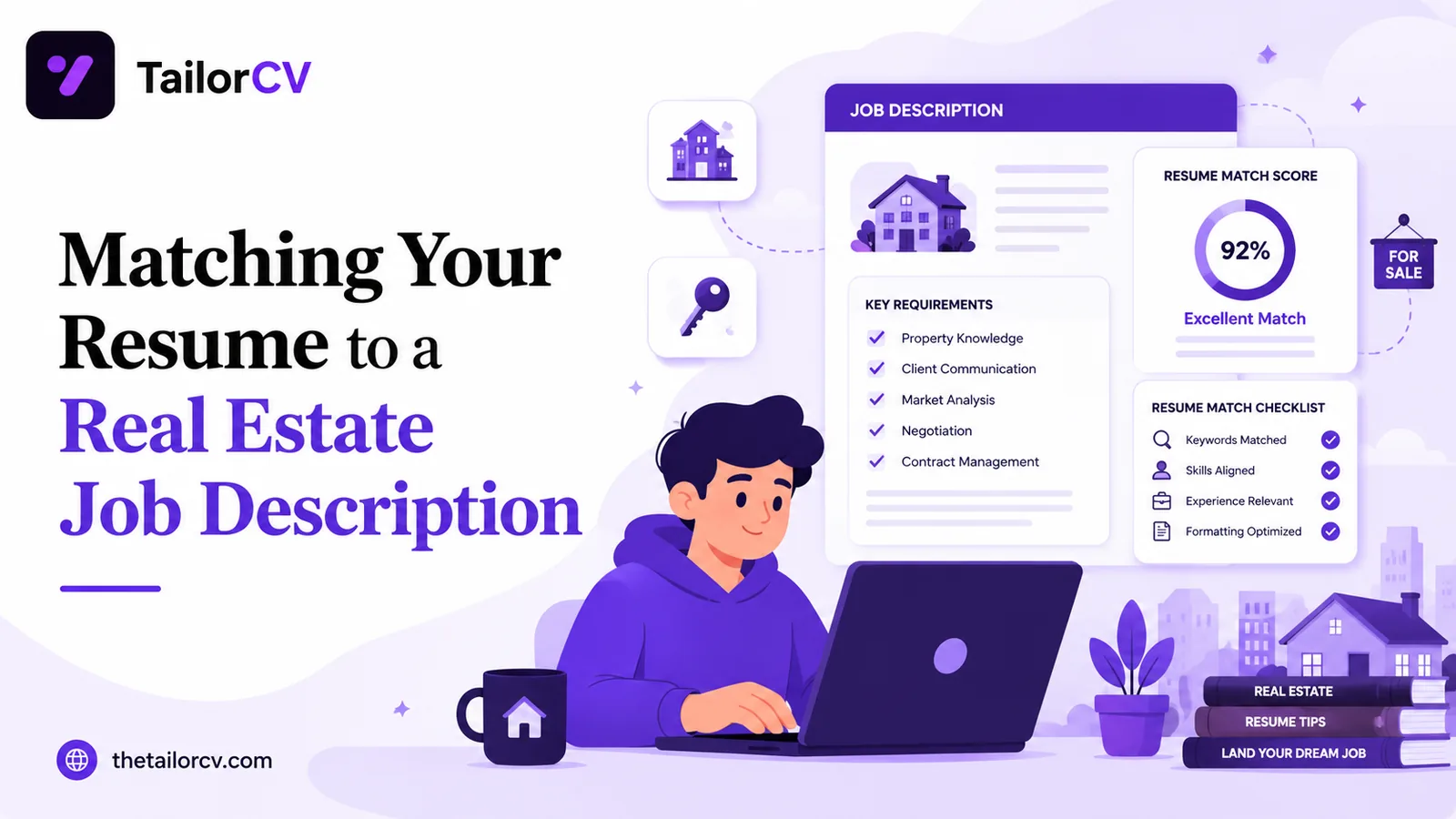
Real estate hiring spans a wide range of roles, from commission-based sales agents to salaried property managers to commercial real estate analysts, and each type of job description rewards a different resume strategy. A resume built for a leasing agent role rarely matches well against a commercial real estate analyst posting, even though both fall under "real estate."
Larger brokerages, property management firms, and commercial real estate companies increasingly use ATS software to screen applicants, especially for property management and corporate real estate roles.
This guide covers how to match your resume to a real estate job description, across sales, property management, and commercial real estate.
Paste any real estate job posting into the TailorCV resume optimizer to see your match score instantly.
The Three Types of Real Estate Job Descriptions
- Sales and leasing agent roles — weigh production numbers, licensing, and client relationship skills heavily
- Property management roles — weigh operational metrics, tenant relations, and specific software proficiency
- Commercial and corporate real estate roles — weigh financial analysis, market research, and deal experience
Matching your resume starts with correctly identifying which of these three categories the posting falls into, since the language and priorities differ significantly.
Keywords That Matter in Real Estate Job Descriptions
| Category | Examples |
|---|---|
| Licensing and credentials | Real estate license (by state), broker license, CCIM, CPM |
| Software and tools | MLS, Yardi, AppFolio, RealPage, CoStar, Salesforce |
| Sales and leasing metrics | Sales volume, units leased, occupancy rate, commission structure |
| Property management skills | Tenant relations, lease administration, maintenance coordination, budget management |
| Commercial real estate skills | Underwriting, market analysis, cap rate, due diligence, deal structuring |
Use the resume keywords guide to decide which terms belong in your summary and skills section based on the role type.
Matching a Real Estate Agent Resume
- Lead with production numbers: total sales volume, number of transactions closed, average deal size
- Confirm your license status matches exactly what the posting requires (state, brokerage affiliation)
- Reflect the specific market segment named in the posting (residential, luxury, commercial, rental)
- Name the CRM or MLS platform you use if the posting specifies one
Read how to quantify resume achievements for guidance on presenting commission-based results clearly.
Matching a Property Management Resume
- Name the specific property management software required (Yardi, AppFolio, RealPage) explicitly
- Quantify portfolio size: number of units, square footage, or properties managed
- Reflect occupancy rate improvements, tenant retention, or budget management results
- Match the property type language exactly (multifamily, commercial, mixed-use, student housing)
Matching a Commercial Real Estate Resume
- Lead with deal volume, transaction size, or portfolio value managed or analyzed
- Reflect specific financial modeling or underwriting tools by name (Argus, Excel-based models, CoStar)
- Match the exact asset class language used in the posting (office, industrial, retail, multifamily)
- Include relevant credentials like CCIM or CPM if the posting values them
If you are moving between real estate sub-sectors, such as residential sales into commercial analysis, read resume matching for career changers for guidance on translating your experience.
Common Mistakes in Real Estate Resume Matching
Treating All Real Estate Roles as the Same
Submitting the same resume for an agent role and a property management role dilutes your match for both. Tailor your emphasis to the specific role type.
Omitting License or Credential Status
If a posting requires an active real estate license and your resume does not clearly confirm it, you risk being filtered out even with strong experience. State your license status explicitly.
Leaving Out Software Proficiency
Property management and commercial real estate postings frequently name specific tools as requirements. Listing "real estate software" generically instead of naming Yardi or AppFolio directly can cost you a keyword match.
Formatting That Fails ATS Parsing
Review ATS resume formatting mistakes and build from a clean, ATS-friendly template for corporate and property management applications specifically.
How TailorCV Helps Real Estate Job Seekers
Paste any real estate job posting into TailorCV's resume optimizer to identify missing licensing, software, and metric keywords instantly. TailorCV rewrites your bullets to reflect the posting's exact language while preserving your real production numbers and experience, and checks your formatting against ATS parsing rules. Build a tailored cover letter for each brokerage or firm you apply to.
Your resume after optimization
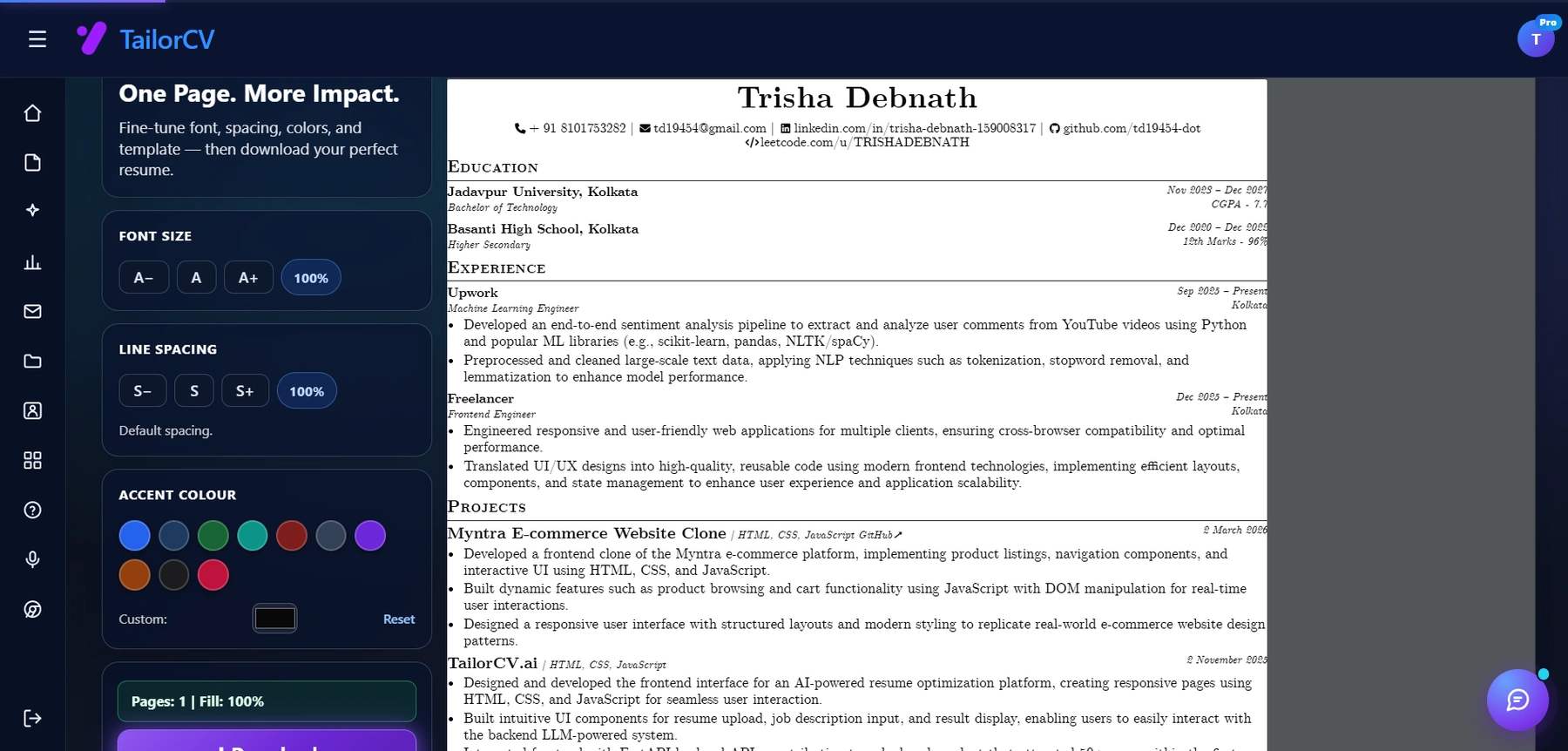
Font size, spacing, accent colour and template are all adjustable, with a live page counter.
Real Estate Job Description Analysis: A Step-by-Step Guide
When preparing your resume for a real estate position, analyzing the job description is crucial. Here’s a step-by-step approach to ensure you capture all relevant details:
-
Read the Job Description Thoroughly: Begin by reading the entire job description carefully. Highlight key responsibilities, required skills, and qualifications.
-
Identify Keywords and Phrases: As you read, make a note of specific keywords or phrases that stand out, especially those related to skills, software, and industry terminology. These are often indicators of what the employer values most.
-
Categorize the Information: Divide the highlighted keywords into categories such as Skills, Experience, and Qualifications. This helps you visualize what areas you need to focus on in your resume.
-
Cross-Reference with Your Experience: Compare the categorized keywords with your own experiences. Identify where your background aligns with the job description and where it doesn’t.
-
Modify Your Resume: Tailor your resume by integrating the identified keywords and phrases into your work experience and skills sections. Ensure they reflect your actual capabilities and experiences.
-
Review and Revise: After making initial changes, review your resume against the job description again to ensure you haven’t missed any important elements.
For a detailed checklist to guide your analysis, check out our Job Description Analysis Checklist Before You Apply.
Common Mistakes to Avoid When Matching Your Resume
Creating a tailored resume is an art, and avoiding common pitfalls can make a significant difference. Here are some mistakes to steer clear of:
-
Using a Generic Resume: Submitting the same resume for multiple applications can lead to missed opportunities. Always customize your resume for each job.
-
Ignoring Job Description Language: Failing to use the specific terminology found in the job description can result in your resume not passing through Applicant Tracking Systems (ATS). Always mirror the language used in the job posting.
-
Overloading with Irrelevant Information: Including experiences or skills that don’t relate to the job can dilute your message. Focus on what’s relevant to the position at hand.
-
Neglecting Soft Skills: In real estate, interpersonal skills are crucial. Don’t forget to highlight your communication, negotiation, and relationship-building abilities.
-
Not Showcasing Results: Employers want to see your achievements. Use quantifiable metrics (e.g., “increased sales by 20%”) to demonstrate your impact in previous roles.
By being mindful of these common mistakes, you can create a more effective and targeted resume.
Mini Checklist for Tailoring Your Resume to Real Estate Jobs
Use this checklist to ensure your resume is perfectly tailored for real estate positions:
- unchecked: Job Title Alignment: Does your resume reflect the job title you are applying for?
- unchecked: Keyword Integration: Have you included keywords from the job description?
- unchecked: Relevant Experience: Are the most relevant past positions highlighted?
- unchecked: Quantifiable Achievements: Have you included metrics to showcase your contributions?
- unchecked: Skills Section: Does your skills section reflect the specific skills mentioned in the job description?
- unchecked: Formatting and Style: Is your resume formatted clearly and professionally, using one of the Best Resume Fonts for 2026?
- unchecked: Proofreading: Have you thoroughly checked for spelling and grammatical errors?
- unchecked: ATS Compatibility: Have you run your resume through an ATS checker to ensure it meets the technical requirements?
Following this checklist can help streamline your resume customization process.
Real-World Scenarios: Tailoring Your Resume for Different Real Estate Jobs
To illustrate the importance of tailoring your resume, consider these scenarios:
-
Scenario 1: Real Estate Agent Position
Jane is applying for a real estate agent role. The job description emphasizes negotiation skills and local market knowledge. Jane revises her resume to highlight her successful negotiation experiences and her extensive knowledge of the local housing market, including specific neighborhoods and property types. -
Scenario 2: Property Management Role
Mark is targeting a property management position where the focus is on tenant relations and maintenance oversight. He adjusts his resume to feature his previous experience managing tenant communications and coordinating maintenance requests, ensuring he uses the same terminology as the job description. -
Scenario 3: Commercial Real Estate Analyst
Sarah is applying for a commercial real estate analyst position that requires financial modeling skills. She revamps her resume to include her proficiency in financial software and specific achievements in financial analysis, showcasing relevant projects she’s completed.
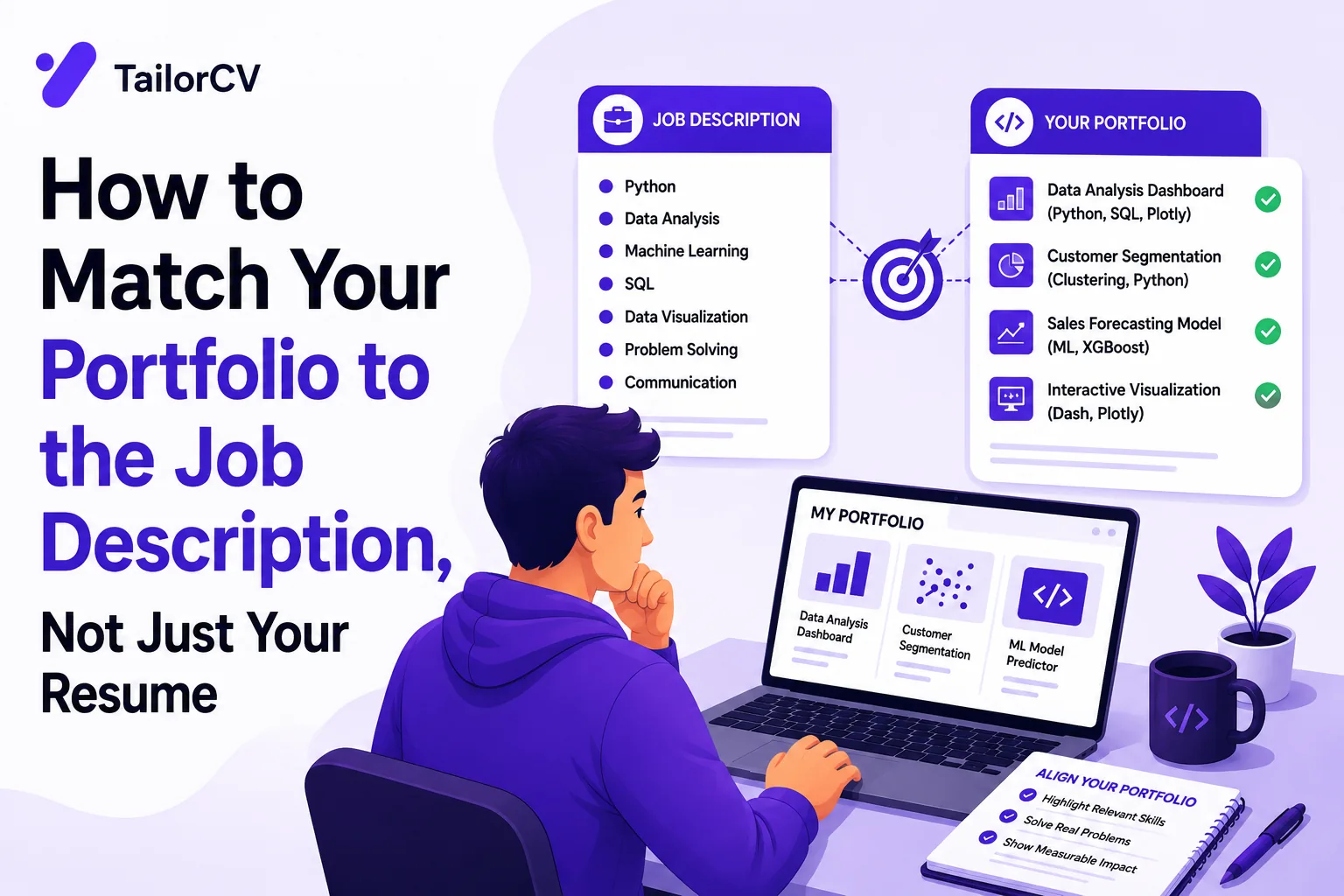
These scenarios exemplify how targeted resume customization can enhance the chances of landing an interview. For additional guidance on aligning your portfolio with job descriptions, see our guide on How to Match Your Portfolio to the Job Description (Not Just Your Resume).
By implementing these strategies and avoiding common mistakes, you can significantly increase your chances of standing out in the competitive real estate job market.
Frequently Asked Questions
Do real estate companies use ATS to screen resumes?
Larger brokerages, property management firms, and commercial real estate companies increasingly do, especially for property management and corporate roles. Independent agent hiring is often more relationship-based, but matching your resume's language still helps.
How important is naming specific software like Yardi or AppFolio?
Very important for property management roles. If a posting requires experience with a specific platform and your resume only says "property management software," you risk a keyword mismatch.
Should I include my sales volume even if it varied year to year?
Yes, include your most recent or strongest year, and specify the time period. Real, specific numbers are more credible and more matchable than vague claims.
Can I use one resume for both residential and commercial real estate roles?
Not effectively. The keywords, metrics, and priorities differ significantly between the two. Maintain separate versions and tailor each to the specific posting.
How do I check my real estate resume's match score before applying?
Use the TailorCV ATS score checker to compare your resume against any real estate job posting and see your match percentage instantly.
Related Guides
- Resume Matching with Job Description - Complete Guide
- Resume Matching for Career Changers
- How to Quantify Resume Achievements
- Resume Keywords Guide 2026
- Matching Your Resume to a Hospitality and Hotel Job Description
- Matching Your Resume to an Insurance Industry Job Description
- ATS Resume Formatting Mistakes
- Sales Executive Resume 2026
- ATS Score Guide 2026
- Cover Letter Guide 2026
Conclusion
Real estate resumes need to match not just the industry, but the specific role type, sales, property management, or commercial, since each rewards different keywords, metrics, and credentials.
Check your resume's match score against any real estate job posting with TailorCV before you apply.
Match My Resume to This Job - Free
What is your resume scoring right now?
Scan it against a job description and get your ATS match score in about a minute.
Drop your resume here or choose a file
PDF only. Max 2 MB.
We never share your data or use it to train AI models.

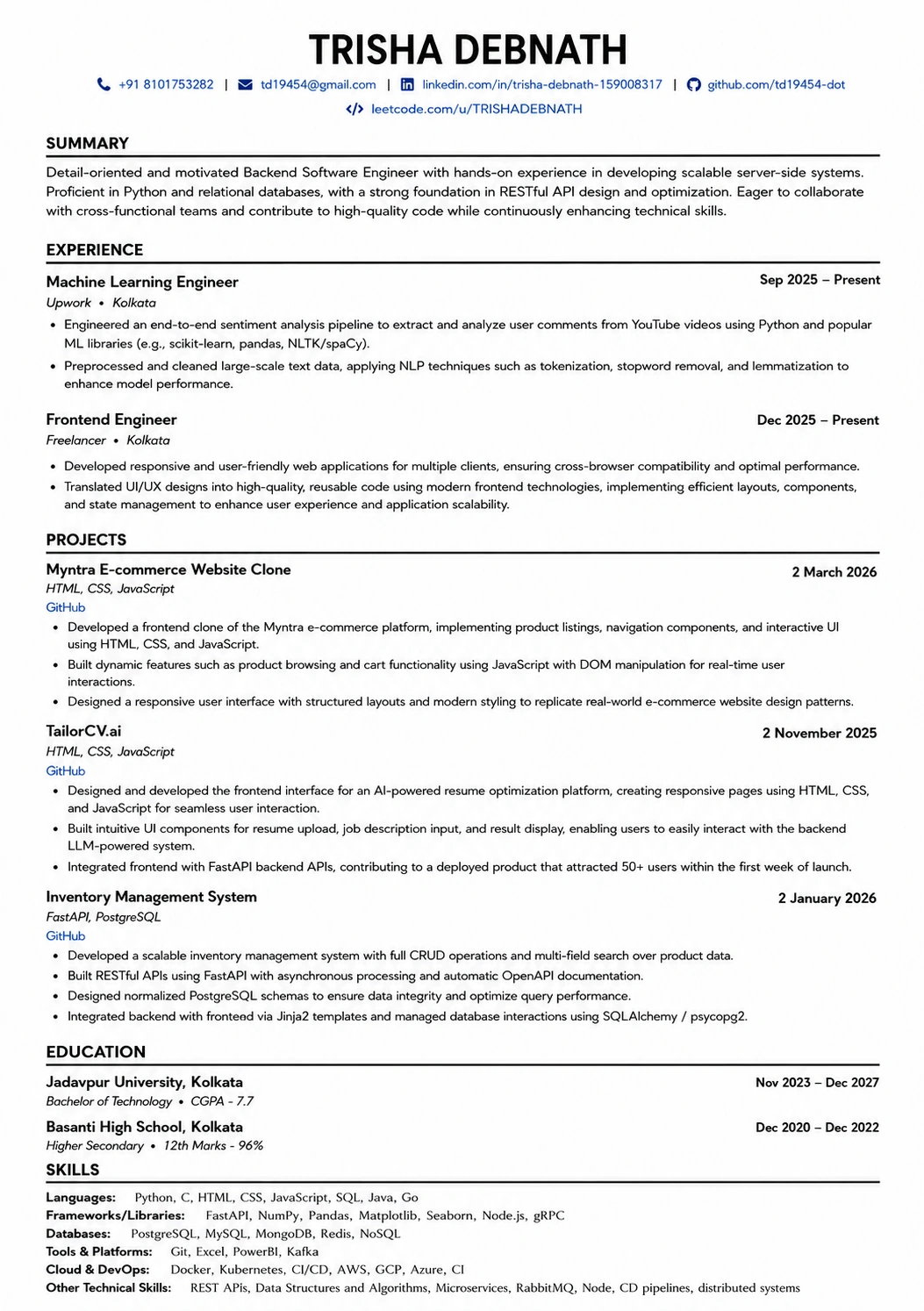
Templates that keep this structure intact
This template is ATS-tested — start from it and the formatting rules in this guide are already handled.
Was this guide useful?
Be the first to rate it.