 TD
TD
Key Takeaways
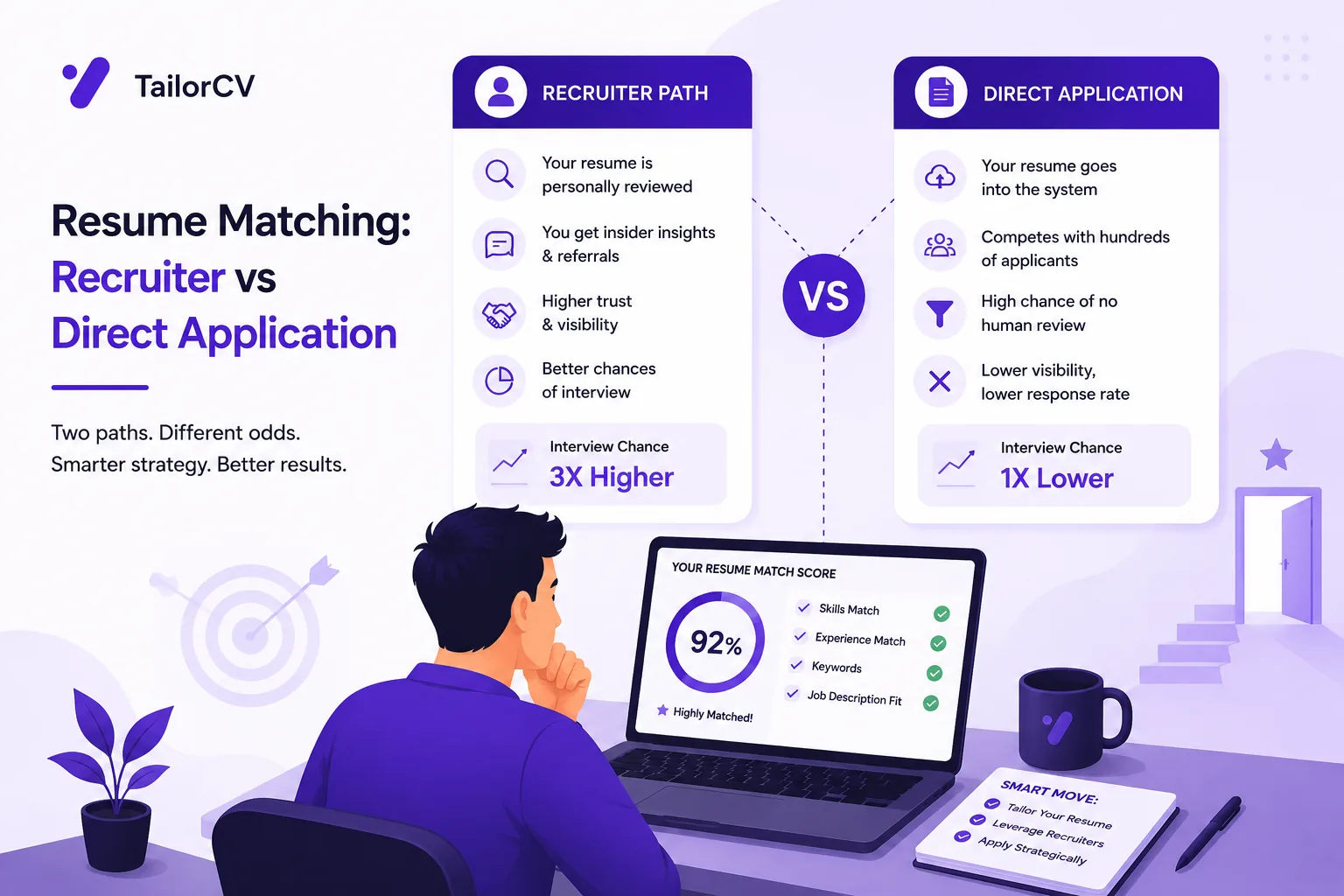
- Your resume still goes through an ATS when submitted by a recruiter, making keyword matching important.
- A recruiter evaluates your fit before submission, so your resume must impress them first.
- Tailoring your resume shows effort and strengthens the recruiter's internal advocacy for you.
- Provide the full job description to extract relevant keywords and tailor your resume effectively.
- Use conversations with the recruiter to explain nuances that a resume cannot capture.
A recruiter reaches out about a role, or you connect with a staffing agency, and suddenly the resume matching calculus feels different. Since a human recruiter, not just an ATS, is reviewing your resume and vouching for you internally, does matching your resume to the job description still matter as much?
Short answer: yes, but the reasons and the emphasis shift. This guide breaks down exactly how.
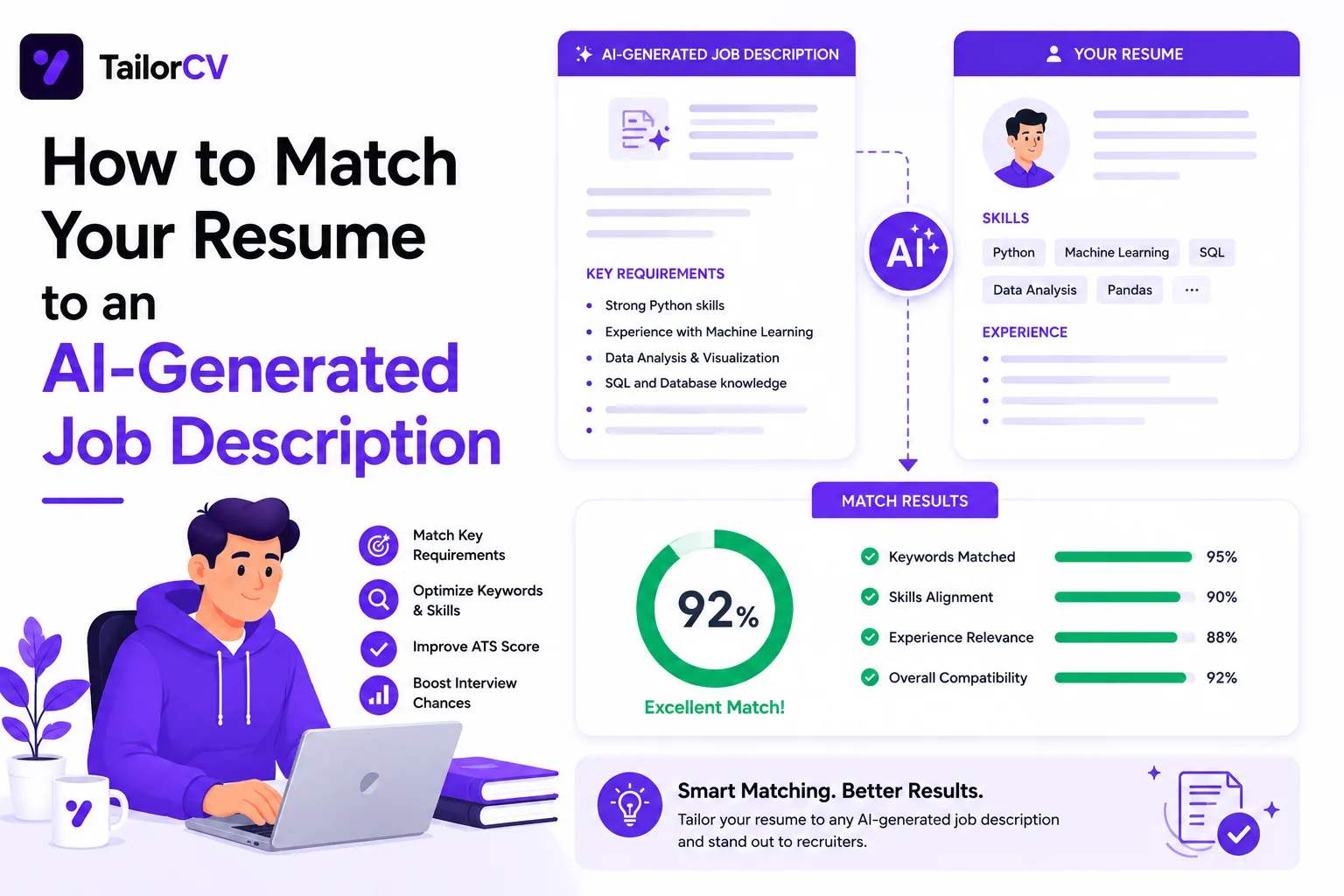
Whether you are working with a recruiter or applying directly, check your match score with the TailorCV ATS score checker before your resume goes out the door.
What Actually Changes When a Recruiter Is Involved
The Resume Still Goes Through the Same ATS
In most cases, a recruiter submitting you for a role still uploads your resume into the employer's ATS, which parses and scores it the same way it would for a direct applicant. A recruiter relationship does not bypass this step in most corporate hiring processes.
The Recruiter Is Also Evaluating Fit Before Submitting You
A good recruiter will not submit a resume they think is a weak match, since their reputation with the client depends on submitting strong candidates. This means your resume needs to convince the recruiter first, before it ever reaches the employer.
You Get a Chance to Provide Context the ATS Can't Capture
Unlike a fully automated application, a recruiter conversation lets you explain nuance, career pivots, gaps, or non-traditional experience, verbally, in a way a resume alone cannot. This does not replace resume matching, but it supplements it.
Should You Still Tailor Your Resume for a Recruiter Submission?
Yes. Here is why it still matters:
Your resume after optimization
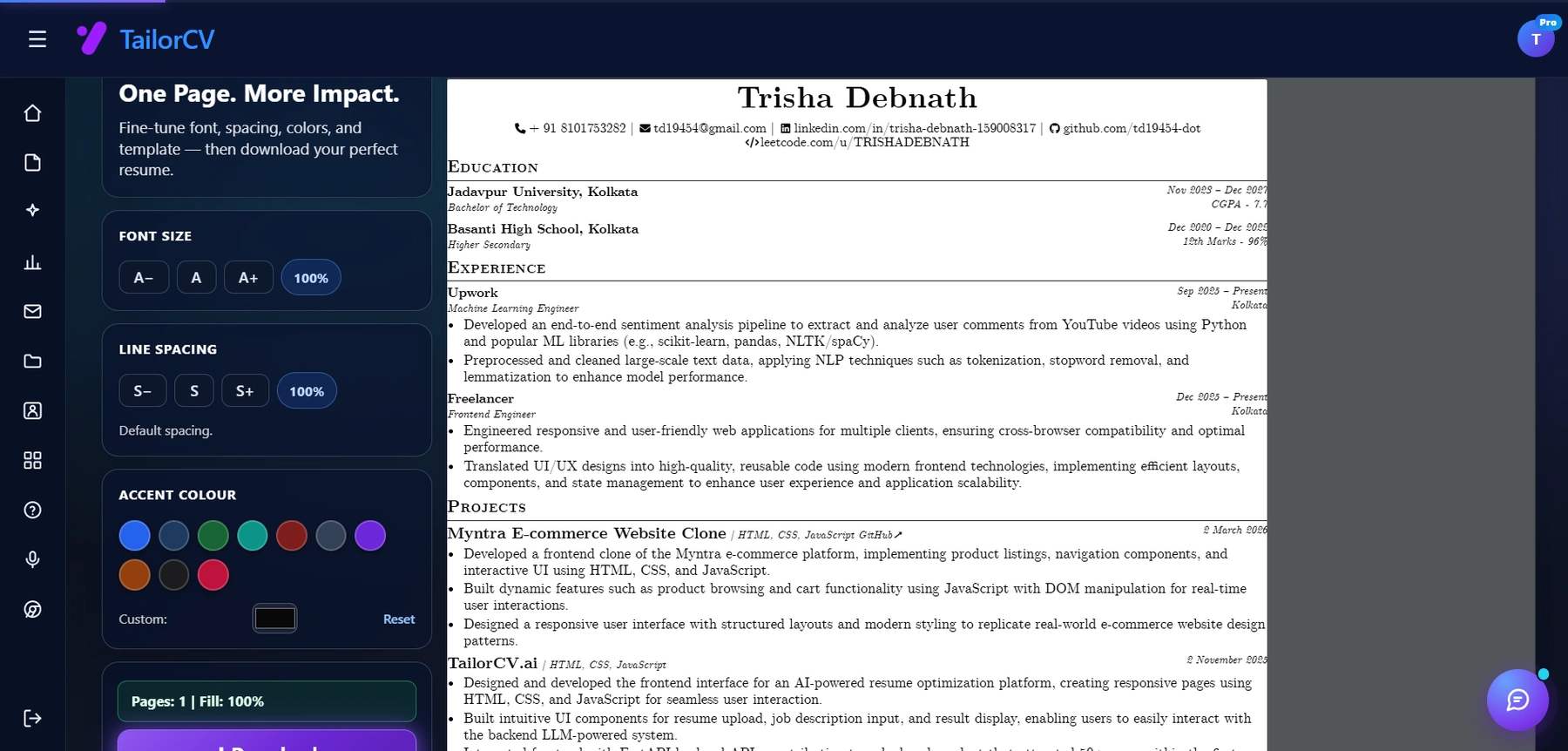
This is the resume after tailoring - the content is already matched, and these controls are how you fit it onto one page.
- The resume usually still passes through an ATS at the employer's end, so keyword matching still affects your score.
- The recruiter uses your resume to build internal credibility with the hiring manager, and a well-matched resume makes their pitch stronger.
- A generic resume signals lower effort, even to a recruiter who already believes in you, and can slow down how confidently they advocate for you internally.
Read common resume and job description mismatch mistakes to understand what a mismatched resume actually costs you, recruiter relationship or not.
What's Different: Where to Focus Your Effort
| Element | Direct Application | Recruiter Submission |
|---|---|---|
| Keyword matching in resume | Critical, since ATS is the first filter | Still important, ATS usually still applies |
| Cover letter | Often required, high effort | Often replaced by recruiter's own pitch email |
| Explaining gaps or pivots | Must be handled entirely on paper | Can be explained verbally to the recruiter directly |
| Follow-up | Falls entirely on you | Recruiter often follows up on your behalf |
| Formatting for ATS parsing | Essential | Still essential, since most recruiters use the employer's ATS |
Read how to write a cold email to a recruiter if you are trying to build a recruiter relationship rather than waiting to be found.
How to Work Effectively With a Recruiter on Resume Matching
Share the Full Job Description, Not Just the Title
Ask your recruiter for the complete job description, not a summary, so you can extract the actual keywords and requirements yourself rather than relying on secondhand context.
Tailor Before You Send, Not After
Send your recruiter a version of your resume already matched to the specific role, rather than a generic one you expect them to "position" for you. Recruiters can advocate for you more effectively with a resume that already makes the case clearly.
Ask What the Employer's ATS Or Process Looks Like
Some recruiters know whether the employer's process is heavily automated or more manually reviewed. This context can help you decide how much to prioritize dense keyword matching versus narrative clarity.
Use the Verbal Conversation to Cover What the Resume Can't
Save nuanced context, career pivots, non-obvious transferable skills, and personal motivation for the recruiter conversation itself, rather than trying to cram it all into the resume.
When Recruiter Relationships Matter Most
Recruiter relationships tend to add the most value in situations where resume matching alone struggles to tell your full story:
- Career changers, where a recruiter can advocate for transferable skills a keyword scan might miss, read resume matching for career changers
- Senior or executive roles, where relationships and reputation carry more weight, read executive resume tailoring guide
- Niche or highly specialized roles, where a specialist recruiter understands nuance a generic ATS filter would not
Even in these cases, a well-matched resume still strengthens the recruiter's ability to advocate for you.
How TailorCV Helps When You're Working With a Recruiter
Paste the job description your recruiter shares into TailorCV's resume optimizer to quickly produce a matched, ATS-ready resume you can send back the same day. A strong, tailored resume makes your recruiter's job easier and their pitch to the hiring manager stronger.
Common Mistakes When Working with Recruiters
Navigating the job market with the assistance of a recruiter can be beneficial, but there are common pitfalls that candidates should avoid. Here’s a list of mistakes that can hinder your chances of success:
-
Neglecting to Customize Your Resume: Even when working with a recruiter, failing to tailor your resume to the specific role can lead to missed opportunities. Recruiters appreciate candidates who make an effort to reflect the job description in their resumes.
-
Ignoring Recruiter Feedback: If a recruiter suggests changes to your resume or approach, it’s essential to consider this feedback seriously. They have insight into what companies are looking for and can help you present yourself in the best light.
-
Overlooking the Importance of Soft Skills: Many recruiters prioritize cultural fit alongside technical skills. Make sure to highlight relevant soft skills that align with the company culture, as these can be decisive factors in the hiring process.
-
Failing to Prepare for Interviews: Some candidates assume that the recruiter will handle all aspects of preparation. However, you are still responsible for researching the company and preparing for interviews. Use resources like mock interviews to build confidence.
-
Not Following Up: After submitting your resume or completing an interview, don’t forget to follow up with both the recruiter and the hiring manager. This shows your enthusiasm for the position and keeps you top-of-mind.
Step-by-Step Guide to Tailoring Your Resume for Recruiter Submissions
To maximize your chances of getting noticed by potential employers through a recruiter, follow this step-by-step guide to tailoring your resume effectively:
-
Analyze the Job Description: Start with a thorough analysis of the job description using the Job Description Analysis Checklist Before You Apply. Identify key responsibilities and required skills.
-
Create a Keyword Map: Utilize the Resume Keyword Map Template - Match Your Resume to Any Job Description to extract relevant keywords from the job description. This will help you focus on the most important terms to include in your resume.
-
Prioritize Qualifications: Differentiate between required and preferred qualifications as outlined in Required vs Preferred Qualifications - How to Prioritize What You Match. Ensure your resume highlights your qualifications that meet the required criteria first.
-
Draft a Tailored Summary Statement: Write a compelling summary statement that aligns with the job description. This should be a brief overview that captures your experience, skills, and what you bring to the position.
-
Highlight Relevant Experience: Adjust your work experience section by emphasizing roles and responsibilities that directly relate to the job you are applying for. Use bullet points to clearly articulate your achievements and contributions.
-
Incorporate Soft Skills: Don't forget to weave in soft skills that are relevant to the role. This can be included in your summary or experience sections to showcase your fit for the company culture.
-
Proofread and Format: Ensure your resume is free of errors and formatted professionally. Use tools like ATS checker to verify that your resume is optimized for applicant tracking systems.
-
Send to the Recruiter: Once you have tailored your resume, send it to your recruiter along with a brief note explaining how you tailored it for the specific job. This not only shows initiative but also helps the recruiter understand your fit.
Do's and Don'ts for Submitting Your Resume Through a Recruiter
To streamline your submission process and enhance your chances of success, keep the following do's and don'ts in mind:
Do's:
- Do Communicate Openly: Keep an open line of communication with your recruiter about your job preferences and career goals.
- Do Be Professional: Treat your interactions with recruiters as you would with a potential employer. Professionalism goes a long way.
- Do Prepare Your Portfolio: If applicable, ensure your portfolio aligns with the job description. Refer to How to Match Your Portfolio to the Job Description (Not Just Your Resume) for guidance.
Don'ts:
- Don't Send a Generic Resume: Avoid sending a one-size-fits-all resume. Personalize it for each application, even when working with a recruiter.
- Don't Ignore the Recruiter’s Expertise: If your recruiter suggests changes or strategies, consider their advice seriously; they are experienced in the industry.
- Don't Overlook the Importance of Networking: Don't rely solely on the recruiter to get you interviews. Network actively within your industry to increase your chances.
Quick Checklist for Tailoring Your Resume for Recruiter Submissions
Use this quick checklist to ensure your resume is ready for submission through a recruiter:
- unchecked: Analyzed the job description thoroughly.
- unchecked: Created a keyword map to identify important terms.
- unchecked: Highlighted required qualifications prominently.
- unchecked: Drafted a tailored summary statement.
- unchecked: Emphasized relevant experience with quantifiable achievements.
- unchecked: Incorporated necessary soft skills.
- unchecked: Proofread for errors and ensured proper formatting.
- unchecked: Sent a personalized note to the recruiter with your resume.
By following these steps and avoiding common mistakes, you can significantly improve your chances of landing a job through a recruiter. Tailoring your resume is not just a task; it’s an opportunity to showcase your best self in the competitive job market.
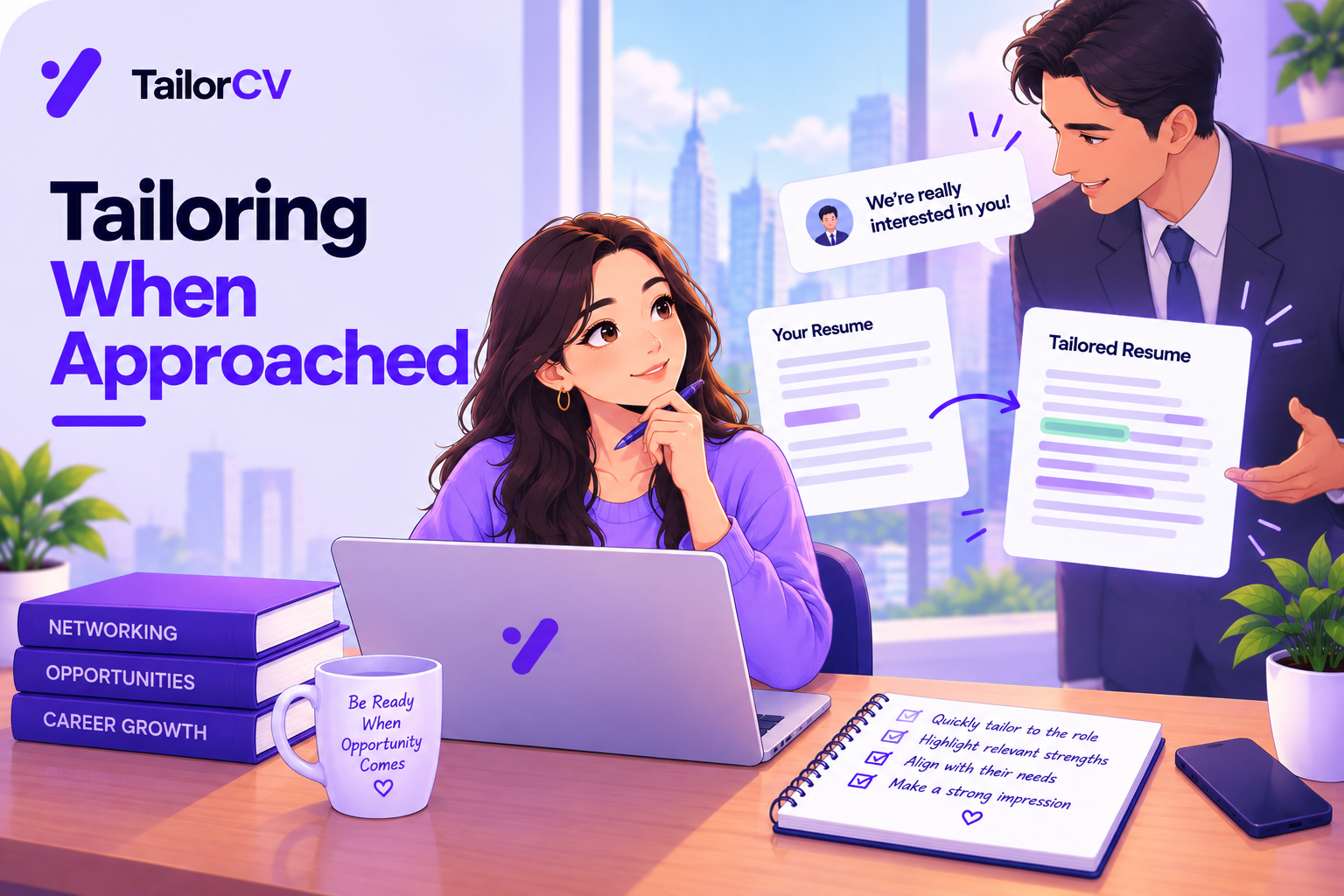
If a recruiter or company approached you first, tailoring when you're being poached shows how to use that access to tailor better.
Frequently Asked Questions
Does a recruiter submission skip the employer's ATS?
Usually not. Most recruiters still submit your resume through the employer's applicant tracking system, so it is parsed and scored the same way a direct application would be.
If a recruiter already believes I'm a good fit, does resume matching still matter?
Yes. The recruiter's belief in your fit does not replace the resume's role in passing the employer's ATS and reinforcing that fit visually and in writing to the hiring manager.
Should I write a different resume for a recruiter than for a direct application?
Not fundamentally different, but you may lean more on the recruiter conversation to explain context and less on the resume alone to carry the full narrative.
Do I still need a cover letter if a recruiter is submitting me?
Often not required, since many recruiters submit candidates with their own summary or pitch email instead. Confirm with your recruiter whether one is expected.
How do I check my resume's match score before sending it to a recruiter?
Use the TailorCV ATS score checker to confirm your resume is well-matched to the job description before you hand it off. You can also utilize a resume keyword map template to ensure your resume aligns with the necessary keywords.
Related Guides
- Resume Matching with Job Description - Complete Guide
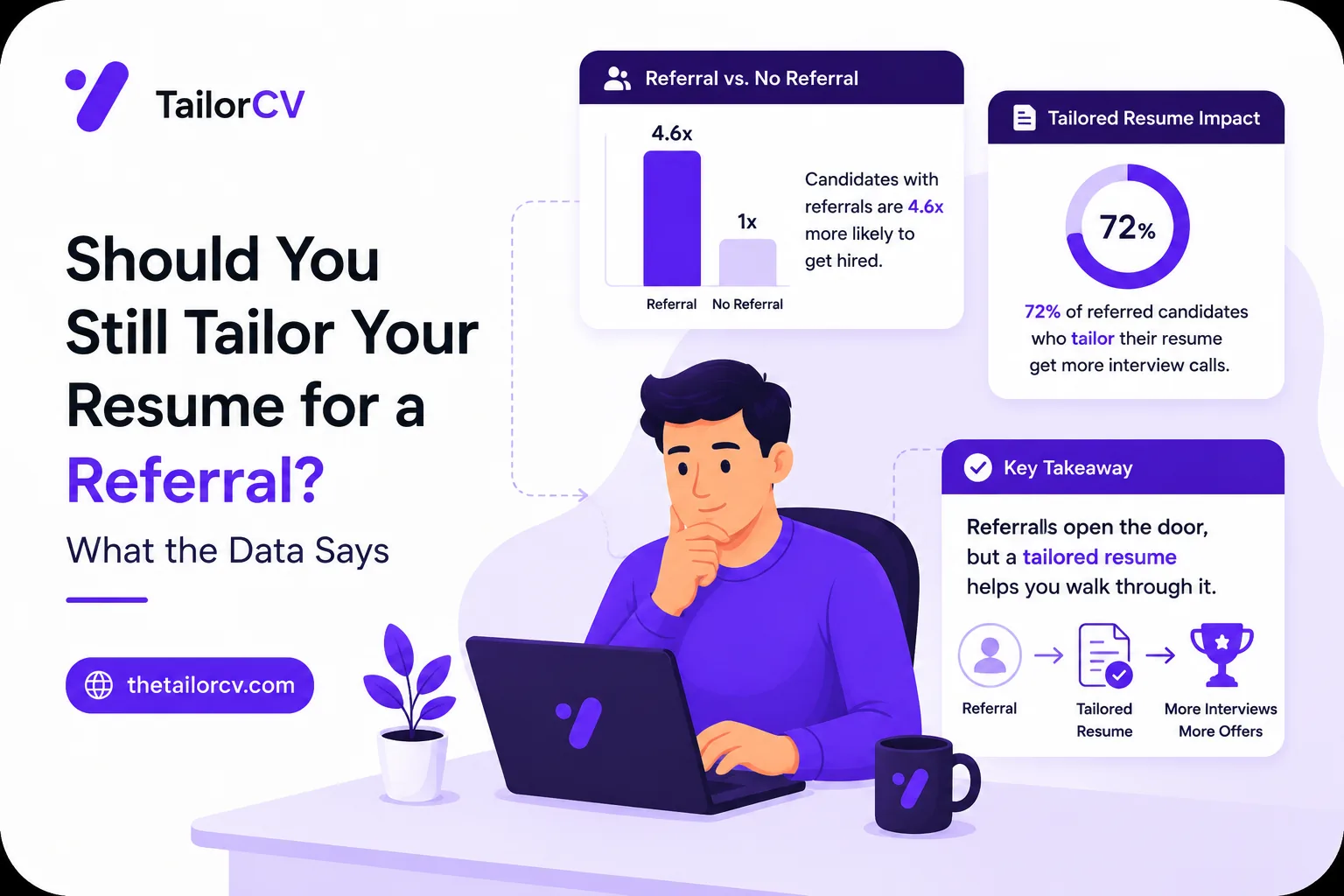
- Should You Still Tailor Your Resume for a Referral?
- How to Write a Cold Email to a Recruiter
- Resume Matching for Career Changers
- Executive Resume Tailoring Guide
- Common Resume and Job Description Mismatch Mistakes
- Job Description Keyword Extraction Guide
- Networking Tips for Job Search
- ATS Score Guide 2026
- Cover Letter Guide 2026
Conclusion
A recruiter relationship strengthens your application, it does not replace resume matching. Your resume still passes through the same ATS and still needs to make a clear, well-matched case, both to the recruiter advocating for you and to the employer reviewing it.
Send your recruiter a resume that is already matched to the role. Check it with TailorCV first.
Match My Resume to This Job - Free
What is your resume scoring right now?
Scan it against a job description and get your ATS match score in about a minute.
Drop your resume here or choose a file
PDF only. Max 2 MB.
We never share your data or use it to train AI models.

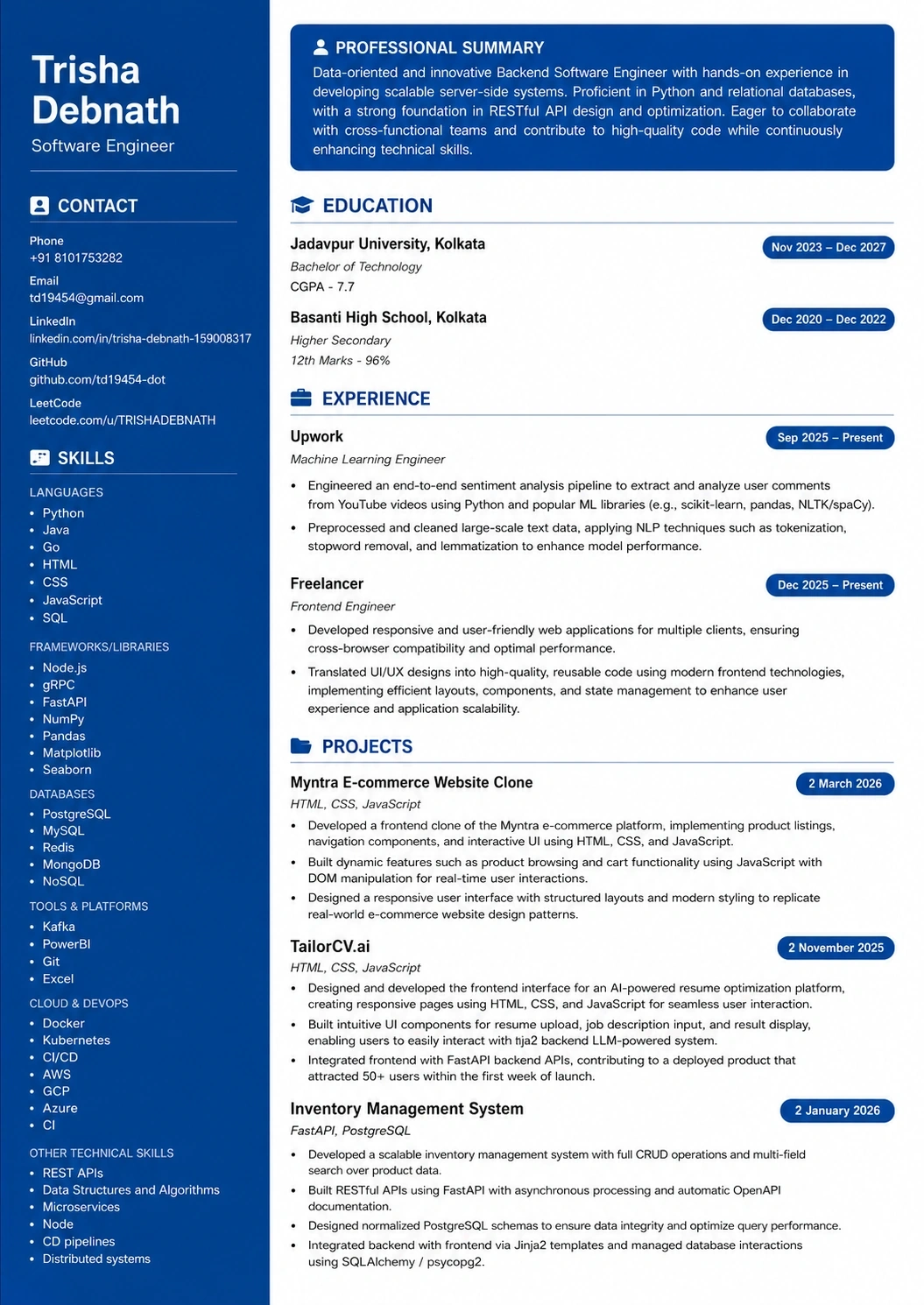
Templates that keep this structure intact
This template is ATS-tested — start from it and the formatting rules in this guide are already handled.
Was this guide useful?
Be the first to rate it.