 TD
TD
Key Takeaways
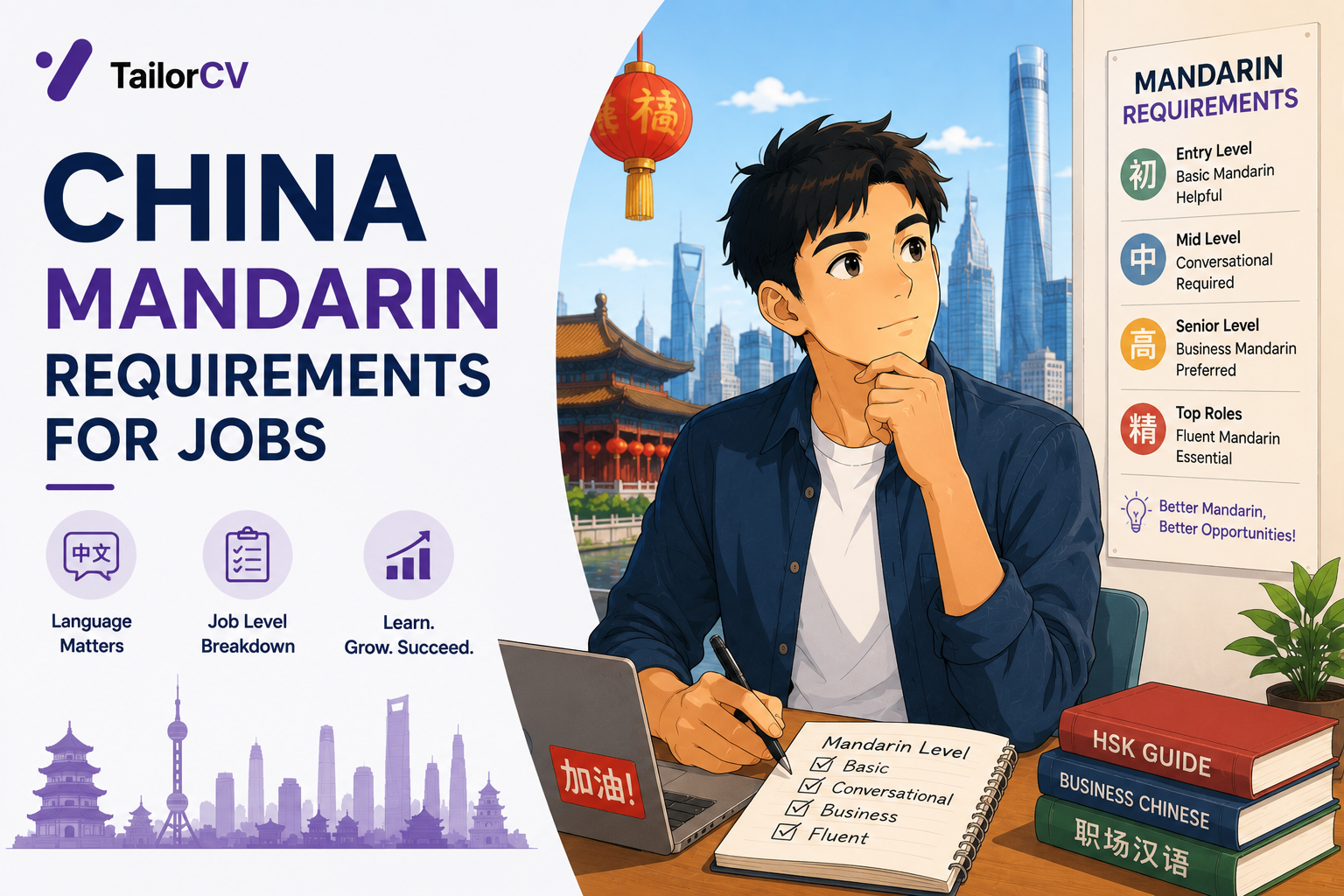
- Language requirements vary enormously by employer type and function, and no single rule applies across the whole market.
- Domestic Chinese employers, including state-owned enterprises and most private companies, generally expect working fluency for both interviewing and daily work.
- Some roles at multinational companies, particularly in specific technical, research or regional-coordination functions, are genuinely accessible with limited or no Mandarin.
- Business Mandarin, the vocabulary and register needed for professional work, differs meaningfully from conversational fluency and is worth assessing separately.
- Honestly assessing your actual level against a specific role's real requirement, rather than the company's general reputation, is what prevents wasted applications.
Why this varies so much
There is no single, universal answer to "do I need Chinese to work in China," because the honest answer depends entirely on the specific employer and role, treating the question as having one universal answer is the most common source of wasted job search effort in this market.
Domestic employers, including state-owned enterprises and most private Chinese companies, generally operate primarily or entirely in Mandarin, both the recruiting and interview process and the daily working environment, this is the default assumption for this category and a real, not nominal, requirement.
Technology companies follow a similar pattern for domestic firms, with some larger companies having specific teams or international divisions where the picture differs, worth checking the specific team's actual working language rather than the company's general profile.
Multinational companies vary considerably, some maintain English as a primary working language for specific functions or teams, particularly research, certain technical roles, or positions coordinating with a global headquarters, others expect Mandarin fluency for effective local collaboration regardless of the company's international profile, the company's general international reputation is a poor predictor of a specific team's actual working language.
Assessing what a role actually needs
Read the posting for explicit language requirements, increasingly common for postings to state a required level directly, and where stated, this is a real filter rather than a formality.
Ask directly rather than assuming, a short, direct question to a recruiter about the team's actual working language, and what proportion of daily work happens in Mandarin versus English, produces far more reliable information than inferring from the company's general profile.
Distinguish between interview language and working language, some employers interview in English but expect meaningful Mandarin ability for the actual role, others do the reverse, clarify both separately rather than assuming they match.
Talk to someone currently in a similar role if you can, through an alumni network or a professional contact, this single conversation frequently reveals the actual daily language reality far more accurately than any official description.
Business Mandarin versus conversational fluency
Conversational fluency and professional working ability are genuinely different skills, someone who can navigate daily life comfortably in Mandarin may still lack the specific vocabulary and register needed for business writing, formal meetings, or technical documentation in a specific field.
If your target role requires professional Mandarin, assess this specifically, not just your general conversational comfort, professional or business Mandarin study, distinct from general language courses, is worth pursuing if you are targeting roles at domestic employers or Mandarin-primary teams.
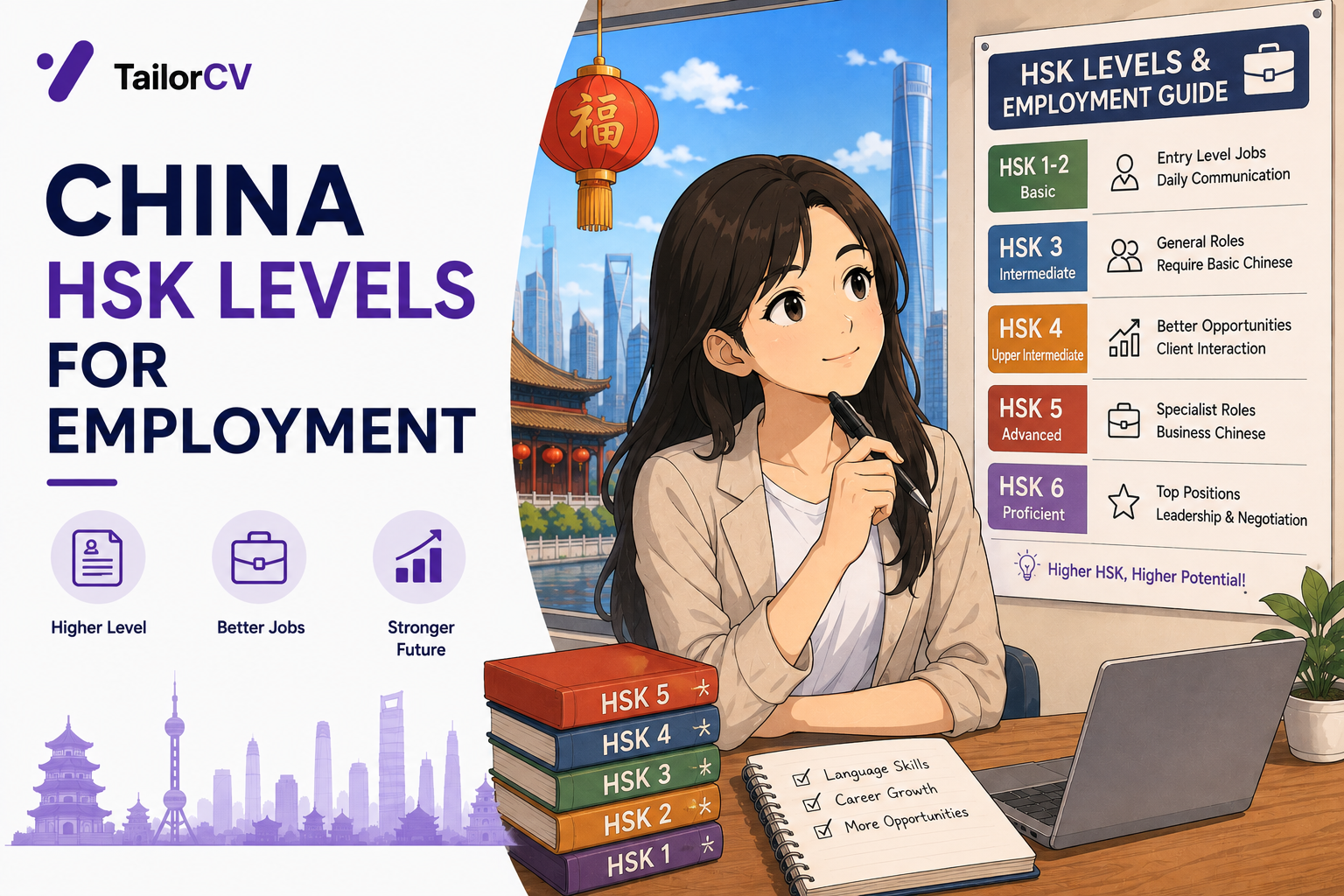
Certification level provides a useful, if imperfect, benchmark, the HSK level guide covers how specific certification levels map to realistic job requirements, worth reading alongside this article if you are trying to gauge where you currently stand relative to a specific role's needs. Note that HSK (Hanyu Shuiping Kaoshi) is specifically the test built for non-native learners — a separate test, PSC (普通话水平测试, Putonghua Proficiency Test), certifies standard Mandarin pronunciation and is aimed mainly at native or near-native speakers entering professions like teaching or broadcasting. If a job posting mentions a language certification requirement, checking which of the two it actually means avoids you preparing for, or citing, the wrong credential entirely.
Roles genuinely accessible with limited Mandarin
Certain technical and research roles at multinational companies, particularly where the immediate team operates in English and the work itself is not primarily client or public facing in Mandarin.
Some teaching positions, particularly at international schools, where English is the primary working language of the role itself, though basic Mandarin still meaningfully improves daily life and professional integration.
Regional coordination or specific global-facing roles at some multinational companies, where the function is explicitly to bridge between a China operation and an international headquarters.
These roles exist and are genuinely accessible, and they represent a real minority of the overall market, worth being honest with yourself that the bulk of the domestic job market, including the large state-owned enterprise sector and most domestic private companies, remains substantially closed without meaningful Mandarin ability.
Building the language ability if you need it
If your target roles require Mandarin you do not yet have, this is a multi-year investment rather than something to acquire in a final semester, plan accordingly and honestly, exactly the same realistic planning that any structural constraint on a job search deserves.
Studying or working in China itself accelerates this considerably, an academic year or a defined work placement produces a meaningfully different outcome than classroom study alone.
Target specific vocabulary relevant to your field early, general conversational study alone does not prepare you for professional or technical Mandarin in a specific domain.
Testing your assumptions before committing significant effort
Rather than assuming a general sense of "I would need much better Mandarin" and either giving up on the domestic market entirely or delaying your search indefinitely to study, get specific, direct information first, contact a small number of real recruiters or HR contacts at genuinely representative target employers and ask directly what level their specific roles actually require, this concrete information is worth more than any general assumption formed without checking.
Consider whether a hybrid strategy, targeting the accessible minority of roles now while building language ability deliberately over time toward the larger domestic market, better serves your situation than an all-or-nothing approach, this lets you gain real local work experience and income while continuing to build toward broader long-term options.
The specific vocabulary that matters most for a job search itself
Beyond general conversational and professional ability, the specific vocabulary and phrasing used in job postings, application forms and interview questions in this market forms its own distinct, learnable subset, worth studying real job postings and common interview question formats specifically, even before your broader general ability reaches your ultimate target level, this targeted preparation lets you navigate the application process itself more confidently even while your overall fluency continues developing.
Tip: Ask a recruiter directly what proportion of the team's daily work happens in Mandarin versus English. It is a far more useful question than "is Chinese required", and it gets a specific answer rather than a diplomatic one.
Common Mistakes
- Assuming one answer on Mandarin. Assuming a single blanket answer to whether Mandarin is required, without checking the specific employer and role. The single most common error in this area.
- Judging language by company brand. Relying on a company's general international reputation to infer a specific team's actual working language. Frequently unreliable, ask directly.
- Confusing conversational with professional. Confusing conversational fluency with the professional Mandarin a specific role genuinely requires. Different skills, worth assessing separately.
- Not separating interview from daily language. Not asking directly about the interview language versus the actual daily working language. These sometimes differ within the same role.
- Cramming Mandarin in a final semester. Assuming Mandarin can be meaningfully improved in a final semester before applying. A genuine multi-year skill, plan realistically.
- Ruling out the entire China job market. Ruling out the entire China job market due to limited Mandarin rather than identifying the genuine subset of roles that remain accessible.
Related Guides
Keep building on this with the related guides in this series:
- China Campus Interview Questions - What Is Actually Asked
- China Campus Recruiting - How the Autumn and Spring Cycles Work
- Teaching English in China - A Realistic Guide for Graduates
- The Points System for Foreign Graduate Work Permits in China
- Graduate Salary Expectations in China - A Realistic Guide
- HSK Levels and What They Actually Mean for Employment in China
- UK Charity Sector Jobs 2026 - Careers Beyond Fundraising
You can also check your resume's ATS score for free, generate a tailored cover letter, or build a portfolio website in minutes.
Frequently Asked Questions
Can I get a good job in China with no Mandarin at all?
A genuine minority of roles, mostly at multinational companies in specific technical, research or international-coordination functions, remain accessible. The bulk of the domestic market, including state-owned enterprises and most private Chinese companies, generally requires meaningful Mandarin ability.
How do I know if a specific role really requires Mandarin?
Read the posting for stated requirements, ask a recruiter directly about the team's actual daily working language, and where possible speak with someone currently in a similar role.
Is business Mandarin different from what I would learn in a general language course?
Yes, meaningfully. Professional vocabulary, formal register and field-specific terminology differ from general conversational study, worth assessing and building separately if your target role requires it.
How long does it take to reach a professionally useful level?
Genuinely a multi-year undertaking for most learners starting from a low base, accelerated considerably by studying or working in China directly rather than classroom study alone.
Do multinational companies always use English as the working language?
No, this varies considerably by company and even by specific team, worth checking directly rather than assuming based on the company's general international profile.
Should I mention my language level on my resume?
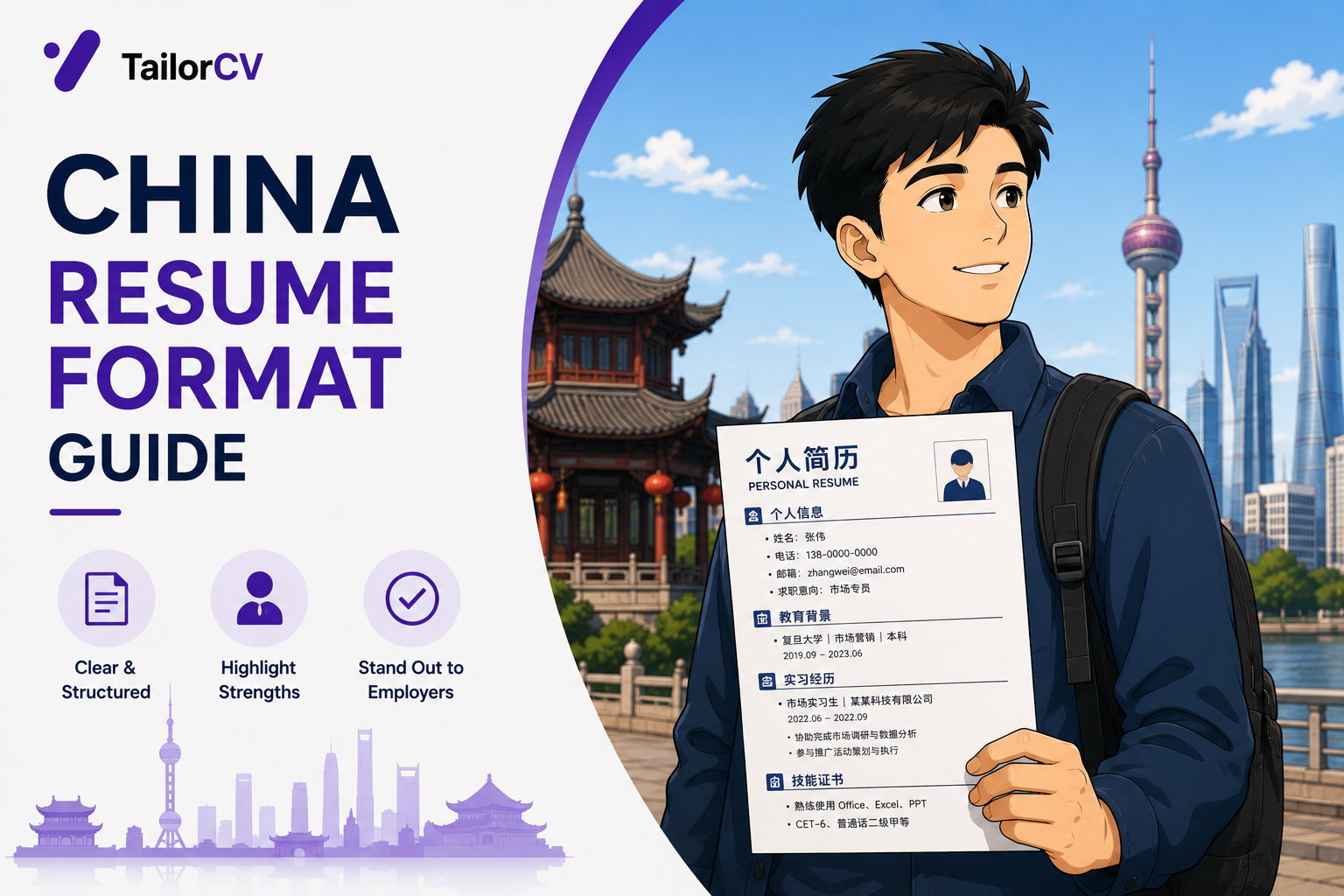
Yes, clearly and honestly, stated alongside any relevant certification level, the resume format guide and HSK levels guide cover how to present this effectively.
What's the difference between HSK and PSC?
HSK is the standard test for non-native Mandarin learners and the one most job postings and international candidates mean by "Chinese proficiency test." PSC (Putonghua Proficiency Test) certifies standard pronunciation and is aimed mainly at native or near-native speakers in professions like teaching or broadcasting — check which one a specific posting actually means before assuming.
What is your resume scoring right now?
Scan it against a job description and get your ATS match score in about a minute.
Drop your resume here or choose a file
PDF only. Max 2 MB.
We never share your data or use it to train AI models.

Was this guide useful?
Be the first to rate it.