 TD
TD
Key Takeaways
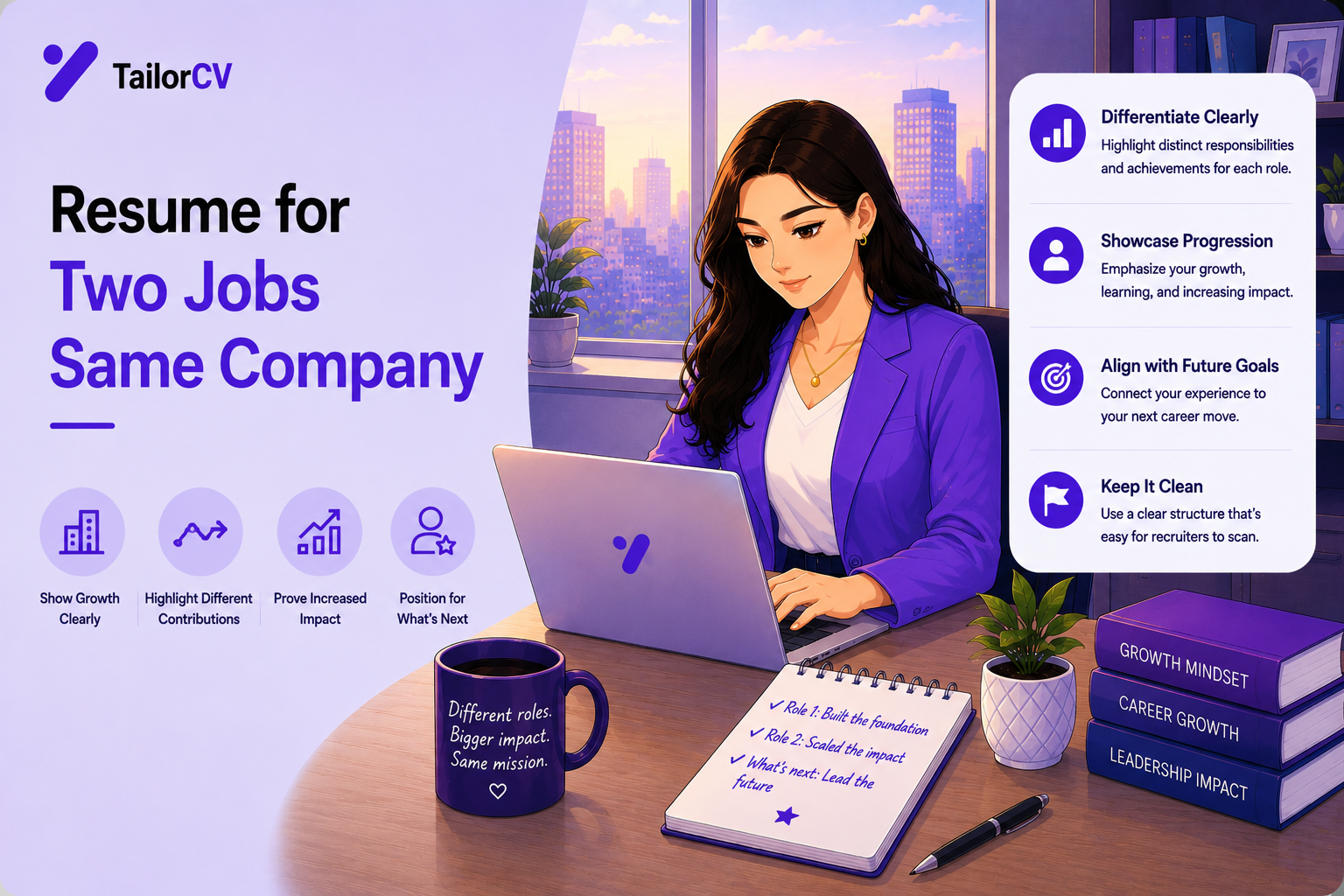
- Applying to two roles is acceptable; applying to six is not.
- Both applications are visible to the same recruiting team, so they must be consistent.
- Tailor each one genuinely. Identical documents to two roles reads as indiscriminate.
- Facts must match exactly across both, even where emphasis differs.
- Two related roles is the sensible limit at any one employer.
How many is too many
The threshold and the reasoning.
One application is the default and needs no explanation at all.
Two related roles is fine, particularly where the same experience genuinely suits both, and it reads as interest in the company.
Three starts to look unfocused unless the roles are closely related and you can explain the logic.
More than three reads as indiscriminate, and it undermines every application in the set because none of them looks considered.
Applying across unrelated functions is the clearest signal of all — a candidate applying to marketing, operations and engineering roles at one company is applying to the company rather than to any role.
And repeated applications over a short period produce the same impression, since the recruiter sees the pattern in their system even when the applications are spaced out.
Keeping them consistent
What must match and what may differ.
| Element | Must match | May differ |
|---|---|---|
| Dates and job titles | Yes | No |
| Employers and tenure | Yes | No |
| Achievements and figures | Yes | No |
| Which achievements you lead with | No | Yes |
| Summary framing | No | Yes |
| Skills ordering | No | Yes |
Emphasis may change; facts may not. Leading with different achievements for different roles is proper tailoring, while describing the same role with different scope in each is a contradiction that gets noticed.
The summary is where the difference belongs, since it is the section that legitimately reframes the same career for different readers.
And be prepared to explain the pair. A recruiter may reasonably ask which role you actually want, and having a clear answer is better than appearing surprised by the question.
When the company suggests a second role
The situation in reverse, which is common and worth handling well.
Recruiters redirect candidates routinely, and being told you are a better fit for a different opening is a good sign rather than a rejection.
Take the suggestion seriously even if the role was not on your list, because the recruiter knows the internal picture and you do not.
Ask why they see the fit, which tells you how they read your background and is useful regardless of what you decide.
You may keep both applications open in most cases, though ask rather than assume.
Do not treat a redirect as a downgrade. A sideways move into a better-matched team frequently produces a better outcome than the role you originally wanted.
And respond promptly, since these suggestions usually come with a live opening behind them and the window is short.
Applying across a large organisation
Where the rules loosen slightly.
Very large companies operate as separate businesses, and applications to genuinely unrelated divisions are not seen the way two applications to one team would be.
Different countries are usually separate processes with separate recruiters and separate systems.
But the applicant tracking system is frequently shared, so assume your history is visible even across divisions.
Internal referral policies vary, and some companies restrict how many roles one candidate may hold open at a time.
Graduate schemes are usually strict, often limiting applicants to a single stream or programme per cycle.
And the sensible principle holds regardless of size — apply to roles you actually want, in numbers you could explain if asked, and let each application look considered.
Mini checklist
- unchecked: Number of applications kept to two related roles
- unchecked: Both roles genuinely of interest
- unchecked: Each application tailored separately
- unchecked: Dates, titles and figures identical across both
- unchecked: Summary reframed appropriately for each
- unchecked: A clear answer prepared for which you prefer
- unchecked: Applications spaced sensibly rather than sent together
- unchecked: Referral used where one exists
Scenarios
Scenario 1: Two roles at different levels of the same team
Apply to both and be explicit that you are open to either. This is a common and entirely reasonable situation, and recruiters frequently move candidates between the two themselves.
Scenario 2: Two unrelated roles you could both do
Choose one. Applying to both signals that you want the company rather than the work, and it weakens the application you actually cared about.
Scenario 3: You applied last month and a better role has appeared
Apply, and mention the earlier application briefly. This is normal, and referencing it openly is better than leaving the recruiter to notice the pattern.
Tip: If you genuinely fit two roles, say so in the cover letter of the one you prefer rather than sending two silent applications. Recruiters frequently redirect candidates internally, and telling them directly is faster than letting them work it out.
Do's and Don'ts
Do
- Limit yourself to two related roles
- Tailor each application genuinely
- Keep every fact identical across both
- Reframe the summary for each role
- Prepare an answer on which you prefer
- Mention an earlier application openly
Don't
- Apply across unrelated functions
- Send identical documents to both
- Vary dates, titles or figures
- Apply to many roles in a short period
- Assume the applications are seen separately
- Leave the recruiter to guess your preference
Common Mistakes
- Too many applications. It undermines all of them at once.
- Identical documents. It reads as indiscriminate applying.
- Inconsistent facts. Both applications are visible to the same reader.
- Unrelated functions. The clearest signal of wanting any job.
- No stated preference. It leaves an obvious question unanswered.
- Ignoring the earlier application. The system shows it regardless.
Related Guides
Keep building on this with the related guides in this series:
- Tailoring for Two Similar Roles
- Reapplying to the Same Company
- How to Tell if a Job Is Worth Applying To
- How to Name Your Resume File
- Referral Versus Cold Application
You can also check your resume's ATS score for free, generate a tailored cover letter, or build a portfolio website in minutes.
Frequently Asked Questions
Can I apply to two jobs at the same company?
Yes, if the roles are related and you genuinely want both. Two is reasonable and reads as interest in the company; more than three reads as indiscriminate.
Will they know I applied to both?
Yes. Applications are visible in the same system to the same recruiting team, which is why consistency between them matters.
Should the two resumes be identical?
No. Tailor each genuinely, changing emphasis, summary framing and skills order. The facts — dates, titles, figures — must be identical across both.
What if the roles are at different levels?
Apply to both and say you are open to either. Recruiters routinely move candidates between adjacent levels themselves, and being explicit makes that easier.
How many applications is too many?
More than three at one employer, or applications across unrelated functions. Both signal that you want the company rather than any particular role.
Should I mention the other application?
Yes, briefly, particularly in the one you prefer. Recruiters frequently redirect candidates internally, and telling them directly is faster than leaving them to infer it.
What if the recruiter suggests a different role?
Take it seriously. Recruiters redirect candidates routinely and they know the internal picture. Ask why they see the fit, respond promptly, and check whether both applications can stay open.
Do the rules differ at very large companies?
Somewhat. Separate divisions and countries usually run separate processes, but the tracking system is frequently shared, and graduate schemes often restrict applicants to one stream per cycle.
What is your resume scoring right now?
Scan it against a job description and get your ATS match score in about a minute.
Drop your resume here or choose a file
PDF only. Max 2 MB.
We never share your data or use it to train AI models.

Was this guide useful?
Be the first to rate it.