 SS
SS
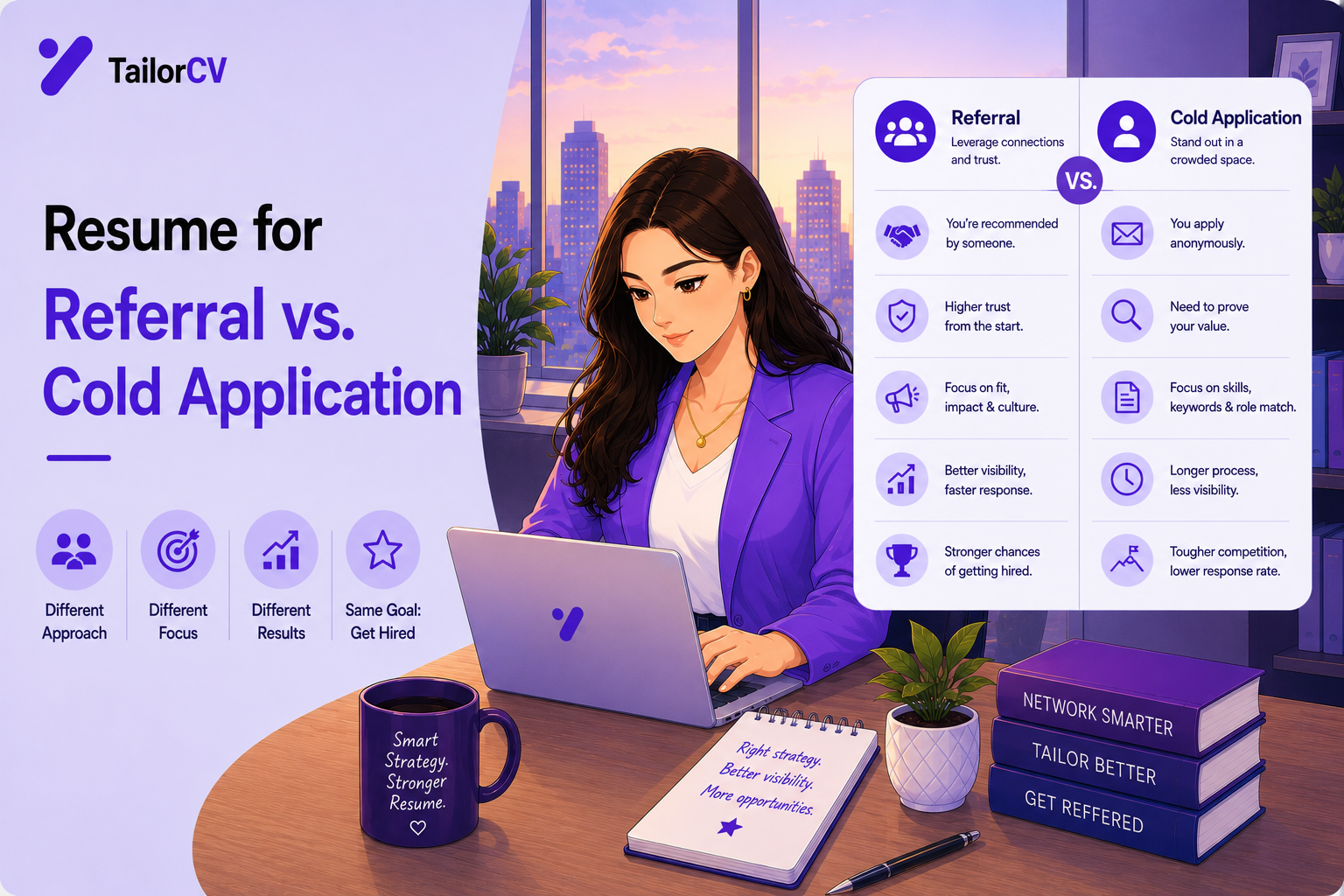
Key Takeaways
- A referral bypasses the filters, which is where most applications actually die.
- It gets you read, not hired. The interview still has to be earned.
- Weak connections work. You do not need a close friend inside the company.
- Make the referral easy to give by supplying everything the referrer needs.
- One referral is worth many cold applications, which should change how you spend your time.
What a referral actually does
The mechanism, precisely.
It routes your application differently. Referred candidates are frequently reviewed in a separate queue rather than in the general pile.
It guarantees a human read, which is the single largest advantage, since most rejections happen before any person sees the application.
It supplies social proof. Someone inside the organisation has attached their judgement to you, and that carries weight.
It provides context the resume cannot, because a referrer can explain a career change or an unusual background in a sentence.
It gives you information. A referrer tells you what the team actually needs, which improves the application itself.
But it does not guarantee an interview, and it certainly does not guarantee an offer. A referred candidate who does not match still gets rejected, just faster and more politely.
Getting one without knowing anyone
The practical routes.
| Route | How it works |
|---|---|
| Former colleagues | The strongest and most overlooked source |
| University or course alumni | A shared institution is a genuine opening |
| Professional communities | Shared interests, built over time |
| Second-degree connections | An introduction through someone you both know |
| Direct approach to a stranger | Works more often than expected if specific |
| Events and meetups | Slower, but the connections are stronger |
Former colleagues are the most underused source. People who have worked with you can speak to your work directly, which is exactly what a referral requires.
A cold approach works when it is specific. A short message naming the role, explaining the fit in two lines and asking directly is answered surprisingly often; a vague request for help is not.
Make it easy to say yes. Supply the role link, a two-line summary of your fit and your resume, so the referrer forwards rather than composes.
And accept a no gracefully. People decline for reasons unrelated to you, including internal referral policies, and a graceful response keeps the connection intact.
Writing the request
The message itself, which decides the answer.
Keep it short. Three or four sentences is the working length, and anything longer reduces the chance of a reply.
Name the specific role with a link, so no searching is required.
State the fit in two lines, concretely, using the same terms the posting uses.
Ask directly. Would you be willing to refer me, or could you point me to the right person, are both clear requests that can be answered quickly.
Attach the resume rather than promising to send it, removing a step.
Give them an easy exit, since a request that acknowledges they may not be able to help is far easier to decline gracefully and preserves the relationship.
And do not send it to several people at the same company, because internal referral systems make that visible and it looks uncoordinated.
After the referral
What happens next and what you owe.
Apply promptly once the referral is in, since a referral that sits unused for two weeks loses its value.
Tell the referrer you applied, which closes the loop and lets them follow up internally if they choose.
Update them on the outcome, whatever it is. People who refer candidates want to know what happened, and silence discourages them from doing it again.
Thank them regardless of result, because the referral was a favour independent of whether it worked.
Do not ask them to chase. Following up internally is their choice, and pressure converts a helpful contact into an uncomfortable one.
And return the favour when you can. Referral networks are reciprocal, and the people who refer others are the ones who get referred themselves.
Mini checklist
- unchecked: Existing network checked for connections at the company
- unchecked: Former colleagues considered first
- unchecked: Alumni networks searched
- unchecked: Request kept short and specific
- unchecked: Role link, fit summary and resume supplied
- unchecked: Referrer given something easy to forward
- unchecked: Application still tailored properly
- unchecked: Thanks sent regardless of outcome
Scenarios
Scenario 1: You know someone but not well
Ask anyway, with a specific and easy request. Weak connections produce referrals routinely, and the worst outcome is a polite decline.
Scenario 2: You know nobody at the company
Approach someone in the relevant team directly with a short, specific message. Ask about the role rather than for a referral, and let the conversation develop naturally.
Scenario 3: Your referrer barely knows your work
Give them what they need — a two-line summary of your relevant experience they can use in their own words. A referrer who cannot describe you writes a weak referral.
Tip: Ask for a conversation rather than a referral. It is an easier request to grant, it tells you what the team actually needs, and it frequently produces the referral anyway without you having to ask for one.
Do's and Don'ts
Do
- Check your network before applying cold
- Start with former colleagues
- Keep the request short and specific
- Supply everything the referrer needs
- Tailor the application regardless
- Thank people whatever the outcome
Don't
- Assume you need a close friend inside
- Send a vague request for help
- Expect a referral to replace a good application
- Ask several people at one company
- Take a decline personally
- Skip tailoring because you were referred
Common Mistakes
- Never asking. The most common and most costly.
- Vague requests. They are hard to act on and easy to ignore.
- Making the referrer do the work. Supply the summary yourself.
- Relying on the referral alone. It gets you read, not hired.
- Asking several people at once. It looks uncoordinated internally.
- Skipping former colleagues. They are the strongest source available.
Related Guides
Keep building on this with the related guides in this series:
- Writing for Recruiter Outreach
- Resume Matching for Referral Applications
- The Posting Says 100+ Applicants
- Informational Interview Guide
- Reapplying to the Same Company
You can also check your resume's ATS score for free, generate a tailored cover letter, or build a portfolio website in minutes.
Frequently Asked Questions
How much does a referral help?
Substantially, because it guarantees a human read and routes you out of the general pile. Most applications are rejected before anyone sees them, and a referral removes that risk entirely.
Do I need to know the person well?
No. Weak connections produce referrals routinely — former colleagues, alumni, people in the same professional community. A specific, easy request matters more than the strength of the relationship.
What should I send the person referring me?
The role link, a two-line summary of why you fit, and your resume. A referrer who has to compose the description themselves writes a weaker referral.
Does a referral guarantee an interview?
No. It gets your application read by a person, and everything after that depends on the match. A referred candidate who does not fit is still rejected.
How do I ask a stranger?
Ask about the role rather than for a referral. A short specific message about the team and the work is answered far more often than a request for help, and it frequently leads to the referral anyway.
Should I still tailor my resume?
Yes. The referral gets you read; the document still has to hold up. A weak resume with a referral wastes the referral.
How should I word a referral request?
Three or four sentences — name the specific role with a link, state your fit in two concrete lines, ask directly, attach your resume, and give them an easy way to decline.
What should I do after someone refers me?
Apply promptly, tell them you have applied, update them on the outcome whatever it is, and thank them regardless. Do not ask them to chase internally.
What is your resume scoring right now?
Scan it against a job description and get your ATS match score in about a minute.
Drop your resume here or choose a file
PDF only. Max 2 MB.
We never share your data or use it to train AI models.

Was this guide useful?
Be the first to rate it.