TD
TD

Key Takeaways
- The process resembles the US model but is usually shorter, with fewer rounds and less emphasis on pure algorithmic puzzles.
- Behavioral rounds carry real weight, and the expected register is more understated than in American interviews.
- Newcomers should expect the Canadian experience question and prepare a direct answer rather than being caught off guard.
- Toronto, Vancouver, Montreal, and Waterloo have distinct market characters worth knowing before you target.
- Compensation is generally below US levels, so comparing offers requires accounting for healthcare, taxes, and cost of living.
Canadian technology interviews sit between the American and British models. The structure is recognisably North American - recruiter screen, technical rounds, behavioral assessment - but the process is usually shorter, the algorithmic bar is often lower outside the largest employers, and the interpersonal register is noticeably more restrained.
For candidates arriving from the US, the adjustment is mostly tonal. For those arriving from elsewhere, it is the behavioral rounds and the Canadian experience question that need preparation.
This guide covers the process, the market, and how to handle both.
Before the interview, make sure your resume is getting you there - run it through the free ATS score checker.
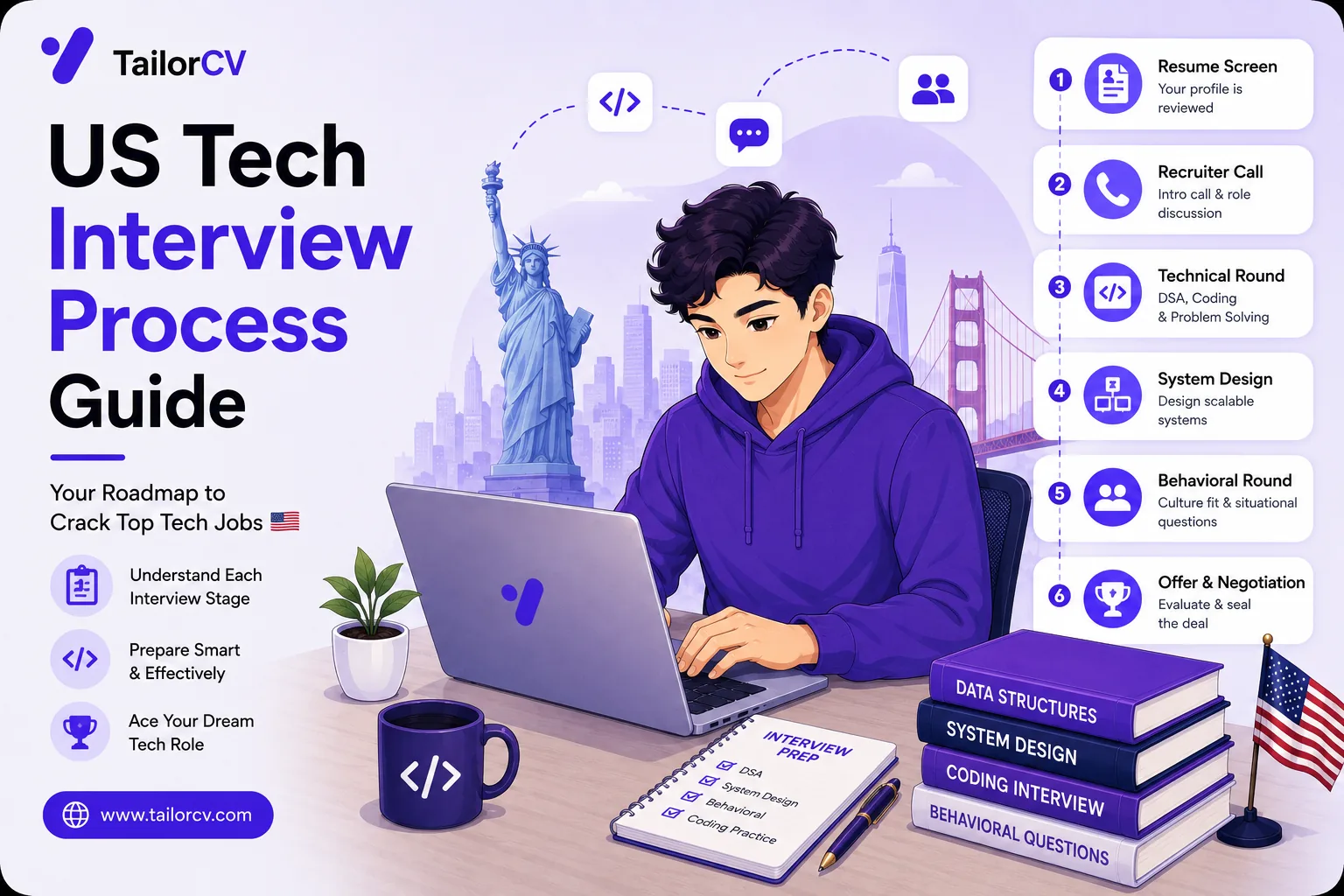
The Standard Process
1. Recruiter screen (20-30 minutes). Background, motivation, salary expectations, work authorisation, and timeline. For newcomers, expect the work authorisation question early - answer it plainly.
2. Technical screen (45-60 minutes). A coding exercise, or increasingly a discussion of systems you have actually built. Some employers use a take-home instead.
3. Technical rounds (one to three). Coding, system design at mid-level and above, and sometimes a domain-specific session.
4. Behavioral or hiring manager round. Frequently the deciding round, and under-prepared by technically strong candidates.
5. Offer.
Timeline: typically two to five weeks - shorter than the US process, which routinely runs four to eight. Run applications in parallel regardless.
How It Differs From the US
Fewer rounds. Full-day onsite loops of five or six sessions are less common outside the largest employers.
Less algorithmic intensity. Big technology companies with Canadian offices run the same bar as their US operations, but the broader Canadian market leans more toward practical assessment - a take-home, a code review discussion, or a conversation about your actual work.
More emphasis on collaboration and communication. Behavioral rounds are weighted seriously.
A different register. American interview culture rewards confident ownership of achievements. Canadian interviewers respond better to a somewhat more measured delivery - specific and quantified, but without the promotional framing. Overselling reads less well here than one border south.
The practical translation: keep every number and every specific, drop the superlatives. "I led the migration and it cut latency 40%" works. "I completely transformed our infrastructure" works less well.
The Technical Rounds
Coding. Standard data structures and algorithms at medium difficulty - arrays, strings, hash maps, trees, graphs, dynamic programming. Explain your reasoning aloud; silence reads as being stuck. The preparation approach is in coding interview preparation and technical interview preparation.
Take-homes are more common in Canada than in the US, particularly at mid-size companies and startups. They are usually assessed on structure, testing, and clarity rather than cleverness. Write the tests, and include a short README explaining your decisions and what you would do with more time - reviewers consistently say this separates submissions.
System design from mid-level upward. Start from requirements and scale rather than jumping to a diagram, then go deep on one or two components and discuss tradeoffs. It frequently determines the level you are offered, which affects compensation more than negotiation does.
The equivalent US process is covered in more depth in the US tech interview process guide, and much of it transfers.
Behavioral Rounds
Take these seriously - they are a real filter.
Common questions:
- Tell me about a time you disagreed with a colleague
- Describe a project that did not go as planned
- Tell me about a time you had to influence someone without authority
- How do you handle competing priorities?
- Describe a time you received difficult feedback
Answer in STAR - Situation, Task, Action, Result - keeping the situation short and the action long, with a quantified result. See behavioral interview questions and answers.
Prepare six stories covering conflict, failure, influence, ambiguity, deadline pressure, and technical depth. Most questions map onto these.
Use "I" for your contribution while crediting the team for context. Canadian interviewers value collaborative framing more than American ones, but they are still scoring you individually - "we redesigned the system" tells them nothing about what you did.
Have a genuine failure example. A disguised strength is transparent and scores badly.
The Canadian Experience Question
If you are a newcomer, prepare for this specifically rather than hoping it does not come up.
It may be asked directly, or it may appear as hesitancy about your foreign employers and credentials. Either way, the underlying concern is uncertainty rather than a judgement about your skills - as explained in the Canadian experience problem.
Address it proactively:
Give context for your employers. "I was at a fintech company in Bangalore with about 2,000 people, serving the Indian domestic payments market" makes your experience legible in one sentence.
Name any Canadian touchpoints. Contract work, volunteering in your field, a bridging program, Canadian clients, or collaboration with North American teams. Any of these counts.
Mention your credential assessment if you have one.
Address the retention concern. If you are a permanent resident settled in the city, say so - it removes an unspoken worry.
Do not be defensive. Treat it as a reasonable question about unfamiliarity, answer it factually, and move on.
The Regional Markets
Worth knowing before you target, because they differ.
Toronto. The largest market by a wide margin - finance and fintech, enterprise software, a large startup ecosystem, and most major technology companies' Canadian offices. Highest salaries and highest costs.
Vancouver. Strong in gaming, visual effects, and cloud, with proximity to Seattle drawing satellite offices. Very high housing costs.
Montreal. AI research is a genuine international strength, alongside gaming and aerospace. Lower cost of living. French matters more here - working French is expected in many roles, though the tech sector is more anglophone than the broader market.
Waterloo and Kitchener. A dense technology corridor anchored by the university, with strong hardware and enterprise software, at a substantially lower cost base than Toronto.
Calgary and Ottawa. Growing markets - energy technology in Calgary, and government-adjacent technology and telecom in Ottawa.
Remote and hybrid work has made the smaller markets more viable, and a role based outside Toronto attracts considerably less competition.
Common Mistakes
Preparing only algorithms. Behavioral rounds are a genuine filter in Canada and frequently the deciding round, so technically strong candidates who skip this preparation lose offers late.
Carrying an American register into the room. Confident ownership is fine, but promotional framing and superlatives land less well here - keep the numbers and drop the adjectives.
Treating the take-home casually. It is more common in Canada than in the US and is assessed on structure, testing, and clarity, so a submission with no tests and no README loses an otherwise winnable process.
Not preparing for the Canadian experience question. It is likely to come up for newcomers, and improvising a defensive answer converts a manageable concern into a real objection.
Failing to explain foreign employers. A well-known company in your home market may be entirely unknown here, and one sentence of context prevents your experience being undervalued.
Saying "we" throughout behavioral answers. Canadian interviewers value collaborative framing, but they still need to know what you personally did.
Comparing compensation to US figures without adjusting. Healthcare, taxes, and cost of living differ enough that headline comparison is misleading - see Canada salary negotiation.
Targeting only Toronto. Waterloo, Montreal, Ottawa, and Calgary have real markets with considerably less competition and lower costs.
Frequently Asked Questions
How does the Canadian tech interview process compare to the US?
Similar in structure but usually shorter - two to five weeks and fewer rounds. Algorithmic intensity is generally lower outside the largest employers, and take-home exercises are more common.
Do Canadian companies ask LeetCode-style questions?
Large technology companies with Canadian offices generally do, at the same bar as their US operations. The broader market leans more toward practical assessment and discussion of work you have actually done.
How important are behavioral interviews?
Substantial, and frequently the deciding round. Prepare six STAR stories with quantified results rather than treating this as a conversation to improvise.
Will they ask about Canadian experience?
Likely, if you are a newcomer - either directly or as hesitancy about foreign employers. Prepare a factual answer that provides employer context, names any Canadian touchpoints, and addresses the retention concern.
How do Canadian tech salaries compare to the US?
Generally lower, sometimes substantially at senior levels. Comparing requires accounting for healthcare, tax differences, and cost of living rather than headline figures alone.
Which Canadian city is best for tech?
Toronto has the most opportunities and the highest costs. Vancouver is strong in gaming and cloud, Montreal in AI, and Waterloo has a dense corridor at a much lower cost base. Smaller markets attract less competition.
Do I need French for tech jobs in Montreal?
The technology sector is more anglophone than the broader Quebec market, so English-only roles exist. Working French widens your options considerably and matters for many employers.
Get to the interview stage first. Check your ATS score free.
Make This Practical
Prepare the behavioral rounds as seriously as the technical ones, because they are frequently the deciding stage in Canada. Write six STAR stories with quantified results covering conflict, failure, influence, ambiguity, deadline pressure, and technical depth, and rewrite each to use "I" for your own contribution while crediting the team for context.
Then adjust the register. Keep every number and specific, drop the superlatives, and if you are coming from the US market, deliberately dial the promotional framing down - it lands less well here.
Finally, if you are a newcomer, prepare the Canadian experience answer in advance rather than improvising it. Have one sentence of context ready for each foreign employer, name any Canadian touchpoints including contract work or volunteering, mention your credential assessment, and address the retention question directly. The wider problem and its solutions are in the Canadian experience problem, and negotiation afterwards in Canada salary negotiation.
Was this guide useful?
Be the first to rate it.