 TD
TD
Key Takeaways
- Behavioral rounds at large US employers are scored against a written rubric, not treated as a friendly conversation.
- STAR fails when candidates spend the answer on Situation — interviewers are scoring Action.
- Say "I", not "we". Collaborative phrasing is the most common reason strong candidates score low.
- Six well-built stories cover almost every question you will be asked, because the questions map onto a handful of competencies.
- Every story needs a quantified Result, and "it went well" is not one.
American behavioral interviewing looks informal and is not. At most large employers the interviewer has a competency rubric, takes notes against it, and submits a written score. Candidates who treat the round as rapport-building lose to candidates who treat it as an assessment with a known format.
The format is genuinely known. That is the opportunity.
This guide covers how STAR actually scores, the six stories to build, and the mistakes that cost points.
Before the interview, make sure the resume is getting you there — the free ATS score checker.
What STAR is really weighting
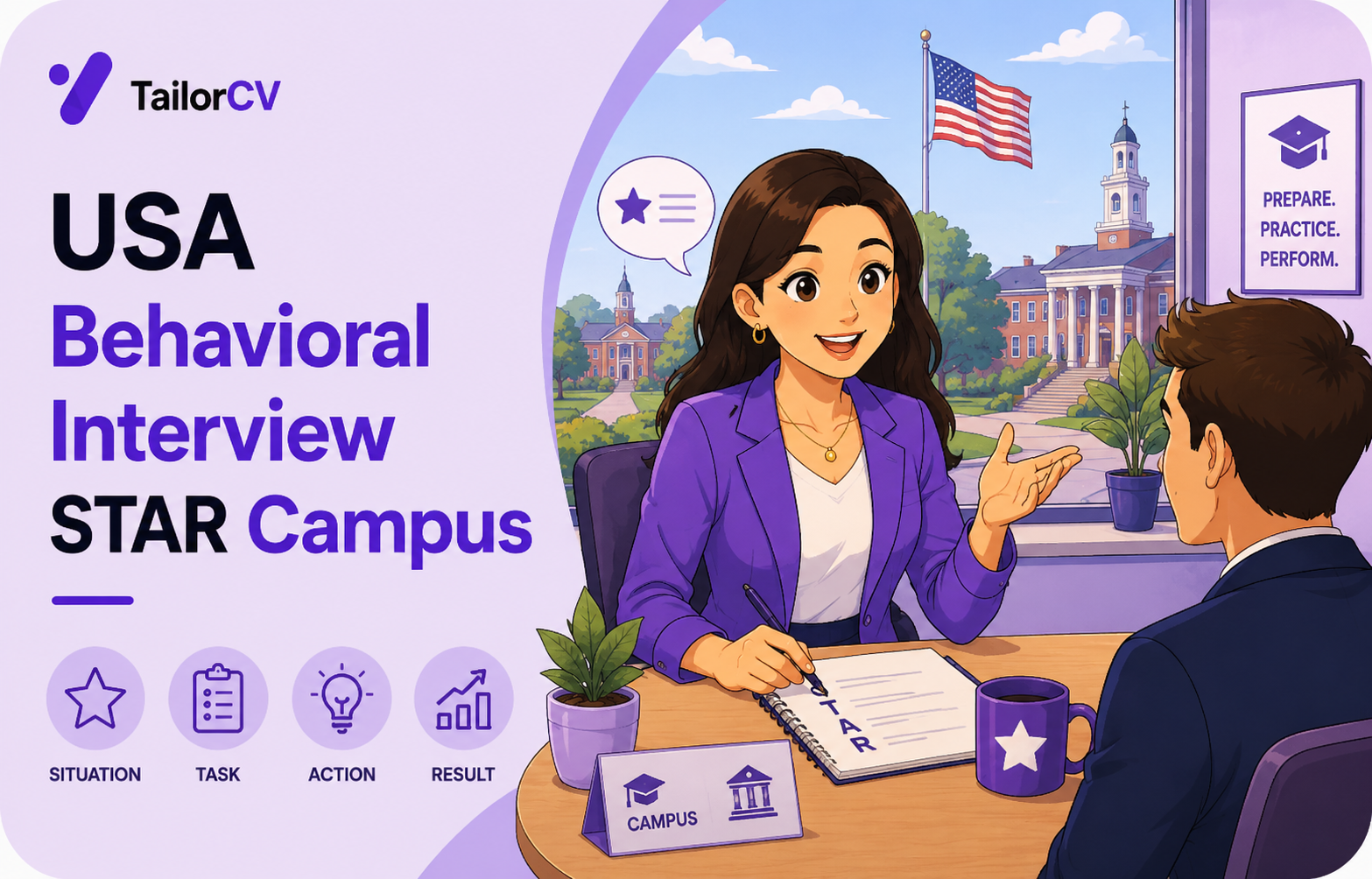
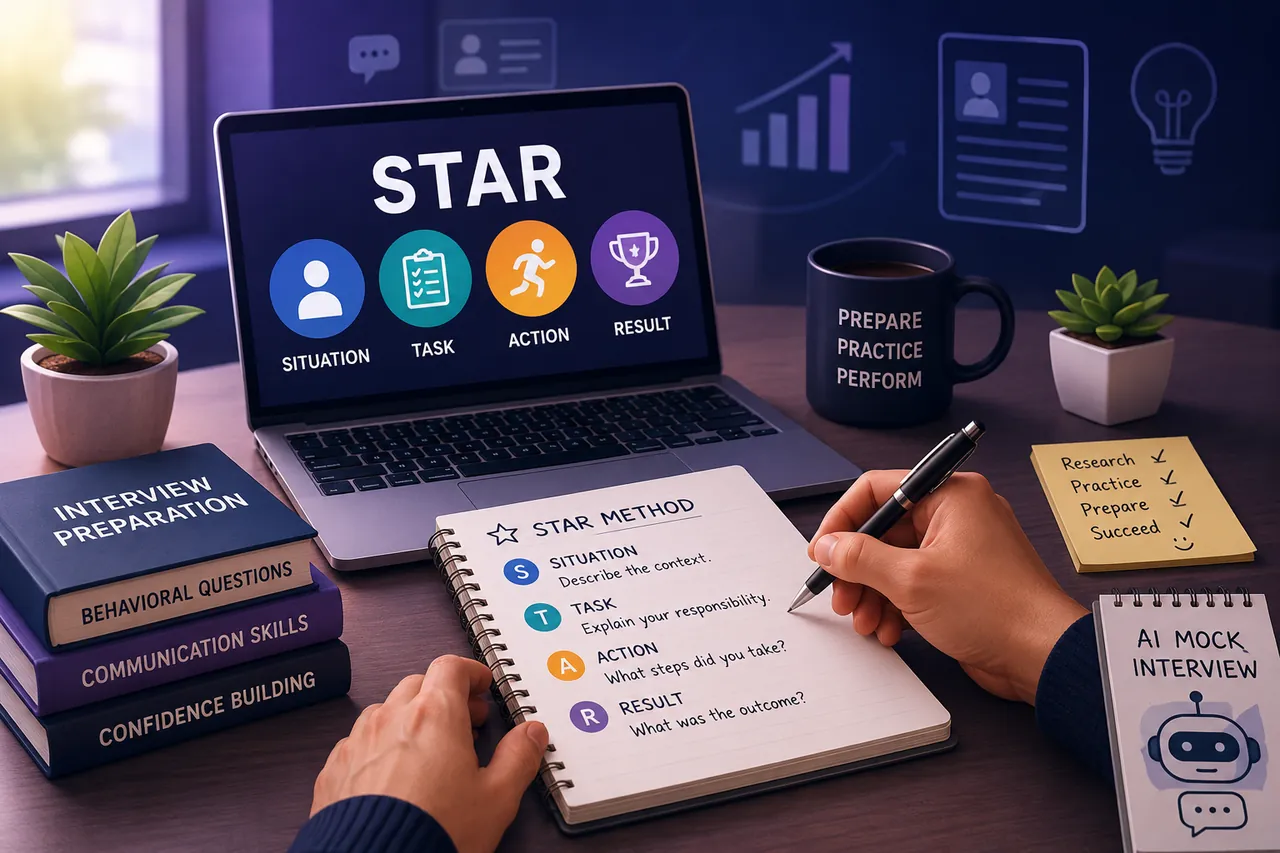
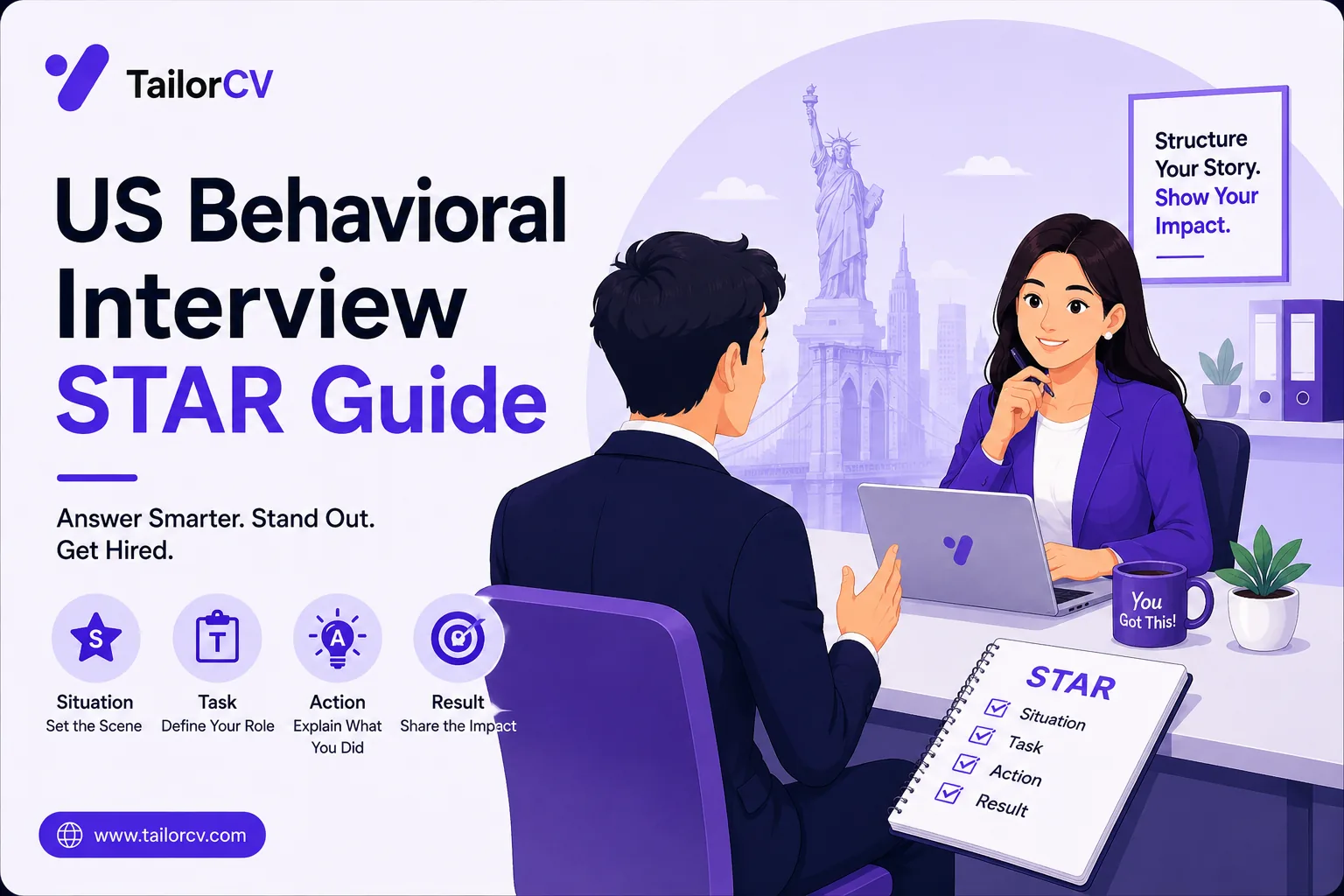
S — Situation. Context. Two sentences. Where you were, what the problem was.
T — Task. What you specifically needed to achieve. One sentence.
A — Action. What you did. This is 60-70% of the answer and it is what is being scored.
R — Result. What happened, with a number.
The near-universal failure is inversion: ninety seconds of elaborate context, then fifteen seconds of "so I fixed it and it worked out." The interviewer has nothing to score. They needed the decisions — what you considered, what you chose, why, and what you did when the first attempt failed.
A useful test: if someone read only your Action section, could they tell what kind of professional you are? If not, it is too thin.
Length: two to three minutes. Under a minute is usually missing the Action. Over four and you are losing the room.
Say "I", not "we"
This single habit costs more points than any other, and it is most common among candidates from collaborative or modest professional cultures.
"We noticed the pipeline was failing, so we rewrote the ingestion layer and we got it stable."
The interviewer learns nothing about you. They cannot score a team.
"I noticed the pipeline was failing silently — the alerts only fired on hard errors, not on zero-row loads. I proposed adding row-count assertions, and I owned the ingestion rewrite while two colleagues handled the downstream reports."
Same events, same team, and now there is something to assess. Credit the team once for accuracy, then describe your own contribution specifically. That is not arrogance in the US context — it is the expected register, as the US tech interview process guide covers.
The six stories
Almost every behavioral question maps onto a small set of competencies. Build six stories properly and you adapt rather than improvise.
1. Conflict or disagreement. With a colleague, a manager, or a stakeholder. What the disagreement was, how you handled it, what the outcome was. Avoid making the other person a villain — how you handled it is the point.
2. Failure. A real one. This question is asked genuinely and a disguised strength ("I care too much") scores badly. Name what went wrong, your part in it, and what you changed afterwards.
3. Influence without authority. Persuading someone who did not report to you. Highly weighted at senior levels.
4. Ambiguity. A situation with no clear requirements or incomplete information, and how you proceeded anyway.
5. Pressure or competing priorities. A deadline, an incident, two urgent things at once. How you decided what to drop.
6. Technical or professional depth. The thing you are proudest of, explained so a non-expert follows it.
Write them out. Not bullet points — full prose, then rehearse aloud until they run naturally. Speaking is a separate skill from knowing, and it is the one being tested.
Quantify the Result
"It went much better afterwards" is not a result. These are:
- "Cut the monthly close from nine days to four."
- "Reduced escalations from about fifteen a week to three."
- "Saved roughly $40,000 a year in licence costs."
- "Took onboarding from three weeks to five days for the next four hires."
If you genuinely have no number, use a concrete before-and-after state: "Before, nobody knew which reports were stale. After, every dashboard showed its last refresh time and the questions stopped."
The discipline is identical to writing resume bullets — see how to quantify achievements on your resume.
Questions you will actually hear
- Tell me about a time you disagreed with your manager.
- Describe a project that failed.
- Tell me about a time you had to influence someone without authority.
- Give an example of working with incomplete information.
- Tell me about a time you received difficult feedback.
- Describe a time you had to say no.
- Tell me about the hardest technical problem you have solved.
- Give an example of a time you missed a deadline.
- Tell me about a time you improved a process nobody asked you to improve.
Notice that several are negative — failure, missed deadlines, difficult feedback. Interviewers are testing self-awareness, and candidates who cannot produce a genuine example read as either inexperienced or defensive.
Follow-ups are part of the score
Expect probing after each story:
- "What would you do differently?"
- "How did the other person react?"
- "What was the hardest part of that?"
- "How did you know it worked?"
These separate real stories from constructed ones. A real experience survives four follow-ups; an invented one collapses on the second. That is another reason to use genuine examples rather than impressive-sounding ones.
Common Mistakes
Front-loading the Situation. Interviewers score Action, so a ninety-second scene-setter followed by a fifteen-second resolution leaves them with nothing to write down.
Saying "we" throughout. The rubric scores you individually, and collaborative phrasing makes it impossible to tell what you actually contributed.
A disguised strength as the failure. "I work too hard" is recognised instantly and scores as evasion rather than modesty.
No number in the Result. Without a before-and-after the story has no demonstrated impact, however good the action was.
Inventing or heavily embellishing. Follow-up questions are specifically designed to test depth, and a constructed story falls apart by the second one.
Preparing twenty answers instead of six stories. You cannot anticipate exact wording, but six well-built stories adapt to almost any competency question.
Rehearsing silently. Speaking is the skill being assessed and it is markedly harder out loud than in your head.
Blaming the other person. In a conflict story, how you handled it is the assessment — a narrative where you were simply right and they were wrong scores poorly.
Frequently Asked Questions
How long should a STAR answer be?
Two to three minutes, with the majority spent on Action. Under a minute usually means the Action is missing; beyond four you are losing attention.
Can I reuse the same story for different questions?
Yes, if it genuinely fits — one strong project can serve as a conflict story and an ambiguity story with different emphasis. Avoid using the same one three times in one loop.
What if I have no failure example?
You do — pick something real and modest rather than catastrophic. Being unable to name one reads as lacking self-awareness, which scores worse than the failure itself.
Should I write my stories down?
Yes, in full prose, then rehearse aloud. Writing clarifies the structure; speaking is what the interview actually tests.
How important are behavioral rounds in the US?
Substantial, and formally scored at most large employers. Candidates who clear every technical round and fail here are common.
What if I do not have a number for the result?
Use a concrete before-and-after state instead. A clear change in situation is far better than "it improved."
Do startups do behavioral interviews too?
Usually less formally, but the same questions come up. The structure still helps — it just needs to sound conversational rather than rehearsed.
Get to the interview first. Check your ATS score free.
Make This Practical
Write six stories in full prose — conflict, failure, influence without authority, ambiguity, pressure, and technical depth. These six cover almost every behavioral question you will be asked, so you adapt rather than improvise under pressure.
Then fix the two things that cost most points. Rewrite each story so Action takes 60-70% of the length and the Situation is two sentences, and replace every "we" describing your own contribution with "I" while crediting the team once for context.
Finally, put a number on every Result, and rehearse each story aloud until it runs at two to three minutes naturally. Then prepare for the follow-ups — "what would you do differently", "how did they react" — because those are where constructed stories fail and real ones hold up.
Was this guide useful?
Be the first to rate it.