 TD
TD
Key Takeaways
- A one-page resume is preferred for early-career professionals, while experienced candidates can extend to two pages.
- Use strong action verbs and quantify achievements to make your contributions stand out.
- Tailor your professional summary and skills section to align with the specific job description.
- Ensure your resume is ATS-friendly by using standard headings, incorporating keywords, and avoiding complex formatting.
- Include relevant certifications, volunteer work, and languages spoken to enhance your qualifications.
Aiming for an H-1B visa sponsorship job can feel daunting, especially when it comes to crafting a standout resume. In a competitive job market, your resume is not just a summary of your experiences; it’s your first impression on potential employers. For international candidates, it’s crucial to align your skills and experiences with U.S. employer expectations while also ensuring your resume passes through Applicant Tracking Systems (ATS). This article will guide you through the essential components of an effective resume tailored for H-1B visa sponsorship jobs, helping you stand out among the competition.
Understanding the U.S. Job Market and Resume Norms
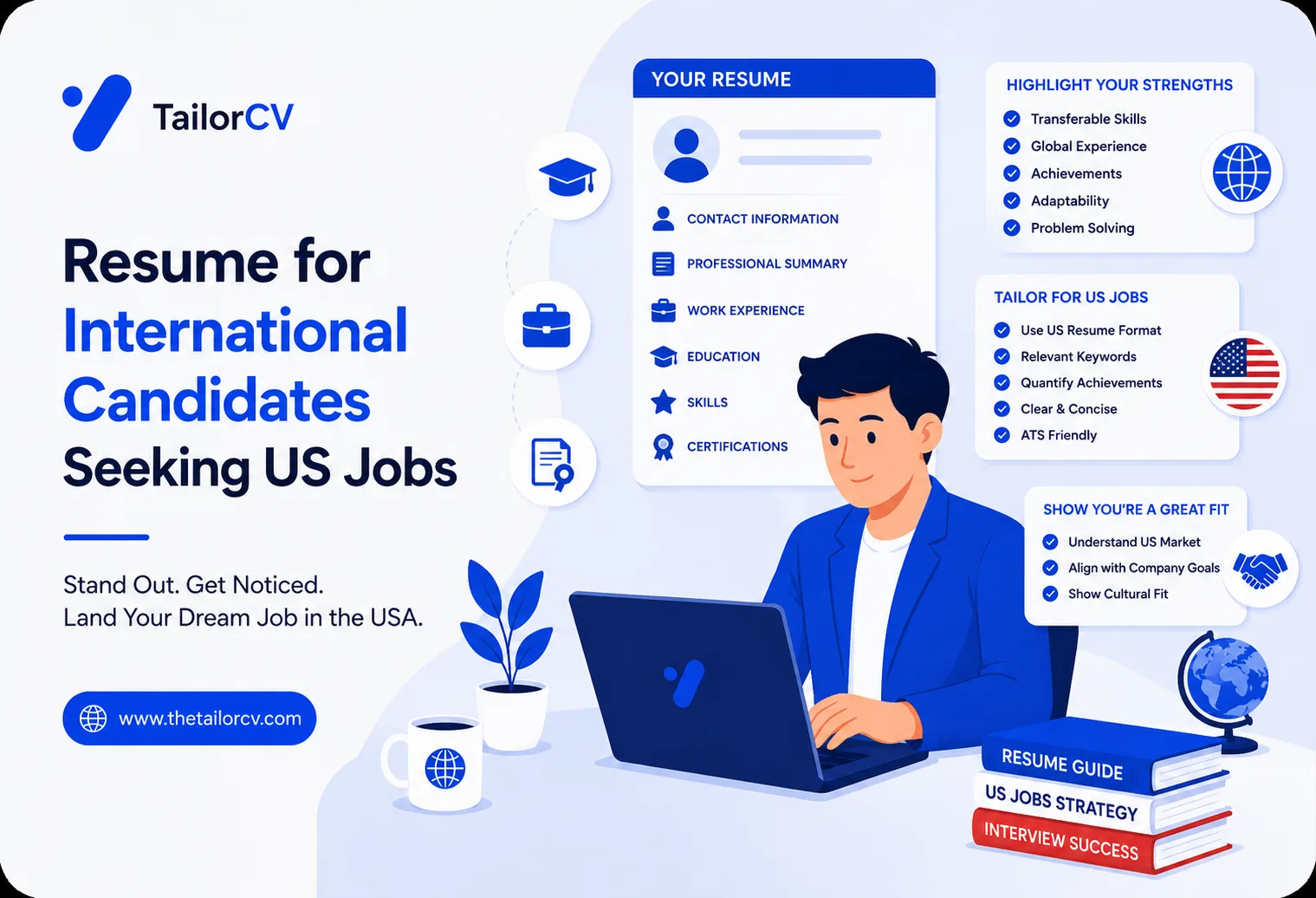
Before diving into the specifics of resume writing, it’s essential to understand the U.S. job market landscape. Employers in the U.S. often receive hundreds of applications for a single position, making it vital to present your qualifications clearly and concisely. Here are some key resume norms specific to the U.S.:
| Rule | What it means |
|---|---|
| Length | For early-career professionals, a one-page resume is preferred. More experienced candidates can extend to two pages |
| Format | U.S. resumes should not include personal information such as photos, age, or marital status. Instead, focus on your name, contact information, and relevant skills |
| Action Verbs | Use strong action verbs to convey your achievements and responsibilities. Words like “developed,” “designed,” and “implemented” can make a significant impact |
| Quantified Achievements | Whenever possible, quantify your accomplishments. For example, instead of saying “improved sales,” say “increased sales by 20% in six months.” |
Crafting Your Resume: Key Sections
1. Contact Information
Ensure your contact information is clear and formatted correctly. Include:
- Full name
- U.S. phone number (if available)
- Email address (professional and simple)
- LinkedIn profile or portfolio website (if applicable)
2. Professional Summary
A compelling professional summary should be at the top of your resume. This 2-3 sentence overview should highlight your most relevant experiences, skills, and what you bring to a potential employer. Tailor this section for each job application to align with the job description.
Example:
“Detail-oriented software engineer with 3 years of experience in developing scalable web applications. Proven track record of increasing system efficiency by 30% and enhancing user experience through innovative solutions.”
3. Skills Section
List relevant technical and soft skills that match the job description. Use keywords from the job posting to increase your chances of passing ATS filters.
Key Skills to Highlight:
- Technical Skills: Programming languages, software proficiency, tools, and technologies relevant to your field.
- Soft Skills: Communication, teamwork, problem-solving, and adaptability.
4. Professional Experience
This section should detail your work history in reverse chronological order. Focus on achievements rather than responsibilities, using bullet points to describe your contributions.
Example:
Software Developer
XYZ Corporation, San Francisco, CA
June 2021 - Present
- Developed and implemented a new feature that increased user engagement by 40%, resulting in a 15% boost in revenue.
- Collaborated with a team of 5 to design a mobile app that achieved 4.8 stars on the App Store.
5. Education
List your degrees, starting with the most recent. Include the name of the institution, degree obtained, and graduation date. If you graduated recently, you can also include relevant coursework or projects.
Example:
Master of Science in Computer Science
University of California, Berkeley
Graduated: May 2021
6. Certifications and Additional Sections
Include any relevant certifications or professional development courses. You may also add sections for volunteer work, publications, or languages spoken, especially if they relate to the job.
Making Your Resume ATS-Friendly
To ensure your resume is ATS-friendly, follow these guidelines:
- Use Standard Headings: Stick to conventional headings like “Experience,” “Education,” and “Skills” to help the ATS parse your information correctly.
- Keywords: Incorporate keywords from the job description throughout your resume.
- Simple Formatting: Avoid complex layouts, graphics, or unusual fonts. Use standard fonts like Arial or Times New Roman.
For more tips on optimizing your resume for ATS, check out our resume optimization guide.
Tailoring Your Resume for H-1B Visa Sponsorship
When applying for H-1B visa sponsorship jobs, it's crucial to demonstrate not only your skills but also your understanding of U.S. work culture and your ability to contribute to the company. Here are specific strategies:
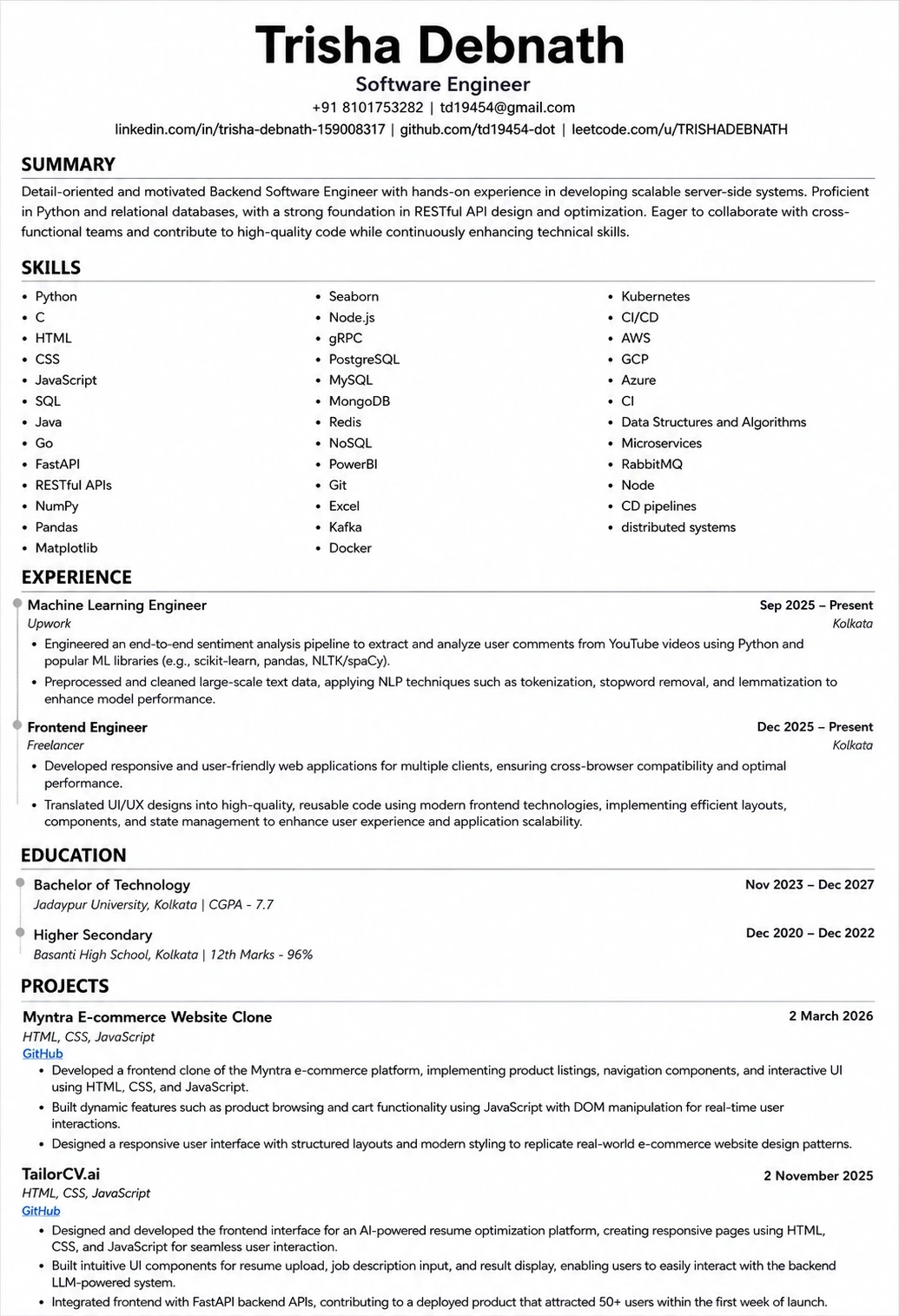
Your resume after optimization
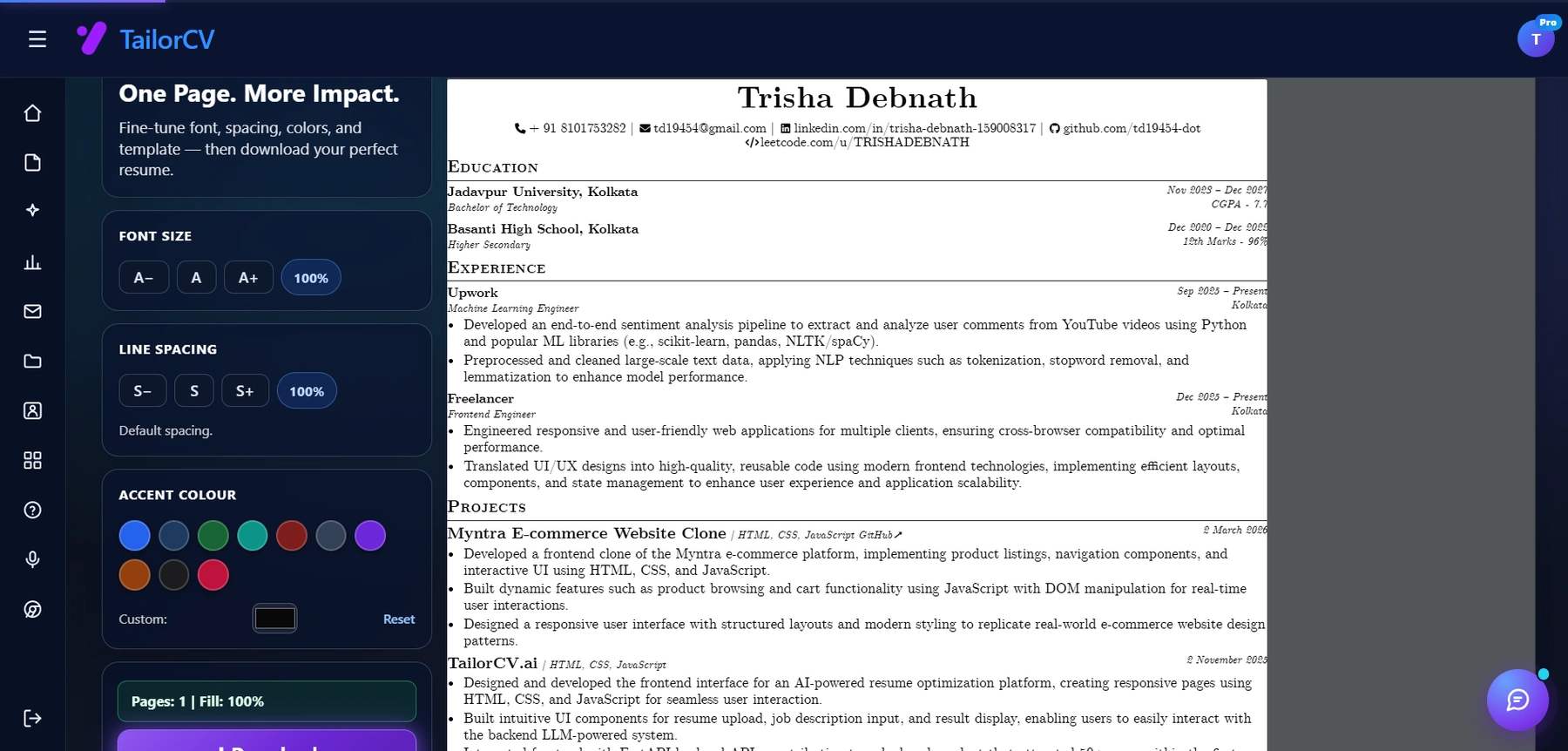
This is the resume after tailoring - the content is already matched, and these controls are how you fit it onto one page.
Highlight Relevant Experience
If you have previous experience in the U.S. or with U.S. companies, make sure to emphasize this. Employers may prefer candidates familiar with the local work environment.
Showcase Cultural Fit
Employers often look for candidates who can integrate well into their teams. Use your professional summary and cover letter to convey your understanding of U.S. workplace norms.
Address Work Authorization
While it’s generally not advisable to mention visa status on your resume, be prepared to discuss your work authorization in your cover letter or during the interview. You can mention your eligibility for H-1B sponsorship if it’s relevant to the position.
Example Comparison: Generic vs. Tailored Resume
Generic Resume Summary:
“Software engineer with experience in various programming languages.”
Tailored Resume Summary for H-1B:
“Results-driven software engineer with 3 years of experience in developing high-performance web applications using Java and Python. Proven ability to enhance system efficiency by 30% through innovative solutions, seeking H-1B sponsorship to contribute to XYZ Corporation’s mission of delivering cutting-edge technology.”
The tailored version highlights specific skills, achievements, and the candidate's intent, making it more appealing to employers.
Related Guides
Keep building your US job search with these related TailorCV guides:
- US Resume Format Guide (2026): How to Write a Resume for American Jobs
- How to Get a Job in the USA in 2026: A Step-by-Step Guide
- How ATS Works in the USA: Beating Applicant Tracking Systems for US Jobs
- How to Write a Cover Letter for US Jobs (With Structure and Examples)
- Resume for International Candidates Seeking US Jobs
- How to Find Remote Jobs in the USA (2026 Guide)
- How to Get a Job in Canada in 2026: A Step-by-Step Guide
- How International Students Can Get Jobs in Canada (2026 Guide)
You can also check your resume's ATS score for free, generate a tailored cover letter, or build a portfolio website in minutes.
Frequently Asked Questions
How do I write a resume for H-1B visa sponsorship jobs?
To write a resume for H-1B visa sponsorship jobs, focus on showcasing your relevant experience, skills, and achievements. Tailor your resume to the job description and ensure it is ATS-friendly. For detailed guidance, check our how to write a resume from scratch.
What should I include in my professional summary?
Your professional summary should include a brief overview of your experience, key skills, and what you bring to the role. Aim for 2-3 sentences that align with the job description. For more tips, see our resume optimization guide.
How can I make my resume ATS-friendly?
To make your resume ATS-friendly, use standard formatting, include relevant keywords from the job description, and stick to conventional section headings. Learn more about creating an ATS-friendly resume in our guide on how to make a resume ATS-friendly.
Should I mention my visa status on my resume?
It’s generally not advisable to mention your visa status on your resume. However, be prepared to discuss your work authorization during the application process or in your cover letter. For more tips on cover letters, check our cover letter guide.
How can I prepare for interviews after applying?
Once you secure an interview, it's essential to be well-prepared. Utilize our AI mock interview tool to practice common interview questions and improve your confidence.
What is your resume scoring right now?
Scan it against a job description and get your ATS match score in about a minute.
Drop your resume here or choose a file
PDF only. Max 2 MB.
We never share your data or use it to train AI models.

Templates that keep this structure intact
This template is ATS-tested — start from it and the formatting rules in this guide are already handled.
Was this guide useful?
Be the first to rate it.