 SS
SS
Key Takeaways
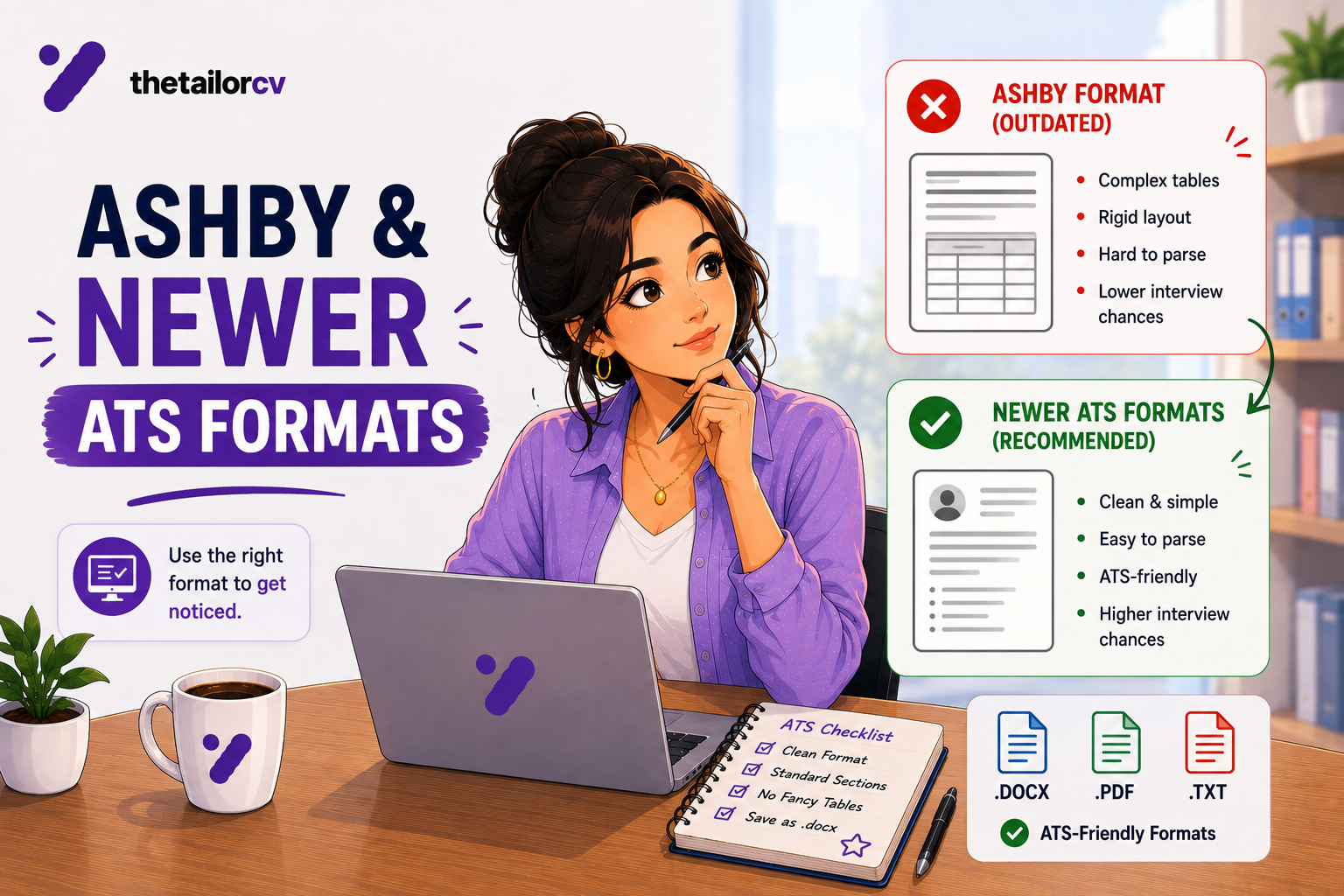
- Ashby is a newer ATS, popular particularly with startups, with generally solid PDF handling but a strict requirement for exact standard section headings.
- A non-standard section heading — "Career History" instead of "Work Experience" — can cause that entire section to be misclassified and effectively lost from the structured view.
- Ashby surfaces skills as structured tags extracted from your resume, and recruiters commonly search by these tags rather than full-text scanning.
- Ashby includes an AI-assisted review feature that evaluates your resume against specific criteria and cites the exact source text as evidence — a human still makes the final decision.
- Image-based PDFs remain unreadable here as on every platform — always confirm your file's text is genuinely selectable.
Ashby is a newer applicant tracking system that has gained particular traction among startups and growth-stage companies. It behaves differently from older, more established platforms in some specific, useful-to-know ways.
PDF Generally Works Well Here
Unlike some other platforms with specific file-format quirks, Ashby's parser is generally reported to handle PDF at least as reliably as .docx — meaning you can use PDF with more confidence here than on a platform like Taleo or Workday, where .docx is sometimes the safer specific choice.
The one real PDF risk that still applies: an image-based PDF — one where the text is not genuinely selectable, often the result of certain design-tool exports — remains completely unreadable regardless of platform. Confirm your file passes the selection test: open it and try to select a paragraph of text with your cursor. If your cursor instead selects a graphic or image boundary rather than actual text, the file needs to be regenerated from a genuine text-based source like Word or Google Docs, not a design tool that flattens text into images.
Section Headings Must Be Exact
This is the most important specific thing to know about Ashby. Its parser is reported to be strict about recognising standard section headings — and a creative or non-standard heading can cause an entire section to be misclassified, effectively dropping that content from the structured, recruiter-visible view even though the text is technically present in the file.
Use conventional headings exactly: "Work Experience" (not "Career History" or "Professional Journey"), "Education," "Skills." This platform's specific strictness on this point makes it worth double-checking even if you have used a creative heading successfully elsewhere.
Skills Are Extracted as Structured Tags
A distinctive feature worth understanding: Ashby is reported to surface your skills as structured tags extracted from your resume content, and recruiters — particularly at the startups where Ashby is common — commonly search and filter candidates by these specific skill tags rather than through broader full-text keyword scanning.
This means messy or unclear skills-section extraction can mean missing tags entirely, which affects your discoverability in recruiter searches beyond just the initial application review. Exact, clearly stated wording in your skills section matters more here than visual presentation — a skill conveyed only through design emphasis rather than clear text is more likely to be missed by this specific tag-extraction mechanism.
The AI-Assisted Review Feature
Ashby includes a feature sometimes described as AI-assisted application review, which is worth understanding because it works differently from a simple pass/fail scoring system. Rather than auto-rejecting or assigning a numeric score, this feature is generally reported to return a verdict — something like "meets" or "does not meet" — against specific criteria a recruiter has defined, along with cited source text from your resume as the evidence behind that verdict.
A human reviewer is still reported to make the final advance-or-reject decision — this feature functions as a structured summarisation and evidence-citation tool for the recruiter's benefit, rather than as an autonomous rejection mechanism. This is a meaningfully different design from a simple numeric ATS score, and it reinforces something covered generally in improving your score without lying: since specific text from your resume can be directly cited as evidence for or against a criterion, having genuine, specific, defensible content matters more than ever — vague claims have nothing concrete to be cited as evidence for.
Standard Formatting Fundamentals Still Apply
Beyond the specific points above, the general ATS-safe formatting baseline remains the safe approach: single column, no tables or text boxes, consistent date formatting (see dates and gaps parsing errors), and contact information in the document body rather than a header or footer (see contact section parsing failures).
A Practical Ashby Checklist
- Use PDF with confidence, but confirm the text is genuinely selectable, not an image.
- Use exact, standard section headings — this platform is specifically strict here.
- Make sure your skills section clearly and explicitly states each skill as text, since these are extracted as structured tags that drive recruiter search.
- Write specific, evidence-backed claims throughout your resume, since the platform's AI-review feature can cite exact source text as evidence for a given criterion.
- Keep the general formatting fundamentals — single column, standard structure, clean dates.
Frequently Asked Questions
Is Ashby's AI review feature the same as an ATS auto-reject? No — it is generally reported to produce a verdict with cited evidence for a human recruiter to review and act on, rather than autonomously rejecting candidates itself.
Does a non-standard section heading really cause that much of a problem on Ashby? Based on how the platform's parsing is generally described, yes — it can cause that entire section to be misclassified and effectively dropped from the structured view, even though a human opening your actual file would still see it.
Should I avoid PDF for Ashby? No — PDF is generally fine here, unlike on some other platforms. The specific risk to watch for is an image-based PDF where the text is not genuinely selectable.
How does the skill-tag extraction affect my application? It affects your discoverability in recruiter searches specifically — clear, explicit text in your skills section matters more than visual presentation for this particular mechanism.
Is Ashby more common at certain types of companies? It has gained particular traction at startups and growth-stage companies, based on general reporting about its adoption patterns.
Check How Your Skills Extract
Given how directly Ashby's skill-tag system and AI-review feature depend on the specific text in your resume, checking your extraction quality is particularly useful here.
Scan your resume and review what gets extracted, paying particular attention to whether your skills come through clearly and specifically — this is a reasonable approximation of what a tag-based extraction system like Ashby's would surface.
Free, about a minute. See also ATS formatting mistakes and improving your score without lying.
Does your formatting survive the parser?
Upload your resume and see what an ATS actually reads back.
Drop your resume here or choose a file
PDF only. Max 2 MB.
We never share your data or use it to train AI models.

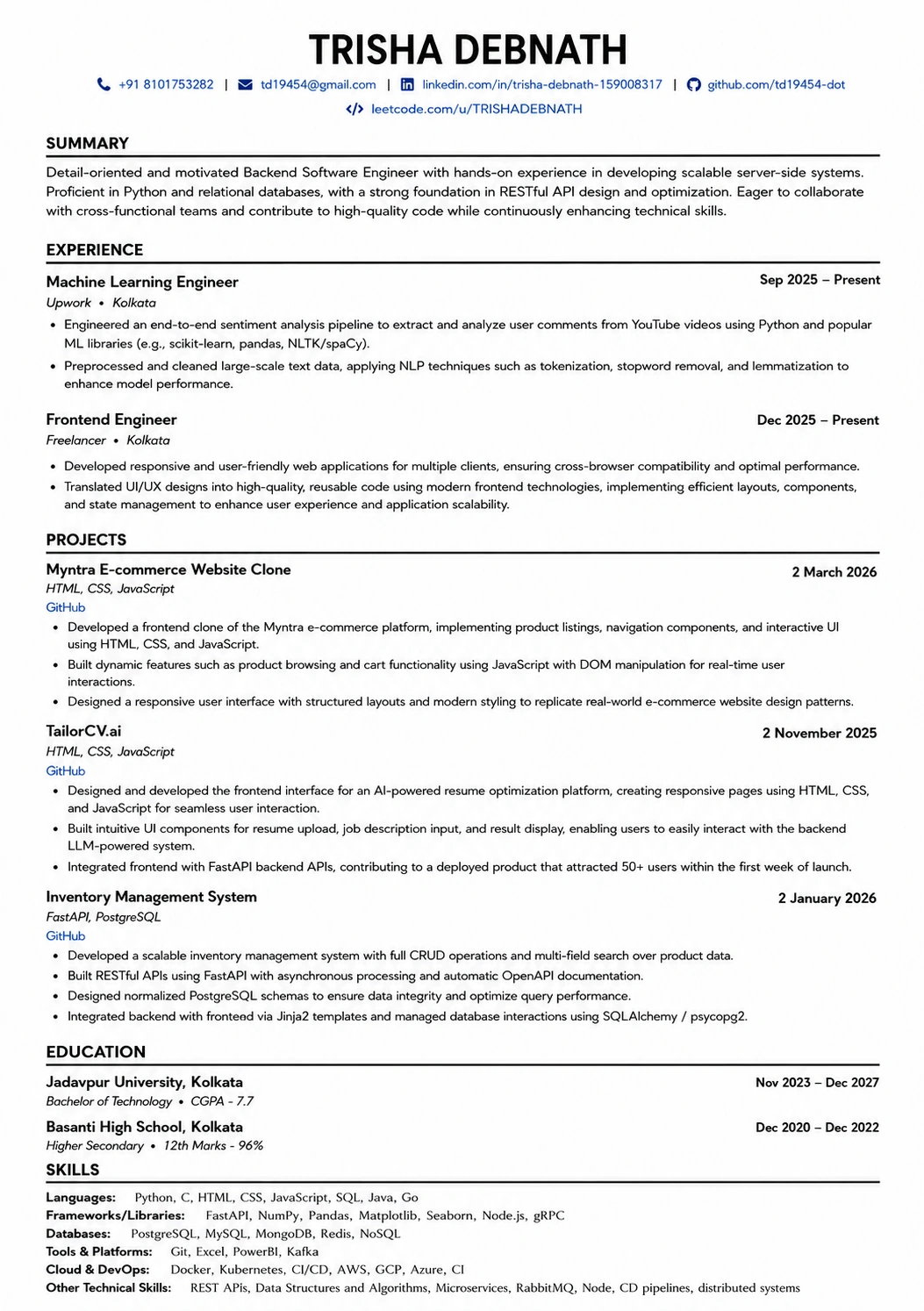
A layout that parses cleanly
Single column, standard headings, no text boxes — the formatting rules in this guide, already applied.
Was this guide useful?
Be the first to rate it.