 TD
TD
Key Takeaways
- AI-generated job descriptions often have a uniform structure, long qualification lists mixing important and generic requirements, and repetitive phrasing.
- It is crucial to identify concrete, specific requirements, like numbers or tools, while deprioritizing generic buzzword phrases that carry little value.
- Cross-referencing with other job postings from the same company can help distinguish boilerplate language from role-specific priorities.
- When qualifications are unclear, focus on matching your resume to the job title and core responsibilities for better alignment.
- Tailor your resume to reflect genuine requirements rather than trying to mirror every buzzword for effective job application results.
More job postings in 2026 are drafted, expanded, or entirely written by AI. Hiring teams use AI to turn a rough bullet list into a polished, keyword-rich job description in seconds, and while that produces more consistent postings, it also produces a specific pattern: longer, more generic, and sometimes internally inconsistent job descriptions that are harder to match accurately.
Understanding this pattern changes how you should read and match your resume to these postings.
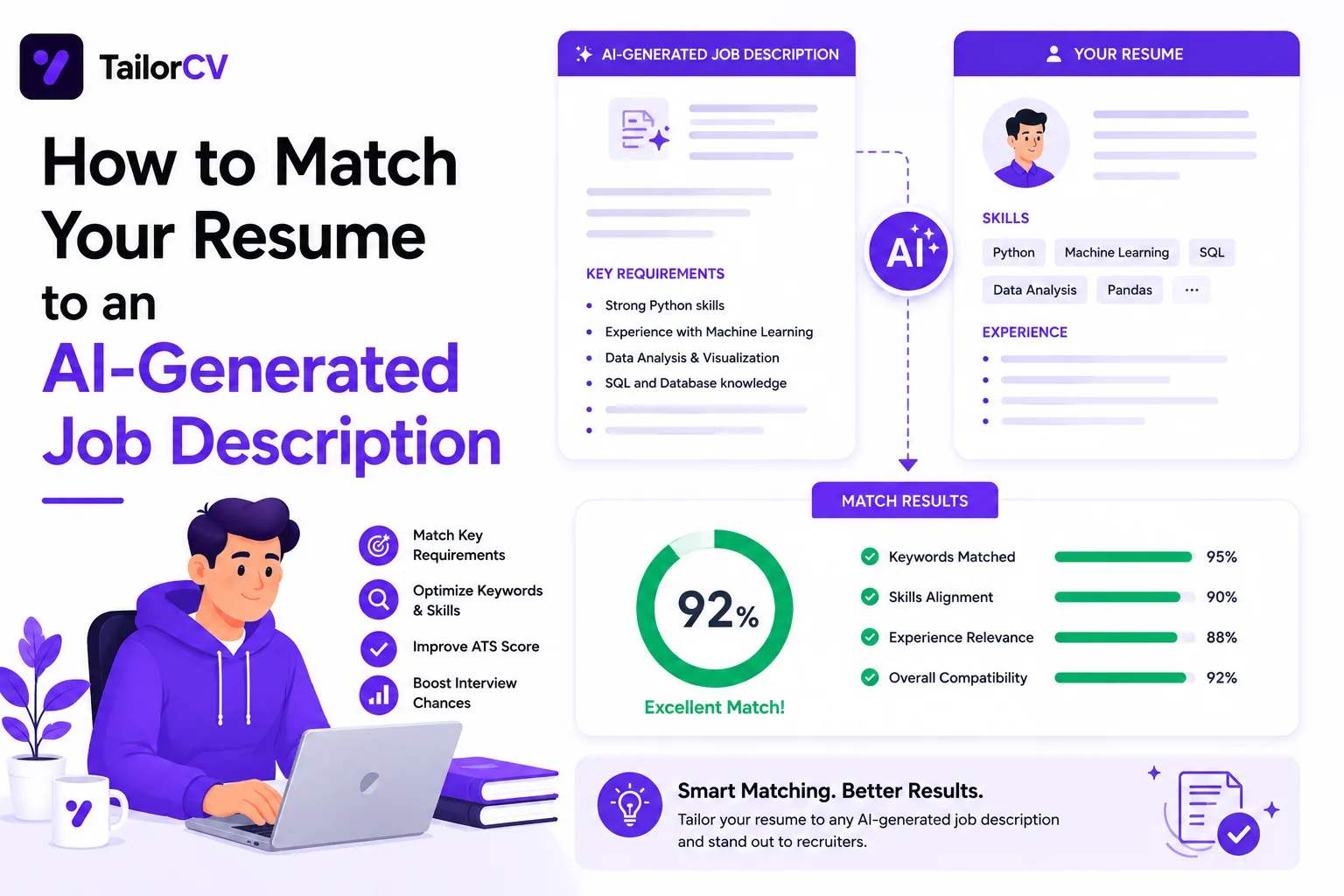
Paste any job description into the TailorCV resume optimizer to get a match score and a clear list of what actually matters, regardless of how the posting was written.
How to Spot an AI-Generated or AI-Expanded Job Description
- Unusually uniform structure across every posting from the same company, with near-identical phrasing patterns repeated section to section
- Long, padded qualification lists that mix genuinely important requirements with generic filler ("strong communication skills," "passion for excellence") in roughly equal weight
- Repetitive or slightly redundant phrasing, where the same requirement is restated in two or three different ways
- Inconsistent seniority signals, such as a posting that asks for "5+ years of experience" in one section and describes entry-level responsibilities in another
- Buzzword density without concrete specifics, like "leverage cutting-edge technology to drive innovative solutions" without naming any actual tools or outcomes
None of this means the job itself is not real or not worth applying to. It means the posting requires more interpretation before you can extract what genuinely matters.
Why This Matters for Resume Matching
A padded, AI-expanded job description makes it harder to tell required qualifications apart from generic filler. If you treat every line as equally important, following required vs preferred qualifications becomes more difficult, and you risk either underselling a strong match or wasting effort chasing keywords that carry little real weight.
The goal is to filter signal from noise before you start matching your resume to the posting.
How to Extract What Actually Matters From an AI-Generated Posting
Step 1: Identify the Concrete, Specific Requirements First
Look for anything with a specific number, tool name, credential, or measurable outcome. These are almost always genuine requirements, regardless of how the rest of the posting reads.
Step 2: Deprioritize Generic Buzzword Phrases
Phrases like "self-starter," "passion for excellence," or "thrives in a dynamic environment" carry little matchable signal on their own. Do not spend significant resume real estate trying to directly mirror them; instead, let your results imply them, following matching soft skills in a job description.
Step 3: Cross-Reference With the Company's Other Postings, If Available
If a company has multiple open roles, comparing their postings can reveal which phrases are boilerplate (repeated across every listing) versus role-specific (unique to this posting). Role-specific language is more likely to reflect genuine priorities.
Step 4: When in Doubt, Match to the Job Title and Core Responsibilities
If the qualifications section is heavily padded or unclear, fall back to matching your resume against the job title and the core responsibilities section, which tend to stay more concrete even in AI-expanded postings.
Should You Still Fully Tailor Your Resume for These Postings?
Yes, but focus your tailoring effort on the concrete signals rather than trying to mirror every buzzword. A resume that reflects the genuine, specific requirements clearly will still outperform a generic resume, even against an AI-written posting. Read how much to change your resume for every job for guidance on calibrating tailoring effort.
A Quick Comparison
| Posting Element | AI-Generated Pattern | What to Do |
|---|---|---|
| Required skills with tool names | Usually genuine | Match precisely |
| Vague culture-fit adjectives | Often filler | Deprioritize, imply through results |
| Years of experience range | Usually genuine, but watch for inconsistency | Match if consistent across the posting |
| Repeated restatements of the same requirement | AI padding | Treat as one requirement, not several |
| Specific responsibilities section | Usually most reliable | Anchor your matching here if qualifications are unclear |
How TailorCV Helps You Cut Through Padded Job Descriptions
TailorCV's resume optimizer reads the full job description and identifies the concrete, high-signal requirements automatically, so you are not left guessing which parts of a long, AI-expanded posting actually matter. It shows you your real match score against the genuine requirements, not just raw keyword volume.
Step-by-Step Guide to Tailoring Your Resume for AI-Generated Job Descriptions
To effectively tailor your resume for AI-generated job descriptions, follow this structured approach:
Your resume after optimization
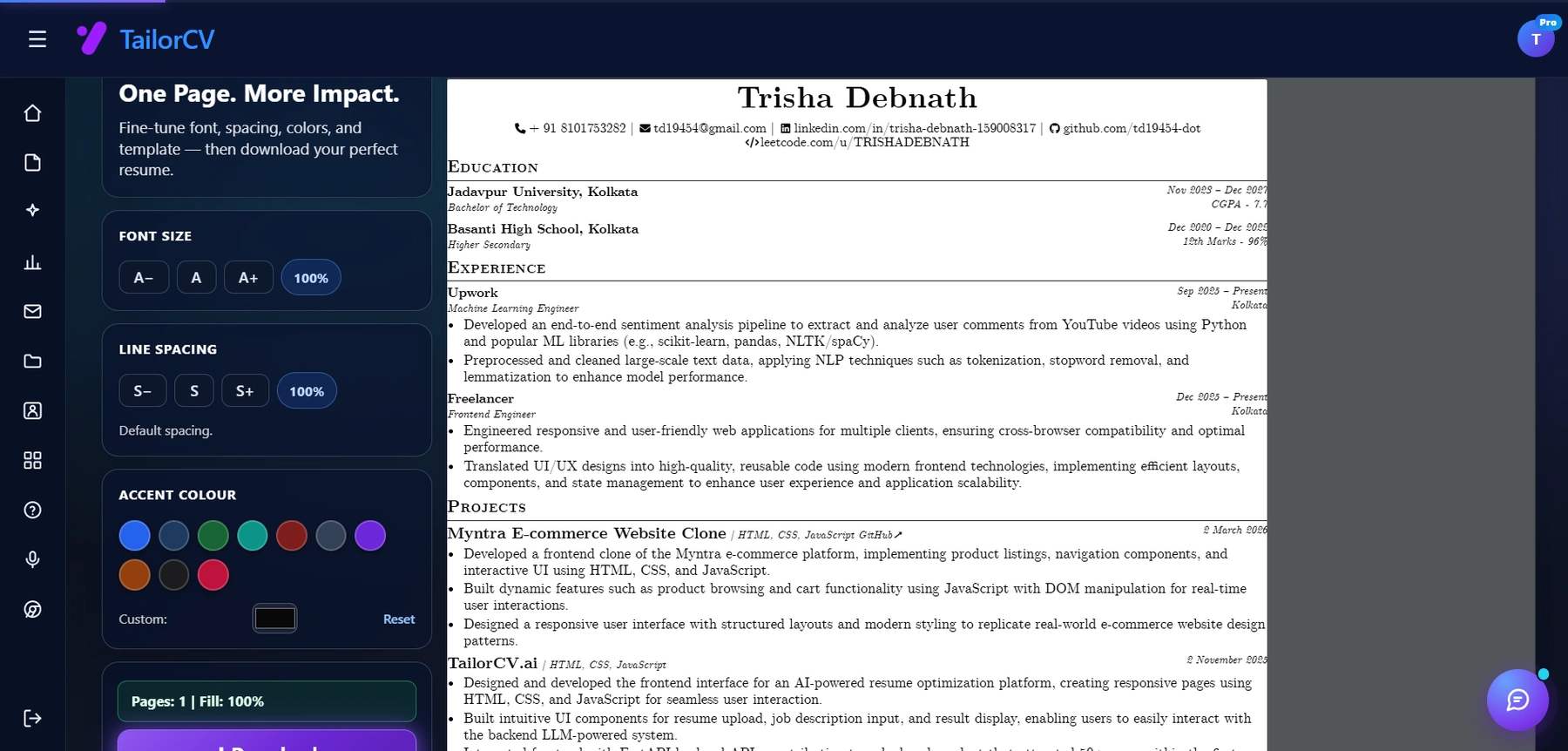
This is the resume after tailoring - the content is already matched, and these controls are how you fit it onto one page.
-
Identify Core Requirements: After extracting key elements from the job description, categorize them into must-have qualifications and preferred qualifications. This will help you prioritize what to highlight in your resume. For a deeper understanding, refer to our guide on Required vs Preferred Qualifications.
-
Create a Keyword Map: Utilize a Resume Keyword Map Template to align your existing skills and experiences with the keywords found in the job description. This visual tool helps ensure that you cover all necessary areas without losing focus.
-
Customize Your Professional Summary: Rewrite your professional summary to reflect the language of the job description. Incorporate key phrases and terminology that resonate with the role. This not only makes your resume more relevant but also helps it pass through Applicant Tracking Systems (ATS).
-
Highlight Relevant Experience: Under your work experience section, emphasize roles and accomplishments that directly relate to the job description. Use bullet points to clearly outline your contributions and use metrics where possible to quantify your impact.
-
Showcase Skills Clearly: Ensure that your skills section mirrors the skills listed in the job description. If the job emphasizes specific technical skills or soft skills, make sure these are prominently featured.
-
Review and Edit: Before submitting your tailored resume, review it for clarity and conciseness. Ensure there are no typos or grammatical errors, as these can detract from your professionalism.
Common Mistakes to Avoid When Tailoring Your Resume
When matching your resume to an AI-generated job description, avoid the following pitfalls:
-
Neglecting the Job Title: Ensure that your resume reflects the job title you are applying for, especially in the professional summary. This helps both ATS and hiring managers quickly see your alignment with the role.
-
Using Generic Language: Avoid vague terms and clichés. Instead, use specific language that resonates with the job description. Phrases like "team player" or "hardworking" may not stand out; instead, focus on unique contributions and achievements.
-
Forgetting to Adjust Formatting: If the job description includes specific formatting or presentation styles (such as bullet points or section headers), mimic these styles in your resume to create a visual match.
-
Overloading with Irrelevant Information: Tailoring your resume means cutting out unrelated experiences. Only include information that directly supports your application for the specific role.
-
Ignoring Soft Skills: Many AI-generated job descriptions emphasize soft skills. Don’t overlook these; ensure you provide examples of how you have demonstrated these skills in past roles.
Do's and Don'ts of Resume Tailoring
Do's:
- Do use action verbs to describe your experiences (e.g., "Developed," "Led," "Implemented").
- Do quantify achievements with numbers and statistics to provide context (e.g., "Increased sales by 20%").
- Do research the company culture and incorporate relevant values or initiatives into your resume.
- Do keep your resume to one page if you have less than 10 years of experience to maintain conciseness.
Don'ts:
- Don't use the same resume for every application; customization is key.
- Don't ignore the company’s language; if they use specific jargon or phrases, incorporate them into your resume.
- Don't be overly verbose; keep descriptions clear and to the point.
- Don't forget to proofread your resume multiple times for any errors before submission.
Mini Checklist for Tailoring Your Resume
Before submitting your tailored resume, use this quick checklist:
- unchecked: Did you identify core requirements from the job description?
- unchecked: Have you created a keyword map to align your skills?
- unchecked: Is your professional summary customized to reflect the job?
- unchecked: Are your relevant experiences highlighted with metrics?
- unchecked: Have you ensured your skills section matches the job description?
- unchecked: Did you proofread for clarity and spelling errors?
- unchecked: Is the format consistent with the job description style?
This checklist will help ensure you’ve covered all bases before hitting “send” on your application. For more strategies on matching your resume, check out our comprehensive Resume Matching with Job Description - Complete Guide for 2026.
Frequently Asked Questions
Does it matter if a job description was written by AI?
Not for the legitimacy of the role, but it does change how carefully you need to read the posting to separate genuine requirements from generic, padded language.
How can I tell if a requirement is genuine or just AI filler?
Specific, concrete requirements (tools, numbers, credentials) are almost always genuine. Vague adjectives and buzzwords without specifics are more likely to be filler.
Should I mirror an AI-generated posting's buzzword language in my resume?
Sparingly. Focus your resume on demonstrating the underlying skill through real results rather than repeating vague buzzwords directly.
Are AI-generated job descriptions less reliable overall?
Not necessarily less reliable, just often less precise. The role and core responsibilities are usually accurate; the qualifications list may just be more padded than a manually written posting.
How do I check my resume's match against a long, padded job description?
Use the TailorCV ATS score checker to get a match score based on the posting's genuine requirements, not just raw keyword count. For more insights on aligning your resume with job postings, check out our Resume Matching with Job Description - Complete Guide for 2026 and Job Description Analysis Checklist Before You Apply. You may also find our Resume Keyword Map Template - Match Your Resume to Any Job Description helpful for this process.
Related Guides
- Resume Matching with Job Description - Complete Guide
- Required vs Preferred Qualifications
- Matching Your Resume to the Soft Skills Buried in a Job Description
- Job Description Keyword Extraction Guide
- How Much to Change Your Resume for Every Job
- Skills-Based Hiring: Matching When JDs List Skills, Not Titles
- How AI Resume Matching Works
- Resume Trends 2026
- ATS Score Guide 2026
- Job Description Analysis Checklist
Conclusion
AI-generated and AI-expanded job descriptions are becoming the norm in 2026, and they reward candidates who can separate genuine, concrete requirements from padded, generic language. Anchor your matching to the specifics, not the buzzwords.
Check your resume's real match score against any job description, however it was written, with TailorCV.
Match My Resume to This Job - Free
What is your resume scoring right now?
Scan it against a job description and get your ATS match score in about a minute.
Drop your resume here or choose a file
PDF only. Max 2 MB.
We never share your data or use it to train AI models.

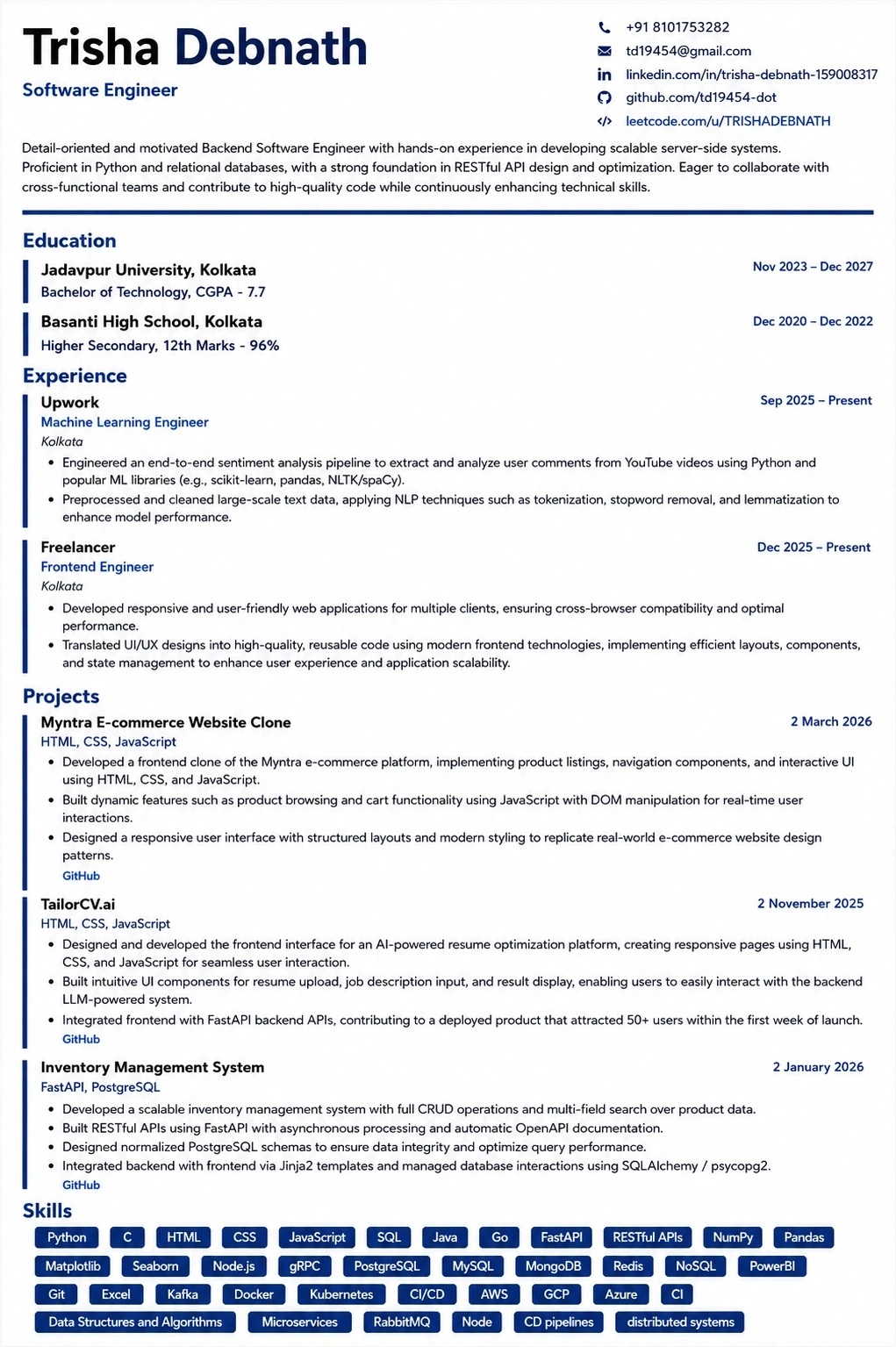
Templates that keep this structure intact
This template is ATS-tested — start from it and the formatting rules in this guide are already handled.
Was this guide useful?
Be the first to rate it.