 TD
TD
Key Takeaways
- Soft skills are often implied in job descriptions rather than explicitly listed, requiring candidates to read between the lines to identify them.
- Responsibilities and culture sections of job postings contain clues about necessary soft skills, such as collaboration and adaptability.
- Resumes should provide concrete examples of soft skills in action, rather than simply listing unsupported adjectives.
- Candidates should extract implied soft skills from job descriptions and match them with real experiences to enhance their resumes.
- Using the specific language from the job posting to describe your experiences can strengthen the alignment between your resume and the role.
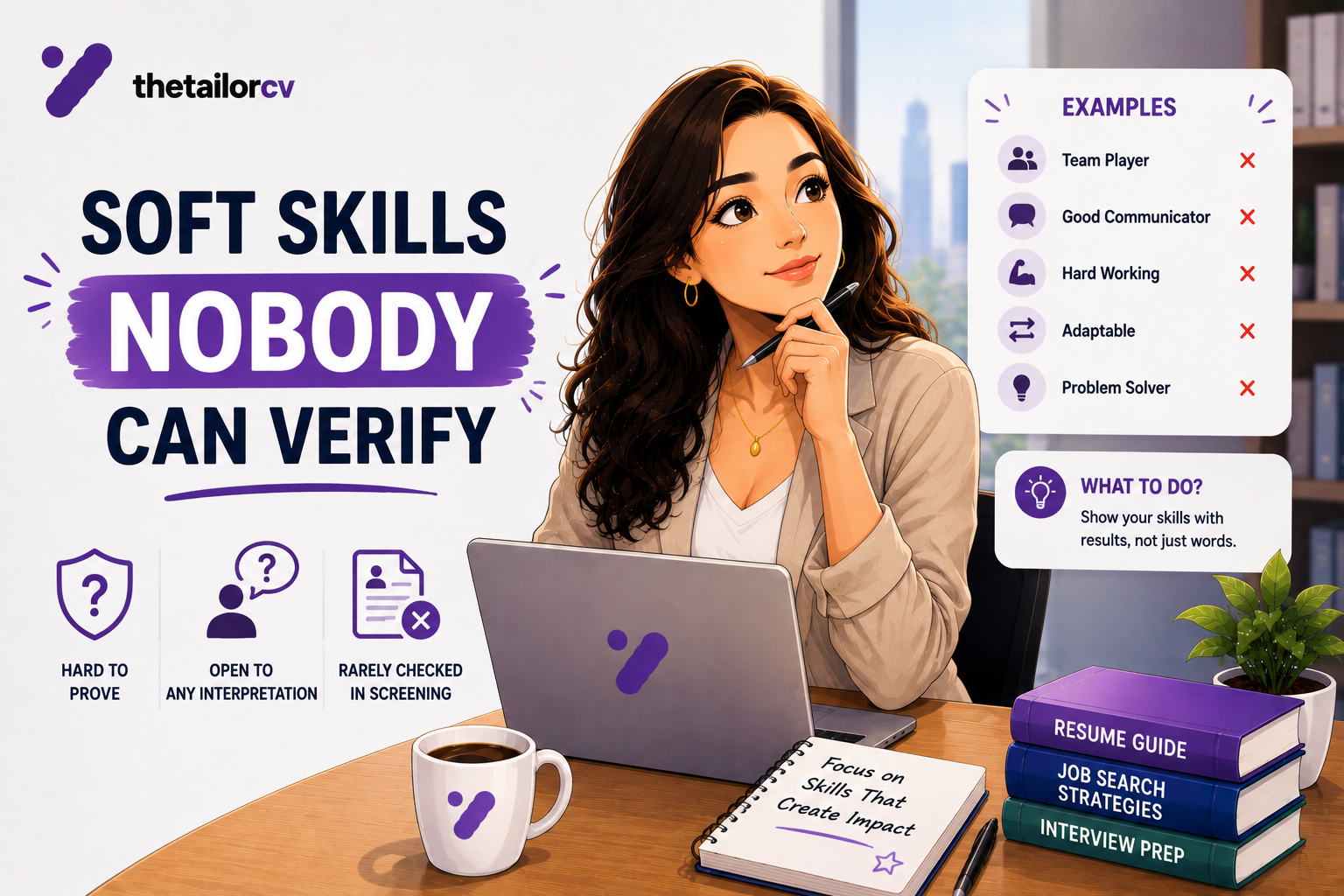
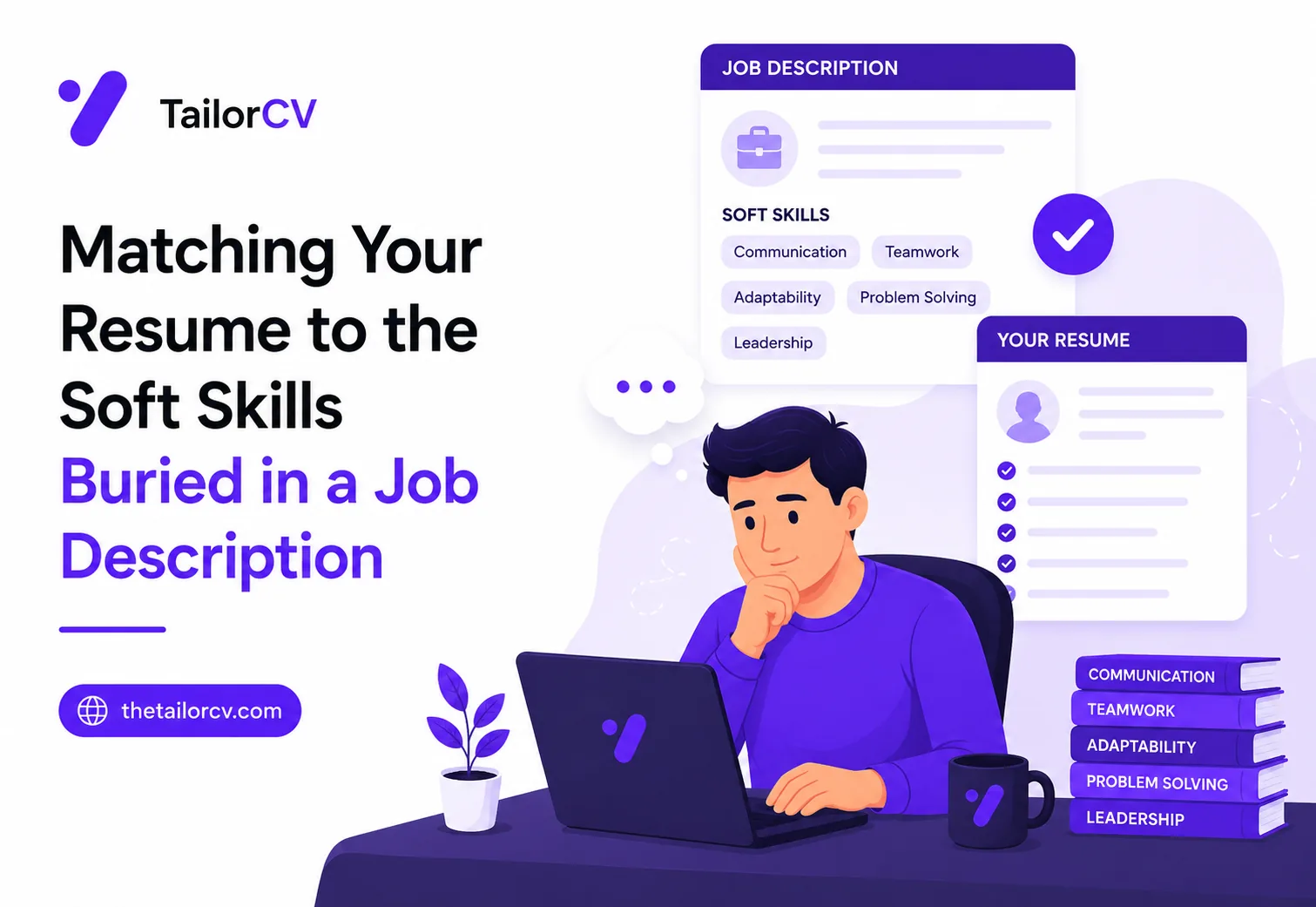
Most candidates hunt job descriptions for hard skills, tools, certifications, years of experience, and ignore the soft skills entirely, or worse, copy generic words like "team player" and "hard worker" straight onto their resume without any real matching effort. Both approaches miss something important: soft skills are rarely listed as a bullet point. They are buried in the responsibilities section, the culture blurb, and the way the role is described.
Learning to read between the lines and match your resume to these implied soft skills, with real evidence instead of buzzwords, is a differentiator most candidates skip entirely.
Paste any job description into the TailorCV resume optimizer to see how well your resume reflects both the hard and soft skills the role demands.
Where Soft Skills Actually Hide in a Job Description
In the Responsibilities Section
"Collaborate with cross-functional stakeholders to deliver on tight deadlines" is not just a task description. It is signaling a need for collaboration, communication, and time management, even though none of those words appear explicitly.
In the "About the Team" or Culture Section
Phrases like "fast-paced environment," "wear many hats," or "high degree of autonomy" describe the working style the employer expects, and they are effectively soft-skill requirements in disguise.
In the Seniority and Scope Language
A posting that mentions "mentoring junior team members" or "influencing without authority" is signaling leadership and interpersonal skills, whether or not the word "leadership" ever appears.
Read the job description keyword extraction guide for a structured method to catch both explicit and implied requirements on your first two or three reads of a posting.
The Difference Between Naming a Soft Skill and Proving It
Most resumes fail here in one of two ways: they either ignore soft skills entirely, or they list them as unsupported adjectives ("excellent communicator," "strong leader") with no evidence behind the claim.
Weak: "Excellent communication and collaboration skills"
Strong: "Coordinated a cross-functional launch across engineering, design, and marketing, aligning 5 stakeholders on a shared timeline and shipping two weeks ahead of schedule"
The second version proves the soft skill through a concrete result rather than naming it directly. This mirrors the approach in how to quantify resume achievements.
A Framework for Matching Soft Skills to a Job Description
Step 1: Extract the Implied Soft Skills
Read the responsibilities and culture sections closely, and write down what working style or interpersonal skill each phrase implies.
Step 2: Match Each Implied Skill to a Real Example From Your Experience
For every implied soft skill, identify one concrete moment from your work history that demonstrates it. If you cannot think of one, that soft skill should not appear on your resume for this application.
Step 3: Weave the Evidence Into Your Bullets, Not a Standalone List
Soft skills read as more credible embedded in an achievement bullet than listed on their own. Reserve a standalone skills section for hard, keyword-matchable terms, following soft skills for resume for general formatting guidance.
Step 4: Mirror the Posting's Specific Language Where Genuine
If the posting says "operates well in ambiguity" and that genuinely describes how you work, use similar language in your summary. This is the same principle behind resume matching with job description, applied to soft skills instead of hard ones.
Common Soft Skill Phrases and What They Actually Signal
| Job Description Phrase | Implied Soft Skill |
|---|---|
| "Fast-paced, ever-changing environment" | Adaptability, comfort with ambiguity |
| "Cross-functional collaboration" | Communication, stakeholder management |
| "Own projects end-to-end" | Initiative, accountability, self-direction |
| "Mentor junior team members" | Leadership, coaching |
| "Influence without direct authority" | Persuasion, relationship-building |
| "High attention to detail" | Precision, quality focus |
Common Mistakes When Matching Soft Skills
Listing Soft Skills as a Bare Bullet List
A skills section full of adjectives with no supporting evidence reads as filler to both an ATS and a human reviewer. Move evidence-backed soft skills into your experience bullets instead.
Using the Same Generic Soft Skills for Every Application
"Team player," "hard worker," and "detail-oriented" appear on so many resumes that they carry almost no signal. Tailor your soft-skill language to what the specific posting actually implies.
Overloading Bullets With Soft-Skill Language at the Expense of Results
Soft skills should support a result, not replace one. Every bullet should still lead with an outcome, using how to write resume bullet points as a guide.
How TailorCV Helps You Match Soft Skills, Not Just Hard Ones
TailorCV's resume optimizer analyzes the full job description, including responsibilities and culture language, not just the explicit skills list, and flags soft-skill signals your resume may be missing. It helps you weave evidence-backed language into your bullets instead of adding generic filler adjectives.
Worked Examples of Soft Skills in Action
To illustrate how to effectively match soft skills with job descriptions, consider the following scenarios based on common job roles:
Scenario 1: Marketing Coordinator
Job Description Snippet: "We are looking for a candidate who demonstrates strong communication skills and the ability to collaborate with cross-functional teams."
Resume Application:
- Soft Skill Identified: Communication
- Proving the Skill: Instead of merely stating "excellent communication skills," provide a bullet point in your experience section like:
- "Developed and presented weekly marketing reports to stakeholders, facilitating informed decision-making and enhancing team collaboration."
Scenario 2: Software Developer
Job Description Snippet: "Candidates should exhibit problem-solving abilities and adaptability in a fast-paced environment."
Resume Application:
- Soft Skill Identified: Problem Solving
- Proving the Skill: Rather than just listing "problem-solving," you could write:
- "Resolved critical software bugs under tight deadlines, improving application stability by 30% and adapting solutions for diverse user needs."
By using specific examples, candidates can effectively demonstrate their soft skills in alignment with the job description.
Step-by-Step How to Analyze Soft Skills in Job Descriptions
- Highlight Key Terms: Read the job description thoroughly and underline soft skill phrases. Look for words like “team player,” “adaptability,” and “leadership.”
Your resume after optimization
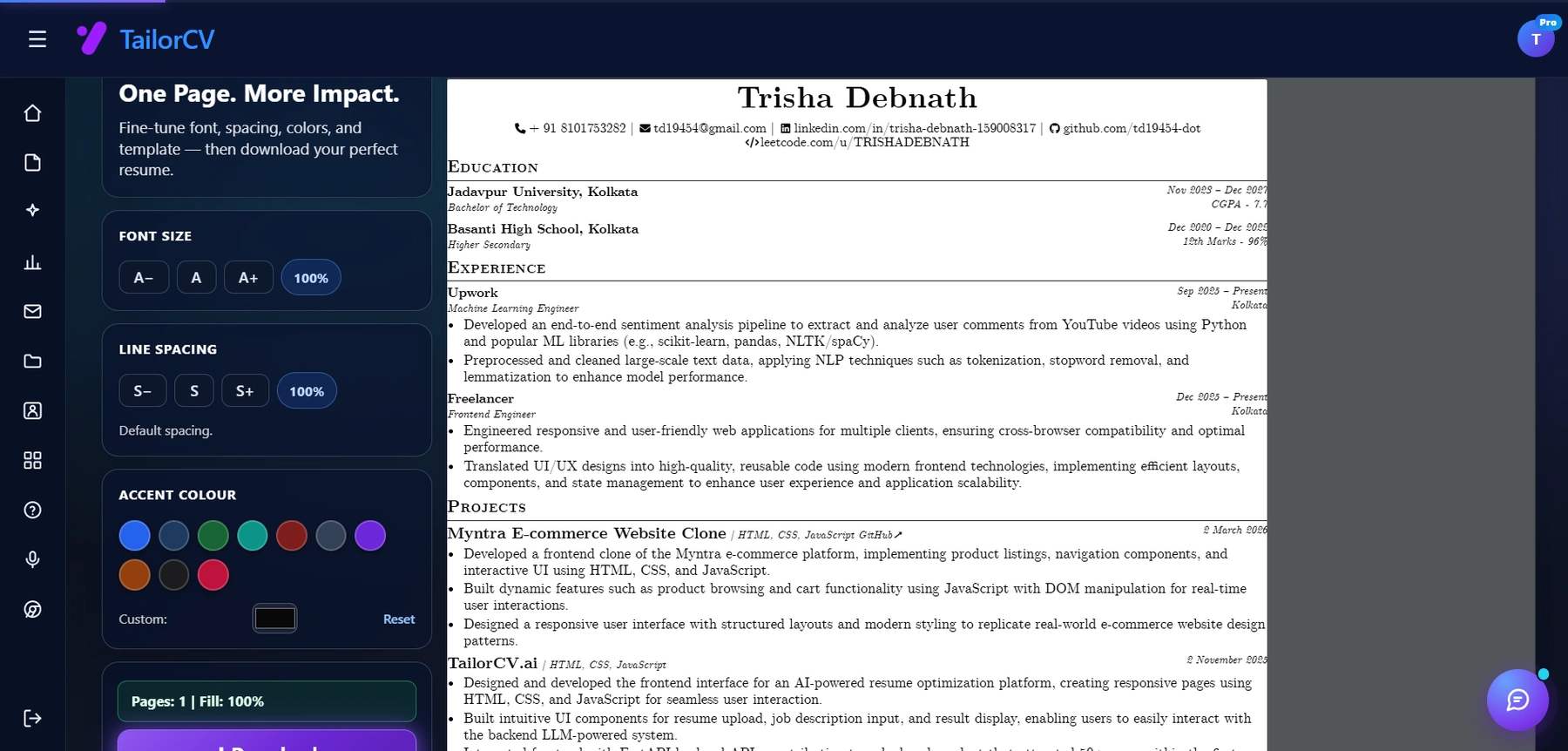
This is the resume after tailoring - the content is already matched, and these controls are how you fit it onto one page.
-
Categorize Skills: Organize the identified soft skills into categories such as communication, leadership, teamwork, and problem-solving to visualize your matches better.
-
Research Skill Context: Look up examples of how these skills manifest in the industry. For instance, what does "adaptability" look like in a tech startup versus a corporate environment?
-
Match with Your Experience: For each soft skill, jot down specific instances from your professional history where you exhibited that skill. Use the STAR method (Situation, Task, Action, Result) for clarity.
-
Create a Tailored Resume Section: Develop a dedicated section in your resume that reflects these matched soft skills using the examples you've gathered.
-
Review and Edit: Ensure that your language is concise and impactful, removing any jargon that might not resonate with the hiring manager.
By following these steps, you can create a compelling resume that resonates with the employer's expectations.
Do's and Don'ts of Matching Soft Skills
Do's
- Do Use Specific Examples: Always back up your soft skills with real-life examples to enhance credibility.
- Do Align with Company Culture: Research the company’s culture and values to better understand the soft skills that might be prioritized.
- Do Keep It Concise: Use bullet points for clarity and brevity, making it easy for recruiters to spot your relevant skills.
Don'ts
- Don't Use Buzzwords: Avoid overused phrases like "hard worker" or "team player" without context. They lack impact without evidence.
- Don't Stretch the Truth: Be honest about your experiences. Employers value authenticity and can often spot exaggerations.
- Don't Ignore the Job Description: Tailor your soft skills to align with the specific requirements of the job description, rather than using a one-size-fits-all approach.
Mini Checklist for Soft Skills Matching
- unchecked: Have I highlighted soft skills mentioned in the job description?
- unchecked: Have I provided specific examples demonstrating these skills?
- unchecked: Have I tailored my resume to include relevant soft skills for this specific role?
- unchecked: Did I research the company culture to ensure my soft skills align?
- unchecked: Have I avoided using vague buzzwords without context?
By utilizing this checklist, you can ensure that your resume effectively showcases your soft skills in a way that aligns with what employers are seeking.
Short Scenarios for Practice
-
Scenario A: You apply for a customer service role that emphasizes "empathy" and "active listening." Write down two experiences from past jobs where you demonstrated these skills.
-
Scenario B: You’re targeting a project management position that highlights "leadership" and "time management." List examples where you successfully led a project and managed deadlines effectively.
Engaging in these scenarios helps reinforce your understanding and application of soft skills relevant to specific job roles.
Frequently Asked Questions
Does ATS software actually score soft skills?
Modern ATS systems increasingly recognize soft-skill language, especially when it appears in context within a results-driven bullet, though hard skills and keywords are typically still weighted more heavily in scoring.
Should I have a dedicated soft skills section on my resume?
A short one can work, but it should be for scannability, not evidence. The real proof of your soft skills should live in your experience bullets, backed by specific results.
How many soft skills should I try to match per application?
Focus on the two or three most clearly implied by the posting rather than trying to check every possible soft skill box. Depth on the right few beats breadth across many.
What if I can't think of a concrete example for an implied soft skill?
Leave it out for this application rather than forcing an unsupported claim. A resume with fewer, well-evidenced soft skills is stronger than one with many unsupported ones.
How do I check if my resume reflects the soft skills a job description implies?
Use the TailorCV ATS score checker to analyze the full job description and see how well your resume's language aligns with both its explicit and implied requirements. You can also create a resume keyword map to ensure you're matching the right terms.
Related Guides
- Resume Matching with Job Description - Complete Guide
- Job Description Keyword Extraction Guide
- Required vs Preferred Qualifications
- Soft Skills for Resume
- How to Write Resume Bullet Points
- How to Quantify Resume Achievements
- Hidden Keywords in Job Description
- Best Action Verbs for Resume
- ATS Score Guide 2026
- Job Description Analysis Checklist
Conclusion
Soft skills are rarely spelled out directly in a job description, but they are almost always implied through responsibilities and culture language. Learn to read for them, prove them with real evidence instead of buzzwords, and weave them into your bullets rather than listing them as unsupported adjectives.
Check how well your resume reflects a job description's full requirements, hard and soft skills alike, with TailorCV.
Match My Resume to This Job - Free
What is your resume scoring right now?
Scan it against a job description and get your ATS match score in about a minute.
Drop your resume here or choose a file
PDF only. Max 2 MB.
We never share your data or use it to train AI models.

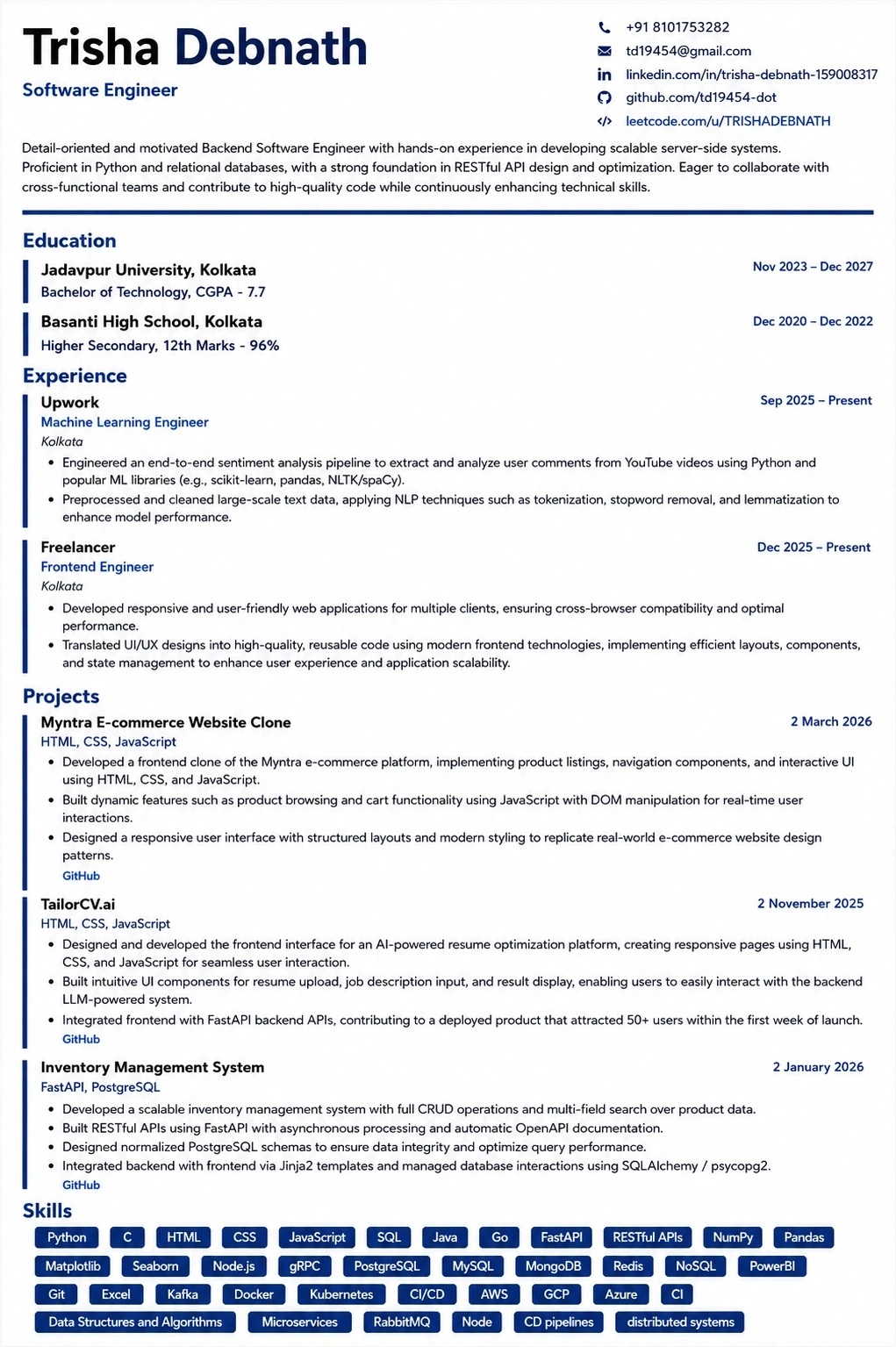
Templates that keep this structure intact
This template is ATS-tested — start from it and the formatting rules in this guide are already handled.
Was this guide useful?
Be the first to rate it.