SS
SS
Key Takeaways
- A resume is a screening document; a portfolio is evidence. They serve different stages and different readers.
- The resume must survive automated parsing; the portfolio must survive a curious human with ninety seconds.
- Almost every role benefits from a portfolio now, not just design and development.
- A portfolio never replaces a resume — no employer skips the resume because your site is good.
- The link on your resume is what connects them, and a dead link is worse than no link.
Candidates frequently treat portfolio and resume as competing formats, as if a good enough portfolio makes the resume unnecessary. They are not alternatives. They sit at different points in the hiring process and answer different questions.
The resume answers "should we look at this person at all?" The portfolio answers "is what they claimed actually true?"
This guide covers what each is for and how to make them work together.
Start with the one that gates everything — run your resume through the free ATS score checker.
The core difference
| What differs | Resume | Portfolio |
|---|---|---|
| Purpose | Pass screening | Prove the claims |
| Read by | Parsers first, recruiters second | Hiring managers and peers |
| When | Application stage | After shortlisting, or via referral |
| Length | One or two pages | As deep as the work requires |
| Format | Structured, parseable text | Visual, interactive, whatever suits |
| Tailored | Per application | Generally stable |
| Required | Almost always | Role-dependent |
The practical consequence: they are optimised against different constraints. A resume must be plain enough for a machine to extract; a portfolio can be as designed as you like because a human is looking at it deliberately.
What the resume must do
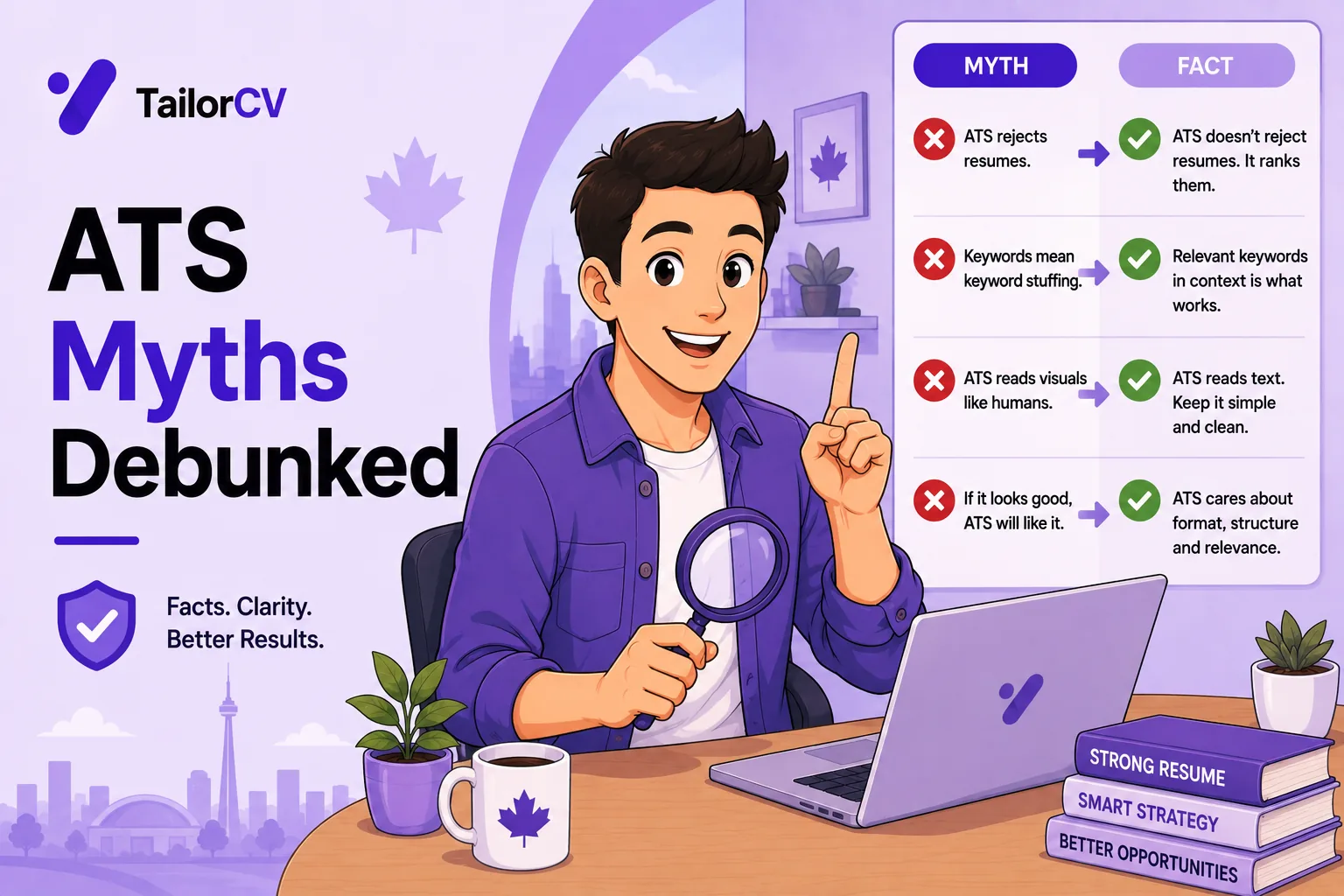
Survive parsing. Most applications pass through an applicant tracking system, and a document that does not extract cleanly is invisible regardless of content — see ATS resume formatting mistakes.
Be scannable in seconds. Recruiters spend very little time per resume.
Be tailored per role. The same portfolio serves many applications; the resume should not — see how to tailor your resume for every job.
Carry the claims. "Rebuilt the checkout flow, cutting abandonment 22%."
Which means it must stay plain. The visual creativity belongs in the portfolio, not here — a beautifully designed resume that fails to parse is the most self-defeating document in job searching.
What the portfolio must do
Prove one or two claims properly. Depth over coverage.
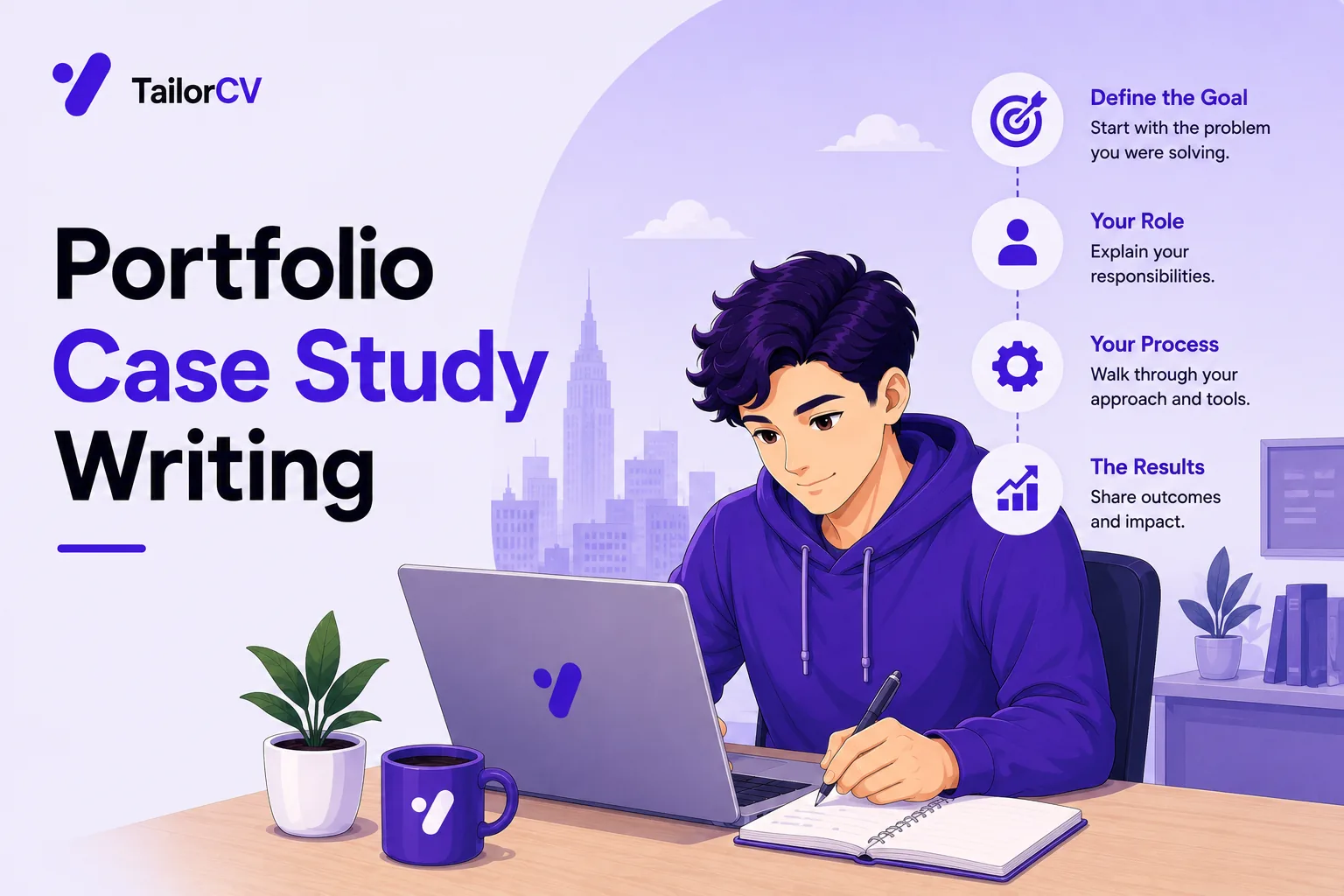
Show your reasoning, not just the output. A screenshot demonstrates that something exists; a short case study demonstrates that you made decisions — the problem, what you tried, what you chose, what happened. That distinction is what separates a portfolio that helps from one that decorates — see portfolio case study writing.
Load fast and work on mobile. Reviewers open links on phones.
Be scannable in ninety seconds. Assume nobody reads it end to end.
Work. A dead link, a broken deployment or a project that errors on load is actively worse than having no portfolio, because you invited the reviewer to check and the check failed.
The same project, in both places
This is the part people get wrong. The resume states the outcome; the portfolio explains how it happened. Neither repeats the other.
On the resume — one line, because that is all the space there is:
Rebuilt the college library issue-return system in Django; issuing a book went from ~4 minutes to under 30 seconds for 8,000 titles.
In the portfolio — the reasoning the resume had no room for:
The problem. Two librarians could issue the same physical copy at the same time. The old system checked availability and wrote the record as two separate steps, so the check could pass twice before either write landed.
What I considered. Optimistic locking with a version column, a queue in front of the issue endpoint, or a row-level lock inside the transaction.
What I chose and why. A row-level lock on the copy record with the status check moved inside the same transaction. The queue was overkill for two concurrent librarians, and optimistic locking would have shown a retry error to a person standing at a desk with a student waiting.
What happened. Duplicate-issue complaints stopped completely. Eighteen months on, it is still running.
Notice what the portfolio version adds: the alternatives, the reason one was picked, and a constraint that came from the real world rather than from the code. That is what a reviewer cannot get from a resume bullet, and it is what makes them want to talk to you.
Who needs a portfolio
Essential: designers, front-end developers, writers, photographers, videographers, architects, illustrators — anyone whose output is visual or textual.
Strongly recommended: software engineers, data analysts and scientists, product managers, marketers. In these fields it is now common enough that its absence is mildly noticeable.
Increasingly useful, though not expected: HR, operations, finance, project management. A short case study of a process you improved differentiates you in fields where almost nobody does it — see portfolio for non-tech roles.
Rarely needed: highly regulated roles where credentials and licensure dominate, and some traditional sectors.
Nobody skips the resume. Even where a portfolio is essential, employers still want the resume — application systems require it, HR processes require it, and the portfolio comes afterwards.
What a student with no jobs yet should put in one
The common objection is having nothing to show. Almost every student has two or three of these:
| Source | What makes it portfolio-worthy |
|---|---|
| Final year project | You made real design decisions and hit real constraints |
| A course assignment you took further | Say what the assignment required, then what you added and why |
| Something you built for yourself | A script that solved your own problem shows initiative better than a tutorial |
| A hackathon build | Time pressure forced trade-offs — those trade-offs are the story |
| A club or fest system | Real users, real deadline, real complaints when it broke |
| Freelance or a friend's business | An actual client with actual requirements |
| An open source contribution | Someone else's codebase, someone else's review |
What does not work: a tutorial project rebuilt step by step with no changes, five to-do apps, or a project you cannot explain a single decision inside. One properly explained project beats six listed ones, every time.
Making them work together
The link is the join. Put the portfolio URL on your resume's contact line, and make sure it survives PDF export as a clickable link. Many resume templates render URLs as text that does not work.
Test the link in the exported PDF, not in the editor. This is the single most common failure in the whole area — see how to add a portfolio link to your resume.
Link individual projects too, not just the homepage. If your resume mentions a specific project, link that project directly. Making a reviewer navigate your site to find the thing you just described adds friction at exactly the wrong moment.
Keep the claims consistent. A resume bullet claiming 22% and a case study saying 15% is the kind of discrepancy that raises questions about everything else.
Do not duplicate. The resume states outcomes; the portfolio explains how. Repeating the resume in prose wastes the portfolio.
Common Mistakes
Designing the resume like a portfolio. Visual elaboration causes parsing failure, and an invisible resume cannot be rescued by good content.
Assuming a portfolio replaces a resume. No employer skips the resume, and application systems generally require one.
Linking a portfolio that does not work. A dead link or a broken deployment is worse than no link, because you invited the check.
Not testing the link in the exported PDF. Many templates render URLs as unclickable text, and this is the most common failure here.
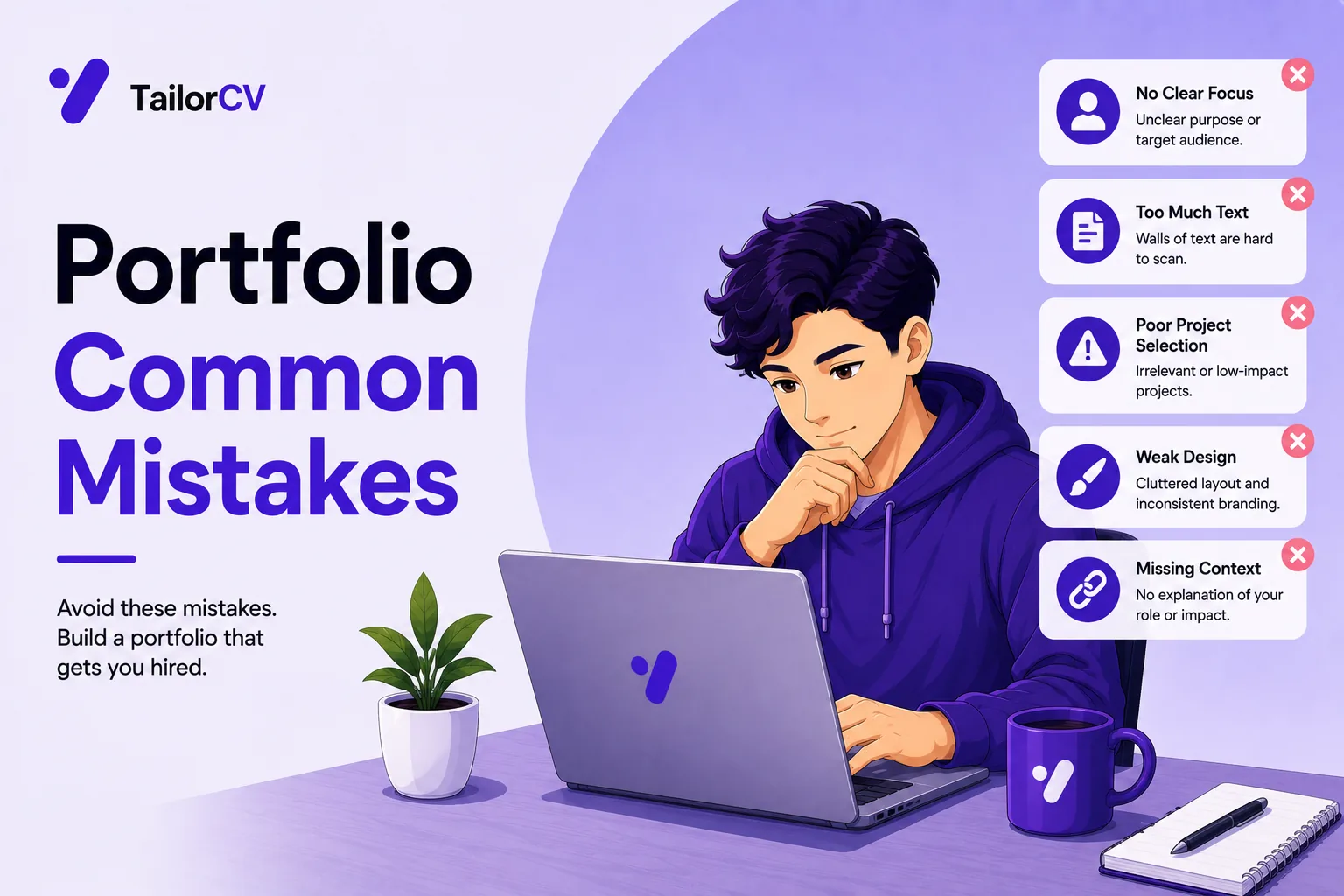
Showing screenshots without reasoning. Output proves something exists; the decisions behind it prove you made them.
Filling a portfolio with tutorial rebuilds. A project with no decisions of your own in it gives a reviewer nothing to ask about.
Linking only the homepage. If your resume names a project, link that project directly rather than making the reviewer hunt.
Inconsistent numbers between the two. A discrepancy in a headline metric undermines confidence in everything else.
Duplicating resume content in the portfolio. The resume states outcomes; the portfolio should explain how they happened.
Frequently Asked Questions
Do I need both a resume and a portfolio?
Almost always the resume, and a portfolio depending on your field. Design, front-end, writing and creative roles effectively require one; engineering, data and product benefit substantially.
Can a portfolio replace a resume?
No. Employers and application systems require the resume, and the portfolio comes after shortlisting or through a referral.
Should my resume be visually designed?
No. It must parse cleanly through applicant tracking systems, so keep it plain and put the visual work in the portfolio.
What goes in a portfolio that is not in a resume?
Reasoning. The problem, the options you considered, what you chose and why, and what happened — the resume only has room for the outcome.
I am a student with no work experience. What do I put in it?
Your final year project, an assignment you took further, something you built for yourself, or a hackathon build. What matters is that you made decisions inside it and can explain them.
Do tutorial projects count?
Only if you changed something and can say why. A tutorial rebuilt step by step gives a reviewer nothing to ask you about.
Do non-technical roles need portfolios?
Not expected, but a case study of a process you improved differentiates you precisely because so few people in those fields have one.
How many projects should a portfolio have?
Two or three explained properly. Depth beats coverage, and reviewers rarely go past the first two.
Where should the portfolio link go on my resume?
The contact line, and test it in the exported PDF rather than the editor — many templates break links on export.
The resume is what gets you to the portfolio. Check your ATS score free.
Make This Practical
Keep the two documents optimised for their actual constraints. The resume must parse cleanly through automated screening, so it stays plain; the portfolio is read by a human who chose to look, so that is where design and depth belong.
Then write one project up properly, in the four-part shape above — the problem, what you considered, what you chose and why, what happened. The "what you considered" part is the one students skip and the one reviewers actually want, because it is the only evidence that a decision was made rather than a tutorial followed.
Finally, make the join work. Put the link on your resume's contact line, link individual projects directly where your resume names them, keep the numbers identical across both, and test every link in the exported PDF rather than the editor — because that is where most of them break.
See what your portfolio could look like
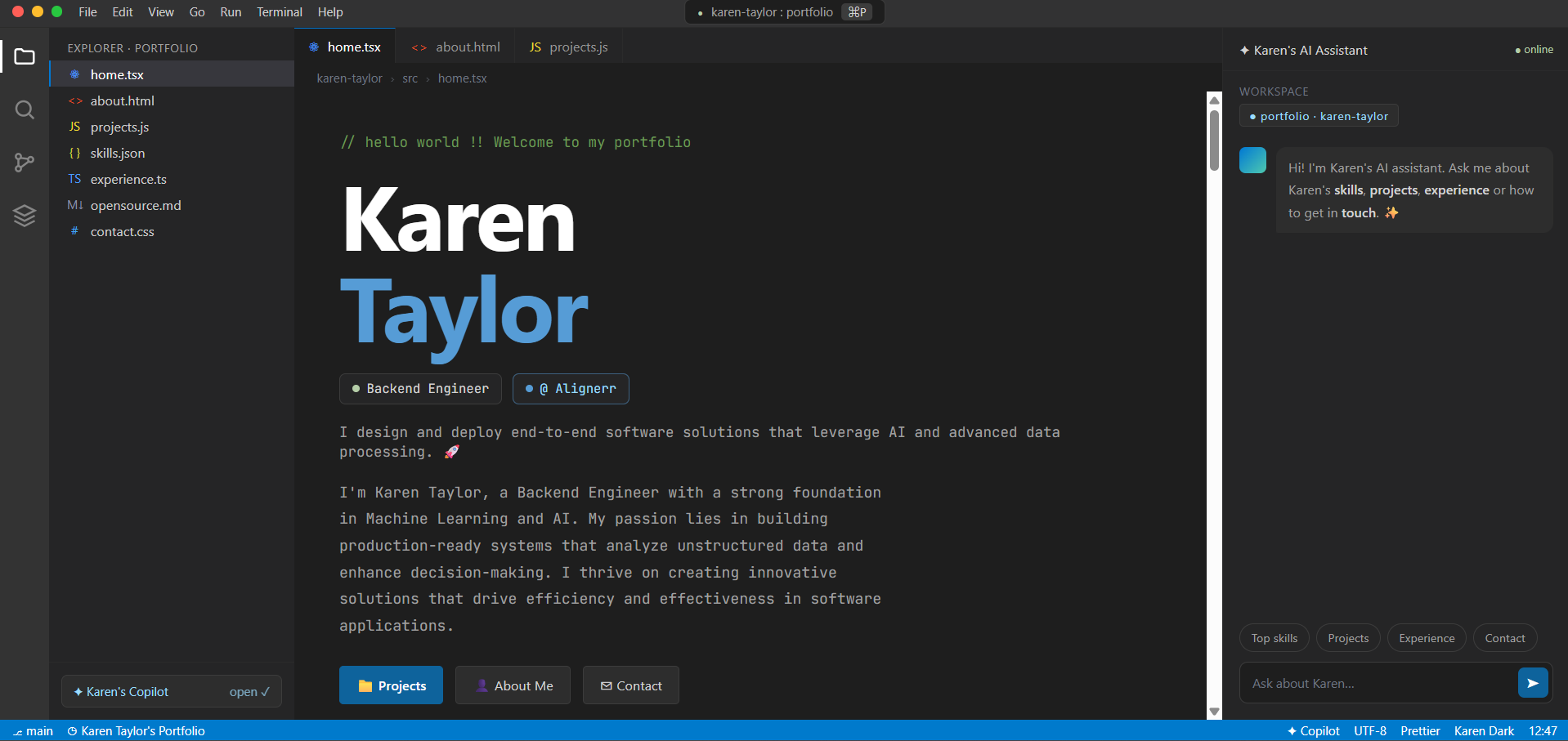
This theme is built straight from your resume — pick one and your portfolio is live in minutes.
Was this guide useful?
Be the first to rate it.